What's the difference?
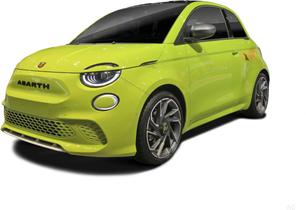
Meet the Abarth 500e, the mad-hatter sibling to the very good and all-electric Fiat 500e, and the Italian brand's first attempt at a bonafide EV hot hatch.
It's tiny, tough and – despite the lack of engine and exhaust – it burbles manically when you fire it up.
So does this mean Italy’s pint-sized, petrol-powered icon has a future in the all-electric era? Let’s go find out.
The Audi A1 2020 range offers something for everyone, and in the case of this particular variant, it’s the one you buy if you want as much grunt and gear as you can get.
It’s the top-of-the-range Audi A1 40 TFSI model, which gets the zestiest engine, the lengthiest equipment list, and offers performance to match some hot-hatches out there. It’s essentially an Audi-ised version of a VW Polo GTI.
This test wasn’t so much about the wow-factor, though. We put it through its paces as an urban runabout to see how it coped as a real-world city car.
It’s not perfect, but it’s everything a hot hatch should be in the electric era — engaging, exciting, and, above all, fun.
If you’re eager for a sporty compact hatchback with premium design and luxury car badges, the Audi A1 40 TFSI is a very, very strong contender. It’s fast, fun, and functional for a little hatchback. It’s just very expensive, and for most people the $10K cheaper 35 TFSI model will tick most of the boxes. I’d recommend you drive it before signing on for the top-spec model.
I’m just going to come right out and say it — I love the look of the Abarth 500e, even if the colour of our test car should be renamed Acid Trip, rather than Acid Green.
I love its perfectly proportioned, hunkered-down hot-hatch styling, the new ABARTH lettering on the body, and the new scorpion logo pasted to the side.
Basically, if you can look at the Abarth and not smile, then you need to find more fun in your life.
Inside, it’s a predictably cramped-feeling space, but it’s all nicely laid out, and the more I use them, the more I like the horizontal drive controllers that don’t eat up the little space you have with a traditional shifter. The materials are a bit hit and miss, though.
I don’t think I’ve seen a better transformation between generations than the current A1. In its previous guise it was bubbly and cute, but now it’s an angular brute.
This version’s S line sports body kit and funky 18-inch alloy wheels certainly help in that regard, but even the standard lighting signatures - LEDs front and rear - make it stand out as anything but a cutie pie city car.
The good news is that it hasn’t grown too much, either. Sure, it is a bit bigger, measuring 4029mm (on a 2563mm wheelbase), 1740mm wide and 1409mm tall. The last one was smaller (3973mm long on a 2469mm wheelbase, 1746mm wide and 1422mm tall), but this one isn’t elephantine in its proportions and so remains simple to park and squeezy enough to be considered a Light Car by industry standards.
And there are some really, really playful colours available. Like this Turbo Blue (which is only for this spec), and Python Yellow. There’s also black, green, red, three different greys, and two whites. The only issue is that flat white (Cortina White) is the only no-cost paint option. The rest will set out back $490 (for Tioman Green or the blue you see here) or $990 (for the rest).
And then you can option the paint with a black roof, for $1380 combined with blue or green, or $1880 in all the other colours. The black exterior styling pack adds black highlights around the grille and on the front and rear bumpers. Those little Audi four-ring stickers on the rear doors are standard on this spec.
But to be honest, it stands out no matter what colour you choose, and that’s enough to get people’s heads turning on the street. And the interior design? Well, it has some good and bad points. See the interior pictures below to make up your own mind.
While I like the addition of the central screen, it’s surprisingly annoying to use — I found myself jabbing at the buttons again and again before it reacts. You need a Stephen Hawking-level intellect to figure it all out.
I was trying to turn off the Abarth Sound Generator, which I'm reliably informed is possible, but after about five minutes digging through sub-menus, I abandoned all hope.
Normally I’d spend a bit of time exploring the back seat, but frankly, once in there I didn't really feel like spending excess time back there.
The Abarth 500e is only around 3.6m long, 1.7m wide and 1.5m tall, and suffice it to say, the space is tight, and you’ll only be using the two seats in the back in an emergency, or for the smallest of kids.
The boot is pretty tiny, too, starting at 185 litres (VDA) with the rear seats up, but growing to 550L (VDA) with the split-fold rear seat lowered.
So, not much to write home about. But criticising the tiny Abarth for a lack of practicality is like criticising a horse because it can’t swim – it’s not really in its job description.
There are elements of the A1’s cabin design that are tremendous. And other bits that are not so tremendous.
The bad bits include the fact you’re paying about $50,000 on the road for a car that has hard plastic just about everywhere the eye can see.
The good bits are that the textured plastics on the dash are beautiful, and so are the designed elements on the doors. I love the door handles, I love the metallic finish, I love the layout and I love the way it makes you forget that you’re in a luxury-branded car with hard plastic all around you.
The media screen and digital dashboard help, too - it feels technical and premium in the driver’s seat as a result. The graphics are crisp and clear, the menus are mostly easy to navigate, but I had some issues getting Apple CarPlay to work. It has wireless CarPlay, and I had it plugged in, so perhaps that was confusing things.
But the Audi media system also includes Audi Connect in this spec, meaning there are realtime map, traffic and hazard updates, plus a Wi-Fi hotspot, fuel prices, parking, weather and Google maps and services. It’s high-tech, and if that’s what you like, this is definitely going to please you more than a Mini Cooper.
Practicality is good, with bottle holders in all four doors, cup holders between the front seats and a covered centre console and wireless charging bay in front of the shifter. In the back, storage is sparse: aside from the door pockets, there’s nothing - no cup holders, no map pockets.
There is enough space for four adults in the A1, so if you plan to take your mates to brunch or if you’ve got young kids, you should be comfortable enough in here.
I had the driver’s seat set for my own height (182cm) and I was able to slide in to the rear seat without much fuss at all, with adequate knee and toe room, and decent headroom too. Try and fit three across the back and it’ll be uncomfortable, unless those three are very slim.
There are dual ISOFIX child-seat anchor points and three top-tether points, and the seat structure is pretty flat, making fitment of these types of seats simple enough.
The boot capacity is good for a car of this size at 335 litres, which is a solid 20 per cent bigger than before. You won’t find a spare under the boot floor, though, as all A1s have an inflator kit. The back seats fold down to allow 1090L of cargo capacity, but there’s a ledge you have to contend with if you’re trying to load larger items in. Maybe skip the IKEA trips in this one, then.
Ok, so bonkers thing number one: This Abarth 500e might look like it could fit in your pocket, but it is priced like a much bigger vehicle, starting at $58,900 plus on-road costs for the Turismo variant, increasing to $60,500 for the limited-edition Scorpionissima.
Outside, either trim gets 18-inch diamond-cut alloys, LED lighting all around, a fixed glass roof, the new e-latch front doors (meaning you can just push a button to open the door) from the 500e, along with some performance-focused add-ons, like a front splitter, greyed-out mirror caps, rear disc brakes and new front and rear bumper treatments.
Inside, there’s a leather-and-Alcantara steering wheel, sports seats, aluminium pedals and climate control, while on the tech front, a central 10.25-inch central screen pairs with a wireless charger and wireless phone mirroring, while a second 7.0-inch Driver Display Screen gives you all your driving data.
Oh, and there’s what the brand calls an Abarth Sound Generator, which is all kinds of crazy, but we’ll touch on that in a moment.
The difference between the Scorpionissima and the Turismo, by the way, is style led, with Abarth decals down the sides, and a certificate of authenticity confirming yours is one of 1949 vehicles sold around the world.
The Audi A1 40 TFSI model is far from affordable if you’re looking at city-sized hatchbacks.
The list price for this model is $46,450 plus on-road costs, and for that you don’t even get leather trim! And heated seats? Optional...
You can option the S-line interior package to get a flat-bottomed steering wheel and leather seat trim, but as standard, even on this top-spec variant, you get cloth seats and a boring old round wheel.
As tested our A1 40 TFSI was $49,720 before on-roads (making for a circa-$55K drive-away price as you see it), because it had the optional blue paint ($490) and black roof ($890), plus the black exterior styling package ($790) and 18-inch Audi Sport wheels ($1100).
It already has 18-inch wheels as standard, plus the S-line exterior body styling pack with sportier front and rear bumpers, sill trims and a rear spoiler.
Plus there are LED headlights and tail-lights, dual-zone climate control, a 10.25-inch digital dashboard, a 10.1-inch multimedia touchscreen with Android Auto, digital radio, built in sat-nav, built-in Wi-Fi and wireless Apple CarPlay.
That’s in addition to push-button start, keyless entry, 2xUSB ports (USB-A and USB-C) ambient lighting, an auto-dimming rearview mirror, wireless phone charging, front and rear parking sensors, semi-autonomous self parking, auto lights and auto wipers, heated and folding mirrors with kerb-side dipping, and a few safety spec items you’ll find in that section below.
There’s a single front-mounted electric motor providing the go here, with a total 113.7kW and 235Nm on offer fed through the single-speed gearbox, which is enough to push the 500e from 0-100km/h in 7.0 seconds.
Happily, the way that power is delivered makes it feel faster, and that Sound Generator does a pretty good impersonation of a petrol-powered hot hatch, rising and falling with your inputs.
This 40 TFSI model is the big humdinger in the range. It has the donk, right?
Yeah, it’s a 2.0-litre four-cylinder turbo-petrol engine, which is a full litre bigger in capacity than the base model car. And it’s the same engine fitted to the Polo GTI - a proper hot hatch!
It doesn’t quite have double the power and torque of the entry-level 30 TFSI model, but it does have solid outputs of 147kW (at 4400-6000rpm) and 320Nm (from 1500-4400rpm). That’s enough to slingshot this A1 from 0-100km/h in a hot-hatch-rivalling 6.5 seconds, according to Audi.
Unlike the lower grades, it runs a six-speed dual-clutch automatic, which it needs because it has so much torque. The 30 and 35 TFSI variants have a seven-speeder. All of them, including this one, are front-wheel drive.
There is no quattro/all-wheel drive A1 this time around, and there won’t be an S1, either. So this is it if you want your kicks in a compact car from the Ingolstadt-based brand.
Right, there’s one obvious downside to the Abarth experience, and that is that it is fitted with a 42kWh battery that delivers a claimed 253km of driving range.
It’s worth noting that there are three Drive Modes — Turismo, Scorpion Street and Scorpion Track — and that only the first one will deliver the maximum range, because it limits inputs to 100kW and 220Nm.
Engage the other two — I’ve had it locked in Scorpion Track, for example, which gives you all of the power and deactivates one-pedal driving — and you can expect those numbers to drop.
When it comes time to charge, the Abarth 500e is set up for 85kW DC fast charging, which should take you from flat to 80 percent charged in around 35 minutes, as well as a maximum 11kW AC charging, which takes just over four hours to get to fully charged. Or you can plug it into a regular socket, which means more like 15 hours to recharge.
One last caveat: I actually wasn't able to get it to charge, which curtailed my adventures a little bit. I tried three chargers, all of which conjured an error message on the screen, and after a quick call to the folks at Abarth it transpired that a quick software update is required.
Claimed fuel consumption is rated at 6.4 litres per 100 kilometres. You might see close to that on a highway drive, but if you’re primarily city-dwelling like me, then expect higher.
I saw an average of 10.1L/100km during my urban review of the A1 40 TFSI. That was with stop-start engaged the whole time, and the occasional squeeze of the accelerator to test out the claimed acceleration.
Fuel tank size for the A1 is just 40 litres, so if you’re doing what I did with this grade of A1, you can expect to visit the servo every 400km or so.
Remember what I said about how just looking at the Abarth should put a smile on your face? Well, driving it paints on an even bigger grin, and it starts as soon as you fire it up.
While most EVs start silently, leaving you wondering if they're on at all, the Abarth takes a different approach, instead leaning on its sound generator, modelled on the exhaust note of the 695, to give you a throaty rumble when you fire it up. It even revs! And yes, you can turn it off (apparently), but why would you?
On the road, electric drive has actually improved the Abarth experience, I reckon, because all the harshness of the drivetrain has been ironed out, instead just leaving this smooth, potent flow of power every time you plant your right foot, with no gear changes or harsh vibrations to get in the way.
The steering is predictably direct, too, and the whole vehicle feels nimble and quick to react to your inputs.
It’s honestly the kind of car that’s fun driving anywhere, be it suburban streets or twisty backroads, and despite having a couple of options parked at my house, I found myself pulled to the Abarth for all of my trips.
Downsides? The ride is firm but comfortable on most roads, but downright uncomfortable when you clang over bumps or road imperfections. You’ll have to decide if that’s a price to high to pay, but I can live with it for the trade off. And while the cabin tech looks nice, but is fiddly and annoying to use.
Finally, the range relegates the Abarth to a second car, or for those who rarely leave the city. Which is a big ask at the price point.
You shouldn’t be surprised to know that the A1 40 TFSI feels a lot like a Polo GTI to drive. It’s quick, it’s entertaining, it’s refined… it’s just about 50 per cent more expensive.
That mightn’t matter to you or factor into your considerations. I just want to point out that you can get a car that’s just as good to drive as this one, and still with a premium German brand attached to it, for a lot less.
The A1 does have it’s own spunk, though. It has a more masculine character, more aggressive styling, and more delightful interior design.
But it also has steering that is predictable and easy to judge, helping it feel nimble and grippy. From tight twisty roads to roundabouts, you’re going to be having fun in the A1 if you’re tooling around town.
It feels planted and grippy - aside from some front-wheel spin during take-offs if the tyres are cold - and you might notice the suspension can be a touch noisy as it pitter-patters over inconsistencies in the road surface, but the ride is firm yet controlled, offering enough comfort over potholed city roads and speed humps for this tester. And there are several of each of those obstacles on my daily drive to work.
The engine is a sweetheart, offering brilliant linearity to its power delivery. It pulls hard from low in the rev range, meaning you’ll be able to zip through traffic without much hassle at all. The powertrain is super responsive to inputs at speed, especially if you put it in Dynamic mode, which also allows you to hear some pops and crackles from the exhaust system.
That said, there is some vibration, shuddering and hesitation at low speeds, which is a combination of the stop-start system kicking in and out, a small amount of turbo-lag from the engine and some shuffling behind the scenes from the dual-clutch transmission. You might find the lurchy nature of the first-gear take-offs to be a bit hard to get used to, especially if you spend a lot of time in bumper-to-bumper traffic.
While this is an Urban Guide review focused on city driving, I thoroughly recommend you find a quiet stretch of twisty road outside the city limits. You won't be disappointed.
The Abarth 500e is fitted with six airbags, and decent suite of active safety stuff, like AEB, Lane Keep Assist, Traffic Sign Recognition, Blind Spot Warning, auto high beam and and an attention monitor. It’s all pretty subtle, though, and it didn't bing or bong at me once, which was wonderful.
It scored four stars when tested by Euro NCAP.
The Audi A1 range scored a five-star ANCAP crash test rating in 2019, and it comes kitted out with some impressive safety tech.
There’s auto emergency braking (AEB) that works up to 250km/h for cars, and up to 65km/h for pedestrians and cyclists. There’s also lane departure warning and lane keeping assistance.
You don’t get adaptive cruise control as standard, even on this expensive top-spec model. You can option it but you shouldn’t have to.
There’s no blind-spot monitoring or rear-cross traffic alert, which mightn’t seem like a big issue for a little car, but you’d be surprised how handy that tech can be when you’re reversing out of a parking space or trying to merge.
And while the previous A1 never came with a reversing camera, the new one does - it has guidance lines displayed on the screen, and there are front and rear parking sensors, too. Very handy for the urban jungle.
All A1s have six airbags (dual front, front side and full-length curtain).
It’s an interesting ownership proposition, because the car is covered for three years or 150,000km, which is underwhelming and then some compared to the warranty offerings of its competition, but there is capped-price servicing, at $300 per visit, required every 12 months or 15,000km, which lasts 10 years.
The battery is covered for eight years or 160,000km.
While the VW Polo GTI that this spec of A1 shares plenty with is backed by a five-year/unlimited kilometre warranty plan, the Audi-badged compact hatch still has a lesser three-year/unlimited kay cover.
The A1 requires servicing every 12 months or 15,000km (just like a Polo), and there’s a pre-pay service pack you can roll into your finance if you so choose.
That service plan covers either three years/45,000km of driving ($1480) or five years/75,000km ($1990). In the case of the five-year plan, Audi is actually better value than the Polo GTI (which costs $2200 for pre-pay).
Where is the Audi A1 built? You might be surprised to learn the answer is Spain.
Concerned about reliability? Got questions over resale, problems, issues, faults, recalls or something else? Check out our Audi A1 problems page.