What's the difference?
When you take on a classic you’d better get it right.
Which is why, back in 2016, when Fiat released a new 124, many an eyebrow was arched.
The original was an icon from the late 1960s, the golden age of roadsters. Styled by Pininfarina, it also oozed Italian swagger and, to top it off, its double overhead cam engine (modern at the time) helped introduce a swathe of innovations to the Italian automotive scene.
Even 50 years later, those old boots were looking awfully hard to fill, and the complexity and demands of today’s economy had Fiat working with Mazda to use its MX-5 chassis and Hiroshima manufacturing facilities to get it right.
A travesty? To some, maybe. But the MX-5 once aimed to emulate cars from the original 124’s golden era, and was a runaway success since, arguably making few missteps.
Thus, the apprentice has become the master. So, does today’s 124, which we only get in angry Abarth spec in Australia, bring something different to the ultra-refined roadster formula in 2019? Is it more than just a badge-engineered MX-5?
I took an Abarth 124 – the latest Monza limited edition – for a week to find out.
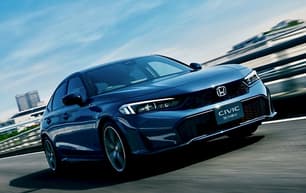
I’m just going to cut to the chase here. This Honda Civic hybrid is a good car. A great one, even.
But for some reason, nobody is really buying it. And it’s not just because it’s not an SUV – it has been outsold in its segment this year by the the BMW 1 Series, the Mercedes A-Class, the MG4 EV, and the VW Golf. Premium and non-premium alike, they’ve all got the little Honda licked.
So, what’s going on? A CarsGuide investigation is required. Stick around and we’ll try to figure this out together.
The Abarth 124 Spider is a flawed but dramatic little car that should put a smile and a big, fat Italian moustache on any weekend warrior’s face.
As long as you don’t expect it to do much more than that in terms of its daily driving ability, it hits the nail on the head as a spicy alternative to the well-rounded MX-5 formula.
Whether it hails from Hiroshima or not is irrelevant. Its ancestors would be proud.
Now, if only all of them had this Monza Edition’s glorious exhaust…
Talk about your new-car unsung heroes – I can't believe Honda's not selling more of these. So, if you can get over the price, and you worry it might be too small for you, I encourage you to check the Civic out. The back seat and boot are both bigger than you might expect, and the drive experience leaves most SUVs in the rear view mirror.
I love the way the 124 looks. The more you pore over its small frame, the more you discover how different it is to its MX-5 counterpart.
It’s angrier. It’s more beautiful, and it’s definitely more Italian.
References to the original have been tastefully applied without transforming it into bloated caricature. These include the dual indents on the hood, the rounded-out light clusters, and the squared-off rear.
From there it goes beyond the original 124 and seems to take influence from contemporary Italian designs. I would argue there’s more than a little modern Maserati in this car’s tough wheelarches, scoopy mouth, rear light fittings and alloy wheel design.
The quad-exhaust pipes (actually just two tailpipes with four apertures) is arguably overkill, but adds a bit of extra aggression to this car’s rear. I’m not a fan of the oversized Abarth badgework on this car’s nose and rear. It removes a bit of subtelty from the equation, and the one on the bootlid is entirely unnecessary.
I’d also argue our test Monza Edition car looks best with its white paint and red highlights throughout. It’s also available in red and black.
The inside breaks the illusion a little. I’d argue not enough has been done to differentiate the 124 from its MX-5 roots here. It’s all Mazda switchgear.
There’s nothing wrong with that switchgear, of course. It’s well built and ergonomic, but I’d love to have something different to mix it up here. A Fiat 500 steering wheel… some switches that look cool but barely function properly… Just a little more of the Italian personality that’s so well expressed on the outside…
The seats are unique to the Abarth and are lovely, and the red highlights carry through them onto the dash and wheel stitching. The Monza edition has the official logo of the famed Italian circuit between the seats, with the build-number etched on it.
Beauty. Eye. Beholder. All that. But I reckon this Civic looks fantastic. Low-slung and sporty. The perfect antidote to all those bland, beige SUVs currently doing the rounds.
New as part of the most recent refresh is the front-end treatment, a new front bumper, more body-coloured flourishes and new designs for the 18-inch alloys.
I think it looks sleek, premium and purposeful, and not at all boring.
Inside, though, it’s a little less adventurous, though I do adore some of the little design touches, like the perforated metal effect that spans the dash.
The central screen is pretty small by modern standards, and you don't want to push too hard on some of the touch points, like the gloss-black highlights on the doors, which feel flimsy, flexible and pretty cheap.
Now, the screen. Does UX design count in the overall design section? Let's say that it does. I haven’t really experienced less intuitive and user friendly cabin tech lately.
For example, I couldn't figure out (though I must admit I didn't resort to owner's manual) how to get Apple CarPlay to load automatically, if you can.
Instead I had to select my phone, cycle through several screens of approval, and then select my phone again, every single time I got in the car. I had a similar issue using Google maps, which simply wouldn't connect at all for me.
Good tech is easy and intuitive. This wasn't.
When it comes down to a practicality score, it’s only fair to compare a car like this to its direct competitors. A sports car like this is never going to take on a hatch or SUV in the practicality stakes.
Even so, and just like the MX-5, the Abarth 124 is tight on the inside. I fit inside it perfectly, but there are problems.
Legroom is super tight for me at 182cm tall. I had to adjust to having my clutch foot at an angle, otherwise I’d smack my knee on the bottom of the steering wheel, a problem that also makes this car tough to clamber into. The handbrake takes up a massive amount of room in the limited centre-console space, and as to storage in the cabin? You may as well forget it.
There’s a tiny flip-up binnacle in the centre, shallow enough maybe for a phone and nothing else, a slot under the air-conditioning controls seemingly designed expressly for phones, and two floating cupholders between the seats.
There’s no storage in the doors, nor is there a glovebox. You do get a rather large storage area behind the cupholders, accessible through a hatch opening, but it’s a little awkward to use.
Once you’re in, though, this car fits like a glove in terms of ergonomics. The wheel is nice and low, the seats are surprisingly supportive and your elbow rests nicely on the centre, leading your hand to the excellent short-action shifter. Headroom is tight no matter which way you cut it, but it’s such a small car you hardly expect more.
How about the boot? It’s better than you might hope, but with just 130 litres on offer it’s still no more than a weekender. It’s also less than the Toyota 86/BRZ (223L) which also have back seats, always handy no matter how small they are.
There’s no spare to be found. The 124 has a repair kit only.
The Honda Civic measures 4569mm in length, 1802mm in width and 1415mm in height, and as you've no doubt already noticed, it's not an SUV, rather a liftback-style sedan.
But if you feel like you need an SUV to move a family, I beg to differ. While the middle seat in the second row is too tight for adults (owing largely to the intrusive raised tunnel that runs through the middle of the cabin), the two window seats can absolutely fit adult humans. I'm 175cm, and had absolutely no issue sitting behind my own driving position.
But the biggest surprise is the boot, which opens to reveal a flat and wide storage space that can swallow 409 litres (VDA) of luggage. In real terms, that's more than enough for our pram and the assorted knick-knacks that go with it on a baby day out.
Unfortunately, though, there’s no spare. Instead you’ll find yourself wrestling with a hateful repair kit should you get a puncture, and you don't want to wait for roadside assist.
There's also twin USB ports in the back, as well as air vents, along with twin cupholders in the pulldown divider.
I should make this clear at the beginning, this Monza edition is an ultra-limited trim, with just 30 cars available in Australia. Ours was number 26, a manual, wearing a drive-away price of $46,950.
That’s expensive, but not outrageously so. An equivalent high-spec manual MX-5, for example (GT 2.0 Roadster), comes in at a before-on-roads cost of $42,820. Looking outside Hiroshima, you can also be hopping into either a Toyota 86 GTS Performance manual ($39,590), or a Subaru BRZ tS manual ($40,434) for less.
So, the Abarth is the most expensive of a limited pool of choices. Thankfully it does offer a little more than just Italian spunk and some oversized scorpion badges.
Standard on every car are 17-inch gunmetal alloy wheels, a 7.0-inch touchscreen with Mazda’s rather good MZD software (but no Apple CarPlay or Android Auto support), a Bose premium sound system, heated front seats, and keyless entry with push-button start.
Performance-wise, every car gets four-piston Brembo front brakes, Bilstein suspension and a mechanical limited-slip differential.
The Monza edition adds the normally optional ($1490) contrast-stitched ‘Abarth’ red and black full leather seats, and the ‘Visibility Pack’ ($2590) consisting of full LED steering-responsive front lighting, rear parking sensors and camera, as well as washers for the headlamps. The pack also adds items to this car’s rather limited safety suite, which we’ll talk about later.
Most notably, this edition finally grants the 124 the exhaust system it deserves, the neatly named “Record Monza” system, which uses a mechanically actuated valve to have the 1.4-litre turbo barking and spitting away in a stupidly smile-inducing way.
Every 124 should have this system, it adds much needed drama to the engine note, but isn’t as obnoxiously loud as something like the outgoing AMG A45.
The Abarth isn’t as crazily specified as some of today’s run-of-the-mill SUVs, sure. But that’s not what this car is about, and for what it’s worth, it has just about everything you’ll really need and certainly more than the 86 or BRZ, helping to justify its extra cash ask.
Ah, so we may have hit the first Honda hurdle. Ours is the entry-level e:HEV L, and it’s a cool $49,900, drive-away. The top-spec LX is $55,900, on the road.
To put that into perspective, Toyota's two Corolla sedan hybrid grades are about $36K and $39K, drive-away, at the moment. The admittedly non-hybrid Golf starts at $39,990, on the road.
The German premium brands are still more expensive, but I think that might be at least part of the Honda’s problem. It now occupies a space between mainstream and premium, which might also be something of a no-man’s land.
Still, the entry-level L is decently equipped, with 18-inch alloy wheels wrapped in quality Michelin Pilot Sport rubber, all-LED lighting all around and key-less entry.
Inside, there’s synthetic leather and fabric seats, dual-zone climate, a 9.0-inch central touchscreen with Apple CarPlay and Android Auto, but also with Google built-in that provides mapping and updates and a 12-speaker Bose stereo.
Both Civic variants also arrive with a three-year subscription to 'Honda Connect', which gives you remote access to your car to lock or unlock it, pre-heat or cool the cabin, or set a geofence alert if your teenagers are borrowing it, that sort of stuff.
But… there are no full-leather seats, there's no sunroof, no wireless charging and you have to open the boot yourself.
The lack of all that doesn’t feel overly premium.
Unlike the MX-5 and 86/BRZ combo, which offer a choice of naturally aspirated engines, the 124 carves its own path by dropping Fiat’s 1.4-litre ‘MultiAir’ turbo four-cylinder under the hood.
The word ‘turbo’ should rightly prick your ears in a car this size, but this this is hardly a high-performance unit when compared to its non-turbo counterparts.
Outputs are set at 125kW/250Nm. That power figure might seem a little low when compared to the new 2.0-litre MX-5 (135kW/205Nm) and 86 (152kW/212Nm), but the extra torque is welcome. It comes at a cost, which we’ll explore in the driving section of this review.
The Civic range is an all-hybrid affair, which in this case is what Honda calls its 'two-motor hybrid', which pairs a 2.0-litre petrol engine with two electric motors, one being an electric generator, and the other being the actual propulsion motor which sends power to the wheels. Expect a total 135kW and 315Nm, which is sent to the front wheels via a CVT auto.
The 124 has a bold-souning official combined fuel consumption figure of 6.4L/100km, which I overshot by quite a margin. At the end of my week, (involving truly mixed freeway/city driving) I landed on 8.5L/100km, which was exactly on this car’s ‘urban’ estimate, so take that as a realistic figure.
It’s also less than I’d expect to consume in an 86 and perhaps also the MX-5, so all-in-all it's not too bad.
The turbo Fiat engine requires a minimum of mid-grade 95 RON unleaded to fill a 45-litre tank.
Honda says you can expect 4.2L/100km on the combined (urban/extra-urban) cycle, but we found the fuel use was a still impressive 5.5L or so, admittedly mostly in the city.
The 40-litre tank drinks 91 RON 'standard' fuel, meaning its cheapish to fill up, and — using Honda’s numbers at least — should deliver a 950km driving range.
Yesterday, 91 RON was about $1.80 per litre meaning you can theoretically get from Melbourne to Sydney for around $75.
I drove the 124 up NSW’s Old Pacific Highway from Hornsby to Gosford at dusk on a Saturday. Talk about the right car in the right place at the right time.
It was absolutely in its element, darting around tight hairpins, then blasting up straights, giving the short shifter a thorough workout. That new exhaust added 150 per cent to the theatre of it as each aggressive down-shift was accompanied by crackling, spitting and barking.
It’s an absolute joy, a proper nod to how cars used to be in the good old days of a ‘Sunday drive’, and thus a proper nod to the 124’s history.
And, of course, it has flaws. Many of them fall into the subjective category on a car like this, however.
Take the engine, for example. I’ve heard endless criticisms of it as laggy and annoying. And it is. Catch the wrong gear and get the revs too low and no matter how hard you stomp that go pedal, you will be stuck fighting a mountain of lag. Seriously. Several seconds of it.
Even trying to ascend my steep driveway had me concerned it was simply going to stall out in first gear.
It’s a bit strange, but then when you’re on the open road it’s worth relishing the challenge that it offers. Grab the wrong gear and this car will let you know how foolish you are. And yet, when you get it right it offers a surge of excitement in the straights that’s arguably far more dramatic than either the MX-5 or 86 can muster.
Another annoyance is the speedometer. It’s tiny and counts 30km/h increments all the way up to 270km/h. How fast was I going, officer? No idea. I have about two inches to tell whether I’m going between 30 and 90, so it’s anyone’s guess.
An obvious benefit of the MX-5 chassis is its go-kart handling, and it seems as though the excellent, fast and direct steering hasn’t been messed with, either. Sure, the suspension is a little crashy, and the convertible chassis a tad rattly, but it’s all part of being that much closer to the road. It would be tough to ask to find a better transmission with its fast, short action and sensible ratios.
Ultimately, the 124 is just plain (literally) old-fashioned weekend fun, offering a challenging but rewarding drive.
First things first – I really, really like the way this Honda drives. There's a finesse, a confidence, in the drive experience that's sometimes missing from the new brands when they first arrive in Australia.
In short, it feels like it was engineered by people who really know what they're doing. That's the easiest way to describe it.
If you're used to driving older-fashioned hybrid systems you might be used to a bit of shuddering harshness when the engine kicks in, but that's simply not the case here.
Instead, the transition is seamless, with the Honda Civic making the choice for you and largely leaving you out of the process entirely.
Where the powertrain does let itself be more known is under heavier acceleration, with engine thrum seriously invading the cabin, without much in the way of flat-footed performance to accompany it.
But the magic of the Civic drive experience is in its balance. It's not a performance car, but there's real driver engagement to be found in the way it rides and handles. Equally, though, it's never uncomfortable, striking the balance between road-holding confidence and comfort really well.
Happy in the city, happy on a twisting road - this is not one of those smaller cars that leaves the drive experience as a secondary factor. It feels like it really has the driver at heart.
No Abarth model carries a current ANCAP safety rating, although the MX-5 this car shares most of its underpinnings with carries a maximum five-star rating, as of 2016.
Feature-wise, you get dual front and side airbags, “active head restraints”, seatbelt pre-tensioners and something called “active pedestrian protection”. The regular suite of stability controls are also present, alongside a reversing camera and sensors.
There’s no auto emergency braking (AEB - which has now become an ANCAP requirement), active cruise or any lane-assist technologies, but the ‘Visibility Pack’ standard on the Monza edition adds Rear Cross Traffic Alert (RCTA) and Blind Spot Monitoring (BSM).
Four airbags and rudimentary active safety is a let-down, but probably not one that this car’s target audience will particularly care about.
The big safety news surrounding the Civic is that its eight airbags are joined by 'Honda Sensing', which packages up every safety system you can possibly imagine — forward collision warning, lane keeping, adaptive cruise, AEB – and delivers them as standard across the range.
But the bigger news is that, refreshingly, none of it is overly intrusive. Even the speed limit warning, which – as in most cars – always gets the speed wrong, just flashes gently on the driver display, rather than binging and bonging through the cabin.
The Civic Hybrid scored a full five-star ANCAP safety rating, with the score based on crash testing in Europe through Euro NCAP.
It’s a shame that the 124 is only offered from Abarth with a three-year 150,000km warranty. Its counterpart MX-5 is now offered with a five-year unlimited promise, and Fiat could really do with a bit of positive warranty coverage right now.
You’ll need to service the 124 once a year or every 15,000km. Capped price servicing? Ha. No such thing over at Abarth, apparently. You’re on your own.
The Honda is covered by a five-year/unlimited-kilometre warranty, and servicing is every 12 months or 10,000km.
There is a capped-price servicing program, called 'Low Price Servicing', which means your first five services are $199, but don't cover things like brake pads and tyres.