What's the difference?
When you take on a classic you’d better get it right.
Which is why, back in 2016, when Fiat released a new 124, many an eyebrow was arched.
The original was an icon from the late 1960s, the golden age of roadsters. Styled by Pininfarina, it also oozed Italian swagger and, to top it off, its double overhead cam engine (modern at the time) helped introduce a swathe of innovations to the Italian automotive scene.
Even 50 years later, those old boots were looking awfully hard to fill, and the complexity and demands of today’s economy had Fiat working with Mazda to use its MX-5 chassis and Hiroshima manufacturing facilities to get it right.
A travesty? To some, maybe. But the MX-5 once aimed to emulate cars from the original 124’s golden era, and was a runaway success since, arguably making few missteps.
Thus, the apprentice has become the master. So, does today’s 124, which we only get in angry Abarth spec in Australia, bring something different to the ultra-refined roadster formula in 2019? Is it more than just a badge-engineered MX-5?
I took an Abarth 124 – the latest Monza limited edition – for a week to find out.
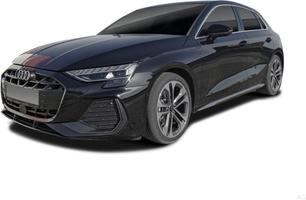
In a world where car upgrades often feel like saying, “Can I upsize that?”, it’s refreshing to hop into the updated Audi S3 Sportback.
The flagship RS 3 may still be the holy grail of hot hatch dreams, but with boosted engine outputs and upgraded tech, the S3 is stepping up.
Is the S3 Sportback the smarter pick over pricier rivals? It delivers serious performance and polish without stretching into RS 3 territory. With fierce competition in the segment, let’s see what this contender brings to the table.
The Abarth 124 Spider is a flawed but dramatic little car that should put a smile and a big, fat Italian moustache on any weekend warrior’s face.
As long as you don’t expect it to do much more than that in terms of its daily driving ability, it hits the nail on the head as a spicy alternative to the well-rounded MX-5 formula.
Whether it hails from Hiroshima or not is irrelevant. Its ancestors would be proud.
Now, if only all of them had this Monza Edition’s glorious exhaust…
The updated Audi S3 Sportback is a fun-sized dynamo with impressive outputs and athletic road manners. It’s missing a few premium features, but its compact size paired with a gutsy engine makes it a compelling option for drivers who don’t want to compromise on performance (just space).
I love the way the 124 looks. The more you pore over its small frame, the more you discover how different it is to its MX-5 counterpart.
It’s angrier. It’s more beautiful, and it’s definitely more Italian.
References to the original have been tastefully applied without transforming it into bloated caricature. These include the dual indents on the hood, the rounded-out light clusters, and the squared-off rear.
From there it goes beyond the original 124 and seems to take influence from contemporary Italian designs. I would argue there’s more than a little modern Maserati in this car’s tough wheelarches, scoopy mouth, rear light fittings and alloy wheel design.
The quad-exhaust pipes (actually just two tailpipes with four apertures) is arguably overkill, but adds a bit of extra aggression to this car’s rear. I’m not a fan of the oversized Abarth badgework on this car’s nose and rear. It removes a bit of subtelty from the equation, and the one on the bootlid is entirely unnecessary.
I’d also argue our test Monza Edition car looks best with its white paint and red highlights throughout. It’s also available in red and black.
The inside breaks the illusion a little. I’d argue not enough has been done to differentiate the 124 from its MX-5 roots here. It’s all Mazda switchgear.
There’s nothing wrong with that switchgear, of course. It’s well built and ergonomic, but I’d love to have something different to mix it up here. A Fiat 500 steering wheel… some switches that look cool but barely function properly… Just a little more of the Italian personality that’s so well expressed on the outside…
The seats are unique to the Abarth and are lovely, and the red highlights carry through them onto the dash and wheel stitching. The Monza edition has the official logo of the famed Italian circuit between the seats, with the build-number etched on it.
The S3 Sportback may be a small car, but its S design features, like the stylised blackout grille, matrix LED headlights, and 19-inch alloys with red brake calipers, give it a distinctly athletic and fun-loving vibe. It’s compact, but definitely not diminutive and carries serious road presence. It’s hot hatch meets fun-size.
Inside, the S3 looks fabulous. Integrated ambient lighting, a sharp dashboard treatment and a driver-focused cockpit all lend it a premium feel.
The front seats look properly sporty with their integrated headrests, and the quilted Nappa leather upholstery feels great, especially with the eye-catching red contrast stitching.
As for technology, it’s as high-end as you’d expect with a 10.1-inch touchscreen multimedia display and 12.3-inch digital instrument cluster taking centre stage.
The only drawback? No sunroof. Combined with the black headliner and compact cabin, it can feel a little gloomy at times. Still, it’s a cabin you’ll enjoy spending time in.
When it comes down to a practicality score, it’s only fair to compare a car like this to its direct competitors. A sports car like this is never going to take on a hatch or SUV in the practicality stakes.
Even so, and just like the MX-5, the Abarth 124 is tight on the inside. I fit inside it perfectly, but there are problems.
Legroom is super tight for me at 182cm tall. I had to adjust to having my clutch foot at an angle, otherwise I’d smack my knee on the bottom of the steering wheel, a problem that also makes this car tough to clamber into. The handbrake takes up a massive amount of room in the limited centre-console space, and as to storage in the cabin? You may as well forget it.
There’s a tiny flip-up binnacle in the centre, shallow enough maybe for a phone and nothing else, a slot under the air-conditioning controls seemingly designed expressly for phones, and two floating cupholders between the seats.
There’s no storage in the doors, nor is there a glovebox. You do get a rather large storage area behind the cupholders, accessible through a hatch opening, but it’s a little awkward to use.
Once you’re in, though, this car fits like a glove in terms of ergonomics. The wheel is nice and low, the seats are surprisingly supportive and your elbow rests nicely on the centre, leading your hand to the excellent short-action shifter. Headroom is tight no matter which way you cut it, but it’s such a small car you hardly expect more.
How about the boot? It’s better than you might hope, but with just 130 litres on offer it’s still no more than a weekender. It’s also less than the Toyota 86/BRZ (223L) which also have back seats, always handy no matter how small they are.
There’s no spare to be found. The 124 has a repair kit only.
Like most hatches, the front row enjoys the most space. While it’s cosy, it never feels cramped. The seats are firm yet comfortable, thanks to their adjustability and expandable under-thigh supports. Access is fairly easy with wide door apertures, though the low seating position might earn a few grunts, especially from taller folks.
Storage up front is well sorted, with a glove box, a small centre console, a dedicated phone cradle and a couple of cup and bottle holders. It’s about what you'd expect for a car this size, but it's enough to keep things tidy.
There are plenty of charging options, with two USB-C ports in each row and a wireless charging pad up front.
The multimedia system is intuitive and easy to use. The touchscreen is responsive, and wireless Apple CarPlay connected without fuss and stayed connected all week. Wireless Android Auto is available, too.
Built-in sat nav is clear, and I love the way directions pull through to the digital instrument panel. The Sonos sound system? Pretty darn good. My son and I had more than one mini-concert on the school run.
As for the rear row, it definitely reminds you this is a small car. At 168cm, I found it on the cramped side of cosy and my husband just laughed when I asked him to try it! The wheel arch also cuts into the door aperture, making access a little awkward. Best to think of it as occasional adult seating. But given the size, that’s no surprise.
Amenities in the back are decent with a couple of map pockets, cup and bottle holders, as well as a fold-down armrest, those USB ports and rear temperature control (but curiously, no fan control). The seats are comfortable enough, but space is limited. Realistically, it’s best suited for two passengers, not three.
Boot space is quite practical. The wide opening and manageable load lip height make it easy to slide items in and out. It offers 325L of space, less than its key rivals, but expands to 1145L with the rear seats folded flat. The handy 40/20/40 split also adds versatility. Under the boot floor, you’ll find a tyre repair kit.
I should make this clear at the beginning, this Monza edition is an ultra-limited trim, with just 30 cars available in Australia. Ours was number 26, a manual, wearing a drive-away price of $46,950.
That’s expensive, but not outrageously so. An equivalent high-spec manual MX-5, for example (GT 2.0 Roadster), comes in at a before-on-roads cost of $42,820. Looking outside Hiroshima, you can also be hopping into either a Toyota 86 GTS Performance manual ($39,590), or a Subaru BRZ tS manual ($40,434) for less.
So, the Abarth is the most expensive of a limited pool of choices. Thankfully it does offer a little more than just Italian spunk and some oversized scorpion badges.
Standard on every car are 17-inch gunmetal alloy wheels, a 7.0-inch touchscreen with Mazda’s rather good MZD software (but no Apple CarPlay or Android Auto support), a Bose premium sound system, heated front seats, and keyless entry with push-button start.
Performance-wise, every car gets four-piston Brembo front brakes, Bilstein suspension and a mechanical limited-slip differential.
The Monza edition adds the normally optional ($1490) contrast-stitched ‘Abarth’ red and black full leather seats, and the ‘Visibility Pack’ ($2590) consisting of full LED steering-responsive front lighting, rear parking sensors and camera, as well as washers for the headlamps. The pack also adds items to this car’s rather limited safety suite, which we’ll talk about later.
Most notably, this edition finally grants the 124 the exhaust system it deserves, the neatly named “Record Monza” system, which uses a mechanically actuated valve to have the 1.4-litre turbo barking and spitting away in a stupidly smile-inducing way.
Every 124 should have this system, it adds much needed drama to the engine note, but isn’t as obnoxiously loud as something like the outgoing AMG A45.
The Abarth isn’t as crazily specified as some of today’s run-of-the-mill SUVs, sure. But that’s not what this car is about, and for what it’s worth, it has just about everything you’ll really need and certainly more than the 86 or BRZ, helping to justify its extra cash ask.
The A3 Sportback comes in three trim levels, with the S3 technically sitting in the middle, just below the performance-focused RS 3. It's priced from $78,800, before on-road costs, and it shares the same platform and underpinnings as the Volkswagen Golf R. Surprisingly, our test vehicle isn’t significantly more expensive than its Golf R rival which comes in at $70,990 MSRP.
That makes it a more affordable option when compared to premium rivals like the BMW M135 xDrive which starts at $83,600 MSRP and the Mercedes-AMG A35 which comes in at $89,700 MSRP.
The update sees engine outputs improve with it gaining 17kW and 20Nm of torque, resulting in a total of 245kW and 420Nm.
Feature highlights include 19-inch alloy wheels, red brake calipers, electrically-adjustable and heated front seats (with expandable under-thigh support), rear privacy glass, quilted Nappa leather upholstery and 'S Sport' suspension with damper control which lowers the ride height lowered by 15mm.
The updated technology is well-rounded and now comes with wireless Apple CarPlay and Android Auto. There's also three-zone climate control, a 10.1-inch touchscreen multimedia display, a 12.3-inch digital instrument cluster, digital radio, four USB-C ports, a wireless charging pad, built-in satellite navigation and a 15-speaker Sonos 3D sound system.
Still, despite its premium hot hatch status, this grade skips a few luxury touches. Ventilated front seats, a heated steering wheel, heated rear outboard seats and a sunroof are all missing. The BMW M135 xDrive, notably, includes all of these as standard.
Even the powered tailgate with kick-functionality is an optional extra here, adding $660 to the price. At this level that should be standard.
Unlike the MX-5 and 86/BRZ combo, which offer a choice of naturally aspirated engines, the 124 carves its own path by dropping Fiat’s 1.4-litre ‘MultiAir’ turbo four-cylinder under the hood.
The word ‘turbo’ should rightly prick your ears in a car this size, but this this is hardly a high-performance unit when compared to its non-turbo counterparts.
Outputs are set at 125kW/250Nm. That power figure might seem a little low when compared to the new 2.0-litre MX-5 (135kW/205Nm) and 86 (152kW/212Nm), but the extra torque is welcome. It comes at a cost, which we’ll explore in the driving section of this review.
The S3 Sportback wears the quattro badge proudly, meaning it’s all-wheel drive and it pairs a tweaked seven-speed automatic transmission with a 2.0-litre turbocharged, four-cylinder petrol engine.
This update brings a bump in performance over the previous model, including the addition of a rear torque splitter. Power is now up to a gutsy 245kW and 420Nm of torque, launching the S3 from 0 - 100km/h in just 4.7 seconds. That’s proper hot hatch territory.
The 124 has a bold-souning official combined fuel consumption figure of 6.4L/100km, which I overshot by quite a margin. At the end of my week, (involving truly mixed freeway/city driving) I landed on 8.5L/100km, which was exactly on this car’s ‘urban’ estimate, so take that as a realistic figure.
It’s also less than I’d expect to consume in an 86 and perhaps also the MX-5, so all-in-all it's not too bad.
The turbo Fiat engine requires a minimum of mid-grade 95 RON unleaded to fill a 45-litre tank.
The S3 Sportback has an official combined fuel consumption figure of 7.9L/100km and a 55-litre fuel tank, giving it a theoretical driving range of up to 696km.
Its key rivals hover around similar numbers, so it's right on the mark for the segment. After a mix of long-distance drives and my usual urban errands, my real-world figure came in at 8.0L/100km - very close to the claim, which I’m pretty happy with.
I drove the 124 up NSW’s Old Pacific Highway from Hornsby to Gosford at dusk on a Saturday. Talk about the right car in the right place at the right time.
It was absolutely in its element, darting around tight hairpins, then blasting up straights, giving the short shifter a thorough workout. That new exhaust added 150 per cent to the theatre of it as each aggressive down-shift was accompanied by crackling, spitting and barking.
It’s an absolute joy, a proper nod to how cars used to be in the good old days of a ‘Sunday drive’, and thus a proper nod to the 124’s history.
And, of course, it has flaws. Many of them fall into the subjective category on a car like this, however.
Take the engine, for example. I’ve heard endless criticisms of it as laggy and annoying. And it is. Catch the wrong gear and get the revs too low and no matter how hard you stomp that go pedal, you will be stuck fighting a mountain of lag. Seriously. Several seconds of it.
Even trying to ascend my steep driveway had me concerned it was simply going to stall out in first gear.
It’s a bit strange, but then when you’re on the open road it’s worth relishing the challenge that it offers. Grab the wrong gear and this car will let you know how foolish you are. And yet, when you get it right it offers a surge of excitement in the straights that’s arguably far more dramatic than either the MX-5 or 86 can muster.
Another annoyance is the speedometer. It’s tiny and counts 30km/h increments all the way up to 270km/h. How fast was I going, officer? No idea. I have about two inches to tell whether I’m going between 30 and 90, so it’s anyone’s guess.
An obvious benefit of the MX-5 chassis is its go-kart handling, and it seems as though the excellent, fast and direct steering hasn’t been messed with, either. Sure, the suspension is a little crashy, and the convertible chassis a tad rattly, but it’s all part of being that much closer to the road. It would be tough to ask to find a better transmission with its fast, short action and sensible ratios.
Ultimately, the 124 is just plain (literally) old-fashioned weekend fun, offering a challenging but rewarding drive.
The S3 Sportback sounds as mean as it looks, and it delivers on that promise with effortless grunt. Acceleration is immediate, with plenty of power on tap when you need it. It’s just fun all around.
The lowered sports suspension and wide tyres do bring some extra noise into the cabin, even at lower speeds. You might find yourself repeating things to rear passengers now and then, but it never feels overwhelming.
Steering and suspension are on the firmer side, so yes, you’ll feel the bumps but the payoff is sharp, responsive handling. Quick lane changes and winding coastal roads are where this car shines.
Visibility is about what you’d expect from a low-slung hot hatch. The pillars don’t obstruct the view, but sitting beside a towering SUV at the lights can make you feel a bit... compact.
Cornering is a strong suit, thanks to the car’s wide stance and AWD system. It feels confidently planted in most conditions. That said, I noticed the occasional wobble through the rear frame on rough sections in heavy rain.
Its compact size makes parking a breeze, especially with the help of multiple sensors. The reversing camera is crisp, but at this price point, the lack of a 360-degree camera view feels like a missed opportunity.
No Abarth model carries a current ANCAP safety rating, although the MX-5 this car shares most of its underpinnings with carries a maximum five-star rating, as of 2016.
Feature-wise, you get dual front and side airbags, “active head restraints”, seatbelt pre-tensioners and something called “active pedestrian protection”. The regular suite of stability controls are also present, alongside a reversing camera and sensors.
There’s no auto emergency braking (AEB - which has now become an ANCAP requirement), active cruise or any lane-assist technologies, but the ‘Visibility Pack’ standard on the Monza edition adds Rear Cross Traffic Alert (RCTA) and Blind Spot Monitoring (BSM).
Four airbags and rudimentary active safety is a let-down, but probably not one that this car’s target audience will particularly care about.
The S3 isn’t covered by its 2WD sibling's maximum five-star ANCAP safety rating but it is well-equipped with safety features all the same.
Safety equipment includes blind-spot monitoring, side exit assist, rear cross-traffic alert, lane departure alert, lane keeping aid, park assist, reversing camera, front/rear parking sensors, forward collision warning, autonomous emergency braking and adaptive cruise control with stop and go function.
It also has six airbags but misses out on a front centre airbag. None of the driver assist systems are intrusive to daily driving, which I always like.
The rear row has ISOFIX child seat mounts and three top-tether anchor points but only two child seats will fit.
It’s a shame that the 124 is only offered from Abarth with a three-year 150,000km warranty. Its counterpart MX-5 is now offered with a five-year unlimited promise, and Fiat could really do with a bit of positive warranty coverage right now.
You’ll need to service the 124 once a year or every 15,000km. Capped price servicing? Ha. No such thing over at Abarth, apparently. You’re on your own.
Audi backs the S3 Sportback with a five-year/unlimited kilometre warranty, which is on par with its European rivals. A five-year pre-paid servicing plan is available for $2890 which is cheaper than pay-as-you-go and reasonable for the class.
For those looking to go the extra mile, the 'Audi Advantage' package lets you extend the warranty and capped-price servicing by an additional two years, which represents solid value overall.
Servicing intervals are every 12 months or 15,000km, whichever comes first.