What's the difference?
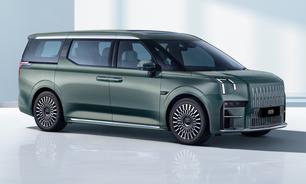
If Rolls-Royce was to make a Kia Carnival then the Zeekr 009 would probably be it, but without the stratospheric price tag.
Zeekr is Volvo’s sister from China under its massive Geely parent company and the 009 is a fully electric, luxury people mover that arrived in Australia to join the small X hatch and the forthcoming 7X mid-sized electric SUV.
The Zeekr 009 we tested is the seven-seater version and with a price of $135,900, before on-road costs, it's double the price of the fanciest Kia Carnival. Then again, the 009 is about $85,000 cheaper than the Lexus LM500h hybrid people mover.
If you are a family with more than two or three children, or a chauffeur service operator, then the 009 could be a much more practical and luxurious alternative to a high-end SUV. And, as I'll show you, even at this price it's a bargain.
ONE of the great motoring successes of the past decade has been the Mercedes-Benz GLA, catapulting the brand to unparalleled prominence in the premium small SUV field and kicking off the posh little coupe-hatch crossover craze.
Cynics might say that it is essentially a jumped-up A-Class hatchback, much like the Subaru XV is basically an Impreza in stilettos. But while the small German crossover is built on the same MFA2 platform as its smaller transverse-engined Benz brethren, no body panels are shared, granting it a distinct look and personality. Unlike the little Suby…
The H247-series GLA launched in Australia in 2020 is second-generation, featuring a longer wheelbase and appreciably more space, but a shorter overall length than the popular original from 2013. It's also substantially taller.
Here we take a long, hard look at the bestselling GLA 250 4Matic.
The Zeekr 009 is difficult to fault. It's a luxurious, practical vehicle that's easy and enjoyable to drive. There's no SUV on the planet that can compete with its practicality, whether it's room for people and their cargo, or just getting in and out of the vehicle. The only thing I would change about the 009 in terms of family use are the captain's chairs in the second row; a bench seat here for three people would be more practical for a family. If, however, you are using the 009 as a chauffeur car then the captain's chairs would provide the comfort and luxury jet-setting executives would welcome.
With Mercedes-Benz’s vast number of SUVs, there is room for an urban luxury crossover niche, and the GLA delivers in spades.
Indeed, in 250 4Matic guise, it is that rare thing – a high-riding hatch with dynamics to shame most dedicated pocket-rockets. It really is a hoot if you find the right road, regardless of weather conditions. The Benz has towering talent.
However, even without desirable options like adaptive dampers and a full suite of driver-assist safety technology, the GLA is expensive, does not quite carry off the price tag from an interior quality point of view, and struggles to maintain the degree of comfort and refinement expected from a Mercedes – with or without the $3K necessary to score adaptive dampers.
Still, especially because of the way the GLA looks, goes, stops and steers, if you can afford it, you’ll be rewarded. There’s never been a more rounded GLA.
You might think that there's only so much you can do to make a people mover good looking but Zeekr’s futuristic and alien-like take is inspired.
I love to sheer bluntness of the face. I love the chiseled looking bonnet, the LED running lights and the little show they put on every time you walk to or from the car. Even the side profile of the car sitting low and planted on its air suspension looks sleek and stylish. And I love the roulette-wheel-style alloys wheels.
I was impressed by the interior of the Lexus LM500h but the interior of the 009 exceeds even that with modern and youthful styling wrapped in beautiful soft leather upholstery. The second-row seats are just absolutely sumptuous and every single touch point throughout the cabin feels luxurious.
The 009 doesn't match the size of the gigantic entertainment screen in the second row of the LM500h but I found the drop down 17-inch 3K entertainment to have an even more modern look and feel.
Looking like a mini-me GLC, today's GLA trades some of its predecessor’s edgier design elements like the slammed roof and exaggerated broad-shouldered stance for a more amorphous if elegant appearance. Even with the cliché plastic cladding around the squared-off wheel arches, it’s still a looker.
The net result is arguably the most attractive of all the MFA2 A-Class offshoots. It sits well within the Mercedes hierarchy of SUVs, bringing a swoopy coupe-like silhouette compared to the ultra-upright GLB.
Along with being 30mm wider, it’s also visibly taller than before, with a handy 213mm of ground clearance compared to just 157mm last time around. And the wheelbase has been stretched to the benefit of rear-passenger room – a bugbear of the old GLA. That's progress.
When it comes to practicality, no SUV on the planet can beat a people mover for space, storage and utility. The Zeekr 009 is beautifully luxurious with outstanding practicality.
Air suspension can lower the vehicle to an entry height that is just a small step into a cabin through the power sliding doors and while space in the second row is outstanding, entry to the third row is easy with the second-row seats folding forward at the touch of the button.
This third row by the way is the most spacious I have encountered with excellent leg and headroom.
Gigantic door pockets, a folding table between second-row seats, great storage under the floating centre console and in the centre console bin, cupholders in all three rows along with wireless charging pads and USB ports everywhere make this a practical and versatile cabin for families or executives.
Boot capacity with all seven seats in place is 574 litres and with the third row folded flat there's 2979 litres of volume.
A front boot can be found under the bonnet but will probably just fit the charging cable.
Compared to before, the 2021 GLA is some 122mm taller, so ushers in a higher hip point for loftier seating – reducing that jumped-up hatch feel. Headroom improves obviously, as does rear legroom, a corollary of a 30mm wheelbase stretch (to 2729mm).
Wide apertures also make entry into and out of the German-built GLA child's play, though the solid heft of their doors is serious business at this end of the segment, very satisfyingly Teutonic and totally on-brand. This is something you won’t enjoy in a Subaru XV.
Then you s-c-r-a-p-e the underside of the front doors on the pavement literally every time you swing it to get out, and wonder whether Mercedes engineers have ever been to Australia. This fail drove us spare. Heaven help the GLAs in towns and cities with bluestone sidewalks. Maybe all that extra AMG packaging is the culprit.
Still, most of the other basics are spot-on and can’t really be faulted; cosy yet spacious for four adults – especially up front, ample vision, an excellent driving position aided by heaps of seat and steering wheel adjustability, cosseting front sports buckets that you just sink into, torrents of ventilation from those delectable turbine vents and stacks of storage. Collectively they make the GLA a welcoming, opulent place to travel in. Only the hapless fifth occupant squished between the outboard rear-seat passengers might think otherwise. But nobody buys this Benz for carting people around. That's the GLB's job.
Several years ago, Daimler poached a senior Audi designer and since then Mercedes’ dashboards have morphed into a multi-coloured multimedia diorama of touchscreen technology that threatens to completely take over the universe. Choose the right combination of colours and lighting and it's like your very own White Night on wheels. Starting with 2018’s A-Class, the striking, spangly MBUX system that underpins all this has come to be widely admired and imitated. For aesthetics anyway, with its vivid hues, panoramic displays and simple, tiled applications, it’s been a real trip.
Anyway, back to reality. From a tactility and functionality point of view, there’s still work to be done.
Access to the multimedia (including our GLA's banging optional audio system) and car settings areas is possible via a mildly fiddly finger-pad arrangement down forward in the centre console, or smaller yet much more annoying thumb sensor tabs on the wheel spokes. These are not easy to modulate on the move. Additionally, their menus can be confusing to navigate through and sometimes counterintuitive in operation. Mercedes obviously realises this as a quick-guide pamphlet is provided on old-fashioned cardboard paper. How quaint.
Eventually all areas can be mastered over time, but the functionality is complicated and may overwhelm the not-so-tech savvy. Additionally, the ‘Hey, Mercedes!’ voice control is impressive for getting MBUX to perform basic multimedia and vehicle settings-related changes, but it too-often erratic, unreliable and ultimately frustrating for more complicated commands. Perhaps elocution lessons on behalf of the operator may help.
But not as much as the profound disappointment we endure from the cheapness of some of the materials, the wincing cellophane-like sounds when pressing on some of the surfaces such as the door cards, or that emanate after a particularly bumpy section of bad roads. Sheeny reflections and hard textures in a car optioned with extras that total up to nearly $82,500 just don’t cut it.
At least in this latest-gen GLA, the rear seat area seems much improved over the previous models, with more space, comfy and supportive seating (remember ours featured the $607 sliding function that ought to be standard) and a reclining backrest. All amenities are present, with deep pockets, fresh air from twin vent outlets, reading lights and thoughtfully placed armrests – but, again, the latter’s extendable cupholders feel brittle and cheap.
Further back, the 435-litre cargo area is sufficiently sized and practical for smaller family use (at last), aided by a 40/20/40 backrest fold and that slide-able cushion to extend capacity further. There is no spare wheel, but a tyre inflation kit is fitted in lieu.
Overall, then, better than before, with that fundamental rock-solid heft, luxurious aura and alluring premium-car aroma. The dazzling MBUX screen-related visuals, too, are endlessly entertaining to explore when the vehicle is not moving, but the GLA’s cabin is still not quite up to Mercedes’ reputation for exacting over-engineered excellence.
Or even to the standards of some mainstream alternatives.
The list price of the Zeekr 009 seven-seater is $135,900 before on-roads. There is also a six-seat version for $139,900 which swaps out the third-row bench seating for two separate, more luxurious seats.
We’ve tested the seven-seater version here but the standard features on both are almost identical.
Coming standard on the seven-seat 009 are LED headlights and LED tail-lights, power sliding side doors, a power tailgate and 20-inch alloy wheels clad in Michelin Pilots for EV tyres.
Inside, seven seats come standard with two captain’s chairs in the second row with heating, ventilation and massaging functions, and of course these are also fully power adjustable.
Standard, too, is a 30-speaker 3000W Yamaha sound system with speakers in the head rests. While I’m no audiophile, I have experienced the best sound systems offered by carmakers and this is up there with the most exceptional - Mark Levinsons included.
Folding out of the ceiling is a 17-inch 3K OLED screen for second and third-row passenger entertainment.
There’s four-zone climate control, sun shades for all side windows, a glass roof, and an 8.6-litre fridge large enough for six cans of drink.
Up front the seats are power adjustable, heated and ventilated too, there’s a 15.05-inch media screen, a 10.25-inch instrument cluster, a 35.95-inch augmented reality head-up display, sat nav, Apple CarPlay and Android Auto.
If you're wondering how all this adds up to $136,000 you can't forget that the Zeekr 009 has one of the largest batteries available in a production car. The 116kWh battery is only matched by Mercedes-Benz's EQS and BMW's i7 and these cars cost hundreds of thousands of dollars.
Batteries account for a large portion of the cost of an electric car and so at under $140K, and with all of the features it has as well, the Zeekr 009 is a relative bargain.
The latest GLA’s evolved dimensions is presumably to put some space between it and its GLB 5+2-seater SUV fraternal twin, giving Mercedes-Benz blanket SUV market coverage. From GL (for Geländewagen, or off-road vehicle) A, B, C, E and S (as well as the G-wagen icon that started it all back in '79), there’s a premium option for everybody… if not every budget.
In the GLA’s case, the entry-level 200 front-driver starts from $55,100 (before on-road costs); moving up to the $66,500 250 4Matic, and then to two performance powerhouses – the AMG 35 4Matic and supernaturally fast AMG 45 S 4Matic+ flagship, from $82,935 and $107,035 respectively.
Even the base GLA 200 includes new and improved autonomous emergency braking (AEB) among other safety-related technologies, as well as the brand’s glamorous MBUX multimedia system with wireless Apple CarPlay/Android Auto, digital radio, satellite navigation, reverse camera, climate control, wireless phone charging, powered tailgate, automatic parking, auto high beam, rain-sensing wipers and 19-inch alloys.
All the extra techy stuff doesn’t come for free though – prices jump almost $10,000 over the less-powerful previous-generation GLA 180 that the 200 replaces – though we expect the former badge to return in time.
In contrast, the GLA 250 4Matic is ‘only’ $3500 more expensive than its predecessor, gaining a terrific 2.0-litre four-cylinder turbo instead of a Renault-Nissan-sourced 1.3-litre turbo, all-wheel drive (with an Off-Road Engineering Package that gives the car some very light off-road capability), and other niceties such as heated electric front seats with memory function, a panoramic sunroof, more direct steering and lowered suspension (for a sportier drive).
Note that adaptive cruise control costs extra – a curious oversight at this price point. It’s part of a $1531 optional Driving Assistance Package, which also includes Active Lane Change Assist, extended semi-autonomous driver assistance in traffic jams (meaning full stop/go capability) and route-based speed adaptation. Do it.
Our test car had it, along with a $915 Vision Package (includes fancier adaptive headlights and a 360-degree camera), $1915 Sports Package (with AMG styling upgrades inside and out, perforated disc brakes, privacy glass, shift paddles and lowered ‘Comfort Suspension’), a Night Package (less brightwork, more black finishes) and sports direct-steering with corresponding wheel), $1531 20-inch AMG Black alloys, a $1915 Communications Package with upgraded audio and head-up display among a litany of other gear, $2838 AMG Exclusive Package with adaptive dampers, cooled as well as heated front seats, an ‘Energising Comfort’ ambience-enhancing 'experience' and special leather upholstery, $1531 Patagonia Red metallic paint and $607 rear-seat fore/aft adjustment. Total cost after the added luxury car tax: $82,446. Gulp.
Not cheap in anybody’s language. Nor, for that matter, are the GLA’s rivals, which owe their existence to the original’s spectacular sales trajectory and the trail that this blazed last decade.
Lexus’ loaded UX 250h hybrid AWD and Audi Q3 Sportback 40TFSI quattro slip slightly below the standard GLA 250 for both pricing and power, while the BMW X2 M35i and its Mini Countryman JCW cousin, along with Jaguar’s E-Pace E250, also offer in-the-same ballpark pricing but quite a bit more space as well as pace.
It’s also worth noting that Volvo’s XC40 T5 AWD conspicuously undercuts all from just $57,000, though now we’re talking about putting square pegs into round holes. Speaking of which…
The Zeekr 009 has two electric motors - one at the front and one at the rear - with a combined output of 450kW and 693Nm. That's Lamborghini Huracan stuff! Almost identical power, but this has more torque.
Not only does this provide all-wheel drive and fantastically controlled traction, but the way the power and torque is delivered is simply superb. This is a seven-seater rocket that will never leave the ground - hopefully.
The nature of electric motors - especially these ones - are the perfect fit for this vehicle, providing a serenely quiet, luxurious and effortlessly powerful experience.
Mounted transversely, Mercedes’ M260 1991cc 2.0-litre four-cylinder petrol engine features a twin-cam, 16-valve design, a twin-scroll turbocharger and variable-valve timing, to help deliver 165kW of power at 5500rpm and 350Nm of torque at a low 1800rpm. With an impressive 97.2kW per tonne, it can hit 100km/h in 6.7 seconds, on the way to a 240km/h top speed.
All four wheels are driven by an eight-speed dual-clutch transmission (DCT), though most of the torque at lower speeds or during reduced throttle loads is delivered to the front wheels until extra traction is required out back. The gearbox is one of the very best of its type we’ve experienced – seamless, strong and largely lag-free.
The Zeekr 009 has a 116kWh battery which is enormous - almost the biggest you can get in Australia currently. This lithium-ion battery has a range of 582km (WLTP). There are petrol cars that can’t go that far on a tank.
The battery has an AC charging capacity of 11kW and DC charging capacity of 205kW, allowing you to charge from 10-80 per cent in 39 minutes.
Energy consumption is officially 19.5kWh/100km and we’ve been getting an average of 23.5kWh/100km.
That’s because this thing is so heavy at 2.9 tonnes.
Weighing in at 1668kg (kerb), and with a bluff nose and high ground clearance also not helping, we didn’t expect great fuel economy, particularly given how hard and fast the GLA 250’s performance bandwidth is. It’s tempting to just blast your way from point A to point B.
However, at the pump we averaged 9.8 litres per 100km, which isn’t too bad at all considering the available muscle. The official figure is 7.5L/100km, for a carbon dioxide emissions rating of 170 grams per kilometre. With a 51-litre fuel tank, the theoretical range is around 680km.
Note that the GLA 250 requires 95 RON premium unleaded petrol as a minimum.
The Zeekr 009 is one of the largest vehicles on the Australian market at almost three tonnes and 5.2 meters long but it's also one of the most comfortable, and one of the easiest and most enjoyable cars I've driven.
This is for three main reasons. The first is the air suspension which provides a beautifully comfortable and composed ride.
The next is those electric motors which provide so much grunt but in a very predictable way that's smooth, silent and instant, allowing you to move through traffic or drive confidently on a motorway.
Finally the visibility, steering and pedal feel all combined to provide an effortless piloting experience through narrow laneways, carparks or while parking.
Adding to the enjoyment of driving this people mover is a comfortable, plush interior that's so well insulated that you'll coast serenely through traffic.
As for handling, I have also driven the 009 on a race track at Sydney Motorsport Park. I pushed it through a couple of corners where even some sports have cars struggled to maintain their composure and this massive people move performed surprisingly well, staying planted through the corners.
I've also taken the 009 onto a skid pan and intentionally tried to slide the vehicle and even under these controlled conditions it showed no sign of roll or loss of control.
Having taken the 009 through probably the widest range of testing I've ever put a car through I'd say that it feels safe and secure in pretty much any real-world condition you will experience.
A soaring 2.0-litre turbo engine application, this is a slick, stirring and robust performer that can also do efficiency as effortlessly as launch the GLA 250 4Matic towards the horizon. Let’s not mince our words. This is a fast and fiery mover.
Three drive modes – Eco, Comfort and Sport – provide a wide spectrum of acceleration and throttle responses, and all deliver precisely what you’d expect. Eco’s fine for pottering around town smoothly and serenely; Sport morphs into a searing and seamless speed demon; and the default Comfort sits somewhere in the middle as the best of both worlds. There really is no faulting Mercedes’ M260 masterpiece.
The DCT also happens to be one of the better dual clutch autos, avoiding the lag and clunkiness pitfalls usually associated with this sort of gearbox. It’s even comparatively smooth off the line on hills. Ours came with the optional handy set of manual-mode paddle shifters, adding a welcome level of interactivity autos tend to overlook. Too bad Mercedes persists with that fiddly column lever that is forever prone to knocking the car out of drive. Even after 15 years, it's still so annoying.
What all this means for the urban driver is strong acceleration for flitting in and out of traffic gaps, as well as incredibly instantaneous point-to-point responses for commanding manoeuvrability, thanks to ultra-eager steering and assisted by outstanding brakes.
With struts up front and a multi-link rear end as standard, the GLA 250’s chassis, too, is a transformative for what is essentially a high-riding hatchback – but only if your pockets are deep enough.
Fitted with that near-$3K AMG Exclusive Package that includes adaptive dampers, our Benz displayed a definite hot-hatch attitude that really would make it the darling of Golf GTI owners who’ve outgrown their rides but not their girl/boyracer desires. Superb handling and hunkered-down roadholding really do make this the driver’s premium compact crossover. You can pretty much point and shoot this Merc as you might a Golf R, and likewise in most weather conditions thanks to all that reassuring tenacious grip.
Plus, if you’re put off by the hard ride in Sport, the Individual mode allows the driver to engage the soft damper mode while the engine and steering retain the hardcore settings. It’s a win-win situation – as long as you can stretch to that AMG Exclusive pack. We strongly recommend it, given the balance between ultimate high-speed control and comfort.
However, while this is all good news for rural and country folk seeking hot crossover fun, back around town, poor urban road conditions can reveal a flaw in the chassis’ ability to properly smother bumps and ruts. It’s the small frequency stuff that seems to transmit through, never really settling down.
The result is a jittery ride, that may somewhat undermine the GLA’s upmarket sheen. There’s also a fair degree of road noise coming through. Perhaps sticking with the 19-inch alloys instead of those lovely 20-inch rims is the solution here.
The Zeekr 009 hasn’t been tested by ANCAP yet, but it comes with auto emergency braking (AEB), front and rear cross-traffic alert, lane keeping assistance, auto parking, and blind spot warning. You’ve got airbags covering all three rows and a centre airbag up front.
For child seats there are four ISOFIX points in the second and third rows and four top tether points.
Mercedes-Benz is a long and proud pioneer in passenger-vehicle safety, and the GLA is no exception… except that for the full suite of safety assistance you need to fork out more in the GLA 250.
The standard roll-call of advanced driving assist systems includes nine airbags (front, pelvis side and window bags for driver and front passenger, side airbags for rear occupants and a knee airbag for the driver), AEB with pedestrian and cyclist detection, and blind-spot monitoring with an exit warning that alerts the driver of approaching cyclists or vehicles if the door begins to open into their path.
The AEB system has a working range of between 7km/h and 200km/h.
Active Lane Keep Assist, an active bonnet that raises to reduce head injury, Cross Wind Assist, Pre-Safe accident anticipatory systems and traffic sign recognition tech are also present.
Additionally, front and second-row seatbelt reminders are fitted, as well as two rear-seat sited ISOFIX child-seat anchorage points and a trio of child-seat tether points behind the backrest.
But you’ll need to fork out another $1531 for the optional Driving Assistance Package, which includes adaptive cruise control with full-stop/go, Active Lane Change Assist, extended semi-autonomous driver assistance in traffic jams, and route-based speed adaptation.
At the time of publishing, the H247-series GLA’s crash test rating results had not been published, but the closely-related GLB tested in 2020 managed a full five stars.
The 009 is covered by Zeekr’s five-year/unlimited kilometre warranty. The battery is covered by an eight-year/160,000km warranty.
Servicing is recommended every 40,000km or every two years, whichever comes first. There’s also five years/unlimited kilometres of roadside assistance and five years of connected services as standard.
Unlike many luxury brands that persist with a sub-par three-year warranty, Mercedes-Benz offers a five-year/unlimited kilometre warranty.
Intervals are every year or 25,000km, with a capped price service plan starting at $550 for the first year, $750 for the second year and $1250 for the third year, totalling $2550. Alternatively, buyers can also choose a Service Plan, starting at $2050 for the first three years (saving $500 from the normal capped-price service plan), $2950 for four years and $3500 for five years.