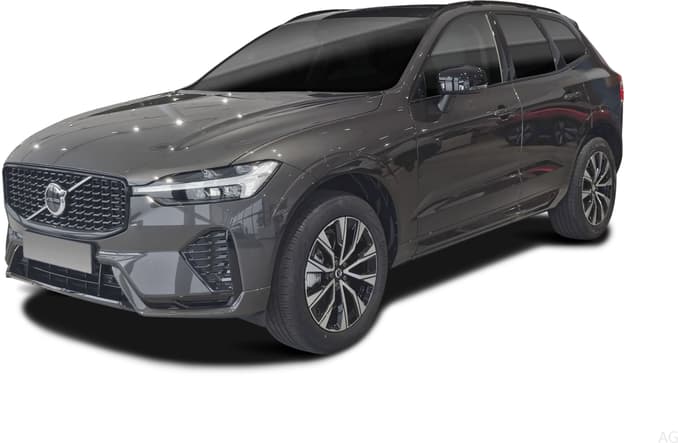
The 2024 Volvo XC60 range of configurations is currently priced from $47,999.
Our most recent review of the 2024 Volvo XC60 resulted in a score of 8.4 out of 10 for that particular example.
Carsguide Contributing Journalist Emily Agar had this to say at the time: The Volvo XC60 Ultimate B5 Bright is a fine example of a family car that actually caters to families. There are plenty of practical features inside to help everyday living and it has a good amount of occupant and boot space for the class. I like how it handles on the road and its running costs are reasonable for a luxury SUV. It's not as flashy as its rivals but it's still stylish.
You can read the full review here.
This is what Emily Agar liked most about this particular version of the Volvo XC60: Safety feature-heavy without being intrusive, Large and comfortable cabin space, On-going costs are reasonable
The 2024 Volvo XC60 carries a braked towing capacity of up to 2400 Kg, but check to ensure this applies to the configuration you're considering.
The Volvo XC60 2024 prices range from $60,610 for the basic trim level SUV Plus B5 Mhev to $109,340 for the top of the range SUV T8 Black Edition Phev.
Although both these cars are similar in many ways, there’s one area where they take difference philosophies. And that’s in the way their hybrid systems are configured and prioritised.
While the Lexus is more of a conventional hybrid with the electric motor doing a lot of the heavy lifting, the Volvo is what’s called a mild hybrid., As the name suggests, that means the electric power is limited to a 10kW boost when taking off or when the driver requires maximum acceleration.
A mild hybrid layout does still operate the stop-start function and can harvest energy when slowing down, so it’s still a worthwhile slice of tech, but it won’t affect fuel consumption as much as the Lexus’ full hybrid system.
Reliability is a bit of an unknown with any new car, but it’s fair to say that the Lexus’ reputation will count for something come trade-in time. Not to mention that, as the more hybrid-focussed of the pair, the Lexus might also be a little more future-proof.
Show more
Australian delivered Volvo XC60s built between 2009 (when the vehicle was launched here) and 2017 were built at Volvo’s plant in Ghent, Belgium. For the current-model XC60 (launched in 2017) production moved to the Gothenburg plant in Sweden.
Show more
This is a pretty common complaint from owners of a lot of European makes and models. To maximise braking performance, a lot of manufacturers (including Volvo) use a relatively hard brake pad and a relatively soft brake rotor. With the result that by the time the brake pads are worn enough to be replaced, so too are the rotors (discs).
However, the general expectation is that a vehicle should be capable of covering about 60,000km before this work needs to be done, so the 30,000km on your car suggests the brakes work harder than perhaps you think they do.
As for the price, I’d assume that to be using genuine Volvo parts. Shopping around and using aftermarket replacement parts could almost halve that quote.
Show more
The interior style of the XC60 can be summed up in two words - understated elegance.
The cabin isn't as flashy or wowing as some of its rivals and that might be because it lacks the visual impact of customisable ambient lighting, or because the chunkier dashboard looks more solid and dependable than sleek and fancy.
There is a plethora of soft-touchpoints throughout the car and visual highlights like chrome accents and a solid steering wheel. And although the dashboard is robust looking, it features beautiful-looking technology to complement the overall look.
The B5 boot space is a great size at 483L. The T8 Recharge has a slightly smaller boot space capacity of 468L but you can boost the cargo capacity to 1395L if you pop the back seats down.
The loading space is level and the back seat has a 60/40 split and a ski-port door to open up storage options. There is a temporary spare tyre underneath the floor. You can adjust the height of the car using the air suspension and all variants enjoy a hands-free powered tailgate.
The XC60 only has one included paintwork option – ‘Black Stone’, all others are at-cost options.
There are a total of nine colours to choose from - ‘Black Stone’, ‘Onyx Black’, ‘Denim Blue’, ‘Fusion Red’, ‘Thunder Grey’, ‘Platinum Grey’, ‘Silver Dawn’, ‘Bright Dusk’ and, ‘Crystal White’.
The XC60 is very well specified even before you add option packs.
The standard features list includes four-zone climate control, pre-entry climate control, a 12-inch digital instrument cluster, a 9.0-inch touchscreen multimedia system, 360-degree camera system, front and rear parking sensors, adaptive cruise control with lane-keeping and stop and go functionality, adaptive power steering, full LED external lights, traffic sign recognition, a tyre pressure monitoring system, leather-accented upholstery, premium trims, keyless entry, a cargo blind, a powered tailgate, electric front seats, electric lumbar support, extendable under-thigh supports and two-way memory function for the front seats.
| Volvo XC60 Model | Body Type | Specs | Fuel Consumption |
|---|---|---|---|
|
Recharge Plus T8 Phev
|
Body Type: SUV | Specs: 2.0L Hybrid 8 SP AUTO |
Fuel Consumption:
1.6L/100km
|
|
Plus B5 Mhev
|
Body Type: SUV | Specs: 2.0L PULP 8 SP AUTO |
Fuel Consumption:
7.6L/100km
|
The XC60 comes with five seats in a 2/3 seat configuration. The rear seats feature a 60/40 split with a ski-port.
Even on the base model, the front seats are electric and feature electrically adjustable lumbar support, under-thigh support and side-bolsters. The front seats have a two-position memory function and are heated.
In certain option packs, you can upgrade both front seats to also feature a ventilation and massage function.
Leather-accented upholstery comes standard in a choice of two colours - black or 'Blond' (grey).
Optional at cost options also include Nappa leather upholstery.
There are two engines available for the XC60, a mild-hybrid engine that is seen in the B5 variants and a plug-in hybrid engine for the T8 Recharge models.
The B5 has a 2.0-litre, four-cylinder turbo-petrol engine with a maximum power output of 183kW and 350Nm of torque. It is an AWD and has an eight-speed automatic transmission.
The T8 Recharge has a 2.0-litre, four-cylinder turbo-petrol engine with a maximum power output of 340kW and 709Nm of torque. It is an AWD and has an eight-speed automatic transmission.
The XC60 B5 has a 0-100km/h sprint time of 6.9-seconds and a top speed of 180km/h.
The XC60 T8 Recharge has a 0-100km/h sprint time of 4.8-seconds and also has a top speed of 180km/h.
B5 variants have an official combined cycle fuel figure of 7.6L/100km and a large 71L fuel tank. Expect a driving range of around 934km on average.
The T8 Recharge has an 81km pure electric driving range and an official combined fuel consumption of 1.6L/100km (WLTP). To get from 0-100 per cent charge, you will see a charge time of around five hours when plugged into a 3.6kW AC charging port. It has a Type 2 charging port.
Volvo recommends a minimum 95 RON unleaded petrol to be used.