What's the difference?
Toyota’s smallest SUV has picked up a few subtle styling and tech tweaks as part of a minor model year update.
It goes up against familiar names like the Nissan Juke and Kia Stonic in the light SUV segment, as well as hybrid rivals like the newer Suzuki Fronx and Chery Tiggo 4.
But does the Toyota still have enough appeal this late in its life cycle?
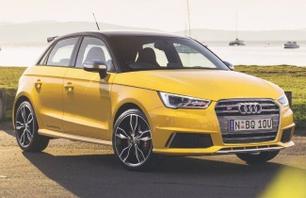
Spoilt. That's what we are. If you're in the market for a hot hatch, you can have your pick of German-built and French ones from as little as $27,000. There isn't a dud among them now that the VW Polo GTI has had a bit of an update and you can pick and choose your style. Audi's S1 is aiming to be king of the kids with its stiffly-priced S1.
Set the finances aside and consider for a moment what's on offer. As it turns out, a lot.
The Toyota Yaris Cross Urban is a city-savvy SUV that’s easy to park, nimble in traffic, and relatively fun to drive. It’s cute as a button on the outside, but the cabin doesn’t quite match the price, and some of the tech feels a little behind the times compared to rivals. The hybrid powertrain definitely earns it points but is it worth the jump in price over its rivals? A hesitant yes, because who doesn't like efficiency? But it needs a cabin upgrade to stay truly competitive in our market.
Cars this small shouldn't be this fast and useable at the same time, but the Audi S1 is. It isn't without its problems - the ride is harder even than the Fiesta ST which might weary some prospective buyers.
It's also a bit difficult to justify the price - in its basic form it's missing a few creature comforts that you'd expect in a $50,000 car - reversing camera, high-res screen, that sort of thing.
However, in the hot hatch world, those things don't matter. It has the bragging rights, the tech and the outright blinding speed to take on the bonkers Focus ST and equally zany Megane RS. And even the Audi S3.
The Yaris Cross is genuinely adorable. It's compact enough to slip into tight city spaces, yet proportioned well enough that it never looks toy-like. Its upright stance gives it a bit of attitude, and the chunky black plastic moulding around the base actually works in its favour, adding a tough, almost adventurous edge.
The rear is one of its best angles, with crisp LED tail-lights and a clean, sculpted shape that gives it more presence than you’d expect from something this small.
Inside, though, things don’t climb to the same heights. There’s a lot of hard plastic throughout, and while the synthetic leather and cloth upholstery looks decent, it doesn't elevate the space. The tech is well positioned and the layout is tidy, making it a pleasant cabin overall but there’s an unmistakable sense of 'nice, but not quite enough,' especially given what you’re paying.
The A1 is so small it starts to strain Audi's design language. When you cram on the S-style bumpers and raccoon-eyed trim on the hatchback, it's starts to look a bit busy.
It isn't quite a shrink-wrapped A3 - Ingolstadt's designers know better than that - but it's full of Audi design cues, such as the strong, light-catching character lines, distinctive LED daytime running lights and fondness for big wheels.
Inside is along the themes of the A3, with what are becoming Audi's trademark; round eyeball air-con vents, the manual fold-down screen familiar to Q3 owners (but smaller) and a good clear dash. The handbrake jars slightly as it feels cheap to hold and wobbles a bit.
The S Sport seats are big and comfortable, and the top half of the backs are capped in plastic, which was colour-coded on our car. The rear passengers will certainly get an eyeful of whatever terrifying hue you've chosen, so choose wisely.
Despite the five doors, the back seats are occasionals, like the Mini the A1 is gunning for, and the boot is very small, but okay for shopping for couples or singles.
The Yaris Cross range spans four grades, and for this review we’re in the second-from-the-top Urban. The GR Sport is technically the flagship, but the Urban feels like the smarter pick as it carries most of the premium features without climbing the price ladder just to wear a GR badge. A badge that doesn’t mean as much here as it does elsewhere in Toyota’s line-up. A GR performance hot hatch it is not.
Priced from $36,930 before on-road costs, the Urban front-wheel drive is pricier than some of its closest rivals. The Nissan Juke Ti is a touch pricier at $37,940, while the Kia Stonic GT-Line is a much cheaper $32,480. Both competitors also offer rear USB ports, and the Juke adds dual 12.3-inch displays and a much larger boot, so the premium you’re paying here really comes down to the Urban’s hybrid powertrain.
Other hybrid rivals include the freshly launched Suzuki Fronx (from $28,990) or the slightly larger Chery Tiggo 4 hybrid ($34,990 drive-away for the Ultimate).
This model-year update brings a modest bump in equipment, now including wireless Apple CarPlay and Android Auto, cloud-based satellite navigation, an armrest up front and illuminated vanity mirrors.
The practical bits are covered with a powered driver’s seat, keyless entry, push-button start, a temporary spare tyre, single-zone climate control, and a powered tailgate.
A few bougie touches like the cloth/synthetic leather mix and heated front seats help lift the cabin, too.
Tech-wise, you get an 8.0-inch touchscreen, a 7.0-inch digital instrument cluster, a coloured head-up display, digital radio, Bluetooth, steering-wheel controls and a 360-degree camera system. A standard audio setup rounds things out.
All up, it’s got enough but only just.
Starting at $49,900, Audi S1 is by far the priciest of the small-hatch based hotties, at least until Mini's madcap JCW arrives. This price is just almost double that of VW stablemate's forthcoming 2015 Polo GTI.
Standard on the manual-and-five-door-only S1 is a ten speaker stereo, climate control, ambient lighting, remote central locking, cruise control, satnav, headlight washers, auto headlights with xenon low beams, partial leather seats, leather-bound steering wheel, auto wipers and rear parking sensors.
Our Misano Red ($990 option) came with two extra packs. The Quattro Exterior Package ($3990) adds bi-xenon headlights with red trim, red brake calipers, spoiler, quattro logos on rear doors (ahem!) and five-spoke 18-inch alloys that are part matt black, part polished.
The Quattro Interior Package ($2490) adds S Sport front seats with Nappa leather and red backrest capping with quattro logo (ugh), more nappa around the cabin with contrast stitching, flat bottom steering wheel and red rings on the air vents.
There's an S Performance Package that brings the best of these two packs together for $4990, saving about $1500 and the embarrassment of the quattro logos.
Our test car also had aluminium air vents ($220), black contrasting boot lid ($300) and black roof ($720).
The A1 is so small it starts to strain Audi's design language
The grand total is a sobering $58,610. There's a couple more options that'll easily pop you over $60,000.
Audi's MMI is dash-mounted in the A1 as there's no room on the narrow centre console. As ever, it works well and doesn't take much getting used to. The satnav is a bit grainy on the smaller screen but is otherwise a competent unit.
Sound is from a ten-speaker stereo and you can stream across Bluetooth or plug in a memory card. The sound was good but the system did take a while to find the phone whenever we came back to the car.
All Yaris Cross variants share the same 1.5-litre three-cylinder hybrid setup, producing 85kW of power combined and 120Nm of torque from the petrol engine. Toyota does not provide combined torque figures for its hybrid powertrains.
On paper, those numbers look a bit anaemic but in practice the hybrid system does a good job of masking the low torque. Around town, it feels livelier than you’d expect, with that electric assist giving it just enough punch to feel almost spritely off the line.
Our test car is the front-wheel-drive version, but you can opt for all-wheel drive for a couple of grand extra.
Compared with rivals, the Yaris Cross lands in an interesting middle ground. The Nissan Juke makes 84kW of power, while the Kia Stonic sits at 74kW.
And that’s really where the critique lands, because while the Yaris Cross feels zippy and eager at low speeds thanks to the hybrid boost, once you’re outside the city the torque deficit becomes harder to ignore. Overtaking and keeping up to speed aren’t the real issues - it’s more that the engine starts to whine like it’s under a bit of duress when you ask for more.
This is where the action is. The S1's tiny body packs a 2.0-litre turbocharged four-cylinder producing 170kW and 370Nm of torque. The S1 will streak to 100km/h in 5.9 seconds thank to the traction aid of quattro all-wheel drive.
All Audi S1s come with a six-speed manual
Despite a pretty solid hammering during its week with us, including more time than we'd have liked in Sydney traffic, the stop-start function helped deliver a pretty reasonable 10.2L/100km, however that's a long way over claimed 7.1L/100km.
All Audi S1s come with a six-speed manual, so dual-clutch haters can save the whining. The only downside from not having a self-shifter is the ECU can't deliver the boy racer farts, parps and crackles of the other S cars.
Power delivery is crisp and punctual, and while the engine can sound strained when you push it on the open road, it rarely translates into any noticeable lag. You won’t feel deep reserves of power, but there’s enough to keep up with traffic and overtake when needed.
Ride comfort is better than expected, with suspension that soaks up smaller bumps, and it corners confidently without too much body roll. The cabin picks up a lot of road noise, and there’s an annoying electric whine at lower speeds but it's easily drowned out with music.
Steering is on the lighter side but remains responsive, making the Yaris Cross genuinely easy to drive. It would make a great first car, or a simple, fuss-free choice for an older couple.
Visibility is excellent, giving you a solid sense of the car’s dimensions which is a big help when manoeuvring and that's even before you look at the 360-degree camera feed. Add in the small 10.6m turning circle, and parking this SUV is almost effortless. If you struggle, it’s not the car’s fault.
If you're buying the S1 as a comfortable urban runabout with a cool badge, you're half right. While the seating for front passengers is certainly supportive, the hard suspension tune will ensure you're well aware of road surface imperfections.
The S1 is a rocket
Thankfully, what it missed out on in the ride department it makes up for in every other way - the S1 is a rocket. The 2.0-litre turbo jammed under the bonnet has almost no lag and is paired with a slick six-speed manual that is terrific fun to manhandle through the gears.
The way the S1 picks up speed when it's on boost is addictive and licence-endangering. A flattened accelerator in second or third will obliterate just about anything this side of $100,000 and you'll be having more fun in this than big brother S3 because the chassis is more adjustable and there's a bit more life.
You can hear the turbo sing to accompany the bassy exhaust growl. Hit the massive brakes hard and the car remains stable even over rutted roads. Turning the wheel brings almost-instant turn-in, mashing the throttle again a fun little wriggle. It's superb.
It's tremendous fun point-to-point on a twisty road
You'll have to be a bit patient with the throttle to get the wriggle, though - give it too much too early and it will want to push wide, the quattro system shuffling power around to try and quell understeer while the electronic diff fiddles with the braking system to do the same thing. It gets there in the end, but you're better off meting out the power with your right foot for maximum rewards.
It's tremendous fun point-to-point on a twisty road - despite being a bit heavy for its size (1415kg), it's as chuckable as the next best thing, the Fiesta ST.
The Yaris Cross has a maximum five-star ANCAP safety rating from testing done in 2021 and has eight airbags, including a front centre airbag, which is good for the segment. It scores well across individual assessment sections with an 86 per cent for both adult and child protection, 78 per cent for vulnerable road user and 82 per cent for its safety assist systems.
There is a healthy suite of safety equipment including lane keeping aid, traffic sign recognition, blind-spot monitoring, safe exit assist, rear cross-traffic alert, and auto high beam. There are also seatbelt reminders (audio/visual), two ISOFIX child-seat mounts and three top-tether anchor points.
The adaptive cruise control is fairly well calibrated, although it can occasionally slow down too much on a corner, and none of the safety systems are annoyingly intrusive. A welcome change as it’s been a while since I’ve been in a car that hasn’t yelled at me.
The Yaris Cross has autonomous emergency braking (AEB) with car, pedestrian, cyclist and intersection detection which is operational from 10 - 180km/h but it is more common to see this feature operate from 5.0km/h.
Six airbags, stability and traction control, ABS, brake assist and distribution all add up to a five star ANCAP rating.