What's the difference?
This is probably the most important new car launch of the year.
The 2026 Toyota RAV4 needs to be bang-on exactly what customers want, because it’s not only Toyota’s most popular model globally, it was the most popular new car in the world last year.
It’s also Toyota Australia’s second-most popular model behind the Toyota HiLux the highest-selling non-ute in the nation.
Crucially, The HiLux has just been launched in a new generation albeit not a revolutionary change, and it somewhat overlaps with the generation changeover of the RAV4.
Toyota is also facing a significant sales dip, the first quarter of sales for the brand in 2026 is down 23 per cent compared to the same time last year. It’s a bigger dip than the industry as a whole, as its market share is down from 19.9 per cent to 15.7 per cent in the same periods.
The new RAV4’s launch must bring strong sales as the vast majority of the brand’s dip is thanks to the mid-size SUV’s changeover.
But as well as an influx of new competitors, the RAV4 must also contend with a lack of ANCAP safety rating for its first few months on sale.
Has Toyota done enough to convince Australia its family SUV is still worthy of its position as the best-selling passenger car getting around? We headed to its Australian launch in Tasmania’s north to find out.
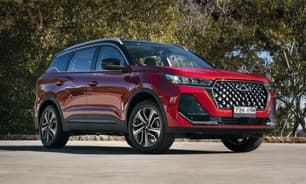
The Chery Tiggo 7 Pro Elite is a part of the brand relaunch for Chery and it showcases the brand's commitment to safety with its five-star ANCAP rating, awarded in 2023.
The medium SUV market is well and truly saturated with options and the Tiggo 7 Pro has rivals like the GWM Haval H6, Hyundai Tucson and MG HS which offer affordable packages for families in an expensive economy.
So, does the newest offering from Chery hold its own? In this review I'll unpack what my little family of three thought after a week with the mid-spec Elite model. (And why I suddenly have a hankering for Cherry Ripes).
The RAV4 is undeniably better than the last generation, and brings with it a level of driving refinement the most popular car in the world should have.
It also levels up its tech without falling into the overcomplicated, messy systems newcomers to the market think will impress buyers. While the base GX is a sound option, the few extra mod cons in the GXL are worth the extra cash.
But its lack of ANCAP rating is surely a point of anxiety for Toyota, and while the safety systems seem sound, we can’t definitively say this RAV4 is as safe as Toyota claims it is.
If you’re willing to trust Toyota on that, you’ll find a very enjoyable car that’s uncomplicated and efficient. But if those five stars from ANCAP matter to you, give it a few months and see how the new RAV4 performs before you put your money down.
The Chery Tiggo 7 Pro Elite has been a very surprising car for me. Its premium features, stylish design and practical space don't match the affordable price tag! But I'm all for it because you definitely get bang for your buck. The technology needs to be improved but everything else more than makes up for it. This medium SUV is a solid all-rounder.
My son likes the red paintwork and how much space he has in the back seat.
Each RAV4 in the range is more visually distinct than before, but most variants feature a similar honeycomb grille that’s a departure from the ‘safe’ design language Toyota is known for.
The outlier is the Edge variant, which gets a more traditional front-end treatment as well as its 20mm wider wheel tracks to go along with the intended purpose of light off-roading.
Despite the fact Toyota has clearly tried not to change the new RAV4 too much in too many ways compared to the last generation (and why would you when it was already so popular), the new design feels a little more adventurous.
It includes elements of Toyota’s latest design language including the ‘c-shaped’ headlights and more streamlined tail-lights but retains the overall size and shape of the RAV4.
The RAV4 is 4600mm long, 1855mm wide and 1680mm tall, a very similar size to before and as such its interior feels similarly spacious.
Inside, the layout is tidy with a little more visual distinction for controls than the last-gen RAV4.
Updated, sleeker buttons and controls replace the ageing fixtures and large screens make the mid-size SUV feel much more up to modern standards.
The Chery Tiggo 7 Pro looks great because it manages to do two things really well.
It's not boring to look at yet simultaneously blends into the sea of medium SUVs without ruffling any design feathers.
The Tiggo 7 Pro is well-proportioned and has some interesting focal points like the large grille that sports a dual-coloured 'diamond' motif.
It gives me some insect-like vibes while adding depth and dimension to the bonnet.
There is a full suite of exterior LED lights that look sharp, the 18-inch alloy wheels and the simplified rear rounds out the package.
The overall footprint is a good size at 4513mm long, 1862mm wide and 1696mm tall.
With those dimensions, the Tiggo earns its place in the medium-SUV category, yet it's still being easy to manoeuvre in tight city streets.
The interior style looks premium with the use of black synthetic leather upholstery and contrasting white piping.
The dashboard is headlined by a large curved screen housing the 12.3-inch touchscreen multimedia system and 12.3-inch digital instrument cluster.
There's also adjustable, coloured ambient lighting, a chunky shifter and a plethora of soft touchpoints throughout, accentuating an already pleasant cabin space.
But despite the sleeker look inside the new RAV4, Toyota hasn’t fallen into the trap of shoving as many digital features into the system as possible.
Many newcomer brands create confusing digital environments by having menus upon menus filled with options and features, but Toyota has avoided this by retaining a simple, almost siloed system.
In the multimedia display, navigation, media, phone and settings are the key shortcuts visible down the side of the screen, though a customisable home screen allows you to make the system your own.
It’s far preferable to the many sub-menus and confusing layouts some manufacturers (especially newcomers) use, and means you’re able to focus on driving.
There are also still plenty of physical controls for the key functions of the car, no need to go into digital settings to sort your drive mode or climate.
The new system, dubbed 'Arene' by Toyota, is a much-needed update for the RAV4, bringing it into the current decade when it comes to tech.
Its voice command system is still a little too keen to interrupt, but the general function is extremely easy to get acquainted with.
The interior is also physically extremely sensible, with good vision and light thanks to a low dashboard and large windows, well-considered ergonomic positioning, comfortable seats and storage options.
The centre console storage bin lid is also able to be opened from either side, or removed and flipped between a hard plastic surface or cushioned elbow rest, though a bit of non-slip surface on the plastic side wouldn't go astray.
Behind the front seats, the second row passengers don’t have a massive amount of amenity, but are far from cramped. The vents, armrest with cupholder, bottle storage in the door and document holder on the backs of the seats are all quite standard, though the outboard seats are heated in the top spec Cruiser.
Behind that, a huge 705L of space in the boot includes a netted pocket if you opt for the Edge grade, plus there's a proper spare wheel under the boot floor. Wins all round.
The cabin space is practical and user-friendly, which is a great combo. Both rows have a decent amount of leg- and headroom (despite the massive sunroof).
Individual storage is great throughout the car with the front row enjoying an extra-deep middle console, undershelf storage cubby below it, a drink bottle holder in each door and two cupholders.
The rear row gets two map pockets, two cupholders in a fold-down armrest and drink bottle holder in each door.
There is also a (very) shallow storage nook at the back of the middle console… think packet of chewing gum or small wallet size.
The boot space is a great size at 626L but if you need extra space, you can bump it up to 1672L with the back seats folded.
The rear backrest has a 60/40 split with a level loading space. Impressively, underfloor storage is taken up by a full-sized spare wheel and you get a powered tailgate in this model.
Other amenities accentuate the premium-feeling the Elite is going for with the electric and heated front seats offering well-cushioned support, although I miss having adjustable lumbar support!
The rear seats aren't as comfortable as the front (a bit hard on the tush) but the back support is fantastic.
In terms of technology, you get a single USB-A port in each row but the front also gets a faster USB-C port, 12-volt socket and a wireless charging pad to choose from.
The multimedia system's touchscreen can be laggy at times, which is annoying while on the go and the onboard 'Hello Chery' assistant tech needs improving.
I managed to get a few voice commands to work but most of the time the response was 'I haven't learned that yet' or a garbled version of the request (despite using the same phrasing as previously approved requests).
The system has built-in satellite navigation supplied by Turbo Dog, which is easy to use and it's simple to connect to the wired Apple CarPlay.
It also has Android Auto, Bluetooth connectivity and AM/FM radio but misses out on digital radio.
The RAV4 is more expensive than it was before. Of course it is.
That’s because it comes with more stuff, and it’s got new oily bits and more software to play with, plus everything gets more expensive anyway, right?
There are five trim levels, most with 2WD or AWD options and the base GX starts from $45,990, before on-road costs, in 2WD guise - a few thousand more than before.
Standard kit isn’t mind-blowing compared with a lot of newcomers to the market, but for an established model like the RAV4 it’s expected.
The GX (which can be had in AWD for $49,340) comes with 17-inch dark grey alloy wheels, LED headlights, dual-zone climate control, a 10.5-inch touchscreen display for multimedia, a 12.3-inch digital instrument cluster, fabric upholstery, six-speaker audio and five USB-C ports plus wireless Apple CarPlay and Android Auto.
If you opt for all-wheel drive, you also get downhill assist control and 'Trail' and 'Snow' drive modes.
Importantly, the RAV4 comes with a spare wheel, though on the GX it’s just a space-saver which costs $300 to upgrade to a full-sizer.
The $48,990 GXL adds 18-inch alloy wheels, privacy tinting, an eight-way powered driver’s seat, rain-sensing wipers and a wireless smartphone charger. That one’s $52,340 in AWD guise.
The Edge is $55,340, comes in AWD-only, and has its own front-end design plus 18-inch dark matt grey metallic alloy wheels on a 20mm wider track, plus a larger 12.9-inch touchscreen, premium trim, heated seats, illuminated entry and a power tailgate. It’s the variant Toyota says is more aimed at light off-roading than its siblings.
The XSE is also AWD-only and starts at $58,340, with 20-inch black alloy wheels, better LED headlights, a surround view parking monitor and two-tone paint. It also has synthetic leather and suede sports front seats with contrast stitching and three-stage front seat heating and ventilation, plus a sunroof. Front and rear bumpers feature integrated skid plates on the XSE.
The Cruiser is available as a 2WD from $56,990, or AWD from $60,340, and adds 20-inch machined black alloy wheels, high-grade LED headlights, leather-accented seat trim, a head-up display, digital rearview mirror, heated outboard rear seats, powered tailgate with kick sensor, another wireless smartphone charger and a premium nine-speaker JBL audio system.
There are three variants for the Chery Tiggo 7 Pro with the range starting with the Urban base model for $39,990 drive-away, the Elite (our test model) for $41,990 drive-away and the top-spec Ultimate grade which sits at $45,990 drive-away.
The price tag for the Elite puts it on par with most of its rivals with the Hyundai Tucson being the most expensive competitor.
The Elite grade comes with a host of standard features which makes the price tag feel very reasonable. Think full-size spare wheel, keyless entry, keyless start, dual-zone air-conditioning, adjustable coloured ambient lighting and a full suite of LED exterior lights.
There are a lot of premium-ticket items, too, like a panoramic sunroof, electric and heated front seats, synthetic leather upholstery and built-in satellite navigation.
Technology and safety get some serious focus with dual 12.3-inch touchscreen multimedia screen and digital instrument cluster, 360-degree view camera system, powered tailgate, Apple CarPlay and Android Auto (both wired) plus an eight-speaker Sony sound system, to name a few.
However, it's the brand-spanking-new five-star ANCAP safety rating that should excite families out there.
The 2.5-litre four-cylinder engine with series-parallel hybrid is less powerful than before, but Toyota says it did this for better efficiency and has made up for it with improvements to the battery and electric motors.
The figures are now 143kW and 221Nm (in 2WD and AWD variants), the power down from 160kW in the last generation. All RAV4s still use a continuously variable transmission (CVT).
Basically, lower numbers, but performance on par with the current RAV4 Hybrid according to Toyota.
The Elite variant has a 1.6-litre, four-cylinder turbo-petrol engine with a maximum power output of 137kW and 275Nm of torque. It also features a front-wheel drive drivetrain and a seven-speed dual-clutch auto transmission.
I wasn't expecting it to be as gutsy as it is and the Elite has adequate power for easy open-road driving.
The new RAV4’s efficiency is of much interest, obviously, and with figures claimed at 0.2L less per 100km over the last RAV4, it’s another case of incremental improvements.
The 2WD comes with a claimed 4.5L/100km, the AWD with 4.6L. During testing we saw numbers as low as 6.8L and 6.9L, respectively, and that was giving it the beans in some pretty twisty mountain roads.
Keep in mind the RAV4 needs 95 RON minimum now, rather than the 91 RON it could deal with before.
The official combined cycle fuel consumption figure is 7.0L/100km and my real-world usage averaged 8.2L after doing some open-road, but mostly urban, driving.
The fuel economy is great considering the driving conditions and the fact I don't hold back in making use of its power.
Based on the combined cycle fuel figure and the 51L tank, expect a driving range of around 730km.
Chery recommends minimum 95 RON unleaded petrol be used.
Put it this way - the RAV4 doesn’t feel like it’s lacking power. Despite the lower output, the new generation car doesn’t seem to struggle with having enough pick-up to keep moving along, even in spirited driving.
The first time I properly took off it surprised me with how punchy the response was. And from there on the new RAV continued to impress.
It’s one of a few things that, dare I say, makes the RAV4 rather fun to drive.
Like its predecessor, it’s built on the 'TNGA' platform, which underpins pretty much everything Toyota builds these days.
It’s a well-sorted basis for a car, making even this relatively large family SUV feel nimble.
Some changes to the suspension help here, too. New geometry and spring and damper rates mean the RAV4 is sharper and better controlled than before.
That control comes with the trade-off that it’s not always cloud-soft, but given Australian preferences and the need to keep the rubber on our rough as guts roads, Toyota has the balance right here.
It also hasn’t seemed to matter massively whether the RAV4 is front- or all-wheel drive even in the wet on twisty Tassie roads. The 2WD requires a little more care being flung into corners but the mid-sizer holds its own well enough.
There’s clearly more ability in the RAV4 than it’ll make known, almost as to keep the driver behaving safely just in case, while being confident in knowing the RAV4 is more capable than many will ever find out.
It’s handled high speeds, sharp corners and unsealed roads to a higher degree than anyone would reasonably expect of a family SUV.
It helps that the steering, throttle and braking are all well-calibrated. Planting your foot brings urgency without a jolt, there’s no guesswork in the steering and the brakes won’t have you lurching at a tap but can pull you up rather rapidly if needed.
It’s easy to drive, which is pretty big compliment and surely one of the key goals for the engineering team.
The Tiggo 7 Pro is a fairly easy-going car to drive. It handles well in the city but also feels pretty solid on the road at higher speeds.
There is a good sense of power that always feel primed and ready to go, in the sense that you don't have much delay between putting your foot down and the car shooting forward.
However, if you're too aggressive with the accelerator, you will lose a bit of tyre traction which can make it feel jumpy.
The brakes aren't particularly sensitive, meaning you have to be firmer when applying pressure. This creates a jerky experience until you get used to it but is more noticeable in stop-start traffic.
Steering feel is not too heavy, not too light. There's a great balance and the car is responsive when manoeuvring, which is what makes its cornering behaviour so surprising.
It doesn't feel dynamic on a winding road, due mainly to the amount of roll the car exhibits.
The cabin is very quiet in terms of wind and road noise, accentuating the premium-feel but suspension is a little firm which can lead to some grunts over harder bumps.
I like medium SUVs because their size usually makes them easy to park and the Tiggo 7 Pro is no different.
With a super clear 360-degree camera system, you shouldn't have any issues parking it. However, I didn't notice the front and rear parking sensors sounding out all that much.
Toyota doesn’t have an ANCAP rating for the RAV4 yet, which is a massive problem for the brand, especially for its fleet buyers.
The systems in place seem pretty sound, and the brand says it’s the safest RAV4 yet.
We have no reason to doubt that, but we can’t just take a manufacturer at their word, that’s why ANCAP exists.
Eight airbags, AEB pre-collision, emergency steering assist, full-speed active cruise control, front and rear cross traffic alert, lane trace, automatic high beam, parking support brake and blind spot monitor are all standard across the range, which is a plus.
It’s also all quite well programmed.
From behind the wheel, you’ll notice persistent but gentle steering wheel nudges when approaching the shoulder, and occasional chimes for driver distraction when using the main screen, but otherwise it’s very well calibrated and cements the experience Toyota has with making its systems easy to use.
The safety list is fantastic for the Tiggo 7 Pro Elite with the standard features list including full LED external lights, daytime-running lights, adaptive cruise control, rear cross-traffic alert, rear collision braking, blind-spot monitoring, driver attention monitor, forward collision warning, lane departure alert, lane keeping aid, intelligent seatbelt reminders, child occupant alert, child rear door safety locks, traffic sign recognition, a 360-degree camera system plus front and rear parking sensors.
I found the driver attention monitor annoying as it's extremely sensitive. There's an audible alert and a badge pops up onto the digital instrument cluster for the smallest things: scratching your face, looking at the speedometer, looking at the steering wheel controls, adjusting sunnies … you get the idea.
Multiple alerts on every journey is distracting and takes away from the driving experience.
Annoyingly, you can't adjust the sensitivity but you can switch this function off. You just have to do it in every trip.
The Tiggo 7 Pro has eight airbags, which includes a driver's knee airbag and the newer front centre bag, which is great to see. And the five-star ANCAP safety rating, awarded in 2023, will surely entice families!
The AEB with pedestrian, cyclist and motorcyclist detection is operational from 5.0–80km/h and up to 135km/h for car detection.
There are ISOFIX child seat mounts on the rear outboard seats and three top tether anchor points but two seats will fit best. There is enough room for front occupants when a 0-4 rearward facing child seat is installed.
Toyota’s standard five-year/unlimited kilometre warranty is not just disappointing compared to other mainstream brands, but should be much higher given the brand is the biggest in the country (and world) and trades on its reputation for reliability.
The warranty can be extended to seven years from delivery if you maintain your logbook servicing with Toyota dealerships, but even then it falls short of Nissan and Mitsubishi’s 10-year (also servicing-conditional) warranties.
Capped-price servicing costs $325 per service and is available for five years or 75,000km, with intervals every 12 months or 15,000km.
Toyota boast a long-established national network of around 300 dealers covering all states and territories including major cities and key regional and rural centres.
The Tiggo 7 Pro comes with a seven-year/unlimited km warranty, which is longer than usual for the class.
There is a seven-year/105,000km capped priced servicing program and services average $294 per, which is very competitive.
Servicing intervals are reasonable at every 12 months or 15,000km, whichever occurs first.