What's the difference?
Thank the automotive gods cars like the GR Yaris still exist.
Not only are hot hatches the funnest way to drive, but in a world that’s obsessed with electric vehicles, these combustion-powered beasties remind us what we’ve got before it's gone.
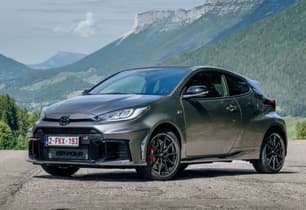
The GR Yaris arrived in 2020 and won praise for its rally-car-for-the-road feel with Toyota’s high-performance division Gazoo Racing heavily modifying the docile Yaris hatch - while adding a bit of Corolla - to create this little monster.
In early 2025 Toyota added more power and torque, along with an automatic transmission for the GR Yaris and now a new variant has been launched - the GTS Aero Performance Package and this is what we are testing.
There has never been a better time to be shopping for an electric SUV in Australia, with the avalanche of Chinese brands constantly smashing through the price floor as they bid for the title of Australia’s cheapest.
MG led the charge with its S5, which is $40,490, drive-away. Then Leapmotor upped (or downed?) the ante with its B10 with a $38,990, drive-away, price tag. And now BYD has knocked them both out with its Atto 2, officially Australia’s cheapest electric SUV (at least for now), with a MSRP of $31,990, which, in NSW, translates to a drive-away cost of less than $35K.
Cheap is one thing. But cheerful? Let’s find out, shall we?
The GR Yaris GTS with the Aero Performance Package is a so wonderfully special with its brilliant engineering, mind-blowing dynamics and fun-to-drive nature. The new aero package makes an already angry beastie look furious, making it the perfect enhancement that's also functional.
The only lower marks here are for warranty, fuel use and practicality. But if there was a score for fun it'd be a 10/10.
The BYD Atto 2 isn't just the cheapest electric SUV in Australia, it's also one that doesn't feel all that cheap, which is a hell of a magic trick. If it's easy, comfortable city motoring you're after, the Atto 2 delivers in spades. But if your blood type is high octane, there are better driving EVs out there.
Note: CarsGuide attended this event as a guest of the manufacturer, with meals provided.
Note: The author, Andrew Chesterton, is a co-owner of Smart As Media, a content agency and media distribution service with a number automotive brands among its clients. When producing content for CarsGuide, he does so in accordance with the CarsGuide Editorial Guidelines and Code of Ethics, and the views and opinions expressed in this article are solely those of the author.
The GR Yaris exists so that Toyota could go racing in the World Rally Championship. As with many racing series it required Toyota to build a road-going version of their Yaris race car, also known as a homologation vehicle. It’s a good deal, they get to race, you get a race car for the road. And so the GR Yaris was born.
Wildly different from a regular five-door garden variety Yaris, the GR Yaris is a hand-built three-door hatch with a wider track, wider and lower body and the use of forged carbon and aluminium for lightweight construction.
The GR Yaris already looks very angry, but the GTS Aero Performance Pack makes it look furious. It adds a huge adjustable rear wing, fender ducts that channel air, a front spoiler lip that aids stability, a giant bonnet scoop to help release air, and rear bumper ducts to reduce drag.
The GR Yaris’s cabin was redesigned for the 2025 update and that saw the dashboard angled more to the driver much like in a race car, but it's more functional than fancy and it’s all very plain.
Still, we’re not complaining. The seats are lovely and the red stitching is a nice touch but this isn’t a Lexus. It’s supposed to favour function over form and so the design is absolutely fitting. And by function I mean dynamics and not practicality.
I think it’s a sharp-looking thing, this Atto 2. Kudos to BYD for not making the design look like it’s trying too hard, or like the Atto 2 is something it isn’t. It’s just smooth, sensible small SUV with styling that looks like it will age gracefully.
I like the chunky black moulding which makes it look a bit tougher than it is, plus the LED DRLs and swept back (and spoiler-equipped) roofline add a bit of visual drama.
Inside, BYD has made two pretty good choices. The first is that the cabin feels toned down from the one in the Atto 3 (which is all chunky wheel-style controls and vents).
This one feels far more sedate and conventional in its design, which I think is a win.
The other good decision is to equip the Atto 2 with soft plastics, rather than hard scratchy ones, in places like the door panels. In some cheaper cars, you feel your elbows constantly rubbing against cheap-feeling plastics, but that’s not the case here.
Too much stuff is still controlled through that central screen, and BYD has an awkward way of shortcutting functions. They call it a three-finger swipe, meaning that if you run three fingers across the screen horizontally you can adjust the climate-control’s fan speed, while swiping horizontally adjusts temp, but it feels like a weird movement.
The regular Yaris is small, the GR Yaris is smaller at 3995mm end-to-end and with two fewer doors. As a tall person (I’m 1890mm end-to-end) the space on board is adequate up front with just enough knee, head and elbow room.
The GR Yaris is a four seater with the two rear seats accessed through the front doors. There’s not much room in there for adults and not even my lanky 11-year old would be happy in there. Still if you need to carry three other people, technically you can.
Cabin storage is limited to fairly large door pockets and two cupholders between the front seats. There is a little shelf carved into the dashboard which is great and a small glovebox below it.
Boot space is tiny at 174 litres but again this is a small car with other priorities.
The Atto 2 measures 4310mm in length, 1830mm in width and 1675mm in height and it rides on a 2620mm wheelbase. It also sits on BYD’s fully-flat EV platform, which helps to maximise space in the back seat.
I’m 175cm tall and could get comfortable behind my own driving position, with enough knee and headroom to ensure I didn’t feel cramped.
There are two ISOFIX attachment points, one in each window seat in the back as well as USB-A and -C connection points.
Boot space is a not cavernous, but also not tiny, 380L with the rear seats in place, growing to 1320L with the rear pews folded flat. Both models also offer a V2L (Vehicle to Load) connection, too, so you can power up household devices.
The GR Yaris GTS Aero Performance Pack sits at the top of the model range with the six-speed manual version listing for $64,990 before on-road costs, while the automatic is $67,490. That’s $4500 more than the standard GTS without the aero pack
The aero pack significantly toughens up the look of the GR Yaris, and also improves its dynamics. So if you plan to use the GR Yaris as a track car and drive it hard and fast, the kit will help.
That's thanks to improved down force from the giant rear wing, air ducts in the fenders to improve steering under braking, a front splitter for stability, underbody cladding to maximise airflow and a bonnet scoop to help release hot air from the engine bay.
The rest of the high-performance equipment comes on the regular GTS including a Torsen limited slip differential, high performance suspension tune and 18-inch forged wheels with Michelin Pilot Sport 4S tyres.
Standard features are the same as the regular GTS and include heated GR sports front seats with suede leather upholstery, a 12.3-inch digital instrument cluster, leather-wrapped steering wheel, aluminium pedals, dual-zone climate control, proximity unlocking and push-button start.
There's also an eight-speaker, eight-inch media screen with Apple CarPlay and Android Auto, and an eight-speaker JBL sound system.
The value is actually great considering all the high-performance engineering around you in the GR Yaris, and it will save you money from being tempted to go down the aftermarket route and buy equipment that hasn't been designed for the car by the people who made the car.
There are some nice comforts, too, like the leather seats, although the media screen is small.
This thing really is cheap. The BYD Atto 2 arrives with a two-model range kicking off with the Dynamic, at $31,990, before on-road costs, before stepping up to the Premium at $35,990 BOC. They both get the same motor and battery, by the way, so the extra money comes down to extra kit.
The Dynamic rides on 16-inch alloys wrapped in cheaper Westlake rubber, scores LED headlights and DRLs and gets rain-sensing wipers and heated wing mirrors. Inside, there’s a 10.1-inch central touchscreen, an 8.8-inch driver display, synthetic leather seats with manual adjustment up front and wireless Apple CarPlay and Android Auto linked to a four-speaker stereo.
The Premium rides on 17-inch alloys wearing better Hankook rubber, and there’s a panoramic glass roof with a shade and roof racks. Inside, the central screen grows to 12.8 inches, and there’s an eight-speaker stereo and a wireless charge pad. Your seats are now electronically adjusted and heated and cooled. Plus there’s some extra safety stuff, but we’ll cover that off in a second.
It still boggles my mind how 221kW and 400Nm is extracted from a 1.6-litre three-cylinder petrol engine but here we are. The GR Yaris has this set up with this output, along with all-wheel drive.
Thanks to lightweight materials such as forged carbon and aluminium the GR Yaris weighs nothing in car terms - just 1300kg - so acceleration from 0-100km/h is a rapid 5.1 seconds.
I’ve already detailed the juicy engineering bits the GTS Aero Package is fitted with, from the limited slip diff to the adjustable rear wing, and it’s not an exaggeration to say that not many small hatches are this gifted with this kind of genius.
Our test car has an eight-speed automatic, which is easy to drive in city traffic. However, I'd opt for the six-speed manual because if you've come this far you may as well go the whole way.
Both Atto 2 models share the same powertrain - a front-mounted electric motor producing 130kW/290Nm which is sent to the front tyres. It feels fairly sedate, even under flat-footed acceleration, though BYD reckons you can knock off the sprint to 100km/h in 7.9 seconds.
The GR Yaris is a hungry beastie that eats through its 50L petrol tank fairly quickly and then wants more. Toyota says you should see 9.1L/100km of 98 RON used in the automatic and 8.2L/100km with the manual over a combination of driving conditions.
Stop-start city driving in traffic saw fuel use increase dramatically to 13.0L/100km in the auto. According to our car's trip computer, my own testing used an average of 14.5L/100km after mainly suburban driving.
Both models also share the same battery, a 51.1kWh LFP unit, which should unlock a WLTP driving range of 345km. AC charging is pegged at 7.0kW, so a good match for a standard home wallbox, while DC fast charging is 82kW. Using the latter, BYD says you should go from 10 to 80 per cent charged in 38 minutes.
There’s been a multitude of electric cars through the test garage over the past six months and the GR Yaris is like a diamond found in a tub of Lego when it comes to driving.
So much sound. The three cylinder snarls on start up sending vibrations into the cockpit and up through the steering wheel, the transmission can be heard engaging gears, the big brakes creak as they’re released. And we’re hardly even moving yet. There’s so much theatre. It’s all real and I love it!
I even love that in the first 10 minutes of driving, a message appears on the instrument cluster asking that excessive acceleration be avoided while the engine is cool. You don’t get that beautiful inconvenience in an electric car.
But when you can excessively accelerate (on a race track of course, right?) it's wonderful and it's loud. Lift off, and the wastegate lets out a little "weeee!" in excitement.
I don't need to tell you that the GR Yaris handles better than just about anything in this price range and while the ride is firm and speed bumps feel like you’ve hit a gutter I still drove the GR Yaris every day, even to do the school run, because it is so much fun. Meanwhile my hybrid long0term test car looked lonely in the driveaway all week...
Being an automatic makes it easy to drive in traffic and the small size makes finding parking spots quick and simple.
Visibility is good, steering is excellent, the seats are big enough to accommodate me but snug enough to offer good lateral support, too.
Your drive experience in the Atto 2 very much depends on what you ask of it.
Or to put it another way, the first half of my drive route was a breezy run through the city and suburbs, then onto the freeway, before arriving at our destination.
It was probably 60 kays or so, and across it all the Atto 2 felt quiet and comfortable, with enough power at its disposal to easily get up to speed and stay there.
In the second half, though, I hunted down some twisting roads and cracks started to appear. The ride is pretty solid and there isn't huge amounts of body roll during more enthusiastic cornering.
But the steering is vague and there's plenty of slack – you can turn the wheel a fair bit without eliciting much response from the tyres.
Interestingly, turning the wheel with a bit of aggression also produced a weird sound up front, like you could hear the mechanicals shifting the tyres.
The tyres make a difference, too, with the Premium's more expensive Hankook rubber far happier to hang on without squealing than the Dynamic's Westlake tyres.
But context is key here. The Atto 2 is an accessible, affordable city-focused EV, and it performs those duties admirably. But if you're sold on a car-driver connection, there isn't much of that on offer here.
The GR Yaris has not been crash tested by ANCAP and the score for the regular Yaris can't be applied to the GR version.
Still the GR Yaris comes equipped with an array of advanced safety tech such as auto emergency braking (AEB), lane keeping assistance and a blind spot warning.
There are six airbags, two child seat ISOFIX points and two top tether anchor mounts in the rear row.
The Atto 2 is yet to be assessed by ANCAP but there’s no shortage of stuff. The entry-level car gets six airbags, rear parking sensors and all the usual traction tech. Then there’s active cruise, lane departure warning, blind spot monitoring, cross-traffic alert in both directions - the list goes on. In fact, the only things the Premium adds on top are a 360-degree camera and front parking sensors.
The GR Yaris is covered by Toyota's five-year/unlimited-kilometre warranty which is lacking compared to many other mainstream manufacturers’ seven-year-plus warranties. The good news is that the engine and driveline is covered by an extra two-year warranty.
Servicing is capped at about $300 for the first six visits, although services are six months apart which means that after three years you’ll run out of capped-price servicing.
Still, Toyota’s reputation for reliability does provide some peace of mind.
BYD’s warranty is an okay six years but just 150,000km, which is underwhelming compared to the best in the business. The battery is covered for eight years or 160,000km.
BYD vehicles typically have 12 month, 20,000km service intervals with capped price servicing, but the details are yet to be confirmed for the Atto 2.