What's the difference?
There’s something immensely appealing about a car that can play two roles.
An off-roader for the weekend and a school pick-up chariot Monday to Friday? How about a race car/grocery-getter combo?
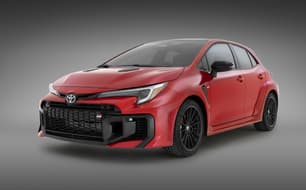
The latter is what the Toyota GR Corolla wants to be, a slightly bigger and more day-to-day alternative to the first GR hot hatch, the Yaris.
Both of these cars have now been updated and are arriving in Australia now, and Toyota hopes the Corolla becomes an even better car to rival the likes of the Volkswagen Golf R.
But can it do it?
We tested Toyota’s hotted-up Corolla on road and track to see if it’s up to the task.
Among the many strange new car brands and names we're increasingly confronted with Subaru is an established and trusted beacon along with Honda, Hyundai, Mazda and Toyota. And Subaru’s Crosstrek SUV competes against rivals such as the Honda HR-V, Hyundai Kona, Mazda CX-30 and Toyota Corolla Cross.
So, what does the Crosstrek give you for your money and what’s different or better about the Crosstrek compared to those rivals?
We tested the mid-grade Crosstrek 2.0S and rediscovered what this small SUV does so well and what could probably be improved.
The GR Corolla had a lot to live up to before, given the likes of the GR Yaris and GR86 fit their briefs so well.
Now, with a little more daily useability and a little more performance, the GR Corolla is even better at both sides of its Jekyl and Hyde personality.
Note: CarsGuide attended this event as a guest of the manufacturer, with accommodation and meals provided.
The Crosstrek is good to drive with great ground clearance and an excellent all-wheel drive system for light off-road adventures. I’m also a fan of the styling and features for the money. But The letdowns comes in the form of limited boot space and cabin storage, a short warranty and pricey servicing. Still, it’s great to see Subaru has updated the car's safety systems, the most important part of any car.
The Corolla already looks more sporting than most hatchbacks even before the GR treatment, but a few tweaks up front, some wider wheel arches and a third exhaust exit at the back have this thing looking almost ready for a rallycross.
The only downside to that is the changes are relatively minor from some angles. If you weren’t aware of the GR version, you'd need to see the GR Corolla from the front or spot that exhaust to know something was up.
The update has, however, ushered in a change at the front bumper, where the air intakes have been adjusted for improved airflow “to the radiator, intercooler, brake ducts, sub radiator and automatic transmission fluid cooler”
In part, this was necessary to help cool the new automatic gearbox, though it does generally help with overall cooling.
While the GR Corolla looks the part, there’s more function to it. The air that passes in through the side intakes at the front is vented to a duct in the wheel arch that also cools the brakes.
It’s the same as the GR Yaris sibling in terms of the philosophy behind aerodynamics and cooling in many ways, though much of the Yaris is bespoke, where on the Corolla, parts have been attached to the standard body.
Like the outside, the inside of the GR Corolla is mostly the same bones as its non-hot-hatch relatives, but the aforementioned sports seats, leather trim and aluminium pedals are all fairly strong hints this isn’t quite ‘hire car spec’.
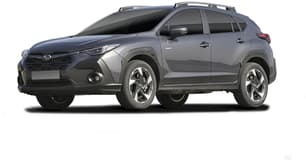
While SUVs tend to come in either a tall and boxy or coupe-like shape, the Crosstrek has a uniquely sleek and sporty wagon look that has stayed much the same over three generations.
Also while the Crosstrek competes with the Honda HR-V, Hyundai Kona, Mazda CX-30 and Toyota Corolla Cross the Subaru is the most off-road suitable thanks in part to its high 220mm ground clearance
As if to signal those adventurous aspirations the Crosstrek has a more rugged appearance with robust-looking plastic guards and chunky roof rails.
Inside the Crosstrek looks so much the same as most other new Subarus it's hard to work out which one you’re in. The materials are dark and soft, there is not much in the way of glitzy trimmings but there’s a high quality feeling throughout.
As far as hatchbacks to build a daily-useable hot hatch upon go, the Corolla is a relatively solid starting point in terms of ergonomics.
Physical buttons and controls for things like climate are within reach for most functions of the car, though the multimedia touchscreen itself isn’t the most up-to-date.
The seats are comfortable but hold you firmly in place, and the steering wheel, pedals, and shifter are all in the correct positions for engaging driving - particularly important in the manual version.
The storage space is where the GR Corolla disappoints a little. There’s door card space for a water bottle, cupholders, the wireless device charger, but not really anywhere for larger items.
Behind the front row, adults will find themselves a little cramped in terms of kneeroom, while dark interior materials make the second row feel poorly lit.
Further back in the Corolla is the 213-litre boot, which is pretty small even for a hatchback, although Toyota lists a maximum 503 litres with the seats folded down.
Under the boot floor is a tyre repair kit, rather than a spare tyre. Keep that in mind if undertaking a road trip.
The Crosstrek is a small SUV but its low and sleek shape doesn’t do it any practicality favours in terms of exiting and entering or storage in the boot.
Boot capacity is 291 litres which is very small compared to its rivals which have capacities closer to 350 or 400 litres.
People space inside, however, is good, and even for a tall (189cm) person like me there’s plenty of space up front and behind my driving position.
Storage space is passable with three cupholders and thin door pockets and a decent-size console bin.
Given the Crosstrek’s adventurous intent, the cabin should be more reflective of that rugged aspiration.
The 2025 Toyota GR Corolla comes in just one grade now, the highly-speced GTS, which starts from $67,990 plus on-road costs for the six-speed manual, but it's now available with an eight-speed automatic for $70,490.
Sounds like a lot for a Corolla, and it’s a little more than the $64,190 asking price the GTS manual wore before, but compare it to the highly-regarded Honda Civic Type R ($74,100) or the do-it-all VW Golf R ($70,590) and it lines up.
While the GTS has plenty of features for the price, they’re not all focused on the comfort of the interior.
For example, the synthetic leather and suede sports seats are manually adjustable, even though they are heated.
The 8.0-inch multimedia touchscreen is similar to that in the standard Corolla, too, plus dual-zone climate, USB-C ports, the wireless phone charger and JBL Audio system are all expected features of a hatchback at more than $60,000.
The GR Corolla does however gain heating for the leather-wrapped sports steering wheel, plus leather trim for the parking brake and shifter too. It also scores aluminium pedals.
There’s a lot more under the skin when it comes to the GR, some of which is visible via controls in the cabin, but we’ll come to that.
The Crosstrek range is divided into three petrol variants and two hybrids. With a list price of $43,990, our test Crosstrek 2.0S sits at the top of the petrols and second from the top of the line-up under the Crosstrek AWD Hybrid S flagship.
Standard features on our 2.0S include 18-in alloy wheels, roof rails, LED headlights and tail-lights, dual-zone climate control, push-button start, proximity unlocking , 10-speaker audio, wireless phone charging, Apple CarPlay and Android Auto, an 11.6-inch media touchscreen and leather-trimmed seats.
If you’re looking to save a few thousand dollars the 2.0R is almost as well equipped.
Is it worth stepping up to the hybrid? Not in my opinion. The hybrid is the 'mild' kind and doesn't offer a great deal in terms of real-world fuel savings. You can read more on fuel efficiency below.
The GR Corolla’s 1.6-litre three-cylinder turbocharged petrol engine is now a little torquier than before, with outputs now 221kW (at 6500rpm) and 400Nm (between 3250 and 4600rpm) thanks to an extra 30Nm.
The G16E-GTS engine can now drive the Corolla’s four wheels through a choice of gearboxes, either the existing six-speed manual or an eight-speed torque converter automatic.
As well as the usual drive modes, Eco, Normal and Sport, the Corolla’s GR-Four all-wheel-drive system can split the torque to the front or rear wheels via its limited-slip diffs.
Normal, Track and Gravel modes can distribute drive either 60:40 front/rear in Normal, 53:47 in Gravel, or variably depending on conditions and need for acceleration in Track.
Toyota hasn't provided a 0-100km/h time for the 2025 GR Corolla in either variant, but the auto should knock it over in under five seconds, with the manual taking a little longer.
The Crosstrek 2.0S uses a 2.0-litre, four-cylinder, horizontally-opposed 'boxer' petrol engine which makes 115kW and 196Nm. A continuously variable transmission (CVT) with eight 'speeds’ isn’t the most exhilarating automatic but all Subaru now use CVTs.
The boxer engine has advantageous in terms of a lower centre of mass and helps deliver better driving feel thanks to more adept handling. Boxer engines also sound better to my ears with their throaty burble.
Toyota’s claimed fuel consumption for the GR Corolla with a manual gearbox hasn't changed from the previous 8.4L/100km, which isn’t bad for a sports car.
With the auto, Toyota says it burns through the fuel faster at a rate of 9.5L/100km.
In either case, the Corolla’s 50-litre fuel tank needs to be filled with premium 98 RON petrol, and theoretically could provide more than 500km of driving if conditions and your driving style are both perfect for efficiency.
Chances are, however, you’ll feel the need to put your right foot down a little harder than they did during WLTP testing, if for no other reason than to hear the turbo flutter when you lift off.
The Crosstrek 2.0S's combined cycle (urban/extra-urban) fuel consumption is 7.2L/100km which aligns closely with our real-world test average of 8.7L/100km returned over mainly urban and city driving. That’s not bad, but given the price of fuel as well as the availability of EVs and excellent hybrids from other brands the Crosstrek is seriously behind the times.
Yes, yes, there is a hybrid Crosstrek, but it’s a mild-hybrid and the electric motor doesn't drive the wheels and doesn’t save much fuel. The hybrid Crosstrek has a claimed combined cycle consumption figure of 6.5L/100km, so there’s not much difference between the efficiency of the two. When you consider the price premium you need to pay it’s not worth stepping up into the hybrid.
The GR Corolla isn’t as engaging to drive as the GR Yaris, it’s not as honed as one particular rival, the Honda Civic Type R, and it’s not as ‘nice’ as the Golf R.
But the GR Corolla is still an excellent car to drive, and it’s better for its update. In fact, the two major gripes I had with the pre-facelift car have been addressed.
I was in a unique position to be able to compare the old and new versions of the GR Corolla as I drove a MY 2024 version a week prior to the media launch for the 2025 model.
The first and probably biggest issue I had was that the Corolla’s suspension seemed like it must have been rather stiff and the body bracing quite rigid for a car riding on 19-inch wheels to let that much road noise and that many harsh bumps into the cabin.
Though it wasn’t mentioned before the on-road drive loop, the car felt more compliant without sacrificing ability and seemed much more suited to daily duties.
Toyota’s product team confirmed there had been tweaks made to the rear suspension geometry and that I wasn’t just imagining it.
The second issue is more for the sake of passengers who may be less agreeable to the three-pot thrum resonating along the exhaust underfloor.
Toyota has solved this by putting a slight mute on the pipes in the Eco drive mode, so the car is now just ‘a bit’ lairy rather than full boy racer.
Generally, it’s hard not to compare the GR Corolla to the smaller (but original) GR hatch, the Yaris. Especially having driven them back-to-back at the media launch.
Without leaning too much on that, I will say that while the Yaris feels like a rally car that's been modified to be road-legal, the Corolla feels more like a road car that was tweaked for rallying.
The Corolla stops just short of being too ‘raw’ for everyday use in most aspects, but it’s still very capable when it comes to driving fast.
Like its suspension, the steering feel is dialled in for feedback without being too rough, and allows you to corner accurately without feeling like you need to second-guess or adjust inputs.
When it comes to handling, it doesn’t feel like the Corolla is entirely leaning on the Yokohama Advan tyres for grip, as it feels tied-down and doesn’t pitch and roll through corners.
The duality of the GR Corolla is helped by its drive mode and differential settings and even on track can help you lean into your own driving style.
While the rear-biased 30:70 setting previously made for a slightly tail-happy hot hatch, the new variable Track setting does a fabulous job of keeping the drive where it needs to be, though it turns out it’s also rather handy for sliding the Corolla around a wet skid pan.
Another neat trick is the GR’s handbrake, same as the Yaris, which can disconnect the rear diff when engaged so you don’t need to dip the clutch pedal in the manual version when indulging in handbrake turns.
It will set you back to 2WD mode when the drivetrain overheats, however, or at least when its sensors suspect the drivetrain has overheated - something that only happened after a lot of handbrake turning and spinning wheels as the hatchback slid sideways.
The Corolla’s brakes are ventilated 356mm front and 297mm rear discs, and doesn't lose stopping power even after plenty of tight, twisting road driving where the brakes and the sticky Yokohama Advan tyres copped a workout.
The new auto transmission is also a delight. It's calm during normal driving but snappy with shifts in Sport mode and set to manual gear selection. It won’t really cooperate on a rapid drive of its own accord.
The only criticism of the auto gearbox (aside from being less engaging than the manual, but that’s your own choice) is that the shift paddles behind the wheel feel a little plasticky, but I’m nitpicking at this point.
I’ve never met a new Subaru that wasn’t good to drive, apart from that time a friend sent me his 30-year old Brumby minus brakes. But even that was fun, until it was time to stop… Anyway, in my view the Crosstrek is better than its rivals in multiple areas except one, which I’ll get to in a moment.
The Crosstrek 2.0S is comfortable to sit in and its ride and handling balance is exceptional for a vehicle in this class. Honestly, the ride quality, body control and steering outshines the HR-V, Kona, CX-30 and Corolla Cross in my view.
A big call out has to go to the Crosstrek's all-wheel drive system, which is exceptional. I have tested this vehicle in some pretty adventurous settings and the kind of terrain it can devour would frighten its rivals.
But the one area that lets the experience down is the CVT auto. I feel this way about this type of transmission in any car and I’m not alone. CVTs provide smooth acceleration and deceleration but if you’re hoping for an engaging, sporty experience you’ll be left wanting.
That said, my wife also drove the car and thought it was perfect for city traffic. And I agree, it’s just on the motorway where you might notice the lack of oomph when overtaking.
Visibility is good and you sit quite high for a little SUV. That small size makes it easy to park and manage in the city’s tighter spaces.
The Corolla’s not lacking in safety kit, with a healthy list of passive and active features as well as a series of seven airbags and three ISOFIX points along the rear seats.
ANCAP tested the non-GR Corolla in 2018 and awarded it five stars, though that score is now outdated. It’s not clear if the car’s updated tech would manage five stars again, though the car is clearly structurally sound.
Aside from the usual expectations like auto emergency braking (AEB), a blind spot monitor, parking sensors front and rear plus a decent reversing camera, the GR Corolla also has rear cross-traffic alert and Toyota’s ‘Safety Sense’ suite of active kit.
That includes a pre-collision safety system with pedestrian detection and cyclist detection in daylight, active cruise, intersection assist, emergency steering assist, lane departure and lane-trace assist, road sign detection for speed limits and auto high beam.
Part of the reason we're testing the Crosstrek is because it was updated with more safety tech and equipment towards the end of last year. This safety boost means the Crosstrek continues to boast a maximum five-star ANCAP rating.
The big change was to the 'Eyesight' sensor system with better traffic sign recognition and enhanced AEB systems. An emergency vehicle stop system has also been added to bring the car to a halt if the driver becomes unresponsive.
The rest of the Crosstrek’s features carry over including AEB, lane-keeping assistance, front and rear cross-traffic alert (with braking) and blind-spot warning.
For child seats there are two ISOFIX points and three top tether anchor mounts across the second row.
There is a spare where but it's a temporary type which will get you to a repair place.
Toyota offers a five-year/unlimited kilometre warranty plus an extra two-year warranty on the GR Corolla’s engine and driveline.
There’s also a capped price on the first three years of servicing for the GR Corolla at $310 per service.
The downside to the servicing arrangement is that intervals are six months or 10,000km, whichever comes first. That's more regular than a usual schedule and it means potentially pricier servicing for the seventh visit onwards.
Subaru’s five year united kilometre warranty is becoming less appealing as other brands offer seven or even 10 years of coverage.
Servicing is recommended every 12 months/15,000km and a capped schedule is pricey relative to its competitors at more than $2400 over five years or about $400 on average per service.
The brand is represented by a long-established and stable network of close to 130 dealers covering metro, rural and regional locations across every state and territory.