What's the difference?
The Toyota Camry is one of the few cars that really needs no introduction. It's been on our shores for 41 years and has proven itself to be steadfastly popular, enough for Toyota to launch a ninth-generation version.
The entry grade Ascent is one of the few 'base-models' still available for the mid-sized sedan segment and offers an upgraded hybrid powertrain and transmission, new tech and a fresh take on its design.
Old fans will love it and in this review we discover if there's something for families to get excited about.
It’s finally happened: Rolls-Royce has become so divorced from the everyday world of common folk that it's no longer even sharing the previously agreed meanings of words. Rolls has its own meanings, possibly its own language, which must be spoken with a plum on the tongue.
They’ve been heading here for a while. For example, at Rolls, “affordable” means the car we're driving today, the Rolls-Royce Ghost Series II, which is yours for just $680,000 (an indicative price, bumping to $800K for the Black Badge). And “iconic British marque” means, obviously, “BMW bought us in 2003, so there might be some German bits”.
It turns out that “driver-focused” means something different at Rolls-Royce, too. Thanks to a smattering of chassis innovations, Rolls says this updated 2025 Ghost is “the most driver-focused V12 Rolls-Royce ever”. Which is “a side of Ghost’s character that our clients increasingly and enthusiastically embrace”.
Don’t fall for it. The Ghost’s extra focus is not actually very focusy, and its additional dynamism is really only more dynamic in the way that a bed that could corner at all would be more dynamic than a normal bed. None of that matters.
The reason it doesn’t matter is because the Ghost Series II is wonderful. Indeed, it is very nearly perfect. Which is a word that even Rolls won’t quibble over.
Ah, gotta love a sedan that knows its audience and the ninth-gen Toyota Camry Ascent proves once again why it’s a popular choice.
On top of the space and practicality, you get a shiny new design and technology. Overall the Camry Ascent is a well-rounded base-model - what’s not to love?
In a disruptive era when the coachbuilder has pivoted to SUVs like the Cullinan, a sort of London black cab that’s been dipped in opulence, and succeeds despite itself, and the brand’s grand, million-dollar EV, the Spectre, the Ghost is a safe and familiar space.
A beautiful, long, broad, immaculate land boat. It’s a space Rolls inhabits with relish.
The Ghost Series II feels nothing like a track-day option when you’re behind the wheel. But it might do if you were stepping out of a Phantom. Or a Cullinan. Or a Wraith. Especially if you’re stepping out of the back doors.
It’s the perfect driver’s car. As long as all your other cars are also Rolls-Royces.
There is a strong 'taxi'-association with the Camry because of how popular it is as a commercial fleet car and while the design has been updated and modernised, that vibe still remains. It's a Camry, after all.
But the new tapered nose with its slim LED headlights look sharper than the previous model and the rear slopes into a neat spoiler that accentuates a sharper rear end.
The new design looks far more modern and dare I say it: sporty.
A lot of the changes are in the cabin where the Camry benefits from a completely restyled dashboard that looks sleek and stylish, with the tech screens integrated into the panelling.
The cockpit still feels very driver-oriented, which is always appreciated, but now not at the expense of the front passenger.
The cloth seats look much nicer than the standard basic stuff you usually get and there are enough tactile dash and door panels to make it feel cosy, despite it's soft-touch points still looking too plasticky.
The overall feel for the cabin is one that is pleasant and well-built, although cloth seats always give me anxiety when kids are around.
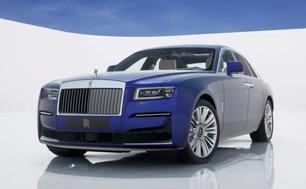
Yes, its exterior is more monolithic than before. The previous iteration was hardly fiddly, but the (apparently client driven) evolution here edges ever so gracefully towards what Rolls-Royce might secretly think of as brutalism.
The Ghost Series II’s generous 2148mm width is further emphasised up front, stretched across its upright prow, with slimline headlights adding definition and — surprisingly — a touch of villainy.
New, Spectre-inspired tail lamps and a discreetly inscribed double ‘R’ monogram add a reserved flourish from behind, and buyers can choose from two new 22-inch, nine-spoke wheel designs.
It’s subtle, no doubt. But it’s also impeccable.
Sedans tend to fly under the radar when people think of cabin space but that's a mistake. Head- and legroom in both rows will make taller occupants very happy and the transmission tunnel isn't massive, so middle seaters will still be able to get comfortable.
Despite being a low-profile car, access is easy enough and it's only the sloping roofline at the rear that might make you bump your head as you get in.
Seat comfort is excellent with thick padding and cushioning to be enjoyed. The front seats are manually adjustable but lack lumbar support, which you'll notice on a longer trip.
The window sills don't sit too high, so my seven-year old had a good view this week but the cloth seats have upped the anxiety as he tends to be messy. He also loves having directional air vents and that keeps him happy on hotter days.
Storage is great for the class with a 7.0L middle console, large glovebox that can hold a manual and other bits, two map pockets, four cupholders, four drink bottle holders, a sunglasses holder, and a functional centre console tray that has multiple cubbies to delight those that travel with lots of stuff.
The boot capacity hasn’t changed and sits at a large 524L capacity, which is decent for a sedan. The boot aperture isn’t too narrow either, so it's easy to access items that roll to the back. The rear seat has a 60/40 split, to open up storage as well.
The boot has a powered boot release that can be accessed via the key fob and while you have to manually close it, it's a super light lid to operate.
Technology feels well-rounded now with the upgrades and the touchscreen multimedia system sports the same system you'll find in Lexus models, which is far superior to the older Toyota software. Basically, it's simple to use and looks good, which is a great combo.
The phone mirroring apps are now wireless and that means one less cable to worry about and charging options are good with five USB-C ports (3/2), and a 12-volt socket but you do miss out on a wireless charging pad at this grade level.
Basically, the Camry now offers better technology and style but the practicality of the cabin remains at an all time high.
Inside, yes, there are bonkers touches in this most refined of automotive spaces, such as upholstery pinpricked by 107,000 'Placed Perforations' of 1.2mm in diameter, each individually examined, that replicate the shape of some clouds spotted over Rolls-Royce's Goodwood HQ.
Beside those flourishes of lunatic opulence, the more practical features feel pedestrian, but they’re comprehensive. The wireless Apple CarPlay and Android Auto, the seamless 'Central Information Display' and the 18-speaker 1400-watt audio, the upgraded Wi-Fi hotspot and the unobtrusive USB-C ports. The rear-seats flush with giant, streaming-optimised screens and heated and ventilated massaging seats.
Rolls acknowledges the generational movement of its clientele from back seat to front, with over 90 per cent of buyers now opting to — gasp! — steer themselves in a Ghost. But with back-seat savoir faire in its DNA, Rolls simply extends its hospitality to every seat.
There are now only three model grades available for the Camry and they are all offered exclusively with a hybrid powertrain. The model on test for this review is the enrtry-grade Ascent.
With the hybrid powertrain and new tech, the entry price is $4939 dearer than before and it now carries a $39,990 before on-road costs price tag. Of the mainstream medium sedan rivals, only the ageing Mazda6 Sport sedan is more affordable at $36,290 MSRP.
What’s interesting to note is that some of its other rivals, the new Honda Accord e:HEV RS and Skoda Superb, are only offered in one highly-specified grade and they come with corresponding price points. The Accord sits at $64,900 drive-away, and the Superb at $69,990 drive-away. So, if you’re in the market for a sedan, there is a good sense of value for the Camry at the moment, despite its price hike.
Standard equipment for the new Camry includes cloth upholstery, an 8.0-inch touchscreen multimedia system with satellite navigation, Toyota Connect app, wireless Apple CarPlay and Android Auto, dual-zone climate control, keyless entry and start, 7.0-inch digital instrument cluster, digital radio and Bluetooth connectivity.
Practical features include 17-inch alloy wheels, temporary spare tyre, power-release boot lid, and manual release buttons for the rear seats in the boot area.
Strangely though, the base model still misses out on rain-sensing windscreen wipers for some reason.
The Ghost Series II is yours for an indicative price of just $680,000 (or $800K for the Black Badge) plus substantial on-road costs. The Ghost Series II extended (which we didn’t drive at the international launch in Provence) will slip in at around $20K less than the Black Badge before additional charges.
If they seem like big numbers, you’re probably the sort of person who looks at price tags, or who shops in shops that put price tags on things. These are not common traits of Rolls-Royce buyers, who may only be vaguely aware of the actual price of their vehicle, and whose historical impression of guillotines is generally unfavourable.
So, high six-hundreds is table stakes.
But you might also think the ‘standard’ Ghost, like all Rolls-Royces, is considered by most buyers to be a mere starting point, from which they’ll typically up-spec their ride from a sumptuous and expensive options list.
Spending another 10 percent of the purchase price on customisation is a bare-bones outlay for most owners, but even so, the evolved Ghost’s out-of-the-box features are so comprehensive as to be almost overwhelming.
First, because the Ghost has been Rolls-Royce’s driver’s car since the first (modern) generation arrived in 2010, specifically to cater to a weird (for Rolls clientele) new generation of buyers who wanted to drive their Rolls themselves.
So that price gets you, above all, that proven but superb 6.75-litre twin-turbo V12 engine, massaged via an eight-speed transmission and an AWD system that’s as rich and viscous as Crassus’s last libation.
There’s its subtly tinkered 'flight on land' 'Planar Suspension System' (note the unspoken dissonance between the terms ‘flight on land’ and ‘driver-focused'), with an ingenious 'Satellite Aided Transmission' system that uses GPS to pick the ideal gear with which to launch out of turns.
It works hand-in-velvet-glove with Goodwood's 'Flagbearer' camera system, which tracks the road ahead to chide potholes into submission in advance.
Because it’s a Rolls, though, that’s barely even the start of the story.
The coachwork is extraordinary, with new trim options including natural open-pore 'Grey Stained Ash' design elements, a sumptuous new bamboo rayon textile called 'Duality Twill'.
There a night-sky inspired illuminated fascia that apes elements of time-lapse celestial photography, part of the central glass panel that stretches the length of the dash.
Sure, you might expect that level of detail for the outlay. But for the outlay it’s far from missing anything you’d expect.
The 2025 Camry has the new and improved hybrid system that Toyota is rolling out and a redesigned electronic continuously variable transmission (CVT) – both changes are welcome to the 2.5L four-cylinder engine.
This combo produces up to 170kW of power, which is up from the previous model but the torque remains the same at 221Nm.
Rolls doesn’t like acceleration figures — too gauche, darling — but armed with that proven 420kW and 850Nm V12, the Ghost Series II has serious heft. Delivering max torque from 1600rpm — just 600rpm above idle — the effect is genuinely of one endless surge, a wafting cloud of momentum that subtly slips between gears as it exudes itself across the countryside.
The Black Badge edition, like all of its, er, ‘disruptive’ ilk offers a ‘Low’ button (‘Low’ means ‘Sport’ in Rollspeak), which bumps gearshift speeds by 50 percent when you plant your foot, and delivers a distinctly non-Rolls-like pop and burble on overrun. It also provides an extra 21kW and 50Nm, because Black Badge is mean and tough.
The outgoing model had an excellent combined fuel cycle figure already but the new hybrid system improves it again to just 4.0L/100km. With the 50L fuel tank, that gives you a theoretical driving range of up to 1250km. Outstanding for a family car!
After doing 803km this week and those kilometres being mostly open-road driving, which is where hybrids are at their least efficient, my real-world figure was 4.4L, which is still great. Expect it to be even better in the city.
Provence is not entirely a driver’s paradise, with every stretch of slightly twisty tarmac only a counterpoint to a motorway lined with Marseille lorries, Depardieu-esque men in tractors who refuse to move to the verge, and small villages where each kerbside corners sit millimetres from the foot of an adjacent boulangerie.
Which is to say it’s neither a place for economy runs, nor a location at which to run up the consumption numbers with a madcap series of impromptu hill climbs.
Our Ghost II drive returned around 16L/100km, which feels about right with that gorilla-in-a-tuxedo 6.75L V12, and is only slightly above the official figures of 15.8L/100km. Not great, could be worse.
Toyota really does the hybrid thing well – the engine and electric motor handle duties effortlessly between them, with minimal fuss like noise or gear changes.
The well of power feels deep enough to really let it loose on the highway, if need be, but that also makes it zippy in the city.
This is sure-footed in most scenarios and I like the comfort that brings to the driving.
The steering is direct enough to feel responsive but not sporty. It handles corners well and suspension is well-tuned, so you don’t wince when you hit bumps.
Being set low and having average-sized windows means visibility can be a little hampered when heading down a hill as you bob and weave to see around the rear-view mirror and thick pillars.
The Camry is 4920mm long (33mm longer than previous gen) and it fills out a space. With it's low profile, you have to be careful not to scrape the bottom on anything but it’s still relatively nimble in a car park because of its tight steering and clear 360-degree camera system.
The Ghost Series II drives like a magic carpet, serene and untroubled; in almost any stable other than that of Rolls, calling it a ‘driver’s car’ would have you throttled by their skunkworks. Everything is relative.
Still, it hides its considerable dimensions well. There’s never any doubt that you’re in a large saloon, as you white-knuckle the Ghost’s impeccably appointed steering wheel, but there’s always enough power to deliver creamily instant throttle response, even in the case of initially misjudged cambers.
Nor can the Black Badge hide the shimmy of that characteristic ‘flight on land’ body drift. The upside is that its manners are impeccable, even through the worst possible pieces of corrugation Provence can deliver.
If anything, the Ghost Series II’s big-hearted bulk adds to the fun factor, especially in some of Rolls-Royce’s more garish colour options, when gasping South of France MAMILs stare in amazement as a bright yellow, five-and-a-half metre Rolls passes them on the outside, scattering their various baguettes and garlands of onions.
The Camry has a brand-spanking new five-star ANCAP safety rating from this year (2024) and now sports eight airbags, including a front-centre airbag.
The safety features list is impressively long with all of the biggies included like blind spot monitoring, SOS call button, driver attention alert, safe exit warning, rear occupant alert, forward collision warning, LED daytime running lights, rear cross-traffic alert, lane departure alert, lane keeping aid, traffic sign recognition, intelligent seatbelt warning, a 360-degree view camera system, and front and rear parking sensors.
The adaptive cruise control has a new cornering feature, which will slow your speed down in corners but it didn't always activate and when it did, it slowed down too dramatically to make the system feel smooth to use.
All other systems feel well-tuned for daily driving.
There are ISOFIX child-seat mounts on the outboard seats and three top-tether anchor points but two seats will fit best.
The new Camry has auto emergency braking (AEB) with car, pedestrian, motorcycle, cyclist and backover function, which is operational from 5.0 to 80km/h (up to 180km/h for car).
You get airbags, ESC, adaptive cruise, parking sensors and auto parking, and a rear camera. But don’t expect Rolls-Royce to allow the blighters at ANCAP to wreck one.
The Camry comes with a five-year/unlimited kilometre warranty but that can be upped to seven years if you exclusively service with Toyota and on schedule, which is good for the class.
You get five-years capped-priced servicing at just $255 per service, which is extremely reasonable and intervals are good at every 12-months or 15,000km, whichever occurs first.
The Camry likes the good stuff though and only drinks a minimum of 95 RON unleaded petrol.