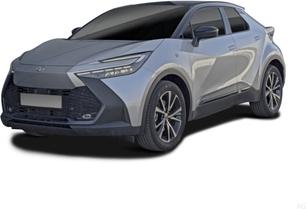
What's the difference?
According to the chief engineer for the Toyota C-HR, a second generation was never guaranteed for this uncharacteristically (for Toyota) design-led small SUV.
After the Corolla Cross came into existence, the top brass didn’t think the brand needed two similarly sized models in the line-up. So, why is it here, and is it any good?
The first question is easy to answer - the team drew the new C-HR up as a European model, built in hybrid-only and with enough key differences from the Corolla Cross to avoid the models competing.
The second question? Let’s find out.
Volvo has been riding a massive wave of success in the Australian new car market, recording (at the time of writing) 20 consecutive months of year-on-year sales growth. An even more impressive achievement given the overall market has been heading in the opposite direction.
Any worm dunker worth their salt will tell you to fish where the fish are, and Volvo has embraced the world's SUV fascination, with the XC40, XC60, and XC90 offering charismatic design and intelligent engineering across three SUV size categories.
But, there's something about Volvo and wagons (and Golden Retrievers). For more than 60 years wagons have been part of the Swedish brand's DNA, and the latest expression is the V90 Cross Country.
In other markets the car is sold in 'civilian' V90 guise. That is, a front-wheel drive only version of the full-size S90 sedan (also not sold here). But we cop the V90 Cross Country, a higher riding, all-wheel drive, five-seater.
Could its more car-like drive characteristics tempt you away from the SUV pack?
There’s not much in terms of practicalities that are going to convince you the C-HR is a better option than Toyota’s other small SUV, the Corolla Cross.
Even other ‘stylish’ small SUVs like the Mazda CX-30, fuel savers like the electric MG ZS EV, or performance small SUVs like the Hyundai Kona N are more affordable than the GR Sport version of the C-HR.
In the case of this car, unlike most of its Toyota stablemates, buyers will likely be making a decision from the heart based on exterior styling and its interior rather than value or practicality.
And who would anyone be to tell you not to buy a car you like for its styling?
The V90 Cross Country is a carefully considered, hugely practical, and sleek full-size wagon. It has power to shift a family and all that goes with it, along with leading edge safety for maximum protection. The engine could be quieter, the ride smoother, and the warranty longer. But if you're thinking about a premium five-seat SUV, we suggest checking out the passenger car driveability this Volvo offers.
There’s a fair bit going on here compared to most of Toyota’s other products, much like the first generation, but being designed with Europe as the key market and Australia as a secondary means the styling team needed to take on some fairly fashionable brands.
All three variants of the C-HR are relatively close in aesthetics, with major differences being two-tone paint or specific trim elements for the top-spec GR Sport.
It uses new Toyota design elements that have been seen on some models already, the ‘c-shape’ lights have been used on the new Prius, which we no longer get in Australia, for example.
The black roof was also available on the previous generation, where this car has carried over the ‘egg-like’ silhouette from.
The overall relatively aquatic styling and shape must be for aerodynamic advantage - its chief engineer told us the drag coefficient is just 0.318Cd - but the removal of the rear wiper to lower drag might have been unnecessary for a city-focused small SUV.
The cabin isn’t as wild as the outside, which may be a let-down in some ways, though it’s still a little more visually interesting than its more mainstream stablemates.
The 64-colour ambient lighting changes based on settings including time of day or drive mode, but can be set to a specific single colour if you wish.
The centre stack on the dash is gently angled towards the driver with a small separation between it and the passenger, creating a slight ‘cockpit’ feeling.
Seats are made from different materials depending on the grade, though no real leather is used even in the GR Sport, where synthetic suede and leather are the main upholstery.
The cloth textiles are made from entirely recycled materials, while the synthetic suede is made from a little less than half recycled materials.
They don’t look cheap, but they also don’t look particularly luxurious.
Three people have led Volvo's drive towards its current ultra-cool design look and feel. Thomas Ingenlath is Volvo's long-time chief design officer (and CEO of the brand's performance car subsidiary, Polestar), Robin Page is head of Volvo design, and Maximilian Missoni oversees exterior design.
In a rare case of healthy designer egos not getting in the way of a positive outcome, this trio has developed a classically simple, Scandinavian approach combining echoes of Volvos past, like the large grille, complete with 'Iron Mark' logo, and current signature elements including the dramatic 'Thor's Hammer' LED headlights and lengthy tail-light clusters.
The Cross Country off-roady bit comes courtesy of black wheelarch over-fenders, with the same shade applied to the window glass surrounds, front air vents, side skirts and lower section of the rear bumper.
Inside, the look is cool and sophisticated, with clean form working hand-in-hand with straight-forward function. The colour palette runs from brushed metal highlights, through grey, to black.
Our test vehicle featured three option packages, with two impacting interior presentation. All the details are listed in the price and value section below, but in terms of the cabin, the 'Premium Pack' adds a panoramic glass sunroof, and tinted rear glass, while the 'Luxury Pack' brings ventilated 'Perforated Comfort Seats' trimmed in (partial) nappa leather (the standard trim is nappa leather 'accented'... without the perforations).
The overall feel is composed and serene, with a layered approach to the dash including a mix of soft-touch materials and 'metal mesh' highlight elements.
A 9.0-inch centre touchscreen is portrait oriented with large vertical vents either side, and a 12.3-inch digital driver display sits inside a compact instrument binnacle.
The seats look inviting with raised stitching defining neatly sculpted panels, the curved head restraints another characteristic Volvo touch.
Overall, the V90's design is carefully considered and understated, but far from boring. It's great to look at on the outside, while the interior is as calming as it is efficient.
When it comes to interior layout and ergonomics, there’s never much to criticise in a Toyota, unless playing it safe is a downside for you.
The buttons you’re most likely to use regularly, across the climate control, centre console and steering wheel, are all very obvious and easy to find, if a little uninspiring, as is wheel design itself - form definitely doesn’t sacrifice function here.
Welcome are the two large screens, the multimedia touchscreen a large 12.3-inch unit and the driver display either 7.0-inch or another 12.3-inch version depending on variant.
Toyota’s software is simple and accessible, using a few main menu sections, though many will likely bypass this with wireless phone mirroring.
Everything’s in a sensible place: a tall bottle in the cupholders won’t block access to anything, the phone charging pad is tucked away to minimise distraction, and Toyota has kept things like the gear selector and stalks behind the steering wheel relatively traditional.
While the interior feels a little dated by its many buttons and some of its simple graphics, there’s certainly something to be said for a welcome change from distracting screens and menus - if the aim was to not exclude Toyota’s older market, it seems like mission accomplished.
In terms of comfort and space, the C-HR makes pretty good use of its interior from the front, the seats are relatively comfortable and visibility is fine, though the back seat starts to feel a bit cramped.
While cupholders and door bottle storage is plentiful in the front, there’s no armrest and no bottle storage in the rear, only relatively shallow cupholders on the armrests in the doors.
Visibility is also relatively poor with high windows, a narrow rear window, and not a lot of light unless there’s a sunroof.
Behind that, with the seats up, the C-HR’s boot has a claimed VDA capacity of 388 litres in the GXL and Koba, or 362L in the GR Sport. Total volume with the seats down is 1154L and 1490L respectively.
At just over 4.9m long, more than 2.0m wide, and a touch taller than 1.5m the V90 CC is a substantial wagon providing seating for five, ample cargo space, and lots of thoughtful touches to help ease the daily grind.
Those in front enjoy heaps of space as well as a centre console incorporating two cupholders, an oddments tray, two USB ports (one to enable Apple CarPlay/Android Auto connection and one for charging only) and a 12-volt socket, all able to be hidden by an elegant, roll-top cover. A similar, smaller cover rolls over a coin tray near the gearshift.
There's also a decent (cooled) glovebox, generous door bins with room for large bottles, and a small lidded box on the lower dash to the right of the steering wheel.
Switch to the rear and the 'roomy' theme continues. Sitting behind the driver's seat set for my 183cm (6.0ft) position I had plenty of leg and headroom, and the width of the car means three average-sized adults can populate the back seat without resorting to uncomfortable contortion.
A centre flip-down armrest houses a pair of pop-put cupholders, an oddments tray and a lidded storage box. But the modest door bins are too narrow for normal size bottles. On the upside, though, parents of small children everywhere will welcome the standard perforated pull-up blinds for each rear door window.
There are also netted map pockets on the back of the front seats, plus adjustable air vents at the back of the centre console and supplementary vents in the B-pillars. Our car's Versatility Pack option added a three-pin 220-volt power outlet at the base of the tunnel console, too.
Then, there's the business end, with the V90 coughing up 560 litres of boot space with the rear seats upright. More than enough to swallow our three-piece hard suitcase set (35, 68 and 105 litres) or the jumbo-size CarsGuide pram, or various combinations of the two.
With the second row 60/40 split-folding rear seat (with through port) down that grows to a substantial 913 litres. And that's measured to top of seat height. If you're loading up to the headlining those numbers stretch out to 723L/1526L.
Plus, there's a 12-volt outlet, bright lighting, a stretchy retaining strap on the right-hand wall, strategically placed shopping bag hooks and tie-down anchors at each corner of the floor.
The Versatility Pack option also adds a 'grocery bag holder' which is a piece of pure Nordic genius. It's essentially a flip-up board that pops out from the cargo floor with two bag hooks at the top and pair of elasticised retaining straps across its width. For small shopping loads it keeps things secure without the need to bring in a full cargo retaining net.
And to make lowering the rear seat and opening up that extra volume easier, the Versatility Pack also brings a pair of power control buttons for rear seat folding located near the rear door.
The space-saver spare is located under the floor, and if you're hitching things to the back, maximum tow weight for a braked trailer is 2500kg and 750kg unbraked.
Icing on the practicality cake is a handsfree power operated tailgate, which combines foot-under-the-rear-bumper auto opening with buttons in the door's lower edge to close it and lock the car.
While a Corolla Cross starts at $33,980 before on-roads, or $36,480 for a hybrid, the C-HR is just under $43K in its lowest spec.
And even though you’re paying more for a new hybrid drivetrain and some fun Euro styling, the Corolla Cross’ drivetrain isn’t far behind, and it still looks good enough to sell quite well.
So what’s the C-HR got going for it that the Cross doesn’t?
The base GXL starts from $42,990 plus on-road costs and comes with a bit more than you might expect from a base variant Toyota.
A 12.3-inch touchscreen, a 7.0-inch driver display and wireless Android Auto and Apple CarPlay have things covered for multimedia, while dual-zone climate, keyless entry and start, rain-sensing wipers, and USB-C and 12-volt ports and chargers cover off convenience.
The GXL has manually adjustable seats with recycled fabric - which I’ll come back to later - plus a synthetic leather-accented steering wheel.
The Koba, at $49,990, scores heated sports seats with synthetic suede trim, plus power adjustment for the driver seat and a digital rearview mirror as well as cabin ionisation via the climate control.
A wireless smartphone charger, a head-up display above a larger 12.3-inch driver display, plus adaptive high-beam all add to the convenience, while a nine-speaker JBL sound system and 64-colour ambient lighting add to the vibes.
Atop the range is the GR Sport, which starts from $54,990.
As well as being more powerful - we’ll come back to that, too - it gets unique styling outside, plus synthetic leather-accented and suede seats inside, aluminium scuff plates, and a heated GR Sport steering wheel.
The question of value in the V90 Cross Country can't be considered without thinking about competitors, and the all-wheel drive premium wagon concept is available above, below, and in line with the Volvo's $80,990 (before on-road costs) price tag.
For $112,800 the Mercedes-Benz E220 All-Terrain offers a similar size package, also powered by a 2.0-litre, four-cylinder turbo-diesel engine. It's a well-equipped, luxury-focused offering, but can't match the Volvo for power and torque.
Audi's A4 allroad 45 TFSI is comparable at $74,800, but smaller than the Volvo in every key measure, and its petrol engine can't match the V90's grunt.
Then the Volkswagen Passat Alltrack 140TDI is yet another Euro all-wheel drive 2.0-litre turbo-diesel four, but this time the cost of entry is 'just' $51,290. Appreciably smaller than the Volvo it's a less powerful but neatly resolved option.
So, in terms of standard equipment we'll cover active and passive safety in the safety section below, but aside from that the features list includes: nappa leather accented trim, power-adjustable and heated front seats (with memory and adjustable lumbar support), a leather accented steering wheel and gear selector, four-zone climate control, satellite navigation, and 10-speaker high-performance audio (with digital radio plus Apple CarPlay and Android Auto connectivity). A voice control function enables hands-free management of media, phone, nav and climate.
There's also keyless entry and start, the handsfree power operated tailgate, a rear sunblind, LED headlights (with 'Active Bending' function), LED tail-lights, rain-sensing wipers, cruise control, 20-inch alloy rims, a 360-degree camera (including reversing camera), 'Park Assist Pilot + Park Assist' (front and rear), plus the 9.0-inch centre touchscreen and 12.3-inch digital instrument display.
Then on top of that lot, our test car was loaded with three option packs. The 'Premium Pack' ($5500) adds a power panoramic sunroof, tinted rear glass, and Bowers & Wilkins 15-speaker premium audio.
The 'Versatility Pack' ($3100) adds the grocery bag holder in the boot, a compass in the rear view mirror, the power folding rear backrest, a power outlet in the tunnel console, and rear air suspension.
Plus, the 'Luxury Pack' ($2000) tips in power side support and a massage function in the front seats, a heated steering wheel, and ventilated 'Comfort Seats' with perforated nappa leather accented upholstery.
Squeeze in 'Crystal White' metallic paint ($1900), and you're looking at an 'as-tested' price of $93,490 before on-road costs.
The difference in boot space is likely because the hybrid-only C-HR comes with two drivetrain options, depending on which variant you have.
The GXL and Koba both use Toyota’s 1.8-litre four-cylinder engine aided by a front-mounted electric motor to produce a 103kW output at the front wheels via a continuously variable transmission.
The GR Sport, however, gains a rear electric motor (taking up some boot space) and a more powerful front motor, helping a larger 2.0-litre four-cylinder petrol engine make a total 146kW - still via a CVT.
Don’t expect to be getting to 100km/h from a standstill in any less than 8.0 seconds in either variant, but both have a claimed top speed of 170km/h.
The V90 Cross Country is powered by Volvo's (D4204T23) 2.0-litre, four-cylinder, twin-turbo diesel engine.
It's an all-alloy, direct-injection unit producing 173kW at 4000rpm and 480Nm from 1750-2250rpm.
Drive goes to all four wheels via an eight-speed automatic transmission and Volvo's fifth-generation, electronically-controlled all-wheel drive system (including off-road mode).
Toyota says the C-HR uses just 4.0L/100km on the combined cycle test, which is 0.3L less than the previous generation’s claim, but it should be noted the 2.0-litre in the GR Sport drinks a claimed 4.1L/100km.
During testing on the launch drive, but without being able to measure properly from fill to fill, one quite spirited leg of driving netted a 6.9L/100km reading on the trip computer, while a more sedate drive returned 5.4L/100km.
Claimed fuel economy for the combined (ADR 81/02 - urban, extra-urban) cycle is 5.7L/100km, the V90 CC emitting 149g/km of CO2 in the process.
Despite an standard auto stop-start system, after close to 300km of city, suburban and freeway driving, the on-board read-out settled on an average of 8.8L/100km. Using that number, the 60-litre tank provides a theoretical range of 680km.
There’s nothing particularly offensive about the way the new C-HR drives, but there’s nothing riveting either.
If you’ve driven anything on the Toyota TNGA platform, this will feel familiar to you - and that’s not a bad thing, it’s generally pretty stable, comfortable and controlled.
The modified Corolla platform it rides on is a very good thing, but the C-HR doesn’t have anything in the way of sporting tendencies its styling might suggest.
The hybrid drivetrain in the two 1.8-litre versions of the small SUV don’t offer up a whole lot in terms of keen acceleration, but even the GR Sport and its 146kW drivetrain need a push to get things feeling properly quick on a twisty road.
The added stability of the all-wheel drive in the top variant is noticeable, the front-drive variants feeling a little less planted when pushed.
Steering is on the slightly lighter side of still being well-weighted - it doesn’t wow, but Toyota’s engineers know what they’re doing and it does everything it needs to in terms of communicating feeling to the driver.
Some particularly rough roads on the test drive showed the suspension to handle short, sharp bumps well and not feel crashy over larger imperfections.
The suspension has been retuned in this TNGA-C platform to be stiffer for more control but also more compliant in terms of comfort.
But it’s around urban and suburban streets where the C-HR will spend most of its time, and neglected streets, speed bumps, or tram lines won’t shake you too much from in the cabin.
From the minute you hit the starter button there's no doubt a diesel engine resides under the V90's bonnet. This iteration of the 2.0-litre twin-turbo hasn't been around all that long, so its rather noisy character comes as a surprise. But once you get past that first impression, selecting D and extending your right ankle results in spirited acceleration.
Volvo claims 0-100km/h in 7.5sec, which is especially quick for a 1.9-tonne wagon, and with a grunty 480Nm of peak torque on tap in the suburban sweet spot - just 1750-2250rpm (with much of it hanging around beyond that), plenty of urge is always available. Continue pressing on and peak power (173kW) arrives at 4000rpm.
Add in slick changes from the eight-speed auto and this Volvo is a sleeper for the traffic light grand prix.
But once you've calmed down and settled into the urban crawl, the V90 CC's relatively patchy ride quality starts to make its presence felt.
It's the smaller bumps, holes and joins that typify urban Aussie roads that upset the V90. Suspension is double wishbone front, with an integral link and transverse leaf spring set-up at the back, and even with the optional air suspension fitted to the rear of our example, the car doesn't lead the pack for ride comfort.
Part of that could be down to the standard 20-inch rims shod with 245/45 Pirelli P Zero rubber. There's plenty of grip available with the variable all-wheel drive system obviously doing its bit to put the power where it's most useful. The electrically-assisted steering points nicely and delivers excellent road feel, but that niggling jiggling is always there. Interesting to note 19-inch alloys are a no-cost option.
Other than the engine sticking its nose in, the cabin is calm and relaxed. The seats feel super firm on first contact, but provide brilliant comfort over lengthy stretches. The brakes are disc all around, ventilated at the front (345mm fr/320mm rr) and the pedal is progressive and confidence inspiring.
Ergonomics are excellent, with the V90's dash and console controls and dials striking a user-friendly balance between screens and conventional buttons. The configurable digital instrument cluster is a stand-out.
All three variants of the C-HR come with a version of the Toyota Safety Sense suite of tech which includes things like pre-collision, active cruise control, speed limit sign assist, a surround-view parking camera, plus all the expected inclusions like ABS, blind-spot monitoring and rear cross-traffic alert.
The rear outboard seats are equipped with ISOFIX tethers, too, while the ADR-necessary top tethers are also present.
It hasn’t been tested by ANCAP, but in the case of a collision the C-HR does have a pretty decent airbag count of 10.
Volvo and safety are words that mesh like finely machined gears, and the C90 doesn't disappoint in terms of standard active and passive safety tech.
The car hasn't been assessed by ANCAP, but Euro NCAP gave it a maximum five-star score in 2017, in the process the V90 becoming the first car ever to score a full six points in the Autonomous Emergency Braking (AEB) for Pedestrians test.
As well as AEB (pedestrian, city, and inter-urban) the list of crash-avoidance features includes, ABS, EBA, 'Emergency Brake Light' (EBL), stability and traction controls, 'Intellisafe Surround' ('Blind Spot Information' with 'Cross Traffic Alert' and 'Collision Warning' front and rear with mitigation support), adaptive cruise control (including Pilot Assist lane guidance), 'Distance Alert', 360-degree camera (including rear parking camera), 'Park Assist Pilot + Park Assist' (front and rear), 'Hill Start Assist', 'Hill Descent Control', rain-sensing wipers, 'Steering Support', 'Oncoming Lane Mitigation', and 'Intersection Collision and Oncoming Mitigation' (with 'Brake Support'). Phew...
But if an impact is unavoidable you're supported by seven airbags (front, front side, curtain and driver's knee), Volvo's 'Side Impact Protection System' (energy absorbing body frame system working in concert with side and curtain airbags), neatly integrated child booster cushions (x2), a 'Whiplash Protection System' (seat and head restraint impact absorption), an active bonnet to minimise pedestrian injuries, as well as three top-tether points across the rear seat back with ISOFIX anchors on the two outer positions for child seats and baby capsules.
Toyota has a five-year/unlimited-kilometre warranty which covers the C-HR, as well as capped-price servicing for the first five years or 75,000km, whichever comes first, with each 12-month/15,000km service costing $250.
The C-HR also comes with a 12-month subscription to Toyota Connected Services, with features accessible through the myToyota Connect smartphone app.
Volvo offers a three year/unlimited km warranty across its new car model range, including roadside assistance for the duration. Not outstanding when you consider the majority of mainstream brands are now at five years/unlimited km.
But, on the upside, once the warranty runs out, if you have your car serviced at an authorised Volvo dealer each year you receive a 12-month extension to the roadside assist coverage.
Service is recommended every 12 months/15,000km (whichever comes first) with a Volvo Service Plan covering scheduled servicing for the V90 over the first three years or 45,000km for $1895 (inc GST).