What's the difference?
According to the chief engineer for the Toyota C-HR, a second generation was never guaranteed for this uncharacteristically (for Toyota) design-led small SUV.
After the Corolla Cross came into existence, the top brass didn’t think the brand needed two similarly sized models in the line-up. So, why is it here, and is it any good?
The first question is easy to answer - the team drew the new C-HR up as a European model, built in hybrid-only and with enough key differences from the Corolla Cross to avoid the models competing.
The second question? Let’s find out.
Alfa Romeo’s new entry-level model has finally arrived in Australia.
Pitched as a spiritual successor to the MiTo and Giulietta hatchbacks, the Junior is a tiny SUV with plenty of hatchback design cues.
It was originally set to be called the Milano, however members of the Italian government complained, claiming it’s illegal to sell products with an Italian place name that aren’t actually made there.
The Junior is actually built in Tychy, Poland alongside the related Jeep Avenger at a Stellantis production plant.
We’ve driven the Junior a few times now overseas, but now it’s time to see how it holds up on local soil.
First up is the Ibrida, or hybrid. The fully electric version is also on sale but will have to wait for a future review.
There’s not much in terms of practicalities that are going to convince you the C-HR is a better option than Toyota’s other small SUV, the Corolla Cross.
Even other ‘stylish’ small SUVs like the Mazda CX-30, fuel savers like the electric MG ZS EV, or performance small SUVs like the Hyundai Kona N are more affordable than the GR Sport version of the C-HR.
In the case of this car, unlike most of its Toyota stablemates, buyers will likely be making a decision from the heart based on exterior styling and its interior rather than value or practicality.
And who would anyone be to tell you not to buy a car you like for its styling?
The Alfa Romeo Junior is a cute car that’s charming and smile-inducing. It deserves to sell well but ultimately this will come down to whether the Australian public is receptive.
There is plenty of competition out there and if you're wanting something design-led, it's hard to look past this without spending much more money.
Note: CarsGuide attended this event as a guest of the manufacturer, with travel, accommodation and meals provided.
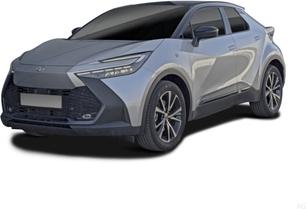
There’s a fair bit going on here compared to most of Toyota’s other products, much like the first generation, but being designed with Europe as the key market and Australia as a secondary means the styling team needed to take on some fairly fashionable brands.
All three variants of the C-HR are relatively close in aesthetics, with major differences being two-tone paint or specific trim elements for the top-spec GR Sport.
It uses new Toyota design elements that have been seen on some models already, the ‘c-shape’ lights have been used on the new Prius, which we no longer get in Australia, for example.
The black roof was also available on the previous generation, where this car has carried over the ‘egg-like’ silhouette from.
The overall relatively aquatic styling and shape must be for aerodynamic advantage - its chief engineer told us the drag coefficient is just 0.318Cd - but the removal of the rear wiper to lower drag might have been unnecessary for a city-focused small SUV.
The cabin isn’t as wild as the outside, which may be a let-down in some ways, though it’s still a little more visually interesting than its more mainstream stablemates.
The 64-colour ambient lighting changes based on settings including time of day or drive mode, but can be set to a specific single colour if you wish.
The centre stack on the dash is gently angled towards the driver with a small separation between it and the passenger, creating a slight ‘cockpit’ feeling.
Seats are made from different materials depending on the grade, though no real leather is used even in the GR Sport, where synthetic suede and leather are the main upholstery.
The cloth textiles are made from entirely recycled materials, while the synthetic suede is made from a little less than half recycled materials.
They don’t look cheap, but they also don’t look particularly luxurious.
This is such a cute and tiny car with Alfa Romeo trying its hardest to sandwich all of its hallmark design traits in. It’s certainly a busy design on the outside which I don’t love right now, but I imagine I’ll grow to like it with time.
At the front there’s a special grille as standard that features Alfa Romeo script, plus an offset license plate and cool matrix LED headlights with the company’s ‘3+3’ lighting signature.
Around the side the 18-inch alloy wheels have a flower petal-like design, hidden second-row door handles, as well as a hidden serpent (Biscione) easter egg that’s laser etched into the C-pillar.
The rear of the Junior is my least favourite angle. It tries too hard to look more like a hatchback than a crossover SUV with the slanted rear window and the big black slab where the tail-lights are.
The twin exhaust pipes are a cute look, however, especially given the engine doesn’t scream performance credentials on paper.
Inside there’s an obvious attempt at making the cabin look and feel driver-oriented and sporty.
I like the seats which have a red section that runs down the backrest and onto the seat base. It helps break up the black finishes nicely.
Speaking of, however, there's a sea of black finishes throughout the rest of the cabin. I’d like to see some more silver or chrome accents as the glossy piano black may not age well.
There is interior ambient lighting around the cabin with a customisable colour, which looks great in low-light situations. It particularly pops in the large circular air vents which flank the dashboard and are shaped like cloverleaves.
If you look closely you may notice the Junior shares a lot of its physical switchgear with the related Jeep Avenger. Examples include the steering wheel buttons, gear selector, starter button and the physical climate control switches.
While there’s an argument to say that this cheapens the feel of the Junior, I’m thankful there is physical switchgear in this car to begin with. Plus, the Junior does look different enough as it is.
When it comes to interior layout and ergonomics, there’s never much to criticise in a Toyota, unless playing it safe is a downside for you.
The buttons you’re most likely to use regularly, across the climate control, centre console and steering wheel, are all very obvious and easy to find, if a little uninspiring, as is wheel design itself - form definitely doesn’t sacrifice function here.
Welcome are the two large screens, the multimedia touchscreen a large 12.3-inch unit and the driver display either 7.0-inch or another 12.3-inch version depending on variant.
Toyota’s software is simple and accessible, using a few main menu sections, though many will likely bypass this with wireless phone mirroring.
Everything’s in a sensible place: a tall bottle in the cupholders won’t block access to anything, the phone charging pad is tucked away to minimise distraction, and Toyota has kept things like the gear selector and stalks behind the steering wheel relatively traditional.
While the interior feels a little dated by its many buttons and some of its simple graphics, there’s certainly something to be said for a welcome change from distracting screens and menus - if the aim was to not exclude Toyota’s older market, it seems like mission accomplished.
In terms of comfort and space, the C-HR makes pretty good use of its interior from the front, the seats are relatively comfortable and visibility is fine, though the back seat starts to feel a bit cramped.
While cupholders and door bottle storage is plentiful in the front, there’s no armrest and no bottle storage in the rear, only relatively shallow cupholders on the armrests in the doors.
Visibility is also relatively poor with high windows, a narrow rear window, and not a lot of light unless there’s a sunroof.
Behind that, with the seats up, the C-HR’s boot has a claimed VDA capacity of 388 litres in the GXL and Koba, or 362L in the GR Sport. Total volume with the seats down is 1154L and 1490L respectively.
The front seats in the Junior are very comfortable for longer drives. The driver’s seat in particular offers six ways of electric adjustability and a massage function. You don’t see features like that very often on a tiny SUV.
Ahead of the driver there’s a leather-wrapped steering wheel. It’s surprisingly slim which makes it nice to hold. There are also paddle shifters on the back which could be more pronounced.
As standard there’s a 10.25-inch digital instrument cluster which emulates analogue dials for the tachometer and speedometer. While the screen is high-res and clear, it’s interesting that Alfa Romeo chose to emulate dials in a digital way rather than just have physical ones, especially because you can’t change their appearance.
There’s a section in the middle that has a few different informative pages you can cycle through. I’d love to see more configurability given there’s limitless possibilities with a screen.
Moving across there’s another 10.25-inch screen for the central multimedia system. It certainly makes up for the lack of configurability in the digital instrument cluster and you can create and customise five different home page screens with a vast array of widgets. It’s fairly clever though at some point it feels like overkill.
There aren’t many menus or sub-menus to get lost in, however, the home button took me a while to locate. It’s above the touchscreen in a small pod of physical buttons alongside the hazard lights and door lock switch.
Underneath the touchscreen there’s a wireless phone charger, plus USB-C and USB-A charger ports.
The engine start button is mounted prominently on the centre tunnel with the lightswitch-like gear selector directly behind it. It’s mounted a little too close to the centre armrest which means craning my arm like a T-Rex to use it.
Other amenities up front include a deep console area with configurable cupholders, a sliding centre armrest with a cubby, as well as a tiny glovebox.
It’s very clear the second row of the Junior isn’t the focus. At 182cm tall I need to splay my legs on either side of the driver’s seat in my desired driving position. Despite this, toe room and headroom is adequate, even with the optional sunroof.
The second row isn’t a place anyone would want to spend too long in. Kids would likely suit better, plus there are top-tether points on all three rear seats and ISOFIX mounting points on the outboard rear seats.
Amenities are limited to a single USB-C port in the second row. There are no air vents or centre armrest. You need to make your own entertainment.
At the back there’s a hands-free power tailgate, which is rare for a vehicle of this size. Once it’s open, the available boot space is decent, especially for such a small car. There’s 415L of boot space with the rear seats upright.
The area itself is fine. There’s no load lip which allows you to get things in and out with ease, plus there’s a two-tier boot floor, allowing you to stow items under the floor away for prying eyes.
In terms of boot-related amenities there’s a 12V socket, a light and some hooks. It’s fairly standard back there.
Unfortunately there’s no spare wheel as standard in the Junior line-up. Instead there’s a tyre repair kit which is not super handy if you have a tyre blow out.
Thankfully you can purchase a space-saver spare wheel for the Junior Ibrida for $314 as a genuine accessory. It would be better if this came as standard given there’s the space for it.
While a Corolla Cross starts at $33,980 before on-roads, or $36,480 for a hybrid, the C-HR is just under $43K in its lowest spec.
And even though you’re paying more for a new hybrid drivetrain and some fun Euro styling, the Corolla Cross’ drivetrain isn’t far behind, and it still looks good enough to sell quite well.
So what’s the C-HR got going for it that the Cross doesn’t?
The base GXL starts from $42,990 plus on-road costs and comes with a bit more than you might expect from a base variant Toyota.
A 12.3-inch touchscreen, a 7.0-inch driver display and wireless Android Auto and Apple CarPlay have things covered for multimedia, while dual-zone climate, keyless entry and start, rain-sensing wipers, and USB-C and 12-volt ports and chargers cover off convenience.
The GXL has manually adjustable seats with recycled fabric - which I’ll come back to later - plus a synthetic leather-accented steering wheel.
The Koba, at $49,990, scores heated sports seats with synthetic suede trim, plus power adjustment for the driver seat and a digital rearview mirror as well as cabin ionisation via the climate control.
A wireless smartphone charger, a head-up display above a larger 12.3-inch driver display, plus adaptive high-beam all add to the convenience, while a nine-speaker JBL sound system and 64-colour ambient lighting add to the vibes.
Atop the range is the GR Sport, which starts from $54,990.
As well as being more powerful - we’ll come back to that, too - it gets unique styling outside, plus synthetic leather-accented and suede seats inside, aluminium scuff plates, and a heated GR Sport steering wheel.
The Junior Ibrida is the “entry-level” variant and has an asking price of $45,900 before on-road costs, which is fairly steep for such a small vehicle.
Depending on what you class as a rival for this car you can either see it as good or poor value. It’s cheaper than the likes of the Lexus LBX and around the same price as a related Peugeot 2008.
However, Chinese rivals like the Chery Tiggo 4 and the MG ZS, albeit slightly larger, are virtually half the price. But they lack the primo Alfa badge.
Despite this, the Junior comes fully loaded as standard in Australia so there’s plenty of kit.
Standard equipment includes 18-inch alloy wheels, matrix LED headlights, a hands-free power tailgate, two-tone black roof, dual 10.25-inch screens, wireless Apple CarPlay and Android Auto, wireless charger, single-zone climate control, heated front seats, as well as black cloth and synthetic leather upholstery.
The only options available include a sunroof and premium paint. Both of these cost $1990 each.
The difference in boot space is likely because the hybrid-only C-HR comes with two drivetrain options, depending on which variant you have.
The GXL and Koba both use Toyota’s 1.8-litre four-cylinder engine aided by a front-mounted electric motor to produce a 103kW output at the front wheels via a continuously variable transmission.
The GR Sport, however, gains a rear electric motor (taking up some boot space) and a more powerful front motor, helping a larger 2.0-litre four-cylinder petrol engine make a total 146kW - still via a CVT.
Don’t expect to be getting to 100km/h from a standstill in any less than 8.0 seconds in either variant, but both have a claimed top speed of 170km/h.
The Junior Ibrida is powered by a 1.2-litre turbocharged three-cylinder petrol engine with 48V mild-hybrid assistance.
In the six-speed dual-clutch transmission is a 21kW electric motor that’s fed by a 0.9kWh lithium-ion battery pack.
It’s worth noting that this is the exact same engine set-up that features in a growing number of Peugeot models locally, including hybrid versions of the 2008, 3008, 5008, 308 and 408.
Total system outputs are 107kW and 230Nm which is far from class-leading. Alfa Romeo claims the 0-100km/h sprint takes 8.9 seconds.
Toyota says the C-HR uses just 4.0L/100km on the combined cycle test, which is 0.3L less than the previous generation’s claim, but it should be noted the 2.0-litre in the GR Sport drinks a claimed 4.1L/100km.
During testing on the launch drive, but without being able to measure properly from fill to fill, one quite spirited leg of driving netted a 6.9L/100km reading on the trip computer, while a more sedate drive returned 5.4L/100km.
The Junior Ibrida has a claimed fuel consumption of just 4.1L/100km, which is solid for a mild-hybrid vehicle.
There’s a 44L fuel tank which requires a minimum of 95 RON premium unleaded petrol.
During our 200km drive loop on the launch which consisted of mixed and spirited drive, we returned an average of 5.4L/100km. However, during one section with fewer twists and turns we saw an average of 4.0L/100km, which is incredible.
Using our as-tested fuel consumption there’s a theoretical range of 815km.
There’s nothing particularly offensive about the way the new C-HR drives, but there’s nothing riveting either.
If you’ve driven anything on the Toyota TNGA platform, this will feel familiar to you - and that’s not a bad thing, it’s generally pretty stable, comfortable and controlled.
The modified Corolla platform it rides on is a very good thing, but the C-HR doesn’t have anything in the way of sporting tendencies its styling might suggest.
The hybrid drivetrain in the two 1.8-litre versions of the small SUV don’t offer up a whole lot in terms of keen acceleration, but even the GR Sport and its 146kW drivetrain need a push to get things feeling properly quick on a twisty road.
The added stability of the all-wheel drive in the top variant is noticeable, the front-drive variants feeling a little less planted when pushed.
Steering is on the slightly lighter side of still being well-weighted - it doesn’t wow, but Toyota’s engineers know what they’re doing and it does everything it needs to in terms of communicating feeling to the driver.
Some particularly rough roads on the test drive showed the suspension to handle short, sharp bumps well and not feel crashy over larger imperfections.
The suspension has been retuned in this TNGA-C platform to be stiffer for more control but also more compliant in terms of comfort.
But it’s around urban and suburban streets where the C-HR will spend most of its time, and neglected streets, speed bumps, or tram lines won’t shake you too much from in the cabin.
Starting up the Junior Ibrida, the turbo three-cylinder engine roars to life with an off-beat, thrum-y sound.
If the engine is bone cold, it’ll stay on to get the fluids up to operating temperature. Once this happens it will happily switch off.
Initial acceleration is typically done on electric power alone and if you don’t press the accelerator too hard it’ll stay in EV mode at city speeds. It’s very electric-heavy for a car that’s technically only a 48V mild-hybrid.
At many points the engine switches off at speeds up to 80km/h, especially if you’re travelling on flat ground. Even at 100-110km/h, it’ll switch off if coasting.
Something to note is the electric motor is part of the six-speed dual-clutch transmission which means you can sometimes feel gear changes even when driving in EV mode. You do get used to this.
A positive of the electric motor being in the dual-clutch is it helps iron out awkward pauses and jerks that this type of transmission typically presents. It’s still not perfect though.
If you press the accelerator harder or the battery charge gets lower, it’ll inevitably fire up the three-cylinder engine. It makes a rorty note during acceleration which is fun to listen to.
The transition from electric to petrol is generally seamless. There can be a slight shudder when the three-cylinder first fires up at low revs, but I’ve experienced much worse in other cars.
There’s only one setting for regenerative braking, which is fairly strong and almost one-pedal-driving like. It takes a bit to get used to the feeling. You do still need to put your foot on the brake pedal to come to a complete stop.
With the combination of the petrol engine and electric motor, acceleration is far from break-neck but it’s far from slow. The fact it doesn’t have much power actually makes this car more endearing, especially because it’s rewarding to drive.
The steering in the Junior is communicative and direct. It's a joy to take corners in as the feel errs more on the lighter side. It almost has a Mini-like go-kart feel as the car feels so nimble.
Additionally, the ride is composed and settled, even at higher speeds on rough roads, which is rare for small vehicles. This is likely because the Junior only has 18-inch alloy wheels with a decent amount of tyre sidewall, rather than the low-profile 20-inch units that are offered in the Veloce Elettrica overseas.
On the highway the Junior’s cabin is surprisingly quiet. You can’t hear the three-cylinder once you’ve reached your set speed and there’s also minimal wind/tyre noise.
Lastly, the safety systems do a good job at working but not being annoying. The worst culprit is the intelligent speed limit assist which chimes when you go over the signposted speed limit.
If it does grate you too much, you can easily switch it off in a dedicated advanced driver assist system (ADAS) menu that can be reached via a shortcut button near the hazard lights. It’s as easy as that.
All three variants of the C-HR come with a version of the Toyota Safety Sense suite of tech which includes things like pre-collision, active cruise control, speed limit sign assist, a surround-view parking camera, plus all the expected inclusions like ABS, blind-spot monitoring and rear cross-traffic alert.
The rear outboard seats are equipped with ISOFIX tethers, too, while the ADR-necessary top tethers are also present.
It hasn’t been tested by ANCAP, but in the case of a collision the C-HR does have a pretty decent airbag count of 10.
The Alfa Romeo Junior hasn’t been crash-tested by ANCAP or Euro NCAP just yet.
Standard safety kit includes six airbags, autonomous emergency braking (AEB), blind-spot monitoring, lane-keep assist, adaptive cruise control, front, side and rear parking sensors, as well as a reversing camera.
Some features missing from the line-up include rear cross-traffic alert, plus a proper surround-view camera. With the latter, however, the reversing camera stitches together when reversing to create a surround-view image, much like Peugeots.
Junior owners get 12 months of complimentary access to connected services which allows for things like SOS emergency calling and live traffic satellite navigation, plus a range of remote functionality through a companion smartphone app.
Toyota has a five-year/unlimited-kilometre warranty which covers the C-HR, as well as capped-price servicing for the first five years or 75,000km, whichever comes first, with each 12-month/15,000km service costing $250.
The C-HR also comes with a 12-month subscription to Toyota Connected Services, with features accessible through the myToyota Connect smartphone app.
Like other Alfa Romeos, the Junior is covered by a five-year, unlimited-kilometre warranty.
There’s also five years of roadside assistance as standard. An additional 12 months of coverage can be added for the lifetime of the vehicle every time you service at an authorised Alfa Romeo dealer.
Logbook servicing is required every 12 months or 15,000km, whichever comes first. The first five services are capped and total $3105.84, which averages out to around $620 each.
This seems pretty expensive for such a small car, but it's only a touch pricier than the Lexus LBX.
It’s clear maintaining this vehicle with its dual-clutch automatic transmission and mild-hybrid components is costly in the long run.