What's the difference?
It is highly unusual to drive around in a bed, but that’s what it felt like we were being asked to do with the new and terribly exciting Tesla Model 3 Performance.
Tesla doesn’t do media launches, nor traditional marketing, so everything about this event was predictably peculiar, but when we were told this new car was causing so much excitement that we should pull a sheet over it every time we stopped, to avoid people photographing it, or touching it (“if someone tries, just politely ask them to stop” as we were advised) we hit peak weirdness.
Eventually, they did agree to pull the sheet off one and let us have a look at the most exciting car Tesla has ever made that’s not a Cybertruck.
The Performance is the Model 3 Tesla engineers and designers always wanted to make. Clearly, it was going to be called the 'Ludicrous', because some staff kept stuffing up and calling it that. It’s a shame the name wasn’t used, but at least it still gets an 'Insane' mode.
They really wanted to go all out with the original Performance version, but “a guy called Elon” didn’t want to add all the complexity that required at the time - he was focused on quality issues and ramping up production - but this go around he has let them have their heads, and encouraged them to go hog wild.
That means an entirely new power unit at the rear, staggered 20-inch wheels for sportier turn-in, aerodynamic changes for more downforce and less lift, new seats and the fitting of active dampers to a Model 3 for the first time, to help provide proper, track-ready handling.
We set out into the embrace of the adoring Los Angeles public (truly, no city on Earth boasts so many Tesla owners, they are everywhere) to find out if all the fuss is worth it.
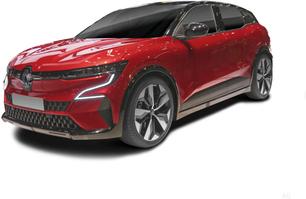
The hotly anticipated Renault Megane E-Tech has arrived on our shores but we're only getting the mid-spec variant for now.
Renault's newest EV is related to the well-known Megane in name only because it has been built from the ground up as an EV. It’s not a hatchback, like its namesake, either, rather a crossover, which means it’s a bit lower than some of its small SUV rivals.
It faces firm competition in the likes of the Hyundai Kona Electric, Volvo C40 and newcomer bZ4X from Toyota. In this review we'll see how Renault's cutest EV handles life with my family of three.
The Model 3 Performance is one of those cars that’s undeniably impressive in almost every way, and hugely fast in absolutely every way, and yet can somehow still leave you feeling slightly cold. Or at least damp with fear sweat.
It’s not my kind of sports car, but if you love speed, and EVs, and Tesla, you’re gong to think it’s the Queen Bee’s knees.
Publishers: Please place the following in BOLD after the verdict:
Note: CarsGuide attended this event as a guest of the manufacturer, with travel, accommodation and meals provided.
The design for the Renault Megane E-Tech is top-notch and the eco-conscious footprint is even better. It’s an easy and comfortable car to be in but the price is a smidge too high in my opinion when you consider there’s currently only one choice for us Aussies and it’s a mid-spec variant at that. It also misses out on some items its rivals have but is a solid EV to consider for urban dwellers.
Tesla’s design folks waxed long and loud about how they’d finally been able to visually lift and separate this Performance Model 3 from the basic one and they point to the new front and rear fascias, more aggressive styling, aerodynamic flicks, integrated cooling ducts, rear diffuser and carbon-fibre spoiler, which are there not only to look good, but to to “optimise lift balance and high-speed stability”.
Now, I’ll grant you it’s better than a normal Model 3, and that we were regularly approached by excited Tesla fans asking “is this the NEW PERFORMANCE OH MY GOD I WANT ONE NOW?!?"
But honestly, I still think it’s a bit subtle, and that includes the strange little 'Performance' sticker/badge on the rear, which does look a lot like the Ludicrous symbol that Elon loves, from the awful movie Spaceballs, but Tesla staff insist it’s not, nor is it Plaid.
Clearly, the design tweaks are there for a reason, and train spotters will note the differences immediately, but it’s still just not the most exciting car to look at, nor is it anywhere near as exciting to behold as it is to drive.
The E-Tech’s plump body panelling gives me some cute marshmallow vibes from certain angles but there are enough features to keep it looking slick, like the fun LED headlights, massive 20-inch alloys and optional two-tone paintwork.
I’m also a fan of the door handles on the E-Tech as they add some nice focal points, because the front has auto-flush handles that pop out on approach and the back door handles are positioned on the C-pillar.
If you're eco-conscious the E-Tech ticks the box because Renault has designed it to be 90 per cent recyclable.
The body is made of aluminium and can be reformed and shaped into new products at the end of its life. The interior materials are made from recycled fabrics and trims; even the lithium-ion battery is free from any rare earth minerals.
Head inside the cabin and the grey knit trims and upholstery on the seats, doors and dashboard creates a cabin space that feels warm and inviting. It's a similar feel to the Polestar 2 - simple but refined.
Although, with my kid around I have higher anxiety about dirtying them!
Inside, the big news is the new seats. Tesla was happy to admit the pews fitted to the previous Performance just weren’t up to the job of holding humans in place when applying so much G force.
The new 'Sport Seats' feature enhanced side cushioning and side bolsters for better lateral support during dynamic driving. And they can also be heated and ventilated.
Elsewhere, there’s some carbon-fibre trim on top of the dash, with a Tesla-first weave pattern to further help the Performance stand out within the Model 3 line-up.
Other than that, it’s pretty standard Tesla sedan, which will be familiar if you’ve ever caught an Uber in Los Angeles. Spartan, minimalist, slightly cheap-feeling.
As for the practicality of the tech, I'm still against the giant 15-inch tablet-style touchscreen, for everything, the replacement of an indicator stalk with buttons and not having a speedo right in front of your eyes, where you need it.
The E-Tech’s cabin is fairly roomy up front with plenty of head- and legroom. The front seats are super comfortable with powered lumbar support and I wouldn’t mind them not being powered if the price point was a bit lower.
The rear seat is comfortable enough once you get seated but the top of the door apertures are low, and I have to duck my head to get in and out.
Your head also brushes against the roof lining in the back which isn't terribly comfortable, especially considering there is no fold-down armrest to lean on.
The front row benefits the most with individual storage and you get a lot of options to choose from but the centre console is one of the most practical I’ve seen for the class. Lots of pockets and nooks that feature adjustable 'walls'.
You get a single permanent cupholder but with the removable walls, accommodation for a second cup or bottle, can be catered for.
Underneath the multimedia screen you get a dedicated phone shelf, which I love using.
In the rear, you get two map pockets and shallow bin storage in each door.
The charging options are good with two USB-C ports in each row as well as a 12-volt outlet and a wireless charging pad up front but you miss out on V2L (Vehicle to Load) functionality in this model.
The 9.0-inch touchscreen multimedia system looks great headlining the dash and is easy to access and use. The system rebooted once on me while driving but other than that everything is responsive.
You get wireless Apple CarPlay and Android Auto and the CarPlay is easy to get started.
The steering wheel has numerous stalks, controls, regen paddle shifters and even the gearshifter on the column, too. It takes a beat to get used to it but I like how driver orientated it is.
The boot offers great storage at 440L but it’s a deep well, which might be annoying if you’re unloading heavier gear. There is underfloor storage for the cables, too, and like I said, you miss out on a powered tailgate.
Tesla says the price for the Model 3 Performance will be "starting at" $80,900, plus on-road costs. There's no word on whether there will be different spec levels and the company does not like answering questions or providing information.
What we also know about Tesla is that the price quoted could move down, or up, at any time, quite randomly, so if phrases like "residual value" or "depreciation" are of interest to you, it can be a challenging brand.
That side swipe aside, this sounds like astonishingly good value for this much performance from your Model 3 Performance. A Hyundai Ioniq 5 N would give it run for fun and involvement, if not brand fans, but it's $111,000, while a Porsche Taycan kicks off at $164,000 (it is a lot more car for the money, but it might struggle to keep up with this Tesla, at least in base model form).
In terms of equipment, it's pretty much standard Model 3 fare, other than the fast bits and a spot of carbon here and there.
You get 'Autopilot' included, of course, but you can't use all of its 'Full Self Driving functionality' on Australian roads. Not yet, anyway.
For the moment, the Megane E-Tech is being offered in only one grade for the Australian market and that’s the Techno EV60, which is the mid-level version of Renault’s brand new EV.
The EV60 is priced from $64,990, before on-road costs, and that positions it right in the middle of its rivals. The nearest competitor is the Hyundai Kona Extended Range at $60,500 MSRP, newcomer Toyota bZ4X 2WD slides in at $66,000 MSRP and the Volvo C40 Plus sits at $78,990 MSRP.
The E-Tech comes with a decent array of features for a mid-spec variant and premium items include heated front seats, a heated steering wheel, a digital rear view mirror and wireless functionality for Apple CarPlay and Android Auto but you do miss out on items like a powered tailgate and electric front seats which most of its rivals sport.
Technology looks good with a 9.0-inch touchscreen multimedia system, 12.3-inch digital instrument cluster, dual-zone climate control, faster USB-C ports (four total) and a wireless charging pad.
Sound is covered by the Arkamys Auditorium sound system with six speakers and the mood can be set with the 48-way configurable ambient lighting system.
Despite missing out on a powered tailgate, the EV60 has some features that still offer convenience like keyless entry, heated and auto-folding side mirrors and auto-folding flush door handles that pop out on approach (front only).
If you’ve ever driven the previous Model 3 Performance you’ll know that it could well have come with Space X badging (arguably Elon’s more impressive engineering achievement), because it really did thrust rather than accelerate.
But this time the engineers wanted to go all out. Customers appreciated the incremental performance they got from the last Model 3 Performance version, but they told Tesla they wanted more.
With many enthusiasts among Tesla's engineering and development team, they looked to unlock the performance potential of the platform.
So, that meant a whole lot more madness and torque thump. It comes from a new Performance 4DU, an all-new drive unit - featuring an entirely new rear motor that uses bar-winding technology - unlocking 22 per cent more continuous power, 32 per cent more peak power and 16 per cent higher peak torque delivery.
Overall figures are 380kW and 740Nm, but looking at them written down, they seem big, yet not as big as they feel in this car, as it’s shoving you from a standing start to 100km/h in three seconds flat.
It feels faster. Sick-making fast, even.
The Techno EV60 has a single electric motor. It produces a power output of 160kW and 300Nm of torque, and Renault says it will sprint from 0-100km/h in 7.4-seconds.
That's perfectly adequate for keeping up with traffic or getting around town. You only notice a sluggishness with power when you have a full load of gear. Flipping it to 'Sport' mode make it feel peppier, if you ever need it.
Despite being heavier and gruntier, Tesla claims the new Performance Model 3 manages to be more efficient than the one it replaces, albeit delivering just a two per cent reduction in energy consumption. Claimed energy usage is 16.7 kWh/100km.
Tesla claims a total range of 528km on the WLTP, which is obviously going to drop if you drive it the way its makers clearly intended.
Using a Tesla Supercharger, you can add 228km in 15 minutes and... that's all Tesla will tell us. There are no official figures available for how long a full charge takes, on either a Tesla charge or a home wallbox of your own.
The official energy consumption figure is 15.6kWh/100km and I averaged 13.9kWh after a fair mix between urban and open-road driving.
That’s outstanding consumption but the official driving range for this E-Tech’s 60kWh lithium-ion battery is up to 454km, which is similar to the Hyundai Kona Electric but I still had an eye on the range during longer trips.
The E-Tech has a Type 2 CCS charging port which means you can benefit from faster DC charging speeds, however, it can only accept a top speed of 7.4kW on AC power.
On a 7.4kW AC charger, you can go from 0-100 per cent in a little over nine hours but on a standard 2.3kW house plug, that jumps up to over 30-hours.
On a 130kW DC charger expect to go from 15-80 per cent in as little as 30 minutes, which is pretty convenient if you have access to one.
Sadly, the E-Tech doesn’t have vehicle-to-load capability, so you can’t power or charge bigger items.
Very occasionally, one drives a car that makes the human body feel inadequate to the task. I would have worried that I’m getting old, that my body is simply too flubby and my brain too broken, to cope with the kind of wild acceleration and brutal g-forces the Model 3 Performance delivers.
But, fortunately, I had a videographer in the passenger seat, a much younger man who loves fast cars, and he kept threatening to vomit when I drove it hard, too.
I’ve driven quite a few cars that you can use make your passenger sick, or hurt their necks - one obvious competitor in the shape of a Porsche Taycan Turbo S comes to mind - but it’s very rare that a vehicle is so intense it can make you, the driver, feel bilious.
Yes, you do bring this on yourself, by choosing to push this Performance anywhere near its limits through particularly sharp and intestine-shaped roads like the canyons outside Malibu Tesla chose to launch it on.
On longer, sweeping bends it was far more of a joy, and less physically punishing, but in the tight stuff it often felt like corners were being thrown at you, as if you were driving behind the Millennium Falcon and being pulled along in its wake.
The brakes, special new sporting ones with track-ready pads, were up to the task, even though it often felt like they couldn’t possibly pull you up from the speeds you were doing.
And yes, it was entirely my fault that the very first time I even gently prodded the throttle and it launched me ahead past a California Highway Patrol officer, that was my fault too. Three minutes into the drive, holding an American fine, I had already deduced that perhaps this car was too fast for my own good.
But lots of EVs are fast in a straight line, you’re really comparing the length and depth of your “oooophhh” sounds at this point, but where this one succeeds is by being a lot better in the handling and ride and cornering departments than most.
Tesla’s stated goal with this car was to move beyond straight-line speed, to become more than a one-trick pony, and to do that it’s given the Performance a stiffer structure overall and updated the springs and stabiliser bars.
Aerodynamic changes have reduced drag by five per cent, delivered a 36 per cent lift reduction, and a 55 per cent improvement in front-to-rear lift balance.
Tesla’s own, in-house version of adaptive dampers, not an option but included in every Performance, work with the car’s 'Vehicle Dynamics Controller' through its various modes - 'Insane' and 'Track' being the most… ludicrous - to immediately respond to driver inputs.
The Performance rides well on LA’s awful concrete freeways but feels absolutely nailed down when you attack even a bumpy driver’s road.
This version also has a lot more power going to the rear wheels, to help it feel more sports-car playful and to fire out of bends the way an enthusiast’s car should. And make no mistake, I met them, the people behind this car are serious driving enthusiasts (although they demur, slightly, on whether their boss is one).
Track mode will allow some serious adjustability, drifting ability and fun, so the kind of people who want to hurl around a racing circuit in silence will love it.
Perhaps the only let downs are that it still feels a bit austere inside, just not very special, and that the steering is just a bit digital, soft and uninvolving, compared to the cars they clearly benchmarked against - BMWs and Porsches.
I have mostly loved driving the E-Tech. It's easy to cruise around in and the power is adequate for open-road driving but it prefers an urban environment.
The power can feel a bit lacklustre when you are carrying lots of people or gear but you mostly feel that when you're on a steep incline and trying to keep up your speed.
The steering is crisp and that makes the E-Tech very responsive to drive. The power is delivered smoothly and it feels well-balanced when you put your foot down.
There is more roll in corners than I was expecting but the car still feels firmly planted.
The ride comfort is great. The suspension is more firm than soft which means you feel the road but it's not a major bother. There is a bit of wind noise at higher speeds, as if the door isn’t properly sealed by a millimetre but it doesn't annoy me.
The regenerative braking is controlled by paddles on the steering wheel and you have three levels plus a one-pedal function to choose from.
The single pedal set-up is pretty smooth, even in stop/start traffic, but it’s great to be able to quickly change modes on the go.
The smaller size of the E-Tech makes it an easy car to manoeuvre in a small car park. You get front, rear and side parking sensors which is great because the reversing camera isn’t as clear as it should be for this price level.
Tesla provided no information about safety for the Performance Model but it is assumed it will be unchanged from a standard Model 3.
Aside from Autopilot that means auto emergency braking, lane keep aids, and instead of blind-spot monitoring, it gets the surround radar view and blind-spot cameras when you indicate.
The latest Model 3 has an additional centre airbag for a total of seven, as well as additional bolstering where the doors meet the body in response to requirements in its American home market.
It should be able to carry its maximum five-star ANCAP safety rating, which the original version achieved in 2019.
The E-Tech has a maximum five-star ANCAP safety rating from testing in 2022 and has seven airbags, including a front centre airbag.
The EV60 comes with lots of passive safety features including dusk sensing auto LED headlights, LED DRLs, a rear fog light, child safety locks, tyre pressure monitoring, traffic sign recognition tech, an intelligent seatbelt warning, a reversing camera plus front, rear and side parking sensors.
Active safety equipment includes items like blind-spot monitoring, driver attention alert, rear collision warning, forward collision warning, rear cross-traffic alert, lane departure alert, lane keeping aid, and adaptive cruise control (with stop and go).
You also get a digital rear view mirror which is essential as the back window is narrow and the camera feed provides a clearer view than you’d have without it.
The rear row also features ISOFIX child seat mounts on the outboard seats and three top tethers but two seats will fit best. The front passenger seat also has ISOFIX child seat mounts and a top tether.
AEB with car, pedestrian, cyclist and junction turning assist function is operational from 8.0-80km/h (160km/h for cars) but it is common to see that starting figure sit closer to 5.0km/h.
Again, we've been asked to assume the Performance will come with Tesla's standard four-year/80,000km warranty and roadside assistance. And that the battery and drive unit will fall under an eight-year/192,000km warranty, whichever comes first.
Tesla says it monitors its cars to ascertain when they need servicing, and so it is based on a case-by-case situation. Every 12 months/20,000km is recommended for a general check-up, and includes tyre rotation.
Wiper blades, brake fluid and cabin air filters need replacement every two years while the air-con service is every six years.
Of course, there are no oil changes, filters or spark plugs to replace, and even brake pad wear is less than on an ICE vehicle because of the regenerative braking system. Although it will likely be higher in the Performance variant.
The E-Tech comes with a five-year/100,000km warranty, but it’s usual to see an unlimited km term for the class. The battery is covered by an eight-year or up to 160,000km warranty term.
Service intervals are reasonable at every 12 months or 30,000km and you also get five-years roadside assistance included.
Pricing over the first five years ranges from a low of $230.04 to a high of $519.62, averaging out at pretty competitive $317.72 per service. No capped-price deal is available.