What's the difference?
Among the many strange new car brands and names we're increasingly confronted with Subaru is an established and trusted beacon along with Honda, Hyundai, Mazda and Toyota. And Subaru’s Crosstrek SUV competes against rivals such as the Honda HR-V, Hyundai Kona, Mazda CX-30 and Toyota Corolla Cross.
So, what does the Crosstrek give you for your money and what’s different or better about the Crosstrek compared to those rivals?
We tested the mid-grade Crosstrek 2.0S and rediscovered what this small SUV does so well and what could probably be improved.
According to the chief engineer for the Toyota C-HR, a second generation was never guaranteed for this uncharacteristically (for Toyota) design-led small SUV.
After the Corolla Cross came into existence, the top brass didn’t think the brand needed two similarly sized models in the line-up. So, why is it here, and is it any good?
The first question is easy to answer - the team drew the new C-HR up as a European model, built in hybrid-only and with enough key differences from the Corolla Cross to avoid the models competing.
The second question? Let’s find out.
The Crosstrek is good to drive with great ground clearance and an excellent all-wheel drive system for light off-road adventures. I’m also a fan of the styling and features for the money. But The letdowns comes in the form of limited boot space and cabin storage, a short warranty and pricey servicing. Still, it’s great to see Subaru has updated the car's safety systems, the most important part of any car.
There’s not much in terms of practicalities that are going to convince you the C-HR is a better option than Toyota’s other small SUV, the Corolla Cross.
Even other ‘stylish’ small SUVs like the Mazda CX-30, fuel savers like the electric MG ZS EV, or performance small SUVs like the Hyundai Kona N are more affordable than the GR Sport version of the C-HR.
In the case of this car, unlike most of its Toyota stablemates, buyers will likely be making a decision from the heart based on exterior styling and its interior rather than value or practicality.
And who would anyone be to tell you not to buy a car you like for its styling?
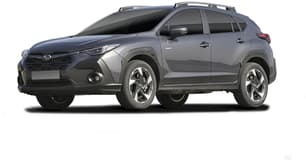
While SUVs tend to come in either a tall and boxy or coupe-like shape, the Crosstrek has a uniquely sleek and sporty wagon look that has stayed much the same over three generations.
Also while the Crosstrek competes with the Honda HR-V, Hyundai Kona, Mazda CX-30 and Toyota Corolla Cross the Subaru is the most off-road suitable thanks in part to its high 220mm ground clearance
As if to signal those adventurous aspirations the Crosstrek has a more rugged appearance with robust-looking plastic guards and chunky roof rails.
Inside the Crosstrek looks so much the same as most other new Subarus it's hard to work out which one you’re in. The materials are dark and soft, there is not much in the way of glitzy trimmings but there’s a high quality feeling throughout.
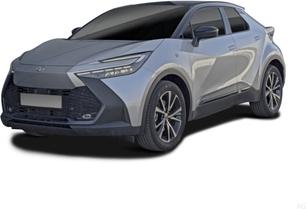
There’s a fair bit going on here compared to most of Toyota’s other products, much like the first generation, but being designed with Europe as the key market and Australia as a secondary means the styling team needed to take on some fairly fashionable brands.
All three variants of the C-HR are relatively close in aesthetics, with major differences being two-tone paint or specific trim elements for the top-spec GR Sport.
It uses new Toyota design elements that have been seen on some models already, the ‘c-shape’ lights have been used on the new Prius, which we no longer get in Australia, for example.
The black roof was also available on the previous generation, where this car has carried over the ‘egg-like’ silhouette from.
The overall relatively aquatic styling and shape must be for aerodynamic advantage - its chief engineer told us the drag coefficient is just 0.318Cd - but the removal of the rear wiper to lower drag might have been unnecessary for a city-focused small SUV.
The cabin isn’t as wild as the outside, which may be a let-down in some ways, though it’s still a little more visually interesting than its more mainstream stablemates.
The 64-colour ambient lighting changes based on settings including time of day or drive mode, but can be set to a specific single colour if you wish.
The centre stack on the dash is gently angled towards the driver with a small separation between it and the passenger, creating a slight ‘cockpit’ feeling.
Seats are made from different materials depending on the grade, though no real leather is used even in the GR Sport, where synthetic suede and leather are the main upholstery.
The cloth textiles are made from entirely recycled materials, while the synthetic suede is made from a little less than half recycled materials.
They don’t look cheap, but they also don’t look particularly luxurious.
The Crosstrek is a small SUV but its low and sleek shape doesn’t do it any practicality favours in terms of exiting and entering or storage in the boot.
Boot capacity is 291 litres which is very small compared to its rivals which have capacities closer to 350 or 400 litres.
People space inside, however, is good, and even for a tall (189cm) person like me there’s plenty of space up front and behind my driving position.
Storage space is passable with three cupholders and thin door pockets and a decent-size console bin.
Given the Crosstrek’s adventurous intent, the cabin should be more reflective of that rugged aspiration.
When it comes to interior layout and ergonomics, there’s never much to criticise in a Toyota, unless playing it safe is a downside for you.
The buttons you’re most likely to use regularly, across the climate control, centre console and steering wheel, are all very obvious and easy to find, if a little uninspiring, as is wheel design itself - form definitely doesn’t sacrifice function here.
Welcome are the two large screens, the multimedia touchscreen a large 12.3-inch unit and the driver display either 7.0-inch or another 12.3-inch version depending on variant.
Toyota’s software is simple and accessible, using a few main menu sections, though many will likely bypass this with wireless phone mirroring.
Everything’s in a sensible place: a tall bottle in the cupholders won’t block access to anything, the phone charging pad is tucked away to minimise distraction, and Toyota has kept things like the gear selector and stalks behind the steering wheel relatively traditional.
While the interior feels a little dated by its many buttons and some of its simple graphics, there’s certainly something to be said for a welcome change from distracting screens and menus - if the aim was to not exclude Toyota’s older market, it seems like mission accomplished.
In terms of comfort and space, the C-HR makes pretty good use of its interior from the front, the seats are relatively comfortable and visibility is fine, though the back seat starts to feel a bit cramped.
While cupholders and door bottle storage is plentiful in the front, there’s no armrest and no bottle storage in the rear, only relatively shallow cupholders on the armrests in the doors.
Visibility is also relatively poor with high windows, a narrow rear window, and not a lot of light unless there’s a sunroof.
Behind that, with the seats up, the C-HR’s boot has a claimed VDA capacity of 388 litres in the GXL and Koba, or 362L in the GR Sport. Total volume with the seats down is 1154L and 1490L respectively.
The Crosstrek range is divided into three petrol variants and two hybrids. With a list price of $43,990, our test Crosstrek 2.0S sits at the top of the petrols and second from the top of the line-up under the Crosstrek AWD Hybrid S flagship.
Standard features on our 2.0S include 18-in alloy wheels, roof rails, LED headlights and tail-lights, dual-zone climate control, push-button start, proximity unlocking , 10-speaker audio, wireless phone charging, Apple CarPlay and Android Auto, an 11.6-inch media touchscreen and leather-trimmed seats.
If you’re looking to save a few thousand dollars the 2.0R is almost as well equipped.
Is it worth stepping up to the hybrid? Not in my opinion. The hybrid is the 'mild' kind and doesn't offer a great deal in terms of real-world fuel savings. You can read more on fuel efficiency below.
While a Corolla Cross starts at $33,980 before on-roads, or $36,480 for a hybrid, the C-HR is just under $43K in its lowest spec.
And even though you’re paying more for a new hybrid drivetrain and some fun Euro styling, the Corolla Cross’ drivetrain isn’t far behind, and it still looks good enough to sell quite well.
So what’s the C-HR got going for it that the Cross doesn’t?
The base GXL starts from $42,990 plus on-road costs and comes with a bit more than you might expect from a base variant Toyota.
A 12.3-inch touchscreen, a 7.0-inch driver display and wireless Android Auto and Apple CarPlay have things covered for multimedia, while dual-zone climate, keyless entry and start, rain-sensing wipers, and USB-C and 12-volt ports and chargers cover off convenience.
The GXL has manually adjustable seats with recycled fabric - which I’ll come back to later - plus a synthetic leather-accented steering wheel.
The Koba, at $49,990, scores heated sports seats with synthetic suede trim, plus power adjustment for the driver seat and a digital rearview mirror as well as cabin ionisation via the climate control.
A wireless smartphone charger, a head-up display above a larger 12.3-inch driver display, plus adaptive high-beam all add to the convenience, while a nine-speaker JBL sound system and 64-colour ambient lighting add to the vibes.
Atop the range is the GR Sport, which starts from $54,990.
As well as being more powerful - we’ll come back to that, too - it gets unique styling outside, plus synthetic leather-accented and suede seats inside, aluminium scuff plates, and a heated GR Sport steering wheel.
The Crosstrek 2.0S uses a 2.0-litre, four-cylinder, horizontally-opposed 'boxer' petrol engine which makes 115kW and 196Nm. A continuously variable transmission (CVT) with eight 'speeds’ isn’t the most exhilarating automatic but all Subaru now use CVTs.
The boxer engine has advantageous in terms of a lower centre of mass and helps deliver better driving feel thanks to more adept handling. Boxer engines also sound better to my ears with their throaty burble.
The difference in boot space is likely because the hybrid-only C-HR comes with two drivetrain options, depending on which variant you have.
The GXL and Koba both use Toyota’s 1.8-litre four-cylinder engine aided by a front-mounted electric motor to produce a 103kW output at the front wheels via a continuously variable transmission.
The GR Sport, however, gains a rear electric motor (taking up some boot space) and a more powerful front motor, helping a larger 2.0-litre four-cylinder petrol engine make a total 146kW - still via a CVT.
Don’t expect to be getting to 100km/h from a standstill in any less than 8.0 seconds in either variant, but both have a claimed top speed of 170km/h.
The Crosstrek 2.0S's combined cycle (urban/extra-urban) fuel consumption is 7.2L/100km which aligns closely with our real-world test average of 8.7L/100km returned over mainly urban and city driving. That’s not bad, but given the price of fuel as well as the availability of EVs and excellent hybrids from other brands the Crosstrek is seriously behind the times.
Yes, yes, there is a hybrid Crosstrek, but it’s a mild-hybrid and the electric motor doesn't drive the wheels and doesn’t save much fuel. The hybrid Crosstrek has a claimed combined cycle consumption figure of 6.5L/100km, so there’s not much difference between the efficiency of the two. When you consider the price premium you need to pay it’s not worth stepping up into the hybrid.
Toyota says the C-HR uses just 4.0L/100km on the combined cycle test, which is 0.3L less than the previous generation’s claim, but it should be noted the 2.0-litre in the GR Sport drinks a claimed 4.1L/100km.
During testing on the launch drive, but without being able to measure properly from fill to fill, one quite spirited leg of driving netted a 6.9L/100km reading on the trip computer, while a more sedate drive returned 5.4L/100km.
I’ve never met a new Subaru that wasn’t good to drive, apart from that time a friend sent me his 30-year old Brumby minus brakes. But even that was fun, until it was time to stop… Anyway, in my view the Crosstrek is better than its rivals in multiple areas except one, which I’ll get to in a moment.
The Crosstrek 2.0S is comfortable to sit in and its ride and handling balance is exceptional for a vehicle in this class. Honestly, the ride quality, body control and steering outshines the HR-V, Kona, CX-30 and Corolla Cross in my view.
A big call out has to go to the Crosstrek's all-wheel drive system, which is exceptional. I have tested this vehicle in some pretty adventurous settings and the kind of terrain it can devour would frighten its rivals.
But the one area that lets the experience down is the CVT auto. I feel this way about this type of transmission in any car and I’m not alone. CVTs provide smooth acceleration and deceleration but if you’re hoping for an engaging, sporty experience you’ll be left wanting.
That said, my wife also drove the car and thought it was perfect for city traffic. And I agree, it’s just on the motorway where you might notice the lack of oomph when overtaking.
Visibility is good and you sit quite high for a little SUV. That small size makes it easy to park and manage in the city’s tighter spaces.
There’s nothing particularly offensive about the way the new C-HR drives, but there’s nothing riveting either.
If you’ve driven anything on the Toyota TNGA platform, this will feel familiar to you - and that’s not a bad thing, it’s generally pretty stable, comfortable and controlled.
The modified Corolla platform it rides on is a very good thing, but the C-HR doesn’t have anything in the way of sporting tendencies its styling might suggest.
The hybrid drivetrain in the two 1.8-litre versions of the small SUV don’t offer up a whole lot in terms of keen acceleration, but even the GR Sport and its 146kW drivetrain need a push to get things feeling properly quick on a twisty road.
The added stability of the all-wheel drive in the top variant is noticeable, the front-drive variants feeling a little less planted when pushed.
Steering is on the slightly lighter side of still being well-weighted - it doesn’t wow, but Toyota’s engineers know what they’re doing and it does everything it needs to in terms of communicating feeling to the driver.
Some particularly rough roads on the test drive showed the suspension to handle short, sharp bumps well and not feel crashy over larger imperfections.
The suspension has been retuned in this TNGA-C platform to be stiffer for more control but also more compliant in terms of comfort.
But it’s around urban and suburban streets where the C-HR will spend most of its time, and neglected streets, speed bumps, or tram lines won’t shake you too much from in the cabin.
Part of the reason we're testing the Crosstrek is because it was updated with more safety tech and equipment towards the end of last year. This safety boost means the Crosstrek continues to boast a maximum five-star ANCAP rating.
The big change was to the 'Eyesight' sensor system with better traffic sign recognition and enhanced AEB systems. An emergency vehicle stop system has also been added to bring the car to a halt if the driver becomes unresponsive.
The rest of the Crosstrek’s features carry over including AEB, lane-keeping assistance, front and rear cross-traffic alert (with braking) and blind-spot warning.
For child seats there are two ISOFIX points and three top tether anchor mounts across the second row.
There is a spare where but it's a temporary type which will get you to a repair place.
All three variants of the C-HR come with a version of the Toyota Safety Sense suite of tech which includes things like pre-collision, active cruise control, speed limit sign assist, a surround-view parking camera, plus all the expected inclusions like ABS, blind-spot monitoring and rear cross-traffic alert.
The rear outboard seats are equipped with ISOFIX tethers, too, while the ADR-necessary top tethers are also present.
It hasn’t been tested by ANCAP, but in the case of a collision the C-HR does have a pretty decent airbag count of 10.
Subaru’s five year united kilometre warranty is becoming less appealing as other brands offer seven or even 10 years of coverage.
Servicing is recommended every 12 months/15,000km and a capped schedule is pricey relative to its competitors at more than $2400 over five years or about $400 on average per service.
The brand is represented by a long-established and stable network of close to 130 dealers covering metro, rural and regional locations across every state and territory.
Toyota has a five-year/unlimited-kilometre warranty which covers the C-HR, as well as capped-price servicing for the first five years or 75,000km, whichever comes first, with each 12-month/15,000km service costing $250.
The C-HR also comes with a 12-month subscription to Toyota Connected Services, with features accessible through the myToyota Connect smartphone app.