What's the difference?
In the eight years it’s been in our market, the Skoda Kodiaq large SUV has only seen modest updates, but the second-generation seven-seater marks a firm step forward.
You still get all of the clever practicality that Skoda is known for, but it now features a (slightly) sharper design, a raft of new features, improved technology and more room inside.
This week, my family of three has been living with the base 140TSI Select variant to find out whether this understated contender deserves more attention and if its rivals should start to worry.
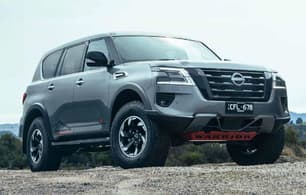
The entire 2025 Nissan Patrol range – including the Ti-based, Premcar-boosted Warrior – has undergone a cabin update.
Changes include a new bigger touchscreen multimedia system, wireless charging and an off-road monitor.
The same V8 engine remains across the range so there are no changes to power and torque.
So, do these cabin tech updates make any kind of significant difference to the Warrior package?
The new Skoda Kodiaq Select 140TSI is a quiet achiever. It may not be as flashy as some of its rivals, and the engine won’t knock your socks off, but it delivers where it counts. This is a well-rounded seven-seater that’s comfortable, practical and cleverly equipped with more standard features than you’d typically expect from a base grade. If you’re after a family SUV that flies under the radar but ticks all the right boxes, the Kodiaq deserves a close look.
The Nissan Patrol Warrior is a very capable 4WD, it’s a refined, comfortable all-rounder with plenty of potential as a touring vehicle.
PremCar’s work here – as on the Navara – has made a good 4WD even better.
All of that conversion work, engineering upgrades and fitment of accessories is the kind of sensible work an experienced 4WDer would apply via the aftermarket. The bonus here is that it’s all factory-backed and covered by a 10-year/300,000km warranty, albeit with conditions.
If you can cope with the fuel bills, this big V8 4WD remains a refreshingly old-school style of off-roader – relying more on sheer grunt than touchy tech – and the latest round of cabin updates has added more appeal to what is already a very appealing vehicle.
From the outside, the new Kodiaq looks more athletic than bulky, with a long and low stance that gives it a sleeker profile than many of its taller, boxier rivals.
The new restyled grille, 19-inch alloy wheels, and distinctive C-shaped LED tail lights give it an understated but handsome roadside presence. This is an SUV that favours quiet confidence with a European flair.
Step inside, and the cabin continues that design language with a stylish, angular dashboard and a well-considered layout that’s both practical and premium in feel. The black leather upholstery, crisp technology displays are complemented by Skoda’s clever new multi-function rotary dials.
Even in the base Select grade, the interior punches above its price point.
The Nissan Patrol Warrior is 5269mm long (with a 3075mm wheelbase), 2079mm wide, 1990mm high and it has a listed kerb weight of 2858kg. It’s 94mm longer and 84mm wider than the Ti.
Though this latest round of range updates have been mostly limited to the multimedia system, that’s a-okay because this Warrior has more than enough heavy-shouldered presence on- and off-road and not simply because it’s a chunky behemoth.
While other large 4WDs, such as the Toyota LandCruiser 300 Series, have bowed to contemporary-taste pressure and become a bit softer around the edges, the Warrior retains some of the blocky stature of 4WDs past.
Inside, the interior has benefitted from the new bigger multimedia system which sits atop the dash and dominates real estate up front. The interior feels slightly fresher than in previous iterations, but still comfortably familiar.
The Kodiaq does a solid job of blending family friendly space with clever design. Up front, there’s plenty of room to stretch out, and the wide door apertures combined with a 187mm ground clearance make getting in and out a breeze.
The front seats are genuinely comfortable, with thick padding, supportive side bolsters, extendable under-thigh supports and heating for both front occupants, which is a nice inclusion at this price point. The driver’s seat is also electrically adjustable with memory, which adds a layer of convenience.
Skoda has a reputation for smart storage and the new Kodiaq continues that trend. There’s a sunglasses holder, an umbrella nook inside the drivers door, removable rubbish bins in each front door pocket and a handy dual glove box set-up. The centre console offers a mix of deep storage, two cupholders and lots of charging options, including two USB-C ports and dual wireless charging pads, plus a third USB-C near the rearview mirror.
That said, the tech experience hasn’t been completely seamless. The 13.0-inch multimedia display looks sharp, but the touchscreen can be laggy at times. The three multi-function dials, while clever in theory, aren’t always intuitive in practice. Changing functions on the go can be fiddly, and I found the climate control system occasionally unresponsive — the ‘sync’ function worked inconsistently and for some reason, we couldn’t always unlock or adjust the rear climate control.
On the plus side, the system includes built-in sat nav, wireless Apple CarPlay and wireless Android Auto. CarPlay connected easily and stayed stable throughout the week.
In the second row, my eight-year-old had no trouble hopping in and out, and while the seats are on the firmer side, they’re still comfortable enough for long drives. Amenities are strong with two USB-C ports, a 12-volt socket, map pockets with device holders, and retractable sunblinds. There’s also a removable centre shelf between the seats that works as a clever storage solution, and the bench is wide enough to take advantage of all three top-tether anchor points.
And I have to call out one of my favourite Skoda features, the pop-out door edge protectors! This is the first time I’ve seen them in action and they’re brilliant. They automatically deploy as you open the door, helping prevent bumps and dings, which is a lifesaver for parents with energetic kids (like mine) who fling doors open with zero hesitation.
As with most three-row SUVs in this segment, the Kodiaq’s third row is best suited to kids. Adults can technically squeeze in but space is limited, with legroom and headroom both tight. It’s worth noting there are no directional air vents, USB charging ports or top-tether anchor points in the third row either, which might be a downside for some families.
Boot space, on the other hand, is a strong point. Even with all seven seats in use, there’s still a very usable 340L of cargo capacity which, is enough for a few school bags or a compact pram. There’s also an underfloor compartment for storing the cargo cover and space-saver spare tyre, which keeps things tidy. Fold the third row down and the capacity jumps to a generous 910L, giving you loads of room for family gear, groceries, or weekend luggage. The powered tailgate is another welcome convenience, especially when your hands are full.
The Warrior cabin is essentially a Ti interior – as such, it’s roomy and plush, with expanses of soft-touch surfaces. Due to plenty of ‘Warrior’ touches and the most recent updates as noted earlier, the cabin feels made-over yet instantly recognisable.
The centre console is no longer the confusion of buttons, dials and knobs it previously was and there are plenty of storage spaces for driver and front passenger – glove box, cupholders, bottle holders in the doors etc – as well as some concealed spaces (with pop-up lids) for keys, phone and other everyday carry gear.
Second-row passengers get comfortable seats, as well as two USB charge points, and temperature and fan controls in the back of the centre console. Those in this row also have access to the back of the centre console.
There are cupholders in the fold-down armrest, map pockets in the seat backs and bottle holders in the doors.
Second-row seats have a top tether point and an ISOFIX point on both outer seats.
Third-row seats are flat and hard compared to the other positions and, in terms of space, are better suited to children or adults for brief stints.
All three rows get air con – there are roof-mounted vents – and there are handy storage spaces in the third row, but no cupholders.
The third row has one top tether child seat anchorage point.
The rear cargo area has load tie-down points and a 12V socket, as well as tyre-changing tools under the floor. The new full-sized spare tyre is underslung at the rear.
With the third-row seats in use, boot space is listed as 467L. With the third row stowed away, there’s a claimed 1413L of cargo space. With the second and third rows stowed there’s a claimed 2623L.
Excluding the limited-edition ‘Launch’ variant, the new Kodiaq range consists of just two core grades and we’ve been family testing the entry-level 140TSI Select.
With a list price of $54,990 before on-road costs, the Select trim undercuts many of its key seven-seat rivals. The Hyundai Santa Fe kicks off at around $56,000, while the Kia Sorento Sport+ starts from $58,430, giving the Kodiaq a slight edge on paper when it comes to affordability.
Of course, it can’t compete with sharply priced Chinese contenders like the Chery Tiggo 8 Pro Max, which starts from just $40,990. But where the Skoda claws back ground is in its blend of space, smart storage solutions and the refined European design-flavour that the brand is known for. This makes it an appealing pick for families wanting practicality without compromising on quality.
Despite being the entry point into the Kodiaq range, the 140TSI Select comes impressively well-equipped and it doesn’t feel like a ‘base model’.
There’s black leather upholstery, a leather-accented steering wheel, heated front seats, a power-adjustable driver’s seat with memory functionality, and rear privacy glass. Three-zone climate control keeps everyone comfortable, and the powered tailgate adds convenience for a busy family life. Skoda even throws in carpet mats as standard, which is a small but appreciated touch.
On the technology front, the Select features a crisp 13.0-inch touchscreen multimedia display and a 10.0-inch digital instrument cluster. Satellite navigation is included, along with wireless Apple CarPlay and Android Auto, plus multiple device-charging options throughout the cabin. That includes two ventilated wireless charging pads up front, USB-C ports in each row, and a handy extra USB-C port near the rearview mirror, perfect for plugging in a dash cam without messy cables.
The cabin feels thoughtfully laid out, modern, and mostly user-friendly, particularly if you're hopping out of an older SUV. All up, it delivers a lot of bang for your buck, especially when compared with similarly priced, or even more expensive, competitors.
The Nissan Patrol Warrior is a eight-seat 4WD wagon with a price-tag of $105,660, before on-road costs.
Standard features include a 12.3-inch touchscreen multimedia system (with wireless Apple CarPlay and Android Auto and sat nav), as well as a new 7.0-inch driver dash display, wireless charging and an off-road monitor.
Other features onboard include front and rear parking sensors, a 360-degree camera view and a tyre-pressure monitoring system.
The more than $15,000 worth of carried-over Premcar conversion work, upgrades and fitment of accessories include a re-engineered version of Nissan’s 'Hydraulic Body Motion Control' (HBMC) system, a 50mm total suspension lift with new springs front and rear increasing vehicle height to 1990mm (+50mm over the Ti), and increased ground clearance to 323mm (+50mm) and wheel track to 1735mm front and rear (+40mm).
Warrior-specific suspension modifications include not only the Warrior-tuned HBMC (front and rear) but front Warrior red springs, rear Warrior multi-rate red springs and Warrior rear bump-stop.
Exterior changes carried over into this Warrior iteration include a red Warrior-branded bash plate, front Warrior-embossed bumper valance, a black grille, Patrol Warrior decals, black side mirror caps, plus an upgraded exhaust system with bi-modal valve and a unique exhaust tip.
There's also a black flare kit (with grained finish), Warrior towbar (towbar cross member, tongue, harness only, all modified to fit the new, bigger full-size spare), two rear recovery points, Warrior rear bumper valance (with grained finish) and a black chrome tailgate Warrior badge.
The Warrior wheel and tyre package is the Yokohama Geolandar 15 All Terrain tyres (295/70R18) on 18 x 9 J cast-aluminium Patrol Warrior black machined-face alloy wheels.
The Patrol Warrior has a specially modified space for a full-size alloy spare wheel.
Inside, carried-over Warrior-specific touches include an Alcantara Warrior embossed garnish, clear-coated gloss black centre console and centre multimedia fascia as well as leather-accented and Alcantara door trim.
Exterior paint choices include 'Gun Metallic', 'Moonstone White', 'Brilliant Silver' and 'Black Obsidian'.
What you get in a Warrior for the price compares favourably, especially when cross-shopped with something like a GMC Yukon Denali, another eight-seat 4WD wagon with a V8 – as its price-tag is $174,990, excluding on-road costs.
The Select is all-wheel drive and powered by a 2.0-litre four-cylinder turbo-petrol engine, producing 140kW and 320Nm. On paper, that’s a solid output for a family SUV, but in practice the power delivery can feel a little underwhelming at times.
The seven-speed dual-clutch automatic transmission is quick to shift but isn’t always smooth. It tends to upshift early, especially when you’re accelerating, which can dull performance and make the engine feel less responsive than it should. It's not sluggish, but it doesn’t feel particularly eager either — especially when loaded up with passengers or gear.
The Warrior has a 5.6-litre V8 petrol engine producing 298kW and 560Nm, matched to a seven-speed automatic transmission.
This solid combination lacks a dynamic edge, but the Warrior produces such a supremely relaxed and assured delivery of power and torque – it feels almost lazy – that you forgive it for not being the zippiest thing around.
The Patrol has full-time four-wheel drive with high- and low-range and a rear diff-lock.
The Kodiaq has an official combined fuel consumption figure of 9.2L/100km, and paired with a 58-litre fuel tank it has a theoretical driving range of about 630km. It's not as long-reaching as some seven-seat SUVs (especially diesel-powered rivals), but it's not terrible.
After my usual mix of urban errands and a couple of longer highway trips, my real-world fuel use averaged 8.7L/100km. Not too shabby.
The Nissan Patrol Warrior has an official combined cycle (urban/extra-urban) fuel consumption figure of 14.4L/100km.
I recorded 21.4L/100km on this test. I did a lot of high- and low-range 4WDing – but the Patrol was never working hard.
The Patrol has a 140L fuel tank capacity, so going by our on-test fuel-consumption figure you could reasonably expect a full-tank driving range of about 654km.
As I mentioned earlier, the powertrain is adequate but not impressive. The engine can over-rev at times, and it feels like there’s limited reserve when you really push it, though it’s far from gutless. It’s an odd one as you do have enough grunt to overtake safely on the open road, and it’s generally fine for a vehicle of this size, but it’s not particularly eager or lively.
The suspension strikes a good balance. It’s soft enough to smooth out bigger bumps and rough patches without feeling too floaty. At the same time, you still get decent feedback through the steering, and the Kodiaq corners reasonably well with minimal body roll.
Speaking of steering, it’s on the softer side and not as sharp as I’d prefer, but it’s responsive enough to make city driving and tight car park manoeuvres easy. Visibility is good all-around from the driver’s seat, which is good.
Noise levels are typical for a large SUV. Road and wind noise are noticeable, especially at higher speeds, but the cabin remains quiet enough to have a conversation in the middle row without raising your voice. If you’re sitting in the third row, though, you might have to ask people to repeat themselves from time to time. Still, it’s a comfortable space to spend time in.
The Select grade comes with a reversing camera, but the image quality isn’t great. The camera view seems skewed to the left, which caught me off guard occasionally. I found myself relying more on the mirrors and good old-fashioned looking around when parking.
This latest update is cabin-centric so it’s brought no powertrain changes or any improvements to 4WD mechanicals or driver-assist tech. And that’s fine because the Warrior is pretty darned impressive, as is.
On-road and on dirt tracks, it’s all smooth sailing. The Patrol Warrior is tighter and more composed than its standard stablemates, and that's mostly due to its upgraded suspension and HBMC system.
HBMC acts as a sway bar and sway bar disconnect equivalent and combines with the Aussie-tuned suspension to rein everything in when you're on bitumen and loosen everything when you're on dirt or off-road.
The Patrol as standard is a nice wagon to drive, but the Premcar work undertaken to create the Warrior – all the conversions and upgrades – have made it that much better.
On the open road you have the opportunity to appreciate just how comfortable and refined the Patrol Warrior is.
And as for 4WDing, well, the Warrior is a Patrol at heart so it has reliable four-wheel drive mechanicals, plenty of torque over a broad rev range and a rear diff lock.
There's more ground clearance in the Warrior over the Ti at 323mm (+50mm ), so approach (40 degrees) and departure angles (23.3 degrees) are an improvement over the standard Patrol.
The Warrior’s tyres – Yokohama Geolandar 15 All Terrain tyres (295/70R18) – are bigger and offer more grip, so they provide plenty of traction on terrain where a standard Patrol may struggle.
Premcar has modified the towbar position to accommodate the new bigger full-size spare wheel and tyre.
Another good thing is the fact the Patrol Warrior has two recovery points at the rear.
The HBMC system, which performs so seamlessly on-road, provides more articulation off-road, as well as a bit more wheel travel through difficult terrain.
And, as I’ve noted before on other tests, one of the impressive points about Premcar’s work here – the conversions, the modifications, the engineering upgrades and the fitment of accessories – is that it’s all the kind of common-sense upgrades an experienced 4WDer would apply to their Patrol.
But, even in something this impressive, the news is not all good.
The Warrior is a big vehicle and at 2858kg you have to drive it with that in mind, all the time. It fills the trail and with its wider wheel track, you have to be focused on wheel placement, even more so than usual.
The bi-modal exhaust is awesome, but those exhaust caps (underneath the Warrior's right-hand side step) are too vulnerable to damage.
They compromise the vehicle's ramp-over angle, so you have to drive with careful consideration, especially if the Warrior rocks even slightly to the right-hand side going up or down a steep rocky hill, because there’s a risk of grinding those exhaust tips against rock steps, dirt or a tree stump.
The Patrol is a towing platform of note and towing capacities remain as 750kg (unbraked) and 3500kg (braked).
The Warrior's GVM (gross vehicle mass) at 3620kg is 120kg more than the Ti Patrol’s.
The Skoda Kodiaq is covered by a five-star ANCAP safety rating from testing done in 2024 and features nine airbags, which includes side chest airbags for the front and middle rows, but the curtain airbags don’t cover the third row, which is disappointing for a family SUV.
The Select grade showcases a healthy safety features list including emergency lane keeping aid, rear cross-traffic alert and side exit assist. Most of the safety items aren’t intrusive for daily driving but the lane-keeping aid can feel sporadic with when it activates and it adjusts the wheel firmly, which takes a bit to get used to.
Other standard safety equipment includes blind-spot monitoring, q reversing camera, front/rear parking sensors, adaptive cruise control with stop and go, driver attention warning and alert, intelligent seatbelt reminders, two ISOFIX child seat mounts and three-top tether anchor points.
The Kodiaq is equipped with autonomous emergency braking with forward collision warning (pedestrian, backover, cyclist, motorcycle and car) and is operational from 4.0 – 85km/h (up to 250km/h for car detection).
The Nissan Patrol range does not have an ANCAP safety rating because it has not been tested.
That said, as standard it has dual front airbags, front-side and curtain airbags that cover all three rows, as well as two ISOFIX points and two top tether points in the second row.
Driver-assist tech includes AEB, rear cross-traffic alert, lane-departure warning/intervention, blind-spot warning/intervention and adaptive cruise control.
The Kodiaq is backed by a seven-year/unlimited-kilometre warranty that is better than the five-year cover you’ll find on some of its rivals.
Servicing is required every 12 months or 15,000km, whichever comes first, and Skoda offers pre-paid service packs for up to seven years. These average out to around $393 per service, which is competitive for this segment and helps take the guesswork out of maintenance budgeting.
The Kodiaq runs on 95 RON premium unleaded, which is worth factoring into ongoing costs.
All new Patrols have a 10-year/300,000km warranty when the vehicle is serviced with Nissan and the Premcar work is covered for the same amount of time – with the same conditions applied.
Five years of roadside assistance also applies – with the same conditions.
Servicing is scheduled at 12 month/10,000km intervals, and capped price service rates apply for five years. That means each of the first five services will cost you $499.