What's the difference?
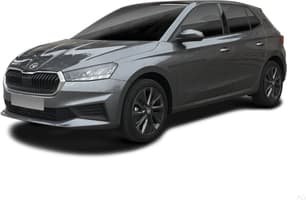
The smallest car in Skoda’s local line-up is also its most affordable, but only just.
When the current generation Fabia launched with the halo Monte Carlo variant at almost $40,000, it was a bit of a surprise for a small hatch from what’s seen as an affordable brand.
Now, there’s a new entry-level version of Skoda’s bub and, while it’s not nearly as cheap as it once was, it offers a choice that’s more within reach for anyone keen on a premium small car.
Can the Fabia Select convince customers looking at the likes of the Mazda 2 or Suzuki Swift to go Euro and cross the $30,000 threshold?
GAC might still be a new name to a lot of Aussie new car buyers, but the Emzoom Luxury isn’t here to quietly blend in. It’s sharply styled, keenly priced and carries just enough attitude to turn a few heads - which is a good start in a crowded small SUV segment.
It also keeps things simple. There’s just the one trim level on offer locally, and it comes in swinging against some well-established rivals like the GWM Haval Jolion Premium, Kia Seltos Sport+ and MG ZS Vibe Turbo.
But standing out on paper is one thing, backing it up with enough personality to stay interesting over time is another.
Once you get past the shock of the Fabia no longer being a sub-$25K car (because let’s face it, what is anymore?), the fact that it remains refreshingly simple to live with and engaging on the road should be celebrated.
It has its downsides if you need space, and you can buy a light (or even small) SUV for the same price, but you’ll be compromising in other areas.
The Skoda Fabia can’t do everything, but what it can, it does well. Plus, it’s certainly less common than the similarly priced Toyota Yaris.
GAC isn’t messing around with the Emzoom Luxury. It’s undeniably eye-catching, priced well and carries just enough of a premium aesthetic to draw attention.
Is it the best small SUV I’ve driven? No. It does enough to avoid being overlooked, but it’s not quite reinventing the wheel.
What it does well is deliver a comfortable, easy urban runaround with strong equipment for the price. However, the safety calibration and overall breadth of systems feel like areas that still need attention.
All up, it gets a lot right for the money, but doesn’t quite land a knockout punch.
There are cars in the market that, for around or not much more than $30,000, seem like a bargain given the perceived value of features like big touchscreens and (synthetic) leather.
The Fabia Select doesn’t have those things, but everything in it makes sense and, more importantly, everything works well.
For example, as much as I point out the dated-looking air conditioning controls, the reality is they're much easier to use than an in-screen menu requiring the same amount of attention as replying to a text while driving - something that is rightfully illegal.
Simple controls on the steering wheel, a touchscreen that doesn’t require much attention, a clear driver display and a few shortcut buttons around the gear selector mean you can focus more of your attention on driving, without lacking any of the convenience or features you’d expect in a new car.
Wireless phone mirroring for Apple CarPlay and Android Auto add to this, as you can bypass Skoda’s (fine, but basic) multimedia software easily.
The lack of wireless phone charging is a shame, but not a deal-breaker, as the space under the centre stack is conveniently sized. The same can’t be said for the tiny storage bin under the centre armrest, though.
However, the glove box and door card storage is generous and there’s the Skoda-standard umbrella in the door that’s accessible when open.
The seats in the Fabia have decent bolstering and are ergonomically sound, manual adjustment is easy enough and there’s a turning wheel rather than a lever with increments to adjust the backrest.
Given the Fabia’s diminutive stature relative to most vehicles on the road, it shouldn’t be a surprise that the back seat isn’t the most spacious. But as an average-sized adult it feels like the kind of space I’d be comfortable in for a short trip, with adequate headroom, knee room and even a vent.
There’s no centre armrest, though, and the seats aren’t as comfortable as the fronts.
Behind the 60/40 split-fold there’s a generous (for a hatch this size) 380-litre boot with bag hooks, though the floor has some mildly intrusive angled plastic elements.
Impressively, the Fabia has a spare tyre rather than a repair kit, so kudos to Skoda for not taking the cheap (and less safe) option.
Up front, the Emzoom offers the most space and it’s where it feels most comfortable. The seats are supportive enough for longer trips, and while only the driver’s side is electrically adjustable, that’s not unusual at this price point. Wide door apertures make getting in and out easy and there’s enough elbow room so it doesn’t feel cramped.
In the rear, space is also surprisingly generous for the segment. The flat floor helps with legroom and headroom remains good despite the panoramic sunroof.
Storage is well thought through and generous. Up front, there’s a glove box, a deep centre console and a dual-phone tray that incorporates a ventilated wireless charging pad. There are two cupholders and a drink holder in each door storage bin. You also get an additional shelf underneath with both USB-A and USB-C ports, which helps keep cables and clutter out of the way.
In the rear, amenities are solid, with rear air vents, a fold-down armrest with two cupholders, map pockets and even small device pockets for added practicality. There's a drink bottle holder in each door and a single USB-A port behind the centre console.
Around the back, the boot offers a wide opening and a level load space, making it easy to use day-to-day. Capacity sits at 341 litres, which is enough for a weekly grocery run or a weekend away. There’s a spare tyre tucked under the floor and a powered tailgate is standard.
The tech is easy to live with, too. The media system is intuitive with clear graphics and a responsive touchscreen. Wireless Apple CarPlay connects quickly without fuss, and there’s also wireless Android Auto. Sound quality from the six-speaker system is crisp and the digital radio and Bluetooth hold a steady connection (where some rivals can struggle).
The Skoda Fabia has fallen prey to the same upward-creeping prices as many other light cars have, quite hard.
What was a sub-$25,000 car in its previous generation’s entry grade is now a $32,390 offering, plus on-road costs.
For an entry-level light hatch, the Fabia Select has a decent list of features, though is decidedly more basic than the already-launched Monte Carlo ($39,690 MSRP).
The headline tech features in the base Fabia include an 8.25-inch touchscreen covering multimedia functions, with wireless Apple CarPlay and Android Auto, an 8.0-inch driver display, two USB-C ports, plus drive mode selection and a host of safety features (covered later in this review).
For reference, the Monte Carlo gets a larger 10.25-inch digital instrument cluster and a 9.2-inch multimedia touchscreen.
The Select makes do with manual-adjust cloth seats, but does have keyless entry and start, a leather ‘sports’ steering wheel, automatic windscreen wipers, an auto-dimming rear view mirror and auto LED headlights and LED tail-lights.
Skoda says the Select’s features list aims to line up as “similar to rivals’ mid-specification models” and it’s about bang on. But its price might still be a turn-off for some seeking a budget-friendly light car.
For now, the GAC Emzoom range is about as simple as it gets. There’s a single, well-specified Luxury grade on offer, priced from $25,590, before on-road costs.
That puts it right in the mix with key Chinese rivals like the GWM Haval Jolion Lux, which starts at $28,990 (MSRP) and the MG ZS Vibe Turbo at $24,990 (MSRP). It also significantly undercuts more established mainstream options such as the Kia Seltos Sport+, which opens at $37,550, before on-roads.
The Luxury arrives well equipped. You get an electric driver’s seat with ventilation, synthetic leather upholstery, a panoramic sunroof with tilt and slide function, and auto-flush door handles. There’s also a leather-wrapped steering wheel, a 360-degree camera system, parking assist and a blind-spot view monitor.
Technology leans towards the premium end, too. A 14.6-inch central display is paired with a 7.0-inch digital instrument cluster, along with ambient lighting, wireless Apple CarPlay and Android Auto and a wireless phone charger. There are two USB-A ports, a single USB-C port up front, a 12-volt socket and a six-speaker DTS sound system.
It’s the smaller details that round things out nicely. Auto LED headlights, rain-sensing wipers, dual-zone climate control, a temporary spare tyre and a powered tailgate are all included as standard.
All up, it’s a strong package for the price.
The Fabia’s turbocharged 1.0-litre, three-cylinder, petrol engine makes 85kW and 200Nm in this guise, mated to a seven-speed dual-clutch transmission driving the front wheels only.
Given the Fabia weighs 1265kg, getting to 100km/h in under 10 seconds - which it should be able to do, just - might depend on how many passengers you have.
While it’s not very fast or powerful, the Fabia’s outputs sit about average for its class and price.
The Emzoom Luxury is front-wheel drive and powered by a 1.5-litre turbo-petrol engine producing 125kW and 270Nm.
That gives it a slight edge over the GWM Haval Jolion, which sits at 105kW and 210Nm and puts it more in line with the MG ZS Vibe Turbo and Kia Seltos Sport+. On paper at least, it’s competitive for the segment and suggests there’s enough performance on tap for daily driving.
It’s paired with a seven-speed dual-clutch auto transmission. Around town, it can feel a little clunky at lower speeds, particularly in stop-start traffic, but it settles down as you pick up pace and feels much smoother on the open road.
The Fabia has a 5.0L/100km combined cycle (urban/extra-urban) fuel consumption figure under WLTP testing, with a minimum 95RON premium fuel grade required.
With its 42-litre fuel tank, that means you could hypothetically expect to cover a touch more than 800km before running out of fuel, though that seems unlikely in the real world.
Despite a particularly lively drive undertaken purely for testing purposes, the highest fuel consumption the trip computer displayed was 7.7L/100km, which isn’t so bad when you consider the Fabia’s not likely to be driven hard most of the time.
The Emzoom Luxury has a 47-litre fuel tank and a claimed combined cycle (urban/extra-urban) consumption figure of 6.6L/100km, which gives it a theoretical driving range of up to 712km. That’s more than enough to comfortably get through a week of mixed driving.
In the real world, my trip computer returned 6.2L/100km after a mix of mostly urban driving and a longer highway run. That’s a strong result and reinforces its credentials as an easy urban runabout.
If you’re someone who doesn’t need a big car and likes an engaging drive, the Fabia ticks those boxes.
In fact, it feels like it punches above its weight. Well, not literally, because while it actually weighs in at over 1.2 tonnes, it feels lighter than even that.
Tight corners don’t faze the Fabia, and its steering and suspension both feel more dialled-in than a car with 85kW has any right to.
Yep, even though its engine is only slightly more powerful than some budget sports cars from the 1980s it feels peppier than it should.
It has some low-speed hesitancy thanks to its transmission - taking off from a stop sign if you’re not in Sport mode can be annoying - but with shift paddles (or a manual gearbox… ) the Fabia could be a hidden gem for enthusiasts.
Its suspension is firm, but not sharp enough that it allows bumps and rough roads to make their way into the cabin as shocks or rattles, and even holds its own on unsealed surfaces at sensible rural speeds.
The Fabia feels playful even on a commute, and the follow-through from the rear-end on a spirited bit of cornering speaks volumes about its chassis, even in urban driving.
On the road, the Emzoom has enough power to feel spritely and capable, whether you’re darting around town or merging onto the highway. That said, the way it delivers that power at lower speeds can feel a little inconsistent. There were moments where lifting off the accelerator didn’t translate to an immediate response, with the car continuing to surge forward briefly. Which made for a few 'eek…' moments during the week.
Handling is on the sharper side for the segment. The steering and suspension are well judged, giving it a slightly zippy, eager feel through corners without tipping into harshness. Braking, however, can feel a touch spongy underfoot, which takes away from that otherwise confident set-up.
Visibility is a mixed bag. Thick pillars, a relatively low window line and a small rear view can make it feel hemmed in from the driver’s seat. Though, the blind-spot camera feed popping up on the display takes some of the guesswork out of lane changes.
Ride comfort is solid overall. It handles bumps well enough, and a longer drive proved comfortable, although there is a low level of road noise that creeps in at higher speeds.
Where the Emzoom really shines is around town. It’s easy to manoeuvre, with an 11.2-metre turning circle that makes tight streets and car parks feel manageable. The 360-degree camera system is clear and makes parking a relatively stress-free experience.
The Fabia wears a maximum five-star ANCAP safety rating from assessment in 2021, under recent but now-surpassed criteria.
That’s not to say its safety kit is outdated, as occupant protection scored well (58 per cent for adults, 81 per cent for children) while pedestrian and active safety were also adequate (70 ad 71 per cent, respectively).
The Fabia Select comes with autonomous emergency braking (AEB), pedestrian and cyclist detection, multi-collision braking, driver monitoring, lane assist, rear cross-traffic alert and six airbags - though no front-centre airbag.
It also features cruise control, though it’s not adaptive and requires a little more attention than most new cars - not necessarily a bad thing, mind you.
On the road, its safety tech is unobtrusive, leaving you to focus on driving while knowing there are features there to keep you safe should the unexpected happen.
The GAC Emzoom hasn’t been tested by ANCAP yet and is unrated. It comes with six airbags, which is on the lower side for this class, and there are a few notable omissions.
Features like rear cross-traffic alert, side exit assist and emergency call functionality aren’t included. While there is a blind-spot view monitor that displays a live camera feed when you indicate, it doesn’t appear to have a traditional blind-spot warning system with indicator lights in the side mirrors.
The core safety suite is there. You get autonomous emergency braking, forward collision warning, lane- keeping aid and lane-departure warning, along with seatbelt reminders for all seats, a tyre pressure monitoring system and hill descent control. There are also two ISOFIX points and three top-tether anchor points for child seats.
Where it falls short is in execution. The steering assist function tied to the adaptive cruise control is overly intrusive, with noticeable inputs that make it difficult to use comfortably. Given the amount of highway driving I do each week, it’s not a system I found myself wanting to rely on.
Overall, the safety offering doesn’t feel as comprehensive or as well calibrated as it could be, which takes some shine off an otherwise well-equipped package.
Skoda offers a seven-year/unlimited kilometre warranty on all its cars, which is becoming more common in the industry but is quite competitive for a European brand.
The Fabia is also able to be covered by a seven-year servicing pack for $3650, that being the total price you’d need to pay for the first seven years of servicing (occurring every 12 months or 15,000 kilometres, whichever comes first). In other words $521 per workshop visit.
Skoda also offers 12 months of roadside assistance from the new vehicle warranty start date, and another 12 months is topped up every time you service with Skoda.