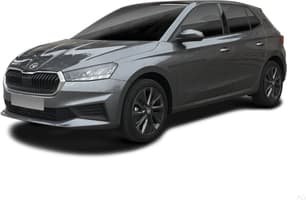
What's the difference?
The smallest car in Skoda’s local line-up is also its most affordable, but only just.
When the current generation Fabia launched with the halo Monte Carlo variant at almost $40,000, it was a bit of a surprise for a small hatch from what’s seen as an affordable brand.
Now, there’s a new entry-level version of Skoda’s bub and, while it’s not nearly as cheap as it once was, it offers a choice that’s more within reach for anyone keen on a premium small car.
Can the Fabia Select convince customers looking at the likes of the Mazda 2 or Suzuki Swift to go Euro and cross the $30,000 threshold?
Chery would likely prefer you forget its initial foray into the Australian market, but doing so would do a disservice to the brand.
We don’t need to go into the nitty gritty of what went wrong back then, but needless to say the first Chery models of around 15 years ago were not particularly good.
Since its return in 2022 Chery is unrecognisable from that first attempt at cracking this market. The Omoda 5, the first model of its relaunch, was flawed but light years ahead of the earlier models in terms of design, presentation and build quality.
It has since expanded with the larger Tiggo 7 Pro and Tiggo 8 Pro Max SUVs and then in late 2024 it added this, the Tiggo 4 Pro. This is Chery’s answer to the likes of the Hyundai Venue, Mazda CX-30, Toyota Yaris Cross, etc in what’s known as the ‘light SUV’ segment.
Chery had a very good 2024, more than doubling its sales, so there are clear signs the brand is enjoying far greater success with its second attempt in Australia.
But is the Tiggo 4 Pro worth buying, if you’re in the market for a compact SUV? Let’s answer that question as we go through all the details.
Once you get past the shock of the Fabia no longer being a sub-$25K car (because let’s face it, what is anymore?), the fact that it remains refreshingly simple to live with and engaging on the road should be celebrated.
It has its downsides if you need space, and you can buy a light (or even small) SUV for the same price, but you’ll be compromising in other areas.
The Skoda Fabia can’t do everything, but what it can, it does well. Plus, it’s certainly less common than the similarly priced Toyota Yaris.
Is the Tiggo 4 Pro the best light SUV on the market? No, it falls short in some key areas, but there’s also a lot to like about it.
The driving dynamics needs more tuning to put it on par with its class rivals. I believe the Chinese brand that invests in a local ride and handling program in the same way Hyundai and Kia have done in the past decade will have a big advantage with customers. The Tiggo 4 feels too vague and unresolved at times, especially in the wet, and that could be rectified with some minor tweaks.
The safety systems also need some major work to make them smoother and less intrusive so you don’t go searching for the button to switch them off - which defeats the purpose of having them in the first place.
But if you can look past (or accept) the driving and active safety issues, there are some big plus points for Chery’s latest model. It looks great inside and out, offers up plenty of value and is as practical as a compact SUV can be.
Chery has come a long way in a short space of time and with some more improvements it’s easy to see it continuing its sales growth with models like the Tiggo 4 Pro.
The Fabia’s design hasn’t departed dramatically from its predecessor, but the evolution into the current generation has the little Skoda looking more mature and smoother than before.
Some elements like its grille and headlights are a little sleeker and the car looks less boxy, but still has a unique Skoda design language that’s instantly recognizable.
Its chrome grille trim and its set of unusual 16-inch alloy wheels are the clues that this is the entry Select, plus the lack of much badging.
Inside, the change in generation is most obvious in the step-up in materials and some of the aforementioned tech (screens in particular), though the steering wheel is a carry-over even if it doesn’t look dated.
The new instrument display cowl which features the model name on its side, the round air vents, and the fabric across the dash bring the interior into the current decade, though the centre stack’s modernity is betrayed by climate controls that could have existed in 1998.
There are a fair few hard plastic surfaces, though none of them are in poorly thought-out places and don’t let the cabin down too much.
This is the area where Chery has made immense progress in such a short period of time, which underlines the rapid rate of change the Chinese car industry has been able to manage.
Whereas the J11 I drove all those years ago was a mess, seemingly designed by a team of people not allowed to talk to each other, the Tiggo 4 Pro looks smart and stylish on the outside and in the cabin.
While there are some elements of rival models to the look, there’s also a clear family design to all the Chery Tiggo models that helps create a cohesive look across the range.
It took the South Korean brands nearly two decades to achieve this level of design evolution, so it’s impressive (and worrying for rivals) that the Chinese brands have managed to do it so much quicker.
Inside, the cabin design is not only a major step forward and looks very nice for an SUV at this price point in terms of the presentation and technology.
The dual 10.2-inch screens look more premium than the car's price suggests, as does the lower digital screen for the climate control settings as well as the soft-touch finishes and gloss black trim.
There are cars in the market that, for around or not much more than $30,000, seem like a bargain given the perceived value of features like big touchscreens and (synthetic) leather.
The Fabia Select doesn’t have those things, but everything in it makes sense and, more importantly, everything works well.
For example, as much as I point out the dated-looking air conditioning controls, the reality is they're much easier to use than an in-screen menu requiring the same amount of attention as replying to a text while driving - something that is rightfully illegal.
Simple controls on the steering wheel, a touchscreen that doesn’t require much attention, a clear driver display and a few shortcut buttons around the gear selector mean you can focus more of your attention on driving, without lacking any of the convenience or features you’d expect in a new car.
Wireless phone mirroring for Apple CarPlay and Android Auto add to this, as you can bypass Skoda’s (fine, but basic) multimedia software easily.
The lack of wireless phone charging is a shame, but not a deal-breaker, as the space under the centre stack is conveniently sized. The same can’t be said for the tiny storage bin under the centre armrest, though.
However, the glove box and door card storage is generous and there’s the Skoda-standard umbrella in the door that’s accessible when open.
The seats in the Fabia have decent bolstering and are ergonomically sound, manual adjustment is easy enough and there’s a turning wheel rather than a lever with increments to adjust the backrest.
Given the Fabia’s diminutive stature relative to most vehicles on the road, it shouldn’t be a surprise that the back seat isn’t the most spacious. But as an average-sized adult it feels like the kind of space I’d be comfortable in for a short trip, with adequate headroom, knee room and even a vent.
There’s no centre armrest, though, and the seats aren’t as comfortable as the fronts.
Behind the 60/40 split-fold there’s a generous (for a hatch this size) 380-litre boot with bag hooks, though the floor has some mildly intrusive angled plastic elements.
Impressively, the Fabia has a spare tyre rather than a repair kit, so kudos to Skoda for not taking the cheap (and less safe) option.
Starting with the question of space, the Tiggo 4 Pro actually offers up good room, for what is ultimately a compact SUV. No, it’s not ideal for a family of five, but for anyone looking for an urban-friendly runabout for singles or couples, it plays that role nicely.
The fronts seats are quite nice, comfortable and offer good support. There’s adequate space in the back to take children, or even adults, with some compromise to the front seat position, but that’s in line with expectations for any model this size externally.
The boot holds a claimed 380 litres, which is quite generous when you compare it to the likes of the CX-3 (264L) and Venue (355L), but can’t match the likes of the Yaris Cross (397L) and Nissan Juke (422L).
The technology in the car is impressive for an SUV this size, especially given the price. The dual 10.2-inch displays look slick, as does the lower screen for climate control, which gives a hint of Audi or Range Rover vibe to the cabin.
The multimedia system is straightforward to use, thanks in large part to the wireless Android Auto and Apple CarPlay, but I did find the ‘Hello Chery’ voice command system hit and miss - although, to be fair to Chery, I find all these voice command systems hit and miss.
One minor amusement is the ‘welcome theme’ that plays when you get in the car. Many brands do this trick, a short musical jingle when you open the door to welcome you inside. The team at Chery went a little overboard, though, and wrote a whopping 15-second theme (yes, I timed it with a stopwatch), which feels like major overkill. Thankfully it can be turned off in the set-up menu.
The Skoda Fabia has fallen prey to the same upward-creeping prices as many other light cars have, quite hard.
What was a sub-$25,000 car in its previous generation’s entry grade is now a $32,390 offering, plus on-road costs.
For an entry-level light hatch, the Fabia Select has a decent list of features, though is decidedly more basic than the already-launched Monte Carlo ($39,690 MSRP).
The headline tech features in the base Fabia include an 8.25-inch touchscreen covering multimedia functions, with wireless Apple CarPlay and Android Auto, an 8.0-inch driver display, two USB-C ports, plus drive mode selection and a host of safety features (covered later in this review).
For reference, the Monte Carlo gets a larger 10.25-inch digital instrument cluster and a 9.2-inch multimedia touchscreen.
The Select makes do with manual-adjust cloth seats, but does have keyless entry and start, a leather ‘sports’ steering wheel, automatic windscreen wipers, an auto-dimming rear view mirror and auto LED headlights and LED tail-lights.
Skoda says the Select’s features list aims to line up as “similar to rivals’ mid-specification models” and it’s about bang on. But its price might still be a turn-off for some seeking a budget-friendly light car.
Chery was not backwards in coming forward with the launch of the Tiggo 4 Pro, with Chief Operating Officer Lucas Harris claiming it is “Australia’s best value SUV.” It’s a huge call to make, but there’s no doubt the Tiggo 4 Pro offers a lot for a competitive price.
There are two model grades to choose from, the Urban, which is priced from $23,990, and the Ultimate, which is $26,990 - and crucially both those prices are drive-away.
That gives Chery a clear financial advantage on its rivals. That’s because the most affordable rival is the Hyundai Venue at $22,500 (plus on-road costs), while the cheapest Mazda CX-3 is $26,950 (plus on-roads) and Toyota’s entry-level model in the hybrid-only Yaris Cross is $30,900 (plus on-roads).
Both the Urban and Ultimate feature the same powertrain, so the difference is in their specification.
The entry-level grade comes equipped with 17-inch alloy wheels, dual-zone climate control, a synthetic leather-trimmed steering wheel, dual 10.2-inch screen display (one for the instrument panel and one for the multimedia), digital radio, Android Auto and Apple CarPlay (wired & wireless), ‘Hello Chery’ voice command and all LED exterior lights.
Stepping up to the Ultimate adds 18-inch alloys, heated front seats, a six-speaker sound system, 360-degree surround camera view, a power sunroof and power-folding exterior mirrors.
All told, the Tiggo 4 Pro is a very good value SUV - even if I wouldn’t go as far as calling it the ‘best value SUV in Australia.’
The Fabia’s turbocharged 1.0-litre, three-cylinder, petrol engine makes 85kW and 200Nm in this guise, mated to a seven-speed dual-clutch transmission driving the front wheels only.
Given the Fabia weighs 1265kg, getting to 100km/h in under 10 seconds - which it should be able to do, just - might depend on how many passengers you have.
While it’s not very fast or powerful, the Fabia’s outputs sit about average for its class and price.
As mentioned earlier, both Tiggo 4 variants are motivated by the same powertrain. Specifically, it’s a 1.5-litre, four-cylinder, turbo-petrol engine paired with a continuously variable transmission (CVT) driving the front wheels.
It makes 108kW/210Nm, which is quite competitive against its rivals, which adds another layer of appeal. The CVT does a decent job and the engine pulls strongly and smoothly in most situations. It’s one of the more impressive elements of the dynamic package.
The Fabia has a 5.0L/100km combined cycle (urban/extra-urban) fuel consumption figure under WLTP testing, with a minimum 95RON premium fuel grade required.
With its 42-litre fuel tank, that means you could hypothetically expect to cover a touch more than 800km before running out of fuel, though that seems unlikely in the real world.
Despite a particularly lively drive undertaken purely for testing purposes, the highest fuel consumption the trip computer displayed was 7.7L/100km, which isn’t so bad when you consider the Fabia’s not likely to be driven hard most of the time.
The official fuel economy figure for the combined cycle is 7.3L/100km, which is well off class-leading for a compact SUV.
The Kia Stonic has claimed ratings between 5.4-6.7L/100km (depending on the model) and the Mazda CX-3 has a 6.3L/100km claim, but Hyundai’s Venue manages 7.0-7.2L/100km to make Chery’s figure stand out less.
We saw a 9.2L/100km on the trip computer on test, but that was almost exclusively urban driving. The claimed urban cycle figure is 8.9L/100km, so the real-world economy isn’t too far off Chery's claim.
However, it’s clear that the punchy engine performance comes at a cost of efficiency, so that should be factored into your consideration of the Tiggo 4.
It does have a fairly large 51-litre fuel tank, which means it has a theoretical driving range of nearly 700km.
If you’re someone who doesn’t need a big car and likes an engaging drive, the Fabia ticks those boxes.
In fact, it feels like it punches above its weight. Well, not literally, because while it actually weighs in at over 1.2 tonnes, it feels lighter than even that.
Tight corners don’t faze the Fabia, and its steering and suspension both feel more dialled-in than a car with 85kW has any right to.
Yep, even though its engine is only slightly more powerful than some budget sports cars from the 1980s it feels peppier than it should.
It has some low-speed hesitancy thanks to its transmission - taking off from a stop sign if you’re not in Sport mode can be annoying - but with shift paddles (or a manual gearbox… ) the Fabia could be a hidden gem for enthusiasts.
Its suspension is firm, but not sharp enough that it allows bumps and rough roads to make their way into the cabin as shocks or rattles, and even holds its own on unsealed surfaces at sensible rural speeds.
The Fabia feels playful even on a commute, and the follow-through from the rear-end on a spirited bit of cornering speaks volumes about its chassis, even in urban driving.
The Tiggo 4 Pro Ultimate made a strong first impression… until the moment I started driving it. As impressive as the brand’s design evolution has been, there is still work to be done on the dynamic side.
While the engine performance is good, the ride needs some fine-tuning as it’s quite soft, which is good for soaking up bumps but also means less chassis control.
The bigger issues are the steering and the brakes, both of which are below the level of Chery’s rivals in this segment.
The steering is too light, which normally wouldn’t be a deal-breaker as it makes parking and navigating traffic easy, but combined with it being unevenly weighted it becomes problematic.
It leads to a disconnected feeling between the driver and the road, and while I understand that a compact SUV doesn’t have to have sports car-like ‘steering feel’, it feels disconnected and that leads to it feeling vague to drive at times.
It doesn’t help that the Giti tyres fitted to our test car don’t provide very good grip, especially in the wet. During a summer rain shower the front end of the Tiggo 4 felt like it was going to understeer at times, with very little grip when turning, even at low speeds.
This problem is compounded by a long brake pedal, with very little initial bite when you press it. Instead, you need to bury your foot in order to get the Chery to slow with any sense of urgency and that led to some uneasy moments during our test drive.
Then there’s the adaptive cruise control, which I’ll dive into later in ‘Safety’, but has a major impact on the driving experience. Put simply, it has very poorly calibrated lane keeping assistance when the cruise control is activated, which seemingly cannot be turned off, despite turning off lane keeping assistance separately.
This leads to the car drifting in the lane until it finds the lane marking and then rather aggressively tugging the steering wheel to push you into the centre - and then begin the process again. This leads to near-constant tugging of the wheel in your hand which is as unnerving as it is annoying.
The Fabia wears a maximum five-star ANCAP safety rating from assessment in 2021, under recent but now-surpassed criteria.
That’s not to say its safety kit is outdated, as occupant protection scored well (58 per cent for adults, 81 per cent for children) while pedestrian and active safety were also adequate (70 ad 71 per cent, respectively).
The Fabia Select comes with autonomous emergency braking (AEB), pedestrian and cyclist detection, multi-collision braking, driver monitoring, lane assist, rear cross-traffic alert and six airbags - though no front-centre airbag.
It also features cruise control, though it’s not adaptive and requires a little more attention than most new cars - not necessarily a bad thing, mind you.
On the road, its safety tech is unobtrusive, leaving you to focus on driving while knowing there are features there to keep you safe should the unexpected happen.
The Tiggo 4 Pro hasn’t been crash tested by ANCAP or Euro NCAP yet, so there is no third-party safety rating. However, it does come with a comprehensive list of active driver assist systems (ADAS), notably across both the Urban and Ultimate variants.
The list of fitted equipment includes autonomous emergency braking (AEB), emergency lane keeping, lane departure warning, lane departure prevention, adaptive cruise control, integrated cruise assist, lane change assist, rear collision warning, rear cross-traffic alert, door opening warning and a driver monitoring system.
That’s a lengthy array of features, which should score the Tiggo 4 well, however, as we mentioned above, it’s hard to give a good review when some of these systems are so poorly calibrated for real-world conditions that we turned them off (or attempted to).
While some, such as the driver attention system and door opening warning do their job well, others are too intrusive or aggressive when activated and spoil the driving experience.
The key villain is the lane keeping when the adaptive cruise control is activated, with the previously mentioned tugging at the wheel.
This repeated wandering in the lane followed by a firm tug at the wheel is simply not good enough and needs to be recalibrated by Chery as soon as possible.
What makes it so maddening is that other systems seem well-calibrated. For example, the driver attention warning is very good for a modern car, not overly sensitive and emitting a subtle chime when it notices your eyes wandering off the road. So Chery needs to take the same care and precision with its other systems.
Skoda offers a seven-year/unlimited kilometre warranty on all its cars, which is becoming more common in the industry but is quite competitive for a European brand.
The Fabia is also able to be covered by a seven-year servicing pack for $3650, that being the total price you’d need to pay for the first seven years of servicing (occurring every 12 months or 15,000 kilometres, whichever comes first). In other words $521 per workshop visit.
Skoda also offers 12 months of roadside assistance from the new vehicle warranty start date, and another 12 months is topped up every time you service with Skoda.
As a still new-to-Australia brand, Chery has made the smart move and is offering a seven-year/unlimited kilometre warranty plus capped-price servicing and roadside assistance for the same period on all models. This gives buyers taking a chance on an unfamiliar brand some peace-of-mind should anything go wrong.
Service intervals are every 12 months or 15,000km (whichever comes first) and servicing is only $280 for the first five workshop visits, rising to $375.64 for the sixth service and $295.54 for the final one covered by the initial plan.
That means a total of just over $2071 to maintain your Tiggo 4 Pro for the first seven years of ownership.
There are still long-term questions about reliability and residual values Chery needs to answer, but only time can tell what those answers will be. Given that, the seven years of ownership coverage is a strong offer.