What's the difference?
Australia’s mid-size (2.5-3.5 tonne GVM) commercial van market currently features nine brands competing for sales against Toyota’s staggeringly popular HiAce, which now represents almost 60 per cent of vehicles sold in this segment.
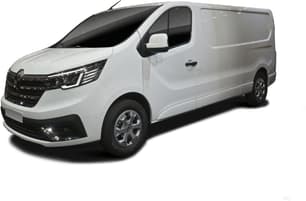
One of those competitors is the Renault Trafic which in 2026 brings a suite of technical upgrades designed to deliver enhanced economy, lower emissions, greater towing capacity and improved driver comfort and convenience.
With June approaching, traditionally the biggest month of the year for commercial vehicle sales, we recently spent a week in Renault’s latest offering to find out if it represents a compelling alternative to the HiAce for tradies and other commercial van users.
Tesla started from nothing to become one of the most recognisable brands across the automotive industry in less than two decades. Rivian is hoping to do the same.
If you haven't heard of Rivian that's okay, it's currently only available in the US market. It shares a lot in common with Tesla, though - a charismatic founder and CEO, a focus on electric vehicles and plenty of hype around the brand.
To find out if the hype is justified, CarsGuide.com.au was able to organise an exclusive preview drive of the brand's R1T electric pick-up in Los Angeles recently. The R1T is one of two models Rivian has entered the market with, the other is the R1S large SUV.
This is a far cry from company founder RJ Scaringe's original vision, the R1 - a mid-engined hybrid coupe sports car. Instead, Scaringe switched focus to the pick-up and SUV markets, which provided a much larger audience and helped attract investment from the Ford Motor Company and Amazon to get the company up and running on an industrial scale.
Rivian is still a few years from making it to Australia, but make no mistake, the company has been committed to global expansion for years. As far back as April 2019 a company representative told CarsGuide it believes there's a good opportunity for the R1T and R1S to find an audience in Australia.
So, with that in mind, we drove the R1T to find out if it has what it takes to make its mark with Australian ute buyers.
The Renault Trafic Premium LWB makes light work of heavy payloads and offers smart solutions for long internal load carrying and ‘mobile office’ requirements, combined with lengthy service intervals, good fuel economy and long driving range. It’s certainly worthy of cross-shopping with the HiAce and other rivals if you’re in the market for a refined and efficient mid-size commercial van.
Having finally experienced the Rivian R1T from the driver's seat I think this is a ute that would have plenty of appeal in the Australian market. Not as a competitor to a Toyota HiLux Workmate or similar working-class ute, but as an alternative to the likes of the HiLux Rogue, Ford Ranger Raptor or even the new Ranger Platinum.
This is a high-end, luxury ute that also happens to be electric, which only expands its appeal. It has seriously impressive performance and, while we didn't get to test them first-hand, strong off-road credentials. Add to that a premium look and feel to the cabin and loads of practicality and it's easy to see this finding an audience here.
The biggest question will be cost, because even at a direct price conversion (which isn't a clear reflection of shipping and local tariffs) the R1T will start well over $100,000. Even by today's standards of six-figure US utes like the Chevrolet Silverado 1500 and incoming Ford F-150, that will be a hard sell and could restrict its chances.
Which would be a shame because while Tesla has a clear head start in Australia, it's possible for Rivian to follow in its wheel tracks and have plenty of mainstream success.
Note: CarsGuide attended this event as a guest of the manufacturer, with travel, accommodation and meals provided.