What's the difference?
The Renault Megane RS is still here, in case you were wondering.
You may have let it slip your mind in recent times, because there’s been a lot of action in the hot hatch scene with the release of the new-generation Ford Focus ST, a fond farewell to the VW Golf R, and consistent talk of the upcoming Toyota Corolla GR hot hatch.
The Megane RS is more than just ‘here’, though. The RenaultSport Megane hatch range has expanded in recent times, and we’ve just spent some time with the Trophy model which first arrived in Australia late in 2019.
It is certainly keeping its presence known in 2020 Renault Megane RS Trophy spec, which represents the most powerful and fastest version of the standard model range before you get to the rip-snorting (and eye-wateringly expensive) Trophy R.
So what’s it like? Read on and you’ll find out all about it.
Freedom of choice has been the focus for the luxury car industry for more than a decade. Buyers were free to choose from a seemingly endless amount of variations and bodystyles to suit their taste and lifestyle.
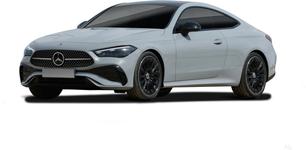
It gave birth to the ‘four-door coupe’ then the ‘SUV coupe’ and so many more. But now it seems car makers have reached their limit, as evidenced by Mercedes-Benz’s newest offering - the CLE Coupe and Cabriolet.
While technically a new addition to the range, the CLE actually replaces not one existing model, but two. The CLE will fill the gap left by both the C-Class Coupe and E-Class Coupe, allowing the German brand to simplify its line-up (ever so slightly).
So, what is the CLE Coupe and how will it live up to expectations of two different car buyers? Read on to find out…
If the Renault Megane RS Trophy is your dream car let me say this: there’s no overarching reason that I’d say you shouldn’t go ahead and buy it.
But with so much amazing competition in this part of the market, it’s hard to put it ahead of its rivals. And it’s going to be even harder for it to stay high on the contenders list as more new metal arrives in the coming years.
The CLE Coupe really feels like a car of the times. As the electric vehicle market continues to suck in resources, the days of endless variants and body styles is going to wane. But the truth is the CLE does a nice job of filling the demands that both previous C-Class Coupe and E-Class Coupe buyers are looking for.
It’s a stylish model with plenty of technology on the inside, so it should appeal to those who want something refined and elegant for their lifestyle. It has a hint of sportiness on road, without being overtly dynamic or uncomfortable; although Mercedes-AMG will cater to those buyers soon enough. And it offers the kind of space inside that buyers of both models will find acceptable (as long as they don’t have to climb into the back regularly).
The biggest challenge will be convincing C-Class customers to take the big jump up in price over the model it replaces, while at the same time convincing E-Class buyers that this is still something special and different given its similarities to the old model.
Note: CarsGuide attended this event as a guest of the manufacturer, with travel, accommodation and meals provided.
The Megane RS Trophy’s dimensions don’t really communicate just how chunky it really is. At 4364mm long on a 2670mm wheelbase, 1875mm wide and 1435mm tall, it is pretty conventional in terms of size for the segment.
But it packs a lot of style into that size. I for one love those broad hipped wheel-arches, the signature LED headlights and chequered flag lighting signature at the bottom of the bumper, and the bright, eye-catching colours available really just ram the message home that this isn’t your average Megane.
I could happily leave behind the red flecks on the wheels, which look a bit too blingy and not quite ‘lightweight racing-spec’ to me. But they obviously appeal to a certain buyer - maybe someone who wants a bit more drive-by flair, as opposed to track-day talking points.
The Trophy model builds upon the Cup variant, using the same chassis and hardware under the skin, and therefore running the brand’s 4Control four-wheel steering and a mechanical Torsen limited slip diff. More on that in the driving section below.
Exterior design and styling are one thing - but you probably spend more time sitting inside your car than just admiring it from a distance. How does the interior of the RS Trophy stack up? Check out the interior images to make up your own mind.
Thankfully for the German brand its family look across its range means the CLE seamlessly integrates into both the C-Class and E-Class line-ups.
Mercedes does use some colourful language to describe the looks, with terms like 'sharknose' for the front end, and these ‘powerdomes’ on the bonnet, and there’s a swooping design that wraps around the tail to create a dynamic-looking vehicle.
The biggest question about design, though, is the size of the CLE, specifically how it compares to the two coupes it replaces. While based on the same basic underpinnings as the C-Class sedan, Mercedes has stretched and pulled the body to try and fill the space between it and the old E-Class Coupe.
The result is a car that is 164mm longer than the C-Class Coupe and +15mm longer than the E-Class overall, with the wheelbase stretched 25mm over the C-Class but actually 8mm shorter than the old E-Class two-door. It’s also 50mm wider than the previous C-Class but exactly the same width as the E-Class. So it’s definitely on the bigger size without actually matching up with either model it supersedes.
The Megane RS Trophy’s cabin carries over some of the design cues from the exterior. It looks and feels like a hot hatch should.
There’s a lovely part-Nappa leather, part-Alcantara steering wheel with paddle shifters and a ‘centre line’ marker - but some may lament the lack of a flat-bottom to the wheel, which is a current trend in the “trust me I’m actually very sporty” breed of cars.
The manually adjustable seats are very supportive though they are a bit firm, so those wishing for ultimate comfort over long distance trips might be left wanting. But there is good adjustment to the seats, and they’re heated, too.
There are some nice elements to the cabin including soft plastics on the dashboard, but the lower plastics - below the eye-line - are quite hard and not very pleasant. However, the inclusion of ambient lighting does distract from that, and add a bit of flair to the cabin.
The portrait-style media screen is fine most of the time, though it does take some learning. The menus aren’t as intuitive as you might hope, with a mix of on-screen buttons and off-screen touchpad-style controls that can be difficult to hit when you’re driving. We also had a couple of instances of glitching while using Apple CarPlay and Android Auto smartphone mirroring.
Storage is okay. There are shallow cupholders between the seats, a covered centre console bin, as well as a storage section in front of the gear selector that’s big enough for a wallet and phone, and bottle holders in the doors.
In the rear seat there’s enough space for someone my size (182cm) to sit behind their own driving position, albeit with limited knee room and toe room. Headroom is good, and there are dual ISOFIX child-seat anchor points and three top-tethers for baby seats.
You’ll find a pair of small door pockets, two map pockets, and rear-seat directional air vents, which is nice. There’s a flip-down arm-rest with cupholders, too, and unlike some other high-price hatches with ambient lighting up front, the Megane gets LED light strips on its rear doors, too.
The boot space is good in the Megane RS Trophy, with luggage capacity claimed at a healthy 434 litres. On test, the car fit all three CarsGuide suitcases (124L, 95L and 36L) with room to spare. Speaking of spare (ahem), there isn’t one: it comes with a repair kit and tyre pressure monitoring, but no spare wheel of any kind.
Not surprisingly given the exterior growth over the old C-Class Coupe, Mercedes is talking up the increased interior room and practicality. Which is crucial to the success of the CLE because in replacing both the smaller C-Class and larger E-Class coupes, it now needs to appeal to both audiences.
Front seat room is generous, with plenty of shoulder room and the seats offer good comfort and support. In the back Mercedes’ designers have managed to create 95mm more legroom than the old C-Class Coupe, but fractionally less than the E-Class Coupe (just 1mm less). The rear seats are wider than both outgoing models, both across the shoulders and the mid-section. Headroom has been increased by 10mm over the C-Class but decreased by the same amount compared to the E-Class.
Putting the measuring tape aside, while the rear seats are fine for short trips, the back of the CLE is clearly not the place to be and if you plan on using the rear seats regularly then you should be looking at one of the brand’s sedans.
As for the boot, at 420 litres it’s 60 litres bigger than the old C-Class but five litres smaller when compared to the E-Class Coupe; so once again there’s a trade-off between the two.
The Renault Megane RS Trophy has a list price of $52,990 for the six-speed manual, or $55,900 for the six-speed dual-clutch auto model, as tested here. Those costs are RRP/MSRP, and don't include on-roads.
Standard equipment for this range-topping ‘regular’ RS model includes 19-inch ‘Jerez’ alloy wheels with Bridgestone Potenza S001 tyres, an active valve exhaust system, Brembo brakes, LED headlights with LED daytime running lights, rear fog lights, front/rear/side parking sensors, semi-autonomous parking system, reversing camera, auto locking, smart key card and push-button start, and steering column-mounted paddle shifters.
There’s also auto headlights, auto wipers, dual zone climate control, an auto dimming rearview mirror, heated front seats with manual adjustment, a nine-speaker Bose sound system with subwoofer and amplifier, an 8.7-inch touchscreen media system with aux port, 2x USB ports, Bluetooth phone and audio, Apple CarPlay and Android Auto, sat nav, the brand’s RS Monitor track timing software, and a 7.0-inch TFT colour screen for the driver with configurable modes and digital speedo.
You can find a run down of the safety tech and equipment fitted in the safety section below.
Options available include an electric sunroof ($1990), and there is also the choice of a few metallic paint colours: Diamond Black and Pearl White metallic are both $800, while the Signature Metallic Paint colours - Liquid Yellow and Orange Tonic as you see here - are $1000. Only Glacier White will cost you no extra.
Wondering where it sits among its closest rivals? If you’re thinking about a Ford Focus ST (from $44,690 - manual or auto), Hyundai i30 N (from $41,400 - manual only), the outgoing VW Golf GTI (from $46,690 - auto only), or the mighty Honda Civic Type R (from $51,990 - manual only) the Megane RS Trophy is expensive. Only the VW Golf R Final Edition ($57,990 - auto only) is dearer… unless you’re thinking of comparing to the likes of a Mercedes-AMG A35 ($69,300).
The initial range consists of just two models - the CLE200 and CLE300 4Matic, but an AMG variant, the CLE53 is due to follow soon (as is the expected-but-not-confirmed V8-powered CLE63), but not before the Cabriolet arrives. While the CLE300 Cabriolet was on hand for us to look at, we weren’t allowed to drive, so we’ll focus this review on the hard-top models.
The CLE200 is priced from $103,900 and the CLE300 is $124,900 (neither price includes on-road costs). While it’s hard to do a like-for-like comparison between the old models and this new one, the CLE is more than $20k more expensive than the old C-Class but around $9-12k cheaper than the equivalent E-Class Coupe.
For future reference, the CLE300 4Matic Cabriolet will be priced from $135,900.
Standard features on both models includes 19-inch alloy wheels, AMG Line exterior and interior packages, a panoramic sunroof, 64-colour ambient cabin lighting, heated front seats with memory function, a head-up display, a 12.3-inch digital instrument display, plus the latest MBUX infotainment system which runs through an 11.9-inch touchscreen as well as Burmester surround sound system. One of the key specification differences between the CLE200 and CLE300, aside from the powertrain, is the interior trim, with the cheaper model using synthetic leather while the more expensive one gets the genuine article.
Engine specs matter if you’re talking about performance hatchbacks, and the Megane RS Trophy is no exception.
It has a 1.8-litre four-cylinder turbo-petrol engine that punches hard for its size, with 221kW of power (at 6000rpm) and 420Nm of torque (at 3200rpm). That’s for the six-speed dual-clutch automatic transmission, as was fitted to our test car. If you buy the six-speed manual, you miss out on a bit of grunt - it has 400Nm (at 3200rpm) and the same peak power.
In auto spec the RS Trophy “300” offers higher figure vs the Sport and Cup “280” models (205kW/390Nm), and more engine performance per litre of capacity than the Focus ST (2.3-litre: 206kW/420Nm), Golf GTI (2.0-litre: 180kW/370Nm; TCR 2.0-litre: 213kW/400Nm), and even the Golf R (2.0-litre: 213kW/380Nm).
All Megane RS models are front-wheel drive (FWD/2WD) and no Megane RS is all-wheel drive (AWD). The Trophy and Cup models both get 4Control four-wheel steering, which is an interesting aspect of the drive experience. More on that below.
There are multiple drive modes to choose from, including Comfort, Neutral, Sport, Race and the configurable Perso mode. These can alter engine, transmission, throttle, traction control, exhaust noise, fake engine sound and steering sharpness - but not suspension, because the dampers aren’t adaptive units.
The CLE200 and CLE300 are both powered by four-cylinder turbocharged petrol engines, albeit in different states of tune, and each assisted by a mild-hybrid integrated starter generator.
The CLE200 Coupé makes 150kW and 320Nm and sends it to the rear wheels via a nine-speed auto transmission. While the CLE300 4Matic Coupé gets 190kW and 400Nm but also gets (as the name gives away) Mercedes’ 4Matic all-wheel-drive system.
While not really a hybrid in the conventional sense, the integrated starter generator adds an extra 17kW/205Nm boost when required while also helping to save fuel.
The claimed official combined fuel consumption for the Megane RS Trophy is 8.0 litres per 100 kilometres. That’s for the EDC auto model as tested. The manual is said to use 8.3L/100km.
You might achieve that if you drive gently, though over my testing - which incorporated hundreds of kilometres of highway and country road driving, as well as a few spirited stints and some urban snarls - I saw a return of 10.8L/100km at the pump.
The Megane RS requires 98RON premium unleaded, and the fuel tank capacity is 50 litres.
Make no mistake, the integrated starter generator is a mild-hybrid system, so don’t expect to see miserly returns from the CLE. Instead, the official figures for the pair are quite close, despite the different drivetrains.
The CLE200 has a claimed fuel rating of 7.2L/100km, while the CLE300 uses 7.4L/100km.
The Megane RS Trophy has the ingredients to be an all-time legendary hot hatch, but they don’t work together well enough for it to be a truly great car to drive.
That is, they don’t work together on public roads. I didn’t get a chance to sample the RS Trophy at the track, and I’m sure that may well alter some of my opinions. But this was a review focused around everyday driving first and foremost, because - unless you’ve got quite a fleet of cars - you’ll be spending a lot of time in mundane motoring in your Megane RS, too.
Other hot hatches in the segment manage to combine big power and torque with immense traction and steering prowess. The Megane RS used to, as well.
But this new version seemingly has some issues harnessing the grunt, and the 4Control four-wheel steering system simply isn’t as rewarding as it should be.
I had several instances where the traction on slippery surfaces was lacking, while even in the dry I noticed distinct torque steer and the Bridgestone tyres struggled to cope under hard acceleration. That’s despite the fact the Trophy gets a mechanical LSD.
Further, that four-wheel steering actually makes it pretty hard to judge the behaviour of the car at times, with an artificial feel to it that just doesn’t do it justice. There will be some who say that the four-wheel steering - which can angle in the rear tyres to help you pivot in corners more adeptly - is excellent. But I’m not one of them. I really found it hard to predict this car’s behaviour. I never really gelled with it.
At the very least there’s a non-interventional lane keeping assist system, which emits a pulsing sound through the speakers rather than actively vibrating or adjusting the steering.
The ride is unapologetic in its firmness – although, if you’re across the history of RS Megane models, that is to be expected for a Trophy chassis. It can be tiring on longer road trips especially if the surface isn’t great.
While it is extremely fast in a straight line - 0-100km/h is claimed at just 5.7 seconds - it wasn’t as quick through corners as I was expecting it might be, and that comes down to its four-wheel steering mostly, along with a lack of usable traction at times. It simply isn’t as connected to the road as the previous RSs have been.
It was also a bit laggy then lurchy at lower speeds when taking off from a standstill, such is the nature of the dual-clutch in stop-start situations.
To put it bluntly, I didn’t enjoy this car anywhere near as much as I thought I might. It just isn’t as pure a driving machine as I’ve come to expect from the RS brand. Perhaps I should aim to try it on a track!
To judge the CLE on its driving merits you first need to understand where it fits within the broader Mercedes-Benz line-up. Put simply, while coupes are seen as sporty cars, the German brand has other models that are designed to appeal to driving enthusiasts; such as the upcoming AMG versions of this car and the AMG GT Coupe.
So within that context, the CLE200 and CLE300 do an admirable job of being stylish cruisers that feel at home in the city but not out of place on a winding country road.
Sports suspension is standard on Australian delivered models, making it 15mm lower than overseas versions and fitted with firmer passive damping too. But still, it doesn’t translate to a dynamically agile and engaging sports coupe suddenly, instead it just gives the CLE a bit more sharpness when turning, at the expense of some comfort on pockmarked roads.
The engines perform nicely, the CLE200 feels adequately endowed with its 150kW/320Nm, so naturally the 190kW/400Nm CLE300 just feels like it has a bit more pep in its step. But I’d question the value of the all-wheel-drive system in a car like this, especially in Australia where the roads are rarely very slippery.
The Renault Megane has not been awarded an ANCAP crash test rating, but the regular (non-RS) model scored five stars against EuroNCAP criteria back in 2015.
The RS Trophy (manual or automatic) comes fitted with adaptive cruise control with speed limiter, auto emergency braking (AEB) at speeds between 30km/h and 140km/h, blind spot monitoring, lane departure warning with audio alert, reversing camera, surround parking sensors and semi-autonomous parking.
Missing is rear cross-traffic alert, front cross-traffic alert, rear AEB, pedestrian detection and cyclist detection.
Both CLE models come with all the usual passive and active safety features you’d expect on a modern luxury car, including autonomous emergency braking, ‘Active Lane Keeping Assist’, ‘Active Brake Assist’, blind spot monitoring, traffic sign assist, active cruise control and Mercedes’ ‘Pre-Safe’ accident anticipation system. There’s also a ‘Parking Package’ with 360-degree camera view to keep you and those around you safe at low speeds.
There’s no ANCAP rating for this new model announced yet, but previously both the C-Class Coupe and E-Class Coupe were tested.
The Renault Megane RS range is covered by a five-year/unlimited kilometre warranty, which adds some peace of mind for owners.
Further, the service intervals are generous, at 12 months/20,000km - though the brand states the Megane RS is actually “subject to adaptive servicing requirements” as the oil condition sensor may trigger a service check requirement prior to the standard intervals.
Unlike other Renault models with a five-year capped price servicing plan, the Megane RS is only covered for three years/60,000km. The service costs for the EDC dual-clutch auto models are higher than the manual versions, due to replacement transmission oil being needed (adding $400 to the first service).
The costs for the first three services are: $799 (12 months/20,000km); $299 (24 months/40,000km); $399 (36 months/60,000km). Consumables beyond those service intervals include: every 24 months or 20,000km - air filter replacement ($49) and pollen filter replacement ($63); every 48 months or 60,000km - accessory belt replacement ($306). Spark plugs are included at no cost, due every 36 months/60,000km.
The car is backed for up to four years of roadside assistance when serviced within the Renault dealership/service network.
The CLE is covered by Mercedes Australia’s usual five-year/unlimited kilometre warranty.
The brand offers pre-purchased service plans for maintenance covering three, four or five years, starting at $3325 then $4535 and then $6800.