What's the difference?
Don’t let people talk you into buying a tiny car just because you live in the city. That’s what I’ve learnt from being a car reviewer and living about eight kilometres from the CBD.
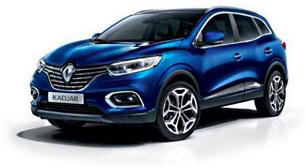
Yes, car spaces are small, or almost non existent, but the people that live there are as full-sized as people elsewhere and they often carry around just as much gear. What you need is a big, little car and the Renault Kadjar is that – a small SUV which is actually bigger than most.
The Kadjar is also French, and that’s appealing to us city folk because even though there are millions of us living in one square metre we like to think of ourselves as different, as individuals, cosmopolitan, metropolitan.
So the Kadjar looks perfect then, right?
Well, it’s good yes… in some ways, but after reading this you might prefer its Japanese cousin, the Nissan Qashqai. Let me explain...
Welcome to one of the world’s tiniest SUVs, as well as amongst Australia’s cheapest – Suzuki’s diminutive Ignis.
There’s an Aussie connection. Holden designer Peter Hughes styled the original YG Cruze based on the first (FH) Ignis of 2000, with both models sharing most components underneath; but the latter was not well received, prompting Suzuki to change tack for its reborn Swift replacement of 2004. Yet the name and concept were revived 11 years later (without GMH) for the retro-themed high-riding hatch/crossover you see here today.
The point? This quick history lesson serves to remind us how similar both Ignis generations are, as well as how devoted Suzuki is in its pursuit of owning the light SUV space.
In June 2020, a facelifted MF arrived, brandishing a revised grille, bumpers and trim to give it a chunkier appearance, along with minor spec changes.
Here we take a long look at the GLX auto.
The Renault Kadjar Intens ticks a lot of the urban boxes. It’s small, which is good for navigating narrow city streets and parking in tight spaces, but it’s also spacious and practical. The Kadjar is fuel efficient for a four-cylinder petrol engine and it has that sophisticated French styling.
The Intens is expensive, though, and unless you absolutely have to have leather seats, a glass roof, and the Bose stereo I’d go for the mid-range Zen grade and save yourself $5K but still have all the same safety tech. That said the Intens has auto parking as standard which is a nice convenience for the city.
Safety could be better. The AEB system doesn’t have pedestrian and cyclist detection, rear cross traffic alert, or reverse emergency braking.
Finally, the dual-clutch automatic and 1.3-litre turbo-petrol engine while a fuel efficient combination, isn’t all that easy to live with and can make driving a less-than-smooth experience. The Nissan Qashqai’s combination of CVT auto and four-cylinder naturally aspirated engine is better suited to the urban jungle - something to think about there.
Now the scores, the Kadjar Intens gets the same mark for daily driving and its urban talents – it could be smoother to drive, but there’s still lots to like.
With statement styling, inherent agility, excellent efficiency, proven reliability, high equipment levels and low entry pricing, the 2021 Ignis GLX is in danger of becoming a mandatory short-list proposition for people seeking fun and affordable motoring.
But undermining all that is a distinct lack of driver-assist safety tech that can’t be – and shouldn’t be – ignored. At least give buyers the option of paying more for essentials like AEB.
If Suzuki can address this shortfall, the Ignis would join its excellent Swift supermini stablemate in being a very compelling and enjoyable compact urban runabout. We hope this happens sooner rather than later.