What's the difference?
One of Renault’s most successful models globally with over 1.5 million sales of the original, the Captur has nevertheless struggled in Australia since its 2015 launch.
Last year, it was Europe’s 11th bestseller outright, outselling stalwarts like the Toyota Corolla, Hyundai Tucson and Volkswagen Tiguan. Only the Peugeot 2008 and VW T-Roc were more popular amongst SUVs. In contrast, only 533 found homes over here in 2011.
However, with the largely all-new second-generation Captur launched locally last year now gaining market traction with a 200 per cent-plus sales spike, the 123-year-old brand’s VW T-Cross rival may yet finally fly Down Under.
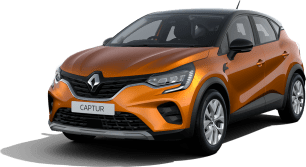
We take a look at the recently-released RS Line range-topper, to see just how well the Captur shapes up in urban Australia.
Meet the IM6 Performance, “presented by MG”. And that last bit’s important, because while it’s marketed and sold by the Chinese mainstream player, it really is unlike any other MG going around.
Think of it as like a Lexus to Toyota, or an Audi to Volkswagen, with the Chinese brand going premium, and seemingly making a direct play for Tesla’s fan base. How so? Well, there’s only two models in IM line-up (sound familiar?) with the IM6 a rival for the Model Y, and the IM5 (which we’ve also tested) a competitor to the Model 3.
The IM6 is spacious, pretty sumptuous and ridiculously fast. And it offers up some features I’ve only ever really seen in high-end German metal. But it’s also got some quirks.
So, can MG run with the big dogs of the premium car world with the IM6 Performance? And should Tesla be worried? Let’s find out.
There’s no denying the Captur RS Line is expensive.
But it’s also sophisticated, cultured, comfy, friendly and fun, possessing a quality and capability normally expected – but rarely delivered as roundly – in more premium-branded small SUVs. Seen in this light, the Renault’s value is relative.
Better still, if the price is just too rich for you, there are three cheaper grades offering equal promise. Which is why the charming Captur deserves to succeed in Australia.
$40,800 before on-road costs
Based on new car retail price
A super solid first outing from the IM brand. Don't let the pricing fool you, there is still bang for buck on offer in the IM6 Performance, even if it at times feels a bit too digital for my tastes.
The original Captur was huge in Europe because it was keenly priced, looked good, drove well (being based on the agile Clio IV supermini sure helped) and was intelligently packaged (offering a sliding rear seat).
It’s no shock, then, that the second-gen version revealed in France during 2019 gently evolved the concept with a broader stance, sharper edges and expanded cabin space as a result of a 20mm longer wheelbase and 110mm of increased body length, improving rear legroom and cargo capacity in the process.
Built on the Renault-Nissan-Mitsubishi Alliance’s CMF-B (Common Module Family, B-segment) platform in Spain and shared with the latest Clio (5) sadly not sold in Australia, it benefits from being stronger and sturdier than before, cutting noise levels inside.
Nearly three years on, Captur II remains a handsome and pleasingly proportioned machine, looking somewhat larger than the CX-3 and Puma, yet still trim and taut enough to avoid seeming too big for urban buyers seeking a compact crossover. Its size fits.
Kudos to Renault Australia importers Ateco Automotive for offering interesting, vibrant colour options.
I feel almost mean saying this, because there will be plenty of people who like the way the IM6 looks, and I don’t want to rain on their parade. But… I’m not one of them.
It reminds me a bit of the pre-facelift Tesla Model Y, in that it’s largely feature-less and a bit blobby, and there’s not a sharp angle anywhere to be found on the thing. Premium to me means powerful and assured — picture just about any Audi — whereas I just find this a bit bland and soft.
Anyway, I do like the big alloys, the insulated glass roof and the light treatment front and rear.
And I like the cabin. The seats aren’t leather, but they’re super thick and comfortable, and there is a genuinely premium air in the cabin, helped by the acreage of screens and the quality elements, like the little door panels.
The doors unlatch electrically, matching the pop-out door handles outside, but they can be a bit fidgety. Someone from MG told me how they worked (you kind of cover the handle and let the door come to you) but I watched everyone else who tried to open them struggle. If you're at the point where you have to explain how a door handle works, you might have over-egged the pudding.
The second screen below the main one acts a bit like a mobile phone. You can alter your home screen widgets and access the main menu, even as Apple CarPlay is synched at the top. You’ll get used to it, I’m sure, but I found it to be a bit fidgety.
Actually it reminds me a little bit of the Lexus trackpad, or whatever that hateful system was called, where you controlled the main screen via a little mousepad thing, though happily it’s nowhere near as annoying as that was.
There’s no denying how compact the Captur is inside as well. Again, that French city-car DNA shines through clearly.
Yet that doesn’t mean the cabin is cramped or tight, thanks to packaging that’s very intelligently executed, to the point where it will have you thinking twice about needing a larger SUV.
Additionally, the dashboard's layout and ambience possess a Euro chic that is also reflected in the quality feel of most of the switchgear and controls. Even the hard plasticky bits hidden in the lower regions of the console and doors avoid seeming cheap.
The RS Line’s cloth/artificial leather combo with its red striping and contrasting stitching plays up to the SUV’s athletic ambitions; ambient lighting choices are plentiful; the steering wheel is a chunky three-spoke affair that’s lovely to hold and behold; the paddle shifters are astutely sited; and the overall finish corresponds with the Captur’s lofty positioning.
That said, the dash’s design looks a little mid-to-late-last decade, with the 9.3-inch portrait touchscreen already dated after the Cinemascopic hyperscreens dominating the cabins of the latest Mercedes-Benzes, Havals, electrified Hyundais/Kias and others. Remember, the Renault's already celebrated its third birthday in France.
Yet the colourful multimedia system itself is thankfully fast and glitch-free, with clear and easy to understand functionality. The same applies to the RS Line’s digital instrumentation, which are configurable according to which of the drive settings (default/normal ‘My Sense’, Sport or Eco) are chosen. In this regard, the Captur's dash looks bang up-to-date.
In the RS Line, you sit on cosseting sports seats with just the right amount of bolstering. And while the driver’s side lacks lumbar support (you'll need the cheaper Intens for that), we found no fault after hours sat behind the wheel. Note, however, that the front passenger cushion is fixed up high – perhaps too much so for bouffant hairdos.
Points are regained for the simple and effective ventilation system, heaps of storage alternatives including door pockets that will easily swallow a bottle; the hidden phone charger deftly hidden under the gear selector; multitude of USB ports and ample all-round vision, aided by this grade’s excellent 360-degree camera views.
On the other hand, the multimedia system needs a good old-fashioned volume knob, as relying on tapping a screen is annoying and distracting. What is this? 2013? The gear selector might look flash, but it is infuriatingly fiddly. More on that later in the Drive section.
Furthermore, the chrome-like brightwork on the steering wheel spokes reflect sunlight badly during certain points of the day. The instrumentation’s indicator for which gear ratio is selected in manual mode is way too small and carelessly positioned in the bottom right-hand corner, making it difficult and distracting to read at speed. And two rattles reared their ugly heads: from the driver’s door and hatch.
Access to the rear is tight for longer-legged passengers, but once sat, there is more than sufficient head, knee and leg room sat behind front seats set for 178cm tall occupants. The outboard cushion is shaped for comfort, the (fixed) backrest angle is fine for most riders, and a third person can squeeze in the middle as required. There’s decent vision out and the ambience mirrors the front’s quality. Gloomy the Captur is not.
Absent rear-seat centre armrest, cupholders and overhead grab handles is disappointing, but there are rear vent outlets, access to two USB ports and a 12V outlet, sizeable door storage and map pockets behind both front seats.
Further back, the boot benefits from a low loading lip and wide aperture, revealing a seemingly shallow floor, but it's a fake; the sturdy base can easily be removed or lowered to open up a much deeper load area. Ideal for providing hidden storage.
Compared to the previous Captur, luggage volume grows 81 litres. Boot capacity varies from 422L to 536L taking advantage of the unique sliding back seat, moving forward some 160mm. That's especially handy if your rear occupants are children in capsules or booster seats.
Finally, with the 60/40 rear backrests dropped, that extends to 1275L, bringing some 1.57 metres of flat floor space with it.
In summary, then, the Renault’s interior is a clever class act, and in keeping with the RS Line’s premium aspirations.
The IM6 measures 4904mm long, 1988mm wide and 1669mm tall, and it rides on a 2950mm wheelbase, with IM describing it as a "mid-large SUV", though I expect it will be classed as a medium SUV Australia.
That said, ICE and EV mid-size electric SUVs are not cut from the same cloth, with the latter making use of a flat floor to maximise space. And so it is with the IM6, where backseat room is pretty damn impressive. I’m 175cm, and I had no problem at all with legroom or headroom, plus the same plush seats from up there are in the back, too.
There are also air vents but no temperature controls, and while there are USB ports, there is no regular household-style plug in the cabin.
The glass in the windows is laminated, while the roof is double glazed, which MG tells me is Australian summer-proof, but I guess we'll know for sure in a couple of months.
There’s no shortage of cargo room either. There’s a 32-litre frunk up front, and there’s 646 litres in the boot with the rear seats in place. They’re 60/40 split, and if you drop them, luggage space grows to 1621 litres.
The towing capacity is a braked 1500kg, too, but I don’t expect to see many of these towing a camper trailer around.
This largely depends on what you value in a vehicle.
The Captur II range is four-tiered, kicking off with the base Life from $31,300, followed by the Zen from $33,300, luxury Intens from $38,300 and sporty RS Line, as tested, from $40,800. All prices quoted here are before on-road costs unless otherwise stated.
The bad news is, amongst most direct competitors, the RS Line seems needlessly expensive.
Cheaper direct rivals with a similarly sporty bent include the Kia Stonic GT-Line (from just $30,490), Toyota Yaris Cross Urban (from $32,990), Ford Puma ST-Line V (from $35,890), Mazda CX-3 Akari FWD (from $37,190) and Skoda Kamiq Monte Carlo (from $37,590), while even the all-wheel drive (AWD) options of the Yaris Cross (yes, the hybrid too) and CX-3 still come in below the Renault.
In the Captur’s defence, with a high-output turbo engine, it does offer either more power and/or more torque than all of the above.
But then so do some substantially larger small SUVs that still haven’t breached the $40K barrier, like the rapid Hyundai Kona N-Line and Kia Seltos Sport+ AWD turbos, Mazda CX-30 G25 Touring SP, Mazda MX-30 G20e Touring Vision and Citroen C4 Shine. The Citroen seems like a conspicuous bargain, actually, since it easily undercuts the related Peugeot 2008 GT (now from $43,397). Maybe the now less-irked-with-Australia Emmanuel Macron turned the other cheek in that instance.
So, is the Renault bundled out at the first round? No, for the Captur is one of those rare cars that succeeds in justifying its premium pricing with tangible benefits, ones that become apparent with exposure.
More on those later, but collectively the Renault might embarrass costlier yet largely less well-equipped base posh equivalents like the Lexus UX200 Luxury (from $44,445), Mini Countryman Cooper Classic (from $45,000), Audi Q2 35 TFSI (from $45,200), BMW X1 sDrive18i (from $47,900) and Mercedes-Benz GLA 200 (from $60,688).
It’s also at least a relief to hear that the RS Line has almost everything you’d expect in a high-priced small SUV.
On the safety front, this means autonomous emergency braking (AEB) with pedestrian and cyclist detection, Forward Collision Warning system with Safe Distance Warning, Lane Departure Warning, Lane Keep Assist, Blind Spot Warning, Rear Cross Traffic Alert, Traffic Sign Recognition, adaptive cruise control with full stop/go, a surround-view camera, front/side/rear parking sensors, Hill Start Assist, LED headlights/daytime driving lights and tyre pressure monitors.
Other goodies include a 9.3-inch portrait touchscreen, DAB+ digital radio as part of a six-speaker premium audio system, wireless smartphone charger, four USB charging ports and two 12V sockets, multi-screen digital instrumentation, satellite navigation, keyless entry/start, walkaway locking, auto high beam, auto self-parking, auto folding mirrors, myriad-choice ambient interior lighting, sliding front centre armrest console with storage, rear-seat air vents, sliding rear seats, heated steering wheel and rear-seat privacy glass.
These come on top of climate control air-conditioning, paddle shifters, Bluetooth telephony and audio streaming, Apple CarPlay/Android Auto, auto on/off headlights and wipers, electric park brake with auto hold, auto up/down electric windows all-round and illuminated sunvisor mirrors.
Being an RS Line, it also gains contrasting stitching on part-cloth/part leatherette (vinyl-like) seat upholstery, dark grey trim with soft-touch material on dash and door panels, red dash trim, chrome door sills, alloy pedals, RS badges, grey body trim, dual chrome exhaust tips, a unique front bumper and 18-inch alloys with a temporary spare wheel.
Weirdly, while the $2500-cheaper Intens grade includes heated front seats and driver’s seat lumbar support, the RS Line does not. Plus, no Captur features the front cross-traffic alert, intersection braking or front centre airbag tech that some newer (post-2020) rivals do.
Overall, though, the RS Line delivers on specification.

Premium play means more premium prices, and my IM6 Performance will set you back $80,990 on the road. That might have just sent your eyebrows skyward, but keep in mind it’s faster than some Ferraris, and is swimming with high-end tech, so the bang-for-buck factor is actually still pretty good.
There are cheaper ones, too. The single-motor Premium grade is $60,990 drive-away, albeit with less power and slower charging. Then there’s the Platinum, with a bigger battery and faster charging, which is $69,990
The Performance, though, gets everything IM has to give, including an 800-volt architecture, which means super-fast charging, as well as twin motors, brutal acceleration, a decent driving range and adaptive air suspension.
Elsewhere, you get LED lighting, a big and insulated glass roof, and 20-inch alloy wheels. Inside, there are thick and soft synthetic leather seats that are heated and cooled in both rows, a banging 20-speaker sound system, and wireless charging to pair with wireless Apple CarPlay and Android Auto.
There’s also 'active noise cancellation', and a seat-aware digital assistant which is about the best, and fastest, I’ve ever used. The IM6’s speaker system can locate where a voice is coming from, so any passenger can use the assistant. For example, if you’re in the backseat and say 'hey IM, lower my window', only your window opens. It’s a technology that I specifically remember the German brands crowing about not so long ago.
There’s also a 10.5-inch central touchscreen that controls much of the vast 26.3-inch screen that runs from in front of the driver to the centre of the cabin, as well as clever little magnets embedded in the dash in front of the driver, as well as in the back of the front seat headrests, that are designed to hold phones, iPads or other little accessories.
Also cool is the IM6’s self-parking tech, but there’s also a relatively useless crab walk function, which leans on the rear-wheel steering system to drive diagonally at slow speeds. I’m still not entirely sure when you’d use that one, to be honest.
Honestly, it’s a lot of stuff, and a lot of tech.
Here’s a fun fact.
Below the Captur’s stylish bonnet is a powertrain you’ll find in the least-expensive Mercedes-Benz A-Class, B-Class, CLA, GLA and GLB, as well as the related Nissan Juke and all-new Nissan Qashqai.
Developed as part of an expanded engine family by Nissan nearly 20 years ago now, Renault’s version is dubbed the TCe 155, a Euro 6-rated, 1332cc 1.3-litre direct-injection four-cylinder turbo petrol unit, pumping out 113kW of power at 5500rpm and 270Nm of torque at a low 1800rpm.
Drive is sent to the front wheels via a seven-speed dual-clutch transmission (also found in the other vehicles mentioned above). In the Captur, it features three specific modes – Eco, Normal (called My Sense) and Sport – that change steering, transmission and throttle responses, as well as a set of the aforementioned paddle shifters.
As with all the grades, the RS Line manages the 0-100km/h acceleration time in 8.6 seconds, on the way to a top speed of 202km/h.
Weighing in at a lithe 1267kg, this Captur boasts a power-to-weight ratio of a healthy 89.1kW/tonne.
Now, if you've been underwhelmed by or read negative reviews about this powertrain's refinement and/or performance in the various Mercedes models, Juke or even Renault's own Arkana, then brace yourself.
All is revealed in the Drive section below.
This is the real party trick of the IM6, because there’s a nuclear power plant under the metal somewhere. All up, the twin-motor setup produces a total 578kW and 802Nm, though I suspect you’re never accessing all the grunt all at once. Still, 100km/h zips by in 3.4 seconds, and the top speed is 239km/h. For the record, that’s exactly as fast the Ferrari Roma Spider I recently handed back, so yeah, it’s properly supercar quick.
For reasons outlined in the Driving section, the Captur’s natural verve and spirit is contagious, especially if you’re up for a bit of fun, and we ended up extending this car’s legs well beyond what most regular small SUVs experience. In other words, we enjoyed caning it.
As a result of this foolhardiness, fuel consumption probably suffered in our enthusiastic hands, yet we still managed a credible 7.5 litres per 100km gleaned at the pump, against the trip computer’s 7.2L/100km readout.
That’s not too far off the official combined average of 6.6L/100km. Urban/Extra Urban numbers are 5.4 and 8.8L/100km respectively, while the carbon dioxide emissions average is 149 grams/kilometre.
However, note that the 48-litre fuel tank needs 95 RON premium unleaded petrol minimum. Expect over 700km between refills based on the official combined average consumption figure.
Also on board is a 100kWh Nickel-Cobalt-Magnesium battery that produces a WLTP driving range of 505kms. Pretty good.
Charging is strong, too. The high-tech platform allows for 396kW DC fast charging, which is faster than what is currently offered in Australia. The claim is 30-80 per cent charged in 15 minutes. There’s also an external vehicle-to-load (V2L) port.
Has Renault finally broken its dreary automatic transmission curse?
The original Captur (and previous Clio) was fun to drive and comfortable to travel in with the old TCe 90 (0.9L three-cylinder turbo) engine/five-speed manual gearbox combo.
But the old 1.2L four-cylinder auto version with the previous six-speed DCT (dual-clutch transmission, also marketed as EDC for Efficient Dual Clutch) suffered from being slow and laggy selecting gears, when all you wanted was an instant shove forward.
No such ailments afflict the Captur II.
Regardless of the DCT, the 1.3L four-pot turbo is a terrifically muscular performer, stepping off the line quickly and smartly, with barely any hesitation or delay. Perhaps the best we've encountered this side of Porsche's PDK transmission.
Even on hills, it is tuned for linear, jerk-free response, aided by a hill-hold function that eliminates the frustration of rolling backwards on inclines. Crawling in heavy traffic, there is none of the flaring or driveline snatch that the old EDC inflicted. Smooth, swift and sweet acceleration is at last available in a modern auto Renault.
And the news gets better as the roads empty out and open up. Throttle response on the move is strong, with speed building up quickly and smoothly. There’s a deep well of torque to draw upon, helped out by the fast-shifting DCT and good spread of ratios, that keep the engine spinning in the sweet spot. It sounds and feels sporty and alive.
Consequently, we reckon the Captur boasts the best application of this powertrain we’ve yet experienced – even amongst the Mercedes models using a variation of it. If only the otherwise-well-rounded Nissan Juke felt as polished as its Renault cousin.
One gripe, though, is the RS Line's gear fly-by-wire gear shifter, which too often fails to engage when you're in a hurry. You need to be slow and measured when selecting Drive or Reverse. Otherwise you may be left panicking mid U-turn. This is our biggest issue with the Captur.
Otherwise, it's plain sailing for France's diminutive SUV.
The Captur’s punchy performance helps it zip into tight spots effortlessly, assisted by direct yet easy steering that weighs up according to whether you’re in relaxed Eco or Sport mode.
Whichever is chosen, the RS Line’s handling is defined by high levels of confidence and composure that only comes with cars that provide feel and feedback.
This, along with linear steering that’s never nervous at speed, means driving the Captur quickly is a blast. Cornering is clean and precise, with the car naturally getting into an easy, gentle flow that makes driver feel part of the car.
This Renault feels connected to the road in more ways than one – and that’s a real rarity in this type of vehicle. Right up there with the animated Ford Puma, this truly is the Clio of smaller SUVs.
The Captur continues to impress when pushed really hard. Driven along a mountain road, there is some body lean through really fast and tight corners, yet is shines with its excellent roadholding abilities. Likewise, this is one small SUV that seems to relish long highway touring.
Plus, and despite riding on 18-inch wheels, the Captur’s suspension (struts up front and a torsion beam out back, so nothing special or unusual here) is soft enough to soak up most bumps, especially larger speed humps, yet set up to deliver dynamically. It’s way suppler than you might think looking at the twin yellow Renault Sport diamonds on the steering wheel. We suspect the quality Continental PremiumContact 6 215/55R18 H tyres play a big role in this.
Our only concern is the Captur may be a bit too playful in the dirt. Over gravel at speed, the stability and traction control systems take their time to intervene, though they do eventually take over to gently yet emphatically reel in a wiggly rear end before it begins to slide out of control.
Renault has obviously tuned it this way, and it's frankly heaps better than the abrupt or ill-judged set-ups found in other SUVs (hello, Haval), but a mild adrenalin rush will follow if you're not expecting such... initial looseness.
If you love driving and hate the thought of dull SUVs, the Captur is the one for you.
First things first, don't get too distracted by the word "performance" here. The IM6 doesn't act like a performance car, it feels bit too plush, and bit too digital, for that.
But that's not necessarily a bad thing. Performance cars are often loud, raucous and uncomfortable, and the IM6 is none of those things. Instead, those mountains of power and torque make silky, silent progress absolutely effortless, which feels pretty premium to me.
MG makes a big deal of how much work went into insulating the cabin from noise – with active noise cancellation joined by double-paned insulated glass – and it is a properly calming and quiet space.
Also strong is the suspension, with the adaptive air setup soaking up most bumps and bruises, but I found it can clang over really solid bumps, sounding like it's bouncing off a stopper. The steering is solid, too, with a nice weight, if not overly talkative in the feedback department, while the rear-wheel steering helps eat into the turning circle for tight three-point turns.
The downside, though, is that it all feels a little too digital, and like there's been a little too much overthinking gone into it. Having to push a button to see behind you in a hurry is bonkers (see my explanation in the Safety section below), and the secondary screen is more annoying than intuitive. And there were several bings or bongs I couldn't even identify. All of which interrupts the otherwise calming nature of the drive experience.
Tested in 2019, the latest Captur scored a five-star EuroNCAP crash-test rating, and so has thus been endorsed by the corresponding Australian ANCAP organisation.
On the active safety front, you’ll find AEB with pedestrian and cyclist detection, Forward Collision Warning system with Safe Distance Warning, Lane Departure Warning, Lane Keep Assist, Blind Spot Warning, Rear Cross Traffic Alert, Traffic Sign Recognition, adaptive cruise control with full stop/go, a surround-view camera, front/side/rear parking sensors, Hill Start Assist and tyre pressure monitors.
Note that the Captur’s AEB can detect and brake for cars, bikes and pedestrians between 10km/h and 80km/h day and night, brake for moving vehicles at speeds between 7km/h and 170km/h while the lane-keep assist works between 70km/h and 180km/h.
You'll also find six airbags (front, front/side and front/rear curtain items), seatbelt-off warning warnings for all occupants, anti-whiplash front head restraints, Electronic Stability Control, anti-lock brakes with Emergency Brake Assist with brake-light activation and hazard flashers under heavy braking, and two rear outboard ISOFIX child seat anchorage points alongside a trio of child seat anchorage points.
There is a long list of safety aids on the IM6, and I won't detail the lot here. But I will call out a couple of curious mentions.
As always, the driver distraction warning is annoying, but can be switched off. And MG also counts the IM platform, or what it calls a digital chassis, as part of the safety offering. It has its own digital brain that adapts the air suspension, the rear-wheel steering and the active safety kit on the fly.
The other curiosity is the weird way you see out the back. Rather than fit a digital rear-view mirror to counteract the almost non-existent rear vision, you instead push up on a little toggle on the steering wheel to bring up a live view of what's happening behind you on the central screen.
Renault offers an industry-standard five-year/unlimited kilometre warranty under its ‘Easy Life Ownership’ program, which also includes five years of capped-price servicing and “service-activated” roadside assistance – as long as you have the work done at a Renault-sanctioned dealership. That's when it is renewed annually.
Service intervals are every 12 months or 30,000km (regardless of make/model, we'd recommend a visit to the garage at half that mileage at the very least, though), and are listed at the time of publishing on the Renault website as costing $399 for the first three and fifth services, and $789 for the fourth (48 months/120,000km).
The IM6 is covered by a five-year, unlimited-kilometre warranty, rather than MG’S 10-year term. Capped-price servicing is offered for the first five years, with your total bill just under $3000. The service intervals are 20,000kms or 12 months.