What's the difference?
Fancy a Ford Ranger Wildtrak, Toyota HiLux Rogue or Isuzu D-Max Blade, but need something that’s a bit bigger, bolder and brawnier?
Behold the Ram 1500 Rebel. No, not a Rambler Rebel from the Mad Men era, but a full-sized pick-up truck that’s aimed at younger and/or more-adventure-minded buyers.
Rivalling the Chevrolet Silverado 1500 ZR2, it brings a sporty off-road vibe to Australia’s best-selling big US-made ute. Let’s check it out.
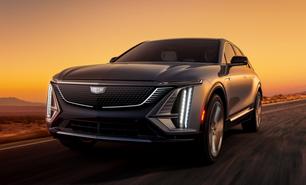
The Cadillac Lyriq really flies in the face of what has become our reality in the world of new cars.
It’s a brand-new, EV-only brand in Australia, but for once, it’s not Chinese.
It’s built in America and shipped to Australia, but it’s not converted from left-hand drive by Walkinshaw or a similar outfit. It’s built in right-hand drive at the factory for us.
And it’s a new player fighting for market share, but it’s not really trying to massively undercut its premium competitors, with the range kicking off north of $120,000.
So, iconic American brand Cadillac seems destined to do things a little differently with the Lyriq. The question is, is it good enough to forge its own path?
Let’s find out.
As with all current-generation Ram 1500s, the Rebel remains one of our favourite full-sized American utes on the Australian market.
Yes, it is not cheap, and a few items standard on the Laramie Sport have been deleted for better or worse, but the Rebel offers better off-road capability without losing any of the regular 1500’s driver enjoyment, comfort, refinement and overall class.
An upsized Ranger Wildtrak with more civility than its redneck reputation suggests.
It's got a couple of quirks, but the Cadillac Lyriq is a pretty convincing, and definitely American, take on a premium electric vehicle in Australia. The only issue, I think, is that, while the brand is obviously iconic in the USA, it's not that well known in Australia, and we are a market now awash with pretty good, and often much cheaper, EVs from China. It's a hyper-competitive market. Only time will tell if Cadillac can convince Australians that its badge belongs among the European premium marques.
Essentially, the 1500 Rebel is a Laramie Sport with a few changes to make it look a little more athletic.
Changes include an extra power bulge in the bonnet, a restyled grille treatment, black powder-coated steel bumpers, daytime running spot lights, 18-inch rather than 20-inch off-road alloy wheels and the aforementioned one-inch (26mm-ish) suspension lift – partly as a result of the knobblier tyres, Bilstein off-road dampers and revised springs, all for better clearances.
Speaking of which, that’s why the retractable side steps have been deleted. The approach/departure/breakover angles are rated at 20.9, 22.2 and 19.2 degrees respectively.
That the Rebel loses the RamBox does mean a bit more tub width, but at the cost of 210 litres of hidden storage.
What’s left are mostly visual changes, including a two-tone colour scheme with black paint on the lower sections, extra blacked-out trim, Rebel badges and decals and three grade-specific hues: 'Bright White', 'Flame Red' and 'Hydro Blue'.
Dimensionally, the 1500 is definitely in the next-league up compared to a Ranger or HiLux, with length at 5916mm, width at 2057mm (excluding mirrors – that balloons out to 2747mm with them) and height at 2006mm. Wheelbase is set at 3672mm. Which does wonders for interior space.
Inside, a red and black look pervades, resulting in Rebel upholstery and material applications, but the seats and dash remain pure Laramie Sport – and that’s no bad thing, as the DT series remains the most car-like and refined interior of all the big US utes.
Let’s dive in.
The Cadillac looks… well, it looks American, right? A kind of difficult-to-describe Americanness that’s somewhere between an SUV and state car.
That’s not an insult, by the way. I personally think the Lyriq looks kind of pretty, with its bold elements countered by the surprisingly gentle touch applied in places, like its razor-thin daytime running lights (DRLs).
I’ve got to say, it doesn’t look much like any of the other new SUVs arriving, or a knock-off German brand. It’s got its own persona.
The cabin of the Lyriq is predictably plush, with comfy massaging seats, soft-touch materials and plenty of tech, but it is a little shiny and busy in places for my tastes. Minimalist this is not.
But I do like the fact that – when I’ve got Apple CarPlay hooked up – I can just leave the screen be. My driving stuff is accessed by the wheel, and everything else I want is accessible through physical buttons.
There are some strange elements, though. The grab handle on the driver’s side, which isn’t replicated on the passenger side, is odd, and likely a byproduct of the factory moving the steering wheel. Some of the central storage bins are too small to be really useful, and I hate gloveboxes that can only be opened through the screen.
This is as much an interior review as anything else, because the Walkinshaw Automotive Group’s engineers have created nearly 50 unique dashboard parts in the 1500’s transition from LHD to RHD.
These join the hundreds of other items that have been modified throughout the big ute.
Haul yourself up and inside, and what you’re met with is essentially a Laramie Sport, but with a more-athletic vibe due to the red-and-black Rebel trim upholstery. In this evaluation example, the presentation, fit and finishes were exemplary.
Everything seems to be in Cinemascope. The sheer girth of the cabin; the excellent vision afforded by lofty seating as well as the deep windscreen and side windows; the abundance of light showering in from the dual-pane sunroof; wide yet cosy front seats that ensconce you like a bear hug – are there comfier ones out there in the world of utes? We doubt it; and heaps of space for your head, shoulders, arms and legs.
Most people should be able to sleep crossways on the back seat floor.
Back up front, the vast multi-layered dash is conventionally designed, with a 12-inch instrument display ahead of the driver and a long, portrait-oriented 14.4-inch touchscreen (containing a superb premium audio system).
But, unusually, there’s also a 10.25-inch multimedia screen for the front passenger, which isn’t visible to the driver for road-safety reasons.
Drilling into the details, there’s a satisfying attention to design to the instrument dials that you’d expect from an Italian brand – Ram owner Stellantis is partly consisted of Alfa Romeo, Fiat and Lancia, after all, as well as Citroen and Peugeot.
It’s also in the feel and quality of the presentation, as well as the general ergonomics, where most of the controls and switchgear are within reach, readily understood and easily operable – after a few moments taken to learn what’s what.
Confidence and swagger, without being too brash or ostentatious. An F-150, in contrast, seems cheap and hard inside.
Weirdly, given all the room around you, there’s also a sense of being a bit hemmed-in, thanks to the ultra-wide centre console. It houses an attic’s worth of storage capability, and is nicely integrated within the overall dash architecture.
It’s a pity, then, that Ram doesn’t offer a three-person bench seat up front – or, at least, a two-person love seat for the passengers right beside the driver’s bucket. There’s certainly enough space for that.
A half-day with the Rebel failed to showcase too many faults or irritations. There’s too much wind noise coming in at speed due to those elephantine exterior mirrors, there’s no digital radio and not everybody will like the red trim inserts. In this regard the vibe is more garish Germanic than restrained Italianate.
Remember, too, the Laramie Sport’s sliding centre console and reclining rear backrests aren’t fitted to the Rebel.
Not that you’d necessarily miss the latter, since the bench is nicely angled and seems comfortable enough. Obviously, there are acres of space to move and lounge about in, and pretty much all the usual amenities are present.
These include USB ports of both varieties, heated outboard seats, face-level ventilation, cupholders, map pockets overhead lighting, a coat hook, and the glorious sunroof that allows so much light to flood in.
There’s extra storage beneath the cushions as well as in the door panels, while a small portion of the back glass slides open. Apparently, that’s handy for hearing and giving instructions when working with the ute. Clever.
And, of course, so is the massive tub out back, complete with a full-sized spare wheel.
For now, Australia only receives the five-foot/seven-inch – or 1.7m long – tub, rather than the longer 6' 1" option offered in earlier 1500s. The Rebel’s payload jumps 30kg, and still maintains its 4.5-tonne towing capacity.
Note that, with the deletion of the RamBox cargo storage units, load-area width increases, but only by 15mm, and you lose 210 litres of hidden tub storage.
For the record, the tub dimensions are around 1700mm (length), 1295mm (width) and 543mm (height). The upshot is about 1500 litres of cargo capacity.
And, of course, there’s the maximum braked towing capacity of 4500kg (with a 70mm ball), 750kg unbraked, 7771kg for Gross Combined Mass (GCM), 3505kg for Gross Vehicle Mass (GVM) and an 893kg payload maximum.
Finally, a heavy-duty tow bar, 12-pin wiring harness and trailer brake controller are standard equipment.
It’s a big boat, the Lyriq, stretching more than five metres long and almost two metres wide. That’s not much shorter than, and in fact slightly wider than, something like a Nissan Patrol, just to put it into perspective. Though of course it’s nowhere near as high as a proper 4WD.
Predictably, though, its dimensions mean plenty of room in the boot, which opens to reveal a very useable 793 litres of luggage space. Drop the seats, and that number grows to a massive 1722 litres.
But the Lyriq does without any spare wheel of any kind. A tyre repair kit is your only option.
Now, the backseat. And I know this is likely only of interest to parents of newborn babies, but that’s me, so I noticed. These are some of the best ISOFIX attachment points I ever used. Usually you’re fumbling around between the seat cushions trying to line up the latch points, but the Lyriq's solution — while perhaps not the most visually alluring – puts the brackets beneath plastic lift-up flaps, and they're so damn easy to use.
But there are some quirks in the backseat, too. Those same ISOFIX attachment points, which are so great for baby seats, are less great for the adults actually sitting in the back. You can feel the hard plastic covers, and what feels like the bracing bar running across the backseat, beneath the cushions. It's not diabolical, and if you shift your rear-end forward slightly you can't feel it at all, but it's a strange quirk all the same.
Elsewhere in the backseat, there is plenty of room for backseat riders, and you can control your own temps, too.
This isn’t a replacement for the bombastic Ram 1500 TRX, which has sadly disappeared along with the classic Hemi V8 (though it may come back sometime in the future), but rather an adjunct to the base Laramie Sport. Just with more off-road sportiness.
Like all 1500s, as well as the conceptually-similar Silverado 1500, Ford F-150 and Toyota Tundra big utes, the Rebel is fully-assembled in the United States in left-hand-drive form, then shipped to and remanufactured in Melbourne for right-hand-drive.
This is no small task, with the Ram boasting hundreds of new and/or modified parts, needing over 80 man-hours of labour in the process.
Hence the high prices – with the Rebel matching the Laramie Sport at $141,950 (all prices before on-road costs).
More than just a sticker pack, the Australian Rebel includes one-inch higher-riding suspension, Bilstein off-road shocks, 32-inch all-terrain Falken Wildpeak 275/65R18 tyres, an electronically locking rear differential, underbody skid plates, a higher payload, special off-road cruise control and a so-called 'Power Bulge' bonnet – though there’s no extra performance under there, sadly, over the Laramie Sport’s existing SST (for Straight Six Twin-turbo).
You’ll need the $159,950 Limited flagship with its High Output SST engine tune for that.
Like the Laramie Sport, the Rebel seems almost sumptuously equipped, and includes goodies like a separate 10.25-inch multimedia display for the front passenger as well as a 14.4-inch central touchscreen and a 12.0-inch electronic instrumentation, 19-speaker Harman Kardon audio, dual-pane sunroof, heated seats front and rear, dual wireless phone charging, a sliding back window, power adjustable pedals and a fully-powered tailgate.
These come on top of a spray-in bed liner, cargo tie-down slider rails, LED headlights, wireless Apple CarPlay/Android Auto connectivity, a reversing camera and front and rear parking sensors. Handy in a truck this long.
There’s also a decent wad of advanced driver assist systems too, like autonomous emergency braking and adaptive cruise control. More on those in the safety section later on.
But it also loses some interior items too, like a sliding centre console, a reclining rear bench and 'RamBox' cargo storage, while digital radio is not available at all… which – to paraphrase '80s punk-rocker Billy Idol – might have Rebel owners yell out for more, more, more!
Anyway, there are also a few things missing outside too that are otherwise standard in the Laramie Sport.
You can have your Cadillac Lyriq in two flavours — the Luxury, yours for $122,000 plus on-road costs. Or the Sport, which is two grand more, listing at $124,000.
Perspective time. The new Polestar 3 starts at around $118k, but climbs to more than $130k for the dual-motor options. The similarly sized BMW iX starts at more than $140k, and the Mercedes-Benz EQE is north of $135k. So if you consider the Cadillac a ready-made premium brand, then its looking like a relatively sharpish one.
Cadillac says the changes between the trims largely focus on the “aesthetic signature” rather than any major equipment differences. The Luxury gets chrome highlights, for example, while the Sport gets a darkened design theme, including the wheels, body highlights and windows.
Both trims are otherwise identically equipped, which means 21-inch alloy wheels, full LED lighting, an electric sunroof, an auto-opening boot and a touch-to-open charging port.
Inside, there’s a 33-inch digital dash, with Apple CarPlay and Android Auto, wireless device charging, a thumping 19-speaker AKG stereo and USB connection points galore.
The leather-wrapped front seats have heating, ventilation and a massage function, there’s heating and cooling for the window seats in the back, tri-zone climate control and there’s 126-colour ambient interior lighting.
Underneath the power bulge bonnet is a 3.0-litre twin-turbo in-line six-cylinder petrol engine known as the 'Hurricane'.
Sharing just five per cent of its parts with Jeep’s version, the Rebel uses the Standard Output (SO) tune, meaning this Euro 5-rated direct-injection unit delivers a heady 313kW of power at 5200rpm and 635Nm of torque at 3500rpm.
The High Output (HO) in the Limited, on the other hand, ups the ante with 403kW and 707Nm.
Compared to the old 291kW/556Nm 5.7L Hemi V8, the Hurricane SO lacks its evocative exhaust burble and effortless low-down grunt, but the figures don’t fib: 7.6 per cent more power and 14.2 per cent more torque.
Tipping the scales at 2615kg, the Rebel returns an impressive 120kW/tonne (versus 109kW/tonne for the V8), resulting in a 0-100km/h sprint-time of just 6.0 seconds, according to Ram (HO: 5.3s). That the Hurricane weighs nearly 60kg less than the Hemi helps.
Torque is sent to either the rear wheels in 2WD mode or all four wheels in 4WD mode via an eight-speed torque-converter auto, that Ram evocatively calls ‘TorqueFlite’ – memories of old Aussie Chrysler Valiants here.
A full-time on-demand transfer case is fitted, offering '2WD High', '4WD Auto' and '4WD High/Low' along with a locking rear differential.
As with all 1500s, there are wishbones up front and the rear axle is a coil-sprung rather than leaf-spring set-up.
All Aussie Lyriqs are dual-motor affairs, with an electric motor at each axle producing a total 388kW and 610Nm, which in a car this big, which weighs just under 2.7 tonnes, is more than enough to get the Caddy up and moving, but not enough to make it feel like a supercar. The two motors mean AWD, of course.
Ram says the Rebel returns a combined average of 10.7L/100km, which translates to about 283 grams/km of carbon dioxide emissions. That’s a small improvement over the Hemi V8’s 12.2L/100km and 325g/km figures, aided by stop/start tech. But stirring performance, rather than outright economy are the priorities here, according to Ram.
Brimming the big 98-litre fuel tank with 91 RON standard unleaded petrol should see a theoretical average range between refills of 916km.
The Lyriq is equipped with a 102kWh lithium-ion NCMA battery, which delivers an ok 530km on the combined cycle. I say 'ok', because the BMW iX offers 600km-plus, while the dual-motor Polestar 3 is more like 630km claimed. Energy consumption is a claimed 22.5kWh per 100km on the combined cycle.
When it comes to plugging in, the Lyriq is set up for 190kW DC fast charging, with the brand promising 128km of range in 10 minutes, or 10 to 80 per cent in just under 30 minutes. At home, a 7kW wall ox will deliver more like 43km an hour.
If you’re a dyed-in-the-wool Hemi V8 lover and dread the notion that a mere ‘six’ has taken its place in the Ram 1500 – and particularly in the sporty off-road Rebel we have here – then a rethink may be in order.
That’s because, in the spirit of iconic sixes of the past, including Ford Australia’s legendary Barra in the Falcon and Territory, the Ram’s Hurricane should blow any scepticism clear away.
And it’s all in the delivery.
Smooth and sophisticated, the 3.0-litre twin-turbo straight-six idles with a muted rumble at start-up, but then roars off the line with an unexpected and prolonged burst of hungry acceleration.
And the power piles on effortlessly as the revs rise, with the auto seamlessly shifting through each ratio without putting a foot wrong.
Reflecting the interior design’s overall cohesiveness, the powertrain possesses a sophistication that’s far beyond what a big American truck ought to have.
That’s in 'Normal' mode. Choosing 'Sport' ups the stakes, as it also seems to stymie the stability/traction control intervention. Throttle response is noticeably sharper and more urgent, but other than the opportunity to more-easily break traction whilst getting to licence-losing speeds slightly quicker, there seemed little sense in staying in Sport.
This is a very fast ute as it is, and also an enjoyable one to drive, with a level of nuance at odds with its excessive proportions.
Even on wet and windy back roads the Rebel feels connected and controlled at speed.
The steering is appropriately weighted, with a sufficient amount of response for the driver to push on with confidence when taking corners quickly.
Remember, this is a 2.6-tonne-plus full-sized ute on off-road-biased tyres, yet getting into a rhythm and flow with the road is easy. Yes, you feel the mass, but the 1500 also feels taut and secure. And you’re not constantly harangued by over-zealous driver-assist systems going off all the time.
The wishbone front/coil-sprung rear suspension set-up must take much of the credit here, smothering bumps and tracing the groove of the road without jolting or stepping out of line.
Comfortable and quiet, there is a sense of isolation from the outside world that, incongruously perhaps, is in league with better premium SUVs. Again, this is a big American pick-up, remember.
On a few downhill twisty bits, the driver of course feels the shift in mass, but deft handling, adequate grip (great for off-road tyres) and effective brakes mean the Rebel doesn't break a sweat, even through puddles blanketing the bitumen.
Downsides? Well, it's still a large, lumbering truck to drive and park, with an inevitably massive turning circle to make heavy work of manoeuvring this beast around. Regular car park spots are almost always too small.
There's some wind noise rustling around the large exterior mirrors. And a bit of road noise coming through over certain coarser surfaces.
Overall, though, the Rebel behaves way-better than expected – and you don’t often get a chance to say that about a ute. Rapid, refined and engaging from behind the wheel, it is the best-driving full-sized US pick-up by some margin.
What V8!
That’s on road. We also had a brief off-road stint in the Rebel at the ex-Holden proving ground at Lang Lang, and we were pretty impressed with the ability and ease demonstrated over some short but demanding rough-track sections.
We doubt – at nearly $150K – that most buyers will go bush-bashing in this, but it’s good to know the hardware is there underneath to get you through.
The first thing you notice behind the wheel of the the Lyriq is just how whisper-quiet it is on the road. Cadillac makes a big deal about its 'Active Noise Cancellation' tech that's deployed here – it uses sensors to monitor road vibrations and the like, and then uses the car's stereo to create what it calls an 'anti-noise' signal.
It all sounds pretty high-tech and complicated, but it also works, with the Lyriq a seriously quiet and composed way to get around, with only the artificial EV noise really noticeable in the cabin.
Even travelling past freeway speeds, the Lyriq remains quiet, which does lend the whole experience a sort of premium vibe.
The Cadillac is also one of those cars that thinks solidity means premium, from the solid 'thunk' of the doors shutting to a general heft and weight to the steering, there's nothing feather-light or agile about the Lyriq experience, but it does all feel a little artificial, and like it's trying to be heavy on purpose.
The Lyriq, then, is no out-and-out performance car – it's 2.5-tonne-plus kerb weight and Olympic swimming pool dimensions largely put an end that – but it's more than brisk enough to get up and moving, with its twin-motor powertrain finding grip even in slippery conditions. It's brisk, but not brutal.
The Lyriq hasn't been tested or tuned in Australia, but happily it doesn't have that floaty, wafty suspension style so popular in the USA. This one feels to have at least had an international tune, which removes some of that marshmallow softness and makes you feel connected to the road.
The steering, too, feels direct enough and easy to predict, and the overall impression is one of quiet, calm motoring, which is probably what it says on the tin of any premium vehicle.
Neither ANCAP nor Euro NCAP have tested any full-sized American utes at this stage.
However, the Ram DT 1500 has scored a five-star result in the US National Highway Traffic Safety Administration rankings.
Keep in mind, too, that the Rebel shares the Laramie Sport and Limited’s advanced driver assist systems, ushering safety like AEB (including cyclist and pedestrian detection), 'Forward Collision Warning', rear cross-traffic alert, blind-spot monitoring, a 360-degree camera view, trailer-sway control and tyre pressure monitors.
Additionally, there are six airbags (dual front, front side and curtain), traction and stability controls and adaptive cruise control.
No speed operation data for the AEB and lane support systems are currently available.
Like all Ram DT 1500s, the Rebel includes three child-seat restraining top-tether points fitted, along with two ISOFIX latches in the rear outboard seats.
The Lyriq hasn’t been crash-tested in Australia, but it did get a five-star equivalent in American testing. There’s autonomous emergency braking (AEB) with pedestrian protection and junction assist, as well as active blind spot monitoring and assist. There’s also a side bicycle alert to stop you opening your door into someone, rear pedestrian alert, adaptive cruise and a total eight airbags, including knee bags for the driver and front passenger.
Interestingly, the Lyriq ditches those annoying safety bings and bongs for a novel, and far less intrusive approach which involves sending gentle vibrations through, well, your backside if the vehicle senses incoming danger.
Ram drops the ball when it comes to warranty.
That’s because, like GMSV’s Silverado range, it only offers a three-year, 100,000km warranty with roadside assistance, which falls short of the rival Ford F-150 and Toyota Tundra’s five-year/unlimited kilometre coverage.
In an era where Chinese rivals are rolling out utes with seven-year schemes, Ram's (and GMSV's) warranty is severely lacking.
Service intervals are at every 12 months or 12,000km, and there is currently no capped-price servicing on offer.
Cadillac has built a pretty convincing ownership package around the Lyriq, which begins with a five-year, unlimited-kilometre warranty, and an eight-year, 160,000km battery warranty. Beyond that, you also get five years of servicing, and five years of roadside assistance, free.
Then you get a year’s free public charging through the Chargefox network and a free home wall box charger. If you have a wall box, or don’t want one, you can trade the home charging for an extra two years of free public charging.