What's the difference?
This might be the biggest gamble in Porsche's history. It's the latest version of its best-selling car, the Porsche Macan, only this one has a very big difference.
You see, this time, it’s all-electric. There is not an internal-combustion engine (ICE) in sight. And that makes climbing into an entry-level Macan significantly more expensive than ever before.
So, will this bold shift help or hinder the Macan in Australia? And is this the country’s best all-electric SUV?
There’s only one way find out.
The Toyota Camry is one of the few cars that really needs no introduction. It's been on our shores for 41 years and has proven itself to be steadfastly popular, enough for Toyota to launch a ninth-generation version.
The entry grade Ascent is one of the few 'base-models' still available for the mid-sized sedan segment and offers an upgraded hybrid powertrain and transmission, new tech and a fresh take on its design.
Old fans will love it and in this review we discover if there's something for families to get excited about.
There is no doubting the substance of the Porsche Macan Electric. Its ride, steering and poise make it a joy to drive on twisting roads, and it ticks the practicality boxes, too.
The only lingering question is whether enough people are ready to make the all-electric switch. Only then will we know if Porsche's Macan gamble has paid off.
Note: CarsGuide attended this event as a guest of the manufacturer, with travel, accommodation and meals provided.
Ah, gotta love a sedan that knows its audience and the ninth-gen Toyota Camry Ascent proves once again why it’s a popular choice.
On top of the space and practicality, you get a shiny new design and technology. Overall the Camry Ascent is a well-rounded base-model - what’s not to love?
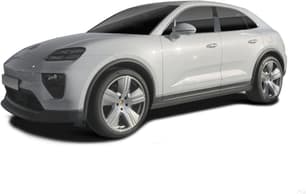
The Macan Electric looks sharp, all aerodynamic and swept-back like a range-maximising electric SUV should.
There’s functional method behind all this swoopy styling, too. The headlights look as though they’ve been chiselled into the body work, and at the grille, you’ll find active venting to help with cooling when needed.
There is also a sizeable front splitter that looks very much like the Macan is sticking its jaw out. All of which is to assist with aero and range.
It’s also a dual charging port layout with access left and right, though the latter is AC charging only, while the one on the left does both.
Step inside the Macan and you’ll find a familiar and very welcoming space. I especially like the twin-screen set-up that looks great in the way it's kind of embedded into the dash. Each is big, clear and easy to use.
I also really like the control panel that gives you quick-button access to the climate control, and the haptic feedback is next level, with the whole screen clicking in or out whenever you hit a button.
That said, in Turbo-guise you’re dropping almost $200,000, and some of the materials feel too hard and plasticky at that price point.
There is a strong 'taxi'-association with the Camry because of how popular it is as a commercial fleet car and while the design has been updated and modernised, that vibe still remains. It's a Camry, after all.
But the new tapered nose with its slim LED headlights look sharper than the previous model and the rear slopes into a neat spoiler that accentuates a sharper rear end.
The new design looks far more modern and dare I say it: sporty.
A lot of the changes are in the cabin where the Camry benefits from a completely restyled dashboard that looks sleek and stylish, with the tech screens integrated into the panelling.
The cockpit still feels very driver-oriented, which is always appreciated, but now not at the expense of the front passenger.
The cloth seats look much nicer than the standard basic stuff you usually get and there are enough tactile dash and door panels to make it feel cosy, despite it's soft-touch points still looking too plasticky.
The overall feel for the cabin is one that is pleasant and well-built, although cloth seats always give me anxiety when kids are around.
There is a little open-sesame magic at play with the Macan, and that starts at the frunk, where, if you lovingly caress the bonnet, it will automatically pop open for you, revealing an 84-litre storage space.
Rubbing the charging port will see it slide open, too, but just in case you’re not the kind of person who likes to fondle their car in public, you can use the key.
The Macan’s boot is a little more traditional, opening to reveal 540 litres (but just 480 litres in the 4S or Turbo) of storage with the rear seats in place, with a wide, flat and very useable area for your goodies.
The back seat of the Macan feels spacious enough, without being outstanding. There’s more than enough space for my 175cm frame, with enough knee and head room, but the way the middle console juts out will definitely eat into leg room for any middle-row passenger.
Elsewhere you get air-con controls with vents, along with bottle storage in each of the doors. There is also a pull-down divider that’s home to two extra cupholders.
Sedans tend to fly under the radar when people think of cabin space but that's a mistake. Head- and legroom in both rows will make taller occupants very happy and the transmission tunnel isn't massive, so middle seaters will still be able to get comfortable.
Despite being a low-profile car, access is easy enough and it's only the sloping roofline at the rear that might make you bump your head as you get in.
Seat comfort is excellent with thick padding and cushioning to be enjoyed. The front seats are manually adjustable but lack lumbar support, which you'll notice on a longer trip.
The window sills don't sit too high, so my seven-year old had a good view this week but the cloth seats have upped the anxiety as he tends to be messy. He also loves having directional air vents and that keeps him happy on hotter days.
Storage is great for the class with a 7.0L middle console, large glovebox that can hold a manual and other bits, two map pockets, four cupholders, four drink bottle holders, a sunglasses holder, and a functional centre console tray that has multiple cubbies to delight those that travel with lots of stuff.
The boot capacity hasn’t changed and sits at a large 524L capacity, which is decent for a sedan. The boot aperture isn’t too narrow either, so it's easy to access items that roll to the back. The rear seat has a 60/40 split, to open up storage as well.
The boot has a powered boot release that can be accessed via the key fob and while you have to manually close it, it's a super light lid to operate.
Technology feels well-rounded now with the upgrades and the touchscreen multimedia system sports the same system you'll find in Lexus models, which is far superior to the older Toyota software. Basically, it's simple to use and looks good, which is a great combo.
The phone mirroring apps are now wireless and that means one less cable to worry about and charging options are good with five USB-C ports (3/2), and a 12-volt socket but you do miss out on a wireless charging pad at this grade level.
Basically, the Camry now offers better technology and style but the practicality of the cabin remains at an all time high.
The Macan arrives with four trim levels, the entry-level Macan, the Macan 4, Macan 4S and then the flagship Macan Turbo. The latter is just a name Porsche now applies to its go-fast models — obviously there isn’t an actual turbo in action.
The new electric range opens with the Macan, which lists at $128,400, before on-road costs. A reminder here that the old entry-level Macan with an ICE powertrain would have set you back less than six figures, so this one represents quite the jump.
Now, it should be pointed out that you can still buy the previous-generation ICE Macan, at least until supply runs dry. The brand isn’t getting any more, but suggests there are enough in the country to satisfy demand until around Q2 next year.
Next is the 4, which is $134,400 and adds a second e-motor. Then comes the 4S, yours for $149,300, before the range tops out with the Turbo, which climbs to $184,400. All prices before on-road costs.
Those are big numbers, but at least Australian-delivered cars are some of the best-specified on the planet.
That starts with the Macan, which gets a 12.6-inch digital instrument cluster, and a second 10.9-inch central touchscreen with Apple CarPlay and Android Auto.
It rides on 20-inch alloys, has synthetic-leather seats that are heated up front and Australian cars get things like the clever 'Porsche Active Suspension Management' (PASM) system as standard.
Next up is the Macan 4, which adds a second electric motor, but otherwise largely mirrors the base car’s spec. Next on the list is the 4S, which rides on a different 20-inch alloy, picks up LED matrix headlights, sports a better Bose stereo, a panoramic roof and four-zone climate control.
Finally, the Turbo is the big dog of the electric Macan range, packing serious power, but also arriving with its own 20-inch alloy wheel design (with 21-inch wheels a no-cost option) — an augmented reality head-up display, and things like the 'Porsche Electric Sport Sound', the 'Sport Chrono Package' and a performance-focused 'Sport+' drive mode.
There are now only three model grades available for the Camry and they are all offered exclusively with a hybrid powertrain. The model on test for this review is the enrtry-grade Ascent.
With the hybrid powertrain and new tech, the entry price is $4939 dearer than before and it now carries a $39,990 before on-road costs price tag. Of the mainstream medium sedan rivals, only the ageing Mazda6 Sport sedan is more affordable at $36,290 MSRP.
What’s interesting to note is that some of its other rivals, the new Honda Accord e:HEV RS and Skoda Superb, are only offered in one highly-specified grade and they come with corresponding price points. The Accord sits at $64,900 drive-away, and the Superb at $69,990 drive-away. So, if you’re in the market for a sedan, there is a good sense of value for the Camry at the moment, despite its price hike.
Standard equipment for the new Camry includes cloth upholstery, an 8.0-inch touchscreen multimedia system with satellite navigation, Toyota Connect app, wireless Apple CarPlay and Android Auto, dual-zone climate control, keyless entry and start, 7.0-inch digital instrument cluster, digital radio and Bluetooth connectivity.
Practical features include 17-inch alloy wheels, temporary spare tyre, power-release boot lid, and manual release buttons for the rear seats in the boot area.
Strangely though, the base model still misses out on rain-sensing windscreen wipers for some reason.
The entry-level Macan is equipped with a single rear-mounted electric motor, and it will make a total 250kW (265kW with launch control activated) and 563Nm, which is enough to push the cheapest Macan to 100km/h in 5.7 seconds.
The 4 then adds a second electric motor for AWD, upping the grunt to 285kW (300kW with the launch function) and 650Nm, and drops the sprint to a brisk 5.2 seconds.
The 4S is probably the performance sweet spot, with its dual-motor set-up generating 330kW (380kW in launch) and 820Nm, and a blistering sprint of just 4.1 seconds.
But the Macan Turbo is a true monster. We’re talking 430kW (470kW with launch control), 1130Nm and a sprint to 100km/h that’s as fast as a Carrera Cup race car – just 3.3 seconds.
It’s twin-motor, all-wheel drive and offers the kind of brutal acceleration that gives you a little facelift every time you step on the accelerator.
The 2025 Camry has the new and improved hybrid system that Toyota is rolling out and a redesigned electronic continuously variable transmission (CVT) – both changes are welcome to the 2.5L four-cylinder engine.
This combo produces up to 170kW of power, which is up from the previous model but the torque remains the same at 221Nm.
Every Macan is fitted with a big 100kWh lithium-ion battery, which helps deliver a solid driving range no matter which one you choose.
The entry-level Macan will cover the most distance, at a claimed 654km, while the 4, 4S and Turbo will travel 624km, 619km and 616km, respectively.
The Macan rides on an 800V architecture, and is set up for 270kW DC high-speed charging, which will take 21min to go from 10 to 80 per cent. It will also accept 11kW AC charging, which should take 10 hours to go from empty to full.
Worth noting, though, that most home wall boxes are around 7.0kW, which means a full charge would take more like 13 hours plus.
The outgoing model had an excellent combined fuel cycle figure already but the new hybrid system improves it again to just 4.0L/100km. With the 50L fuel tank, that gives you a theoretical driving range of up to 1250km. Outstanding for a family car!
After doing 803km this week and those kilometres being mostly open-road driving, which is where hybrids are at their least efficient, my real-world figure was 4.4L, which is still great. Expect it to be even better in the city.
Porsche seemed at pains to prove that, though the all-electric Macan has lost its ICE heart, it's still worthy of the badge, and still very much a Porsche.
First stop, then, was the Norwell race circuit in Queensland, to put the Macan through its paces with 0-100km/h sprints, drifting (well drift attempts... ) on a watered-down skid pan and finally some high-speed running on the circuit.
And two things immediately became very clear. The first, and most obvious, was that, like the first men on the moon, we were likely among only a handful of people that might ever take their all-electric Porsche mid-size SUV to a race track. And second, this is one seriously sorted electric car.
Happily, for the many (read: every) owners who won't be pulling out of a pit garage at their next local track day, the Macan is actually more enjoyable on the road than it is on the track.
On the latter, there's a freedom to push too hard – what with the lack of trees, guard rails or oncoming traffic – and cracks do appear, mostly from the screaming tyres struggling with the two-tonne-plus weight.
But on public roads, where a thick fog of consequence prevents you pushing too hard, the Macan is a gem.
Porsche tends to have a knack for these things, I know, but the Macan is a seriously smooth and satisfying drive.
The ride is bang-on (comfortable enough on rougher surfaces, firm and grippy enough on twisting roads) and the steering is direct and confidence-inspiring.
Body-roll has been largely banished, too, with the Macan staying flat, stable and satisfying, even on the tighter stuff.
In much the same way the ICE Macan defined what it meant to be a driver's SUV, I think this one does the same in the EV space. And the fact that it does it with five seats and a decent boot is a sizeable bonus.
But there's no denying it lacks in the emotion department. That sense of excitement, the sound track, the hard-to-define fizz – as competent its this, and as weaponised as the EV powertrain is – it does feel a little clinical, like a tool doing its job and doing it well.
One important caveat. We've driven the 4 and Turbo to date. The entry-level Macan and the mid-tier 4S are still incoming. And I suspect I wouldn't be dropping my deposit on the Turbo.
Yes, the power is ridiculous, but I don't reckon you need it. For me, the 4 is more than enough, but I suspect the real performance sweet spot will be with the 4S.
Toyota really does the hybrid thing well – the engine and electric motor handle duties effortlessly between them, with minimal fuss like noise or gear changes.
The well of power feels deep enough to really let it loose on the highway, if need be, but that also makes it zippy in the city.
This is sure-footed in most scenarios and I like the comfort that brings to the driving.
The steering is direct enough to feel responsive but not sporty. It handles corners well and suspension is well-tuned, so you don’t wince when you hit bumps.
Being set low and having average-sized windows means visibility can be a little hampered when heading down a hill as you bob and weave to see around the rear-view mirror and thick pillars.
The Camry is 4920mm long (33mm longer than previous gen) and it fills out a space. With it's low profile, you have to be careful not to scrape the bottom on anything but it’s still relatively nimble in a car park because of its tight steering and clear 360-degree camera system.
The Porsche Macan Electric is yet to be assessed by ANCAP, or by Europe’s NCAP, but it doesn’t appear to be missing any key equipment from its safety list.
That includes curtain airbags that extend all the way to the boot, AEB with pedestrian detection, lane keeping assist, a surround view camera and 'Intersection Assist'.
The Camry has a brand-spanking new five-star ANCAP safety rating from this year (2024) and now sports eight airbags, including a front-centre airbag.
The safety features list is impressively long with all of the biggies included like blind spot monitoring, SOS call button, driver attention alert, safe exit warning, rear occupant alert, forward collision warning, LED daytime running lights, rear cross-traffic alert, lane departure alert, lane keeping aid, traffic sign recognition, intelligent seatbelt warning, a 360-degree view camera system, and front and rear parking sensors.
The adaptive cruise control has a new cornering feature, which will slow your speed down in corners but it didn't always activate and when it did, it slowed down too dramatically to make the system feel smooth to use.
All other systems feel well-tuned for daily driving.
There are ISOFIX child-seat mounts on the outboard seats and three top-tether anchor points but two seats will fit best.
The new Camry has auto emergency braking (AEB) with car, pedestrian, motorcycle, cyclist and backover function, which is operational from 5.0 to 80km/h (up to 180km/h for car).
The Porsche ownership experience is frankly underwhelming by modern standards, with the brand offering just a three-year/unlimited kilometre warranty, plus an eight-year/160,000km battery warranty.
The positive, though, is that servicing should only be required every two years or 30,000km. You also buy a prepaid service plan for three, four or five years, priced at $1495, $2795, $2995.
The Camry comes with a five-year/unlimited kilometre warranty but that can be upped to seven years if you exclusively service with Toyota and on schedule, which is good for the class.
You get five-years capped-priced servicing at just $255 per service, which is extremely reasonable and intervals are good at every 12-months or 15,000km, whichever occurs first.
The Camry likes the good stuff though and only drinks a minimum of 95 RON unleaded petrol.