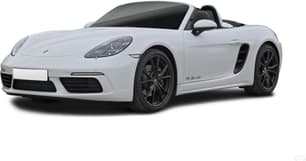
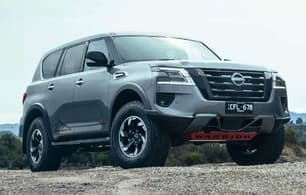
What's the difference?
“If this is to be our end, then I would have them make such an end as to be worthy of remembrance.”
King Theoden may have been talking about the men and women of Rohan in The Lord of the Rings, but he could have just as easily been talking about the team behind the Porsche 718 Boxster.
It’s been nearly 30 years (yes, that long) since the Boxster joined the Porsche line-up as the more affordable sports car alternative to the 911, but now it’s facing a dramatic change that will make it a very different beast.
Porsche has committed to an electric future for the 718 but before it does so, there was one more petrol-powered version to create, this one, the 718 Spyder RS. It stands to be the final 718 to have an internal combustion engine, but could also be the best.
The 718 Spyder RS is the Boxster version of the previously released Cayman-based GT4 RS. So it takes every element of the sports car and turns it up to 11. This is faster, more powerful, lighter and more dynamic than the Boxster has ever been.
The entire 2025 Nissan Patrol range – including the Ti-based, Premcar-boosted Warrior – has undergone a cabin update.
Changes include a new bigger touchscreen multimedia system, wireless charging and an off-road monitor.
The same V8 engine remains across the range so there are no changes to power and torque.
So, do these cabin tech updates make any kind of significant difference to the Warrior package?
If this is to be the end of the 718 as we know it, then it is an end to be remembered. Porsche has produced something special in the Spyder RS, a sports car that can compete with the 911 on any stretch of road - which is something so few cars can claim. The focus on performance has driven the entire concept of the car, but all the elements work in harmony, with form and function coming together.
The Nissan Patrol Warrior is a very capable 4WD, it’s a refined, comfortable all-rounder with plenty of potential as a touring vehicle.
PremCar’s work here – as on the Navara – has made a good 4WD even better.
All of that conversion work, engineering upgrades and fitment of accessories is the kind of sensible work an experienced 4WDer would apply via the aftermarket. The bonus here is that it’s all factory-backed and covered by a 10-year/300,000km warranty, albeit with conditions.
If you can cope with the fuel bills, this big V8 4WD remains a refreshingly old-school style of off-roader – relying more on sheer grunt than touchy tech – and the latest round of cabin updates has added more appeal to what is already a very appealing vehicle.
As the pinnacle of not only the current 718 range, but potentially the entire combustion engine era of the Boxster, Porsche has pulled out all the stops for the Spyder RS.
This includes major changes to the design, but none are purely for aesthetic reasons and instead are driven by the search for performance; and the fact they make the 718 look tougher, meaner and more purposeful than ever before is just a bonus.
It’s a comprehensive redesign that starts at the bumper with a new front lip spoiler to enhance downforce. Then there’s a pair of NACA ducts on the lightweight bonnet to improve brake cooling without compromising aerodynamic drag. The lightweight front fenders include wheel arch vents to stop any potential for front-end lift at high speeds.
And the fenders aren’t the only component that’s gone on a diet, there’s a lighter exhaust, lighter wheels, lighter bonnet, lighter roof, lighter door panels and even lighter carpets on the inside. All up, the Spyder RS tips the scales at 1400kg, which is 40kg lighter than a standard 718 Boxster.
If it’s still not light enough, you can opt for the optional 'Weissach Package' (which was fitted to our test car), which brings even lighter 20-inch forged magnesium wheels and carbon-fibre reinforced plastic for a range of parts including the front luggage compartment, rollover bars and ducktail spoiler on the Gurney flap – plus some cosmetic enhancements.
And we still haven’t even touched on the biggest design change yet - the rear half of the car. Starting with the roof, which Porsche actually calls a ‘sunshield’ and ‘weather guard’ because it’s a stripped down version of what the brand usually uses, to save weight and let the glorious engine noise into the cabin uninterrupted.
But it’s also necessary because the entire rear engine cover has been redesigned to accommodate the larger engine that Porsche has installed in the Spyder RS, a 4.0-litre six-cylinder instead of the usual turbocharged four-cylinder ‘boxer’ engines.
While the Spyder RS looks great with the roof/sunshield on or off, frankly the removal process is much too complicated and requires repeated viewings of a YouTube tutorial to still get it wrong.
While owners will (likely) eventually get the hang of it, it will always be a clunky and awkward process and that’s just the price of being so focused on performance, which you can accept or not.
Inside that ethos of performance over practicality continues, with sports seats, an Alcantara-wrapped steering wheel and even the previously mentioned lightweight carpet floor mats.
It’s a purposeful, rather than luxurious, cabin, but that perfectly suits the nature of the Spyder RS. Our test drive included several long stretches behind the wheel and at no stage did it feel uncomfortable or impractical, despite its stripped-down design.
The Nissan Patrol Warrior is 5269mm long (with a 3075mm wheelbase), 2079mm wide, 1990mm high and it has a listed kerb weight of 2858kg. It’s 94mm longer and 84mm wider than the Ti.
Though this latest round of range updates have been mostly limited to the multimedia system, that’s a-okay because this Warrior has more than enough heavy-shouldered presence on- and off-road and not simply because it’s a chunky behemoth.
While other large 4WDs, such as the Toyota LandCruiser 300 Series, have bowed to contemporary-taste pressure and become a bit softer around the edges, the Warrior retains some of the blocky stature of 4WDs past.
Inside, the interior has benefitted from the new bigger multimedia system which sits atop the dash and dominates real estate up front. The interior feels slightly fresher than in previous iterations, but still comfortably familiar.
One area where the 718 range is starting to show its age quite dramatically is the in-car technology. While Porsche’s native system is relatively user-friendly, the lack of wireless Apple CarPlay or Android Auto in any capacity is deeply out-dated; and was frustrating for this Android using reviewer.
Given the age of the current 718 platform, and the impending arrival of the new model, it’s understandable that the multimedia system didn’t get an overhaul, but for a $350K car it does feel a bit behind the times.
In practical terms the Spyder RS is a bit of a struggle if you plan to go away with it. We managed to get a small suitcase and backpack in the under bonnet storage, but that was at capacity. While the addition of the larger engine removes any meaningful rear storage space.
The Warrior cabin is essentially a Ti interior – as such, it’s roomy and plush, with expanses of soft-touch surfaces. Due to plenty of ‘Warrior’ touches and the most recent updates as noted earlier, the cabin feels made-over yet instantly recognisable.
The centre console is no longer the confusion of buttons, dials and knobs it previously was and there are plenty of storage spaces for driver and front passenger – glove box, cupholders, bottle holders in the doors etc – as well as some concealed spaces (with pop-up lids) for keys, phone and other everyday carry gear.
Second-row passengers get comfortable seats, as well as two USB charge points, and temperature and fan controls in the back of the centre console. Those in this row also have access to the back of the centre console.
There are cupholders in the fold-down armrest, map pockets in the seat backs and bottle holders in the doors.
Second-row seats have a top tether point and an ISOFIX point on both outer seats.
Third-row seats are flat and hard compared to the other positions and, in terms of space, are better suited to children or adults for brief stints.
All three rows get air con – there are roof-mounted vents – and there are handy storage spaces in the third row, but no cupholders.
The third row has one top tether child seat anchorage point.
The rear cargo area has load tie-down points and a 12V socket, as well as tyre-changing tools under the floor. The new full-sized spare tyre is underslung at the rear.
With the third-row seats in use, boot space is listed as 467L. With the third row stowed away, there’s a claimed 1413L of cargo space. With the second and third rows stowed there’s a claimed 2623L.
The bad news is, the Spyder RS costs just over $200,000 more than the entry-level 718 Boxster, which is not a small sum of money. The good news is, for that $200K, Porsche has overhauled the 718 from nose-to-tail and enhanced it in nearly every aspect.
There’s a raft of mechanical changes that we’ll get to later on, to help justify the $334,200, plus on-road costs, asking price, but from a specification perspective there are some notable inclusions.
For starters it comes with the 'Porsche Communication Management' (PCM) multimedia system, which includes in-built navigation and Bluetooth connectivity, as well as a 110-watt sound system.
But Australian delivered cars get an even higher level of standard equipment than other countries, with LED headlights including 'Porsche Dynamic Light System' (PDLS), cruise control, digital radio, rear 'ParkAssist' with reversing camera, 'Light Design Package', tyre fit set and windscreen with grey top tint, plus a no-cost optional Bose Surround Sound System all included.
It may be $200K more than 718 but compared to a 911, it actually makes a pretty compelling value argument. A 911 Cabriolet Carrera S starts at $342,700 (plus on-road costs), making that Spyder RS $8500 cheaper and a genuine alternative to its ‘big brother’.
Then, when you compare it against similar mid-engine European sports cars, such as the Maserati MC20 (from $510,000) or McLaren Artura (from $477,310) the Porsche looks like a bargain; relatively speaking, of course.
The Nissan Patrol Warrior is a eight-seat 4WD wagon with a price-tag of $105,660, before on-road costs.
Standard features include a 12.3-inch touchscreen multimedia system (with wireless Apple CarPlay and Android Auto and sat nav), as well as a new 7.0-inch driver dash display, wireless charging and an off-road monitor.
Other features onboard include front and rear parking sensors, a 360-degree camera view and a tyre-pressure monitoring system.
The more than $15,000 worth of carried-over Premcar conversion work, upgrades and fitment of accessories include a re-engineered version of Nissan’s 'Hydraulic Body Motion Control' (HBMC) system, a 50mm total suspension lift with new springs front and rear increasing vehicle height to 1990mm (+50mm over the Ti), and increased ground clearance to 323mm (+50mm) and wheel track to 1735mm front and rear (+40mm).
Warrior-specific suspension modifications include not only the Warrior-tuned HBMC (front and rear) but front Warrior red springs, rear Warrior multi-rate red springs and Warrior rear bump-stop.
Exterior changes carried over into this Warrior iteration include a red Warrior-branded bash plate, front Warrior-embossed bumper valance, a black grille, Patrol Warrior decals, black side mirror caps, plus an upgraded exhaust system with bi-modal valve and a unique exhaust tip.
There's also a black flare kit (with grained finish), Warrior towbar (towbar cross member, tongue, harness only, all modified to fit the new, bigger full-size spare), two rear recovery points, Warrior rear bumper valance (with grained finish) and a black chrome tailgate Warrior badge.
The Warrior wheel and tyre package is the Yokohama Geolandar 15 All Terrain tyres (295/70R18) on 18 x 9 J cast-aluminium Patrol Warrior black machined-face alloy wheels.
The Patrol Warrior has a specially modified space for a full-size alloy spare wheel.
Inside, carried-over Warrior-specific touches include an Alcantara Warrior embossed garnish, clear-coated gloss black centre console and centre multimedia fascia as well as leather-accented and Alcantara door trim.
Exterior paint choices include 'Gun Metallic', 'Moonstone White', 'Brilliant Silver' and 'Black Obsidian'.
What you get in a Warrior for the price compares favourably, especially when cross-shopped with something like a GMC Yukon Denali, another eight-seat 4WD wagon with a V8 – as its price-tag is $174,990, excluding on-road costs.
The key stat for the engine is the cylinder count. Gone are the four cylinders and instead it’s a return to Porsche’s iconic flat-six.
Specifically, the same 4.0-litre six that Porsche uses in its 911 GT3, which is a lot of engine to squeeze into the middle of this lightened sports convertible.
In order to keep the 718 in its place (beneath the 911), Porsche has slightly detuned the engine, so it makes 368kW/450Nm (compared to 375kW/460Nm in the 911 GT3), but the German brand has never worried about a kilowatt contest and instead prefers to focus on driveability and the other elements that make a drive great.
To that end the combination of air-intakes next to the headrests and the lightweight stainless steel exhaust (which gets titanium tips on the Weissach Package) helps the Spyder RS sound like a Carrera Cup racing car when you really wind it up to its 9000rpm redline.
Not that the performance isn’t spectacular, though, with Porsche claiming it takes the Spyder RS just 3.4 seconds to run 0-100km/h, only 10.9 seconds to get from 0-200km/h and will hit a top speed of 308km/h.
The engine is paired to a seven-speed dual-clutch auto transmission (or PDK in Porsche-speak) that the company claims has “short-ratios”, but with peak power not hitting until 8400rpm and peak torque from 6750rpm, you don’t have to rush the ratio changes.
The Warrior has a 5.6-litre V8 petrol engine producing 298kW and 560Nm, matched to a seven-speed automatic transmission.
This solid combination lacks a dynamic edge, but the Warrior produces such a supremely relaxed and assured delivery of power and torque – it feels almost lazy – that you forgive it for not being the zippiest thing around.
The Patrol has full-time four-wheel drive with high- and low-range and a rear diff-lock.
Porsche says the 4.0-litre engine in the Spyder RS uses 13.0L/100km, which is a big number for what is a relatively small car. But that engine is highly-tuned and built for performance not efficiency, so it’s something owners will need to accept.
Our test drive included some long highway stretches, as well as some spirited driving and urban commuting, so a good mix across all conditions, and we saw consistent returns around the 15-16L/100km range.
It has a 64-litre tank, which means a theoretical driving range of around 490km, assuming you can hit the official claim.
The Nissan Patrol Warrior has an official combined cycle (urban/extra-urban) fuel consumption figure of 14.4L/100km.
I recorded 21.4L/100km on this test. I did a lot of high- and low-range 4WDing – but the Patrol was never working hard.
The Patrol has a 140L fuel tank capacity, so going by our on-test fuel-consumption figure you could reasonably expect a full-tank driving range of about 654km.
I’m only giving it a nine out of 10 because perfection is hard for any car to achieve, but the 718 Spyder RS goes as close as any car I’ve driven. This is a masterpiece of modern sports car design, pushing the 718 closer to the 911 than ever before, which is something Porsche has clearly tried to avoid so as to not tarnish the image of its flagship.
But with the 911’s 4.0-litre flat-six in the middle of the 718, plus its more compact dimensions, the lightweight nature of the Spyder RS and the raft of chassis and handling enhancements, this really does leave you questioning ‘do I really need a 911?’
The steering is fantastically direct, the chassis responds to every input with precision and feedback and the braking is strong and consistent. Which helps because that engine is so good it launches you with ferocity and a glorious noise (as good as anything on the market today) whenever you squeeze down on the accelerator.
The highest praise I can give the Spyder RS is not that it was a dream to drive on winding, challenging roads, but that it was just as enjoyable on a trip to the shops or cruising down the freeway. Any drive in this car is a genuine pleasure.
This latest update is cabin-centric so it’s brought no powertrain changes or any improvements to 4WD mechanicals or driver-assist tech. And that’s fine because the Warrior is pretty darned impressive, as is.
On-road and on dirt tracks, it’s all smooth sailing. The Patrol Warrior is tighter and more composed than its standard stablemates, and that's mostly due to its upgraded suspension and HBMC system.
HBMC acts as a sway bar and sway bar disconnect equivalent and combines with the Aussie-tuned suspension to rein everything in when you're on bitumen and loosen everything when you're on dirt or off-road.
The Patrol as standard is a nice wagon to drive, but the Premcar work undertaken to create the Warrior – all the conversions and upgrades – have made it that much better.
On the open road you have the opportunity to appreciate just how comfortable and refined the Patrol Warrior is.
And as for 4WDing, well, the Warrior is a Patrol at heart so it has reliable four-wheel drive mechanicals, plenty of torque over a broad rev range and a rear diff lock.
There's more ground clearance in the Warrior over the Ti at 323mm (+50mm ), so approach (40 degrees) and departure angles (23.3 degrees) are an improvement over the standard Patrol.
The Warrior’s tyres – Yokohama Geolandar 15 All Terrain tyres (295/70R18) – are bigger and offer more grip, so they provide plenty of traction on terrain where a standard Patrol may struggle.
Premcar has modified the towbar position to accommodate the new bigger full-size spare wheel and tyre.
Another good thing is the fact the Patrol Warrior has two recovery points at the rear.
The HBMC system, which performs so seamlessly on-road, provides more articulation off-road, as well as a bit more wheel travel through difficult terrain.
And, as I’ve noted before on other tests, one of the impressive points about Premcar’s work here – the conversions, the modifications, the engineering upgrades and the fitment of accessories – is that it’s all the kind of common-sense upgrades an experienced 4WDer would apply to their Patrol.
But, even in something this impressive, the news is not all good.
The Warrior is a big vehicle and at 2858kg you have to drive it with that in mind, all the time. It fills the trail and with its wider wheel track, you have to be focused on wheel placement, even more so than usual.
The bi-modal exhaust is awesome, but those exhaust caps (underneath the Warrior's right-hand side step) are too vulnerable to damage.
They compromise the vehicle's ramp-over angle, so you have to drive with careful consideration, especially if the Warrior rocks even slightly to the right-hand side going up or down a steep rocky hill, because there’s a risk of grinding those exhaust tips against rock steps, dirt or a tree stump.
The Patrol is a towing platform of note and towing capacities remain as 750kg (unbraked) and 3500kg (braked).
The Warrior's GVM (gross vehicle mass) at 3620kg is 120kg more than the Ti Patrol’s.
This is another area where the 718 is showing its vintage, with very little in the way of active safety features. There’s the required stability control, as well as airbags for driver and passenger, plus the previously mentioned reversing camera. But that’s it, there’s no autonomous emergency braking, no lane-keeping assist or even adaptive cruise control.
While that may sound shocking to some, there’s never a moment where you feel unsafe in the 718. It feels incredibly stable and responsive on the road, as the onus falls back upon the driver to pay attention and make smart choices.
There’s no ANCAP rating for the 718, or any Porsche, so it is a question of putting your faith into Porsche’s in-house safety measures.
The Nissan Patrol range does not have an ANCAP safety rating because it has not been tested.
That said, as standard it has dual front airbags, front-side and curtain airbags that cover all three rows, as well as two ISOFIX points and two top tether points in the second row.
Driver-assist tech includes AEB, rear cross-traffic alert, lane-departure warning/intervention, blind-spot warning/intervention and adaptive cruise control.
It’s difficult to give the Spyder RS a clear score here because Porsche is cagey on the details. The public dealer websites indicate annual oil maintenance is required, with additional servicing every two years or 15,000km.
How much that will cost is unclear, as despite the rest of the 718 range having publicly available prices, there were no such details for the Spyder RS (or even its Cayman sibling, the GT4 RS).
For reference, the 'standard' 718 requires oil maintenance ($895) for the first annual service and an inspection ($1500) the year after. Those costs continue to alternate annually out to eight years/120,000km.
All new Patrols have a 10-year/300,000km warranty when the vehicle is serviced with Nissan and the Premcar work is covered for the same amount of time – with the same conditions applied.
Five years of roadside assistance also applies – with the same conditions.
Servicing is scheduled at 12 month/10,000km intervals, and capped price service rates apply for five years. That means each of the first five services will cost you $499.