What's the difference?
“If this is to be our end, then I would have them make such an end as to be worthy of remembrance.”
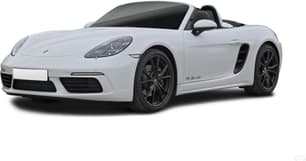
King Theoden may have been talking about the men and women of Rohan in The Lord of the Rings, but he could have just as easily been talking about the team behind the Porsche 718 Boxster.
It’s been nearly 30 years (yes, that long) since the Boxster joined the Porsche line-up as the more affordable sports car alternative to the 911, but now it’s facing a dramatic change that will make it a very different beast.
Porsche has committed to an electric future for the 718 but before it does so, there was one more petrol-powered version to create, this one, the 718 Spyder RS. It stands to be the final 718 to have an internal combustion engine, but could also be the best.
The 718 Spyder RS is the Boxster version of the previously released Cayman-based GT4 RS. So it takes every element of the sports car and turns it up to 11. This is faster, more powerful, lighter and more dynamic than the Boxster has ever been.
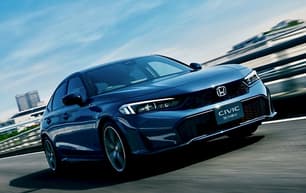
I’m just going to cut to the chase here. This Honda Civic hybrid is a good car. A great one, even.
But for some reason, nobody is really buying it. And it’s not just because it’s not an SUV – it has been outsold in its segment this year by the the BMW 1 Series, the Mercedes A-Class, the MG4 EV, and the VW Golf. Premium and non-premium alike, they’ve all got the little Honda licked.
So, what’s going on? A CarsGuide investigation is required. Stick around and we’ll try to figure this out together.
If this is to be the end of the 718 as we know it, then it is an end to be remembered. Porsche has produced something special in the Spyder RS, a sports car that can compete with the 911 on any stretch of road - which is something so few cars can claim. The focus on performance has driven the entire concept of the car, but all the elements work in harmony, with form and function coming together.
Talk about your new-car unsung heroes – I can't believe Honda's not selling more of these. So, if you can get over the price, and you worry it might be too small for you, I encourage you to check the Civic out. The back seat and boot are both bigger than you might expect, and the drive experience leaves most SUVs in the rear view mirror.
As the pinnacle of not only the current 718 range, but potentially the entire combustion engine era of the Boxster, Porsche has pulled out all the stops for the Spyder RS.
This includes major changes to the design, but none are purely for aesthetic reasons and instead are driven by the search for performance; and the fact they make the 718 look tougher, meaner and more purposeful than ever before is just a bonus.
It’s a comprehensive redesign that starts at the bumper with a new front lip spoiler to enhance downforce. Then there’s a pair of NACA ducts on the lightweight bonnet to improve brake cooling without compromising aerodynamic drag. The lightweight front fenders include wheel arch vents to stop any potential for front-end lift at high speeds.
And the fenders aren’t the only component that’s gone on a diet, there’s a lighter exhaust, lighter wheels, lighter bonnet, lighter roof, lighter door panels and even lighter carpets on the inside. All up, the Spyder RS tips the scales at 1400kg, which is 40kg lighter than a standard 718 Boxster.
If it’s still not light enough, you can opt for the optional 'Weissach Package' (which was fitted to our test car), which brings even lighter 20-inch forged magnesium wheels and carbon-fibre reinforced plastic for a range of parts including the front luggage compartment, rollover bars and ducktail spoiler on the Gurney flap – plus some cosmetic enhancements.
And we still haven’t even touched on the biggest design change yet - the rear half of the car. Starting with the roof, which Porsche actually calls a ‘sunshield’ and ‘weather guard’ because it’s a stripped down version of what the brand usually uses, to save weight and let the glorious engine noise into the cabin uninterrupted.
But it’s also necessary because the entire rear engine cover has been redesigned to accommodate the larger engine that Porsche has installed in the Spyder RS, a 4.0-litre six-cylinder instead of the usual turbocharged four-cylinder ‘boxer’ engines.
While the Spyder RS looks great with the roof/sunshield on or off, frankly the removal process is much too complicated and requires repeated viewings of a YouTube tutorial to still get it wrong.
While owners will (likely) eventually get the hang of it, it will always be a clunky and awkward process and that’s just the price of being so focused on performance, which you can accept or not.
Inside that ethos of performance over practicality continues, with sports seats, an Alcantara-wrapped steering wheel and even the previously mentioned lightweight carpet floor mats.
It’s a purposeful, rather than luxurious, cabin, but that perfectly suits the nature of the Spyder RS. Our test drive included several long stretches behind the wheel and at no stage did it feel uncomfortable or impractical, despite its stripped-down design.
Beauty. Eye. Beholder. All that. But I reckon this Civic looks fantastic. Low-slung and sporty. The perfect antidote to all those bland, beige SUVs currently doing the rounds.
New as part of the most recent refresh is the front-end treatment, a new front bumper, more body-coloured flourishes and new designs for the 18-inch alloys.
I think it looks sleek, premium and purposeful, and not at all boring.
Inside, though, it’s a little less adventurous, though I do adore some of the little design touches, like the perforated metal effect that spans the dash.
The central screen is pretty small by modern standards, and you don't want to push too hard on some of the touch points, like the gloss-black highlights on the doors, which feel flimsy, flexible and pretty cheap.
Now, the screen. Does UX design count in the overall design section? Let's say that it does. I haven’t really experienced less intuitive and user friendly cabin tech lately.
For example, I couldn't figure out (though I must admit I didn't resort to owner's manual) how to get Apple CarPlay to load automatically, if you can.
Instead I had to select my phone, cycle through several screens of approval, and then select my phone again, every single time I got in the car. I had a similar issue using Google maps, which simply wouldn't connect at all for me.
Good tech is easy and intuitive. This wasn't.
One area where the 718 range is starting to show its age quite dramatically is the in-car technology. While Porsche’s native system is relatively user-friendly, the lack of wireless Apple CarPlay or Android Auto in any capacity is deeply out-dated; and was frustrating for this Android using reviewer.
Given the age of the current 718 platform, and the impending arrival of the new model, it’s understandable that the multimedia system didn’t get an overhaul, but for a $350K car it does feel a bit behind the times.
In practical terms the Spyder RS is a bit of a struggle if you plan to go away with it. We managed to get a small suitcase and backpack in the under bonnet storage, but that was at capacity. While the addition of the larger engine removes any meaningful rear storage space.
The Honda Civic measures 4569mm in length, 1802mm in width and 1415mm in height, and as you've no doubt already noticed, it's not an SUV, rather a liftback-style sedan.
But if you feel like you need an SUV to move a family, I beg to differ. While the middle seat in the second row is too tight for adults (owing largely to the intrusive raised tunnel that runs through the middle of the cabin), the two window seats can absolutely fit adult humans. I'm 175cm, and had absolutely no issue sitting behind my own driving position.
But the biggest surprise is the boot, which opens to reveal a flat and wide storage space that can swallow 409 litres (VDA) of luggage. In real terms, that's more than enough for our pram and the assorted knick-knacks that go with it on a baby day out.
Unfortunately, though, there’s no spare. Instead you’ll find yourself wrestling with a hateful repair kit should you get a puncture, and you don't want to wait for roadside assist.
There's also twin USB ports in the back, as well as air vents, along with twin cupholders in the pulldown divider.
The bad news is, the Spyder RS costs just over $200,000 more than the entry-level 718 Boxster, which is not a small sum of money. The good news is, for that $200K, Porsche has overhauled the 718 from nose-to-tail and enhanced it in nearly every aspect.
There’s a raft of mechanical changes that we’ll get to later on, to help justify the $334,200, plus on-road costs, asking price, but from a specification perspective there are some notable inclusions.
For starters it comes with the 'Porsche Communication Management' (PCM) multimedia system, which includes in-built navigation and Bluetooth connectivity, as well as a 110-watt sound system.
But Australian delivered cars get an even higher level of standard equipment than other countries, with LED headlights including 'Porsche Dynamic Light System' (PDLS), cruise control, digital radio, rear 'ParkAssist' with reversing camera, 'Light Design Package', tyre fit set and windscreen with grey top tint, plus a no-cost optional Bose Surround Sound System all included.
It may be $200K more than 718 but compared to a 911, it actually makes a pretty compelling value argument. A 911 Cabriolet Carrera S starts at $342,700 (plus on-road costs), making that Spyder RS $8500 cheaper and a genuine alternative to its ‘big brother’.
Then, when you compare it against similar mid-engine European sports cars, such as the Maserati MC20 (from $510,000) or McLaren Artura (from $477,310) the Porsche looks like a bargain; relatively speaking, of course.
Ah, so we may have hit the first Honda hurdle. Ours is the entry-level e:HEV L, and it’s a cool $49,900, drive-away. The top-spec LX is $55,900, on the road.
To put that into perspective, Toyota's two Corolla sedan hybrid grades are about $36K and $39K, drive-away, at the moment. The admittedly non-hybrid Golf starts at $39,990, on the road.
The German premium brands are still more expensive, but I think that might be at least part of the Honda’s problem. It now occupies a space between mainstream and premium, which might also be something of a no-man’s land.
Still, the entry-level L is decently equipped, with 18-inch alloy wheels wrapped in quality Michelin Pilot Sport rubber, all-LED lighting all around and key-less entry.
Inside, there’s synthetic leather and fabric seats, dual-zone climate, a 9.0-inch central touchscreen with Apple CarPlay and Android Auto, but also with Google built-in that provides mapping and updates and a 12-speaker Bose stereo.
Both Civic variants also arrive with a three-year subscription to 'Honda Connect', which gives you remote access to your car to lock or unlock it, pre-heat or cool the cabin, or set a geofence alert if your teenagers are borrowing it, that sort of stuff.
But… there are no full-leather seats, there's no sunroof, no wireless charging and you have to open the boot yourself.
The lack of all that doesn’t feel overly premium.
The key stat for the engine is the cylinder count. Gone are the four cylinders and instead it’s a return to Porsche’s iconic flat-six.
Specifically, the same 4.0-litre six that Porsche uses in its 911 GT3, which is a lot of engine to squeeze into the middle of this lightened sports convertible.
In order to keep the 718 in its place (beneath the 911), Porsche has slightly detuned the engine, so it makes 368kW/450Nm (compared to 375kW/460Nm in the 911 GT3), but the German brand has never worried about a kilowatt contest and instead prefers to focus on driveability and the other elements that make a drive great.
To that end the combination of air-intakes next to the headrests and the lightweight stainless steel exhaust (which gets titanium tips on the Weissach Package) helps the Spyder RS sound like a Carrera Cup racing car when you really wind it up to its 9000rpm redline.
Not that the performance isn’t spectacular, though, with Porsche claiming it takes the Spyder RS just 3.4 seconds to run 0-100km/h, only 10.9 seconds to get from 0-200km/h and will hit a top speed of 308km/h.
The engine is paired to a seven-speed dual-clutch auto transmission (or PDK in Porsche-speak) that the company claims has “short-ratios”, but with peak power not hitting until 8400rpm and peak torque from 6750rpm, you don’t have to rush the ratio changes.
The Civic range is an all-hybrid affair, which in this case is what Honda calls its 'two-motor hybrid', which pairs a 2.0-litre petrol engine with two electric motors, one being an electric generator, and the other being the actual propulsion motor which sends power to the wheels. Expect a total 135kW and 315Nm, which is sent to the front wheels via a CVT auto.
Porsche says the 4.0-litre engine in the Spyder RS uses 13.0L/100km, which is a big number for what is a relatively small car. But that engine is highly-tuned and built for performance not efficiency, so it’s something owners will need to accept.
Our test drive included some long highway stretches, as well as some spirited driving and urban commuting, so a good mix across all conditions, and we saw consistent returns around the 15-16L/100km range.
It has a 64-litre tank, which means a theoretical driving range of around 490km, assuming you can hit the official claim.
Honda says you can expect 4.2L/100km on the combined (urban/extra-urban) cycle, but we found the fuel use was a still impressive 5.5L or so, admittedly mostly in the city.
The 40-litre tank drinks 91 RON 'standard' fuel, meaning its cheapish to fill up, and — using Honda’s numbers at least — should deliver a 950km driving range.
Yesterday, 91 RON was about $1.80 per litre meaning you can theoretically get from Melbourne to Sydney for around $75.
I’m only giving it a nine out of 10 because perfection is hard for any car to achieve, but the 718 Spyder RS goes as close as any car I’ve driven. This is a masterpiece of modern sports car design, pushing the 718 closer to the 911 than ever before, which is something Porsche has clearly tried to avoid so as to not tarnish the image of its flagship.
But with the 911’s 4.0-litre flat-six in the middle of the 718, plus its more compact dimensions, the lightweight nature of the Spyder RS and the raft of chassis and handling enhancements, this really does leave you questioning ‘do I really need a 911?’
The steering is fantastically direct, the chassis responds to every input with precision and feedback and the braking is strong and consistent. Which helps because that engine is so good it launches you with ferocity and a glorious noise (as good as anything on the market today) whenever you squeeze down on the accelerator.
The highest praise I can give the Spyder RS is not that it was a dream to drive on winding, challenging roads, but that it was just as enjoyable on a trip to the shops or cruising down the freeway. Any drive in this car is a genuine pleasure.
First things first – I really, really like the way this Honda drives. There's a finesse, a confidence, in the drive experience that's sometimes missing from the new brands when they first arrive in Australia.
In short, it feels like it was engineered by people who really know what they're doing. That's the easiest way to describe it.
If you're used to driving older-fashioned hybrid systems you might be used to a bit of shuddering harshness when the engine kicks in, but that's simply not the case here.
Instead, the transition is seamless, with the Honda Civic making the choice for you and largely leaving you out of the process entirely.
Where the powertrain does let itself be more known is under heavier acceleration, with engine thrum seriously invading the cabin, without much in the way of flat-footed performance to accompany it.
But the magic of the Civic drive experience is in its balance. It's not a performance car, but there's real driver engagement to be found in the way it rides and handles. Equally, though, it's never uncomfortable, striking the balance between road-holding confidence and comfort really well.
Happy in the city, happy on a twisting road - this is not one of those smaller cars that leaves the drive experience as a secondary factor. It feels like it really has the driver at heart.
This is another area where the 718 is showing its vintage, with very little in the way of active safety features. There’s the required stability control, as well as airbags for driver and passenger, plus the previously mentioned reversing camera. But that’s it, there’s no autonomous emergency braking, no lane-keeping assist or even adaptive cruise control.
While that may sound shocking to some, there’s never a moment where you feel unsafe in the 718. It feels incredibly stable and responsive on the road, as the onus falls back upon the driver to pay attention and make smart choices.
There’s no ANCAP rating for the 718, or any Porsche, so it is a question of putting your faith into Porsche’s in-house safety measures.
The big safety news surrounding the Civic is that its eight airbags are joined by 'Honda Sensing', which packages up every safety system you can possibly imagine — forward collision warning, lane keeping, adaptive cruise, AEB – and delivers them as standard across the range.
But the bigger news is that, refreshingly, none of it is overly intrusive. Even the speed limit warning, which – as in most cars – always gets the speed wrong, just flashes gently on the driver display, rather than binging and bonging through the cabin.
The Civic Hybrid scored a full five-star ANCAP safety rating, with the score based on crash testing in Europe through Euro NCAP.
It’s difficult to give the Spyder RS a clear score here because Porsche is cagey on the details. The public dealer websites indicate annual oil maintenance is required, with additional servicing every two years or 15,000km.
How much that will cost is unclear, as despite the rest of the 718 range having publicly available prices, there were no such details for the Spyder RS (or even its Cayman sibling, the GT4 RS).
For reference, the 'standard' 718 requires oil maintenance ($895) for the first annual service and an inspection ($1500) the year after. Those costs continue to alternate annually out to eight years/120,000km.
The Honda is covered by a five-year/unlimited-kilometre warranty, and servicing is every 12 months or 10,000km.
There is a capped-price servicing program, called 'Low Price Servicing', which means your first five services are $199, but don't cover things like brake pads and tyres.