What's the difference?
Is there a class of vehicle more overlooked in Australia than the humble light van?
While the pragmatic and often hatchback-based small van is dwarfed in size and sales by the popular ute as the commercial vehicle of choice here, the case is completely reversed in Europe, where light commercial vans dominate city streets, favoured for their compact nature and relative fuel efficiency.
What is it about Australia which makes the ute more successful? Is it just our history of locally producing them? Do you really even need one, or are the Europeans on to something?
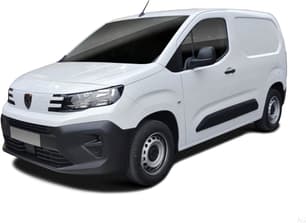
I spent a week reacquainting myself with the freshly facelifted 2025 Peugeot Partner to find out.
Ford’s growling Mustang GT isn’t the only rear-wheel drive performance coupe powered by a naturally-aspirated 5.0-litre V8 engine on the Australian new car market.
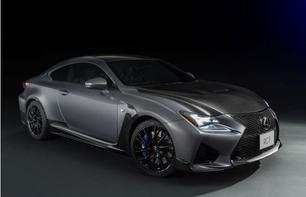
Pfft! Those things are everywhere. If you’re willing to literally double-down and spend twice the pony car’s circa $65K asking price, the Lexus RC F comes into range; the Japanese luxury brand’s take on a two-door, four-seat, muscle car.
Rather than wrestling with the blue oval, it’s a challenger to the German ‘Big Three’, pitching its deep-breathing, high-revving atmo power against shove-in-back, low-down, turbo-torque.
We spent a week behind the wheel to see how this mature, but recently updated machine, measures up in 2020.
It might not be the most modern looking or feeling small van, but amongst its competitors, the Partner stands out for its relative value and load-lugging capabilities.
It’s somewhat fun to drive but now feels a bit plain on the inside, and could benefit from a few extra options and features to make it more comfortable and maybe even a little more customisable.
Still, I think the Peugeot Partner will fit the needs of many primarily city-based small businesses or tradies who want to work out of a compact and easy-to-drive van instead of an unwieldy and often overkill dual-cab ute.
There’s so much to like about the Lexus RC F EP3. A glorious atmo V8 soundtrack, sharp dynamics, plus loads of standard features and safety tech in a beautifully engineered four-seat coupe package. It can’t match the turbos for mid-range thump, and if you need practicality look elsewhere, but it’s the type of performance car we’ll be looking back at in years to come as one of the last to proudly hold its head above a rising tide of turbos, hybrids, and electric hot rods.
The Partner’s recent update brings with it a new, more contemporary face, with the ‘claw’ style light fittings clasping a body-coloured panel in place of the usual grille fitting. It also updates all the badgework to match the French brand’s passenger car range.
Thanks to these upgrades, as well as the fetching colour and Premium body-matching highlights, it looks pretty schmick at a distance, but up close you can start to tell the Partner’s relative age.
It simply doesn’t look as contemporary or coherent in its design as the much newer ground-up fifth-generation Caddy or third-generation Renault Kangoo with which it competes.
A big part of this is due to the Partner being based on a much older platform which is shared across a lot of Stellantis brands. It started life as the third-generation Citroen Berlingo in 2018, and needs to warp its look overseas to fit the Fiat Doblo, Toyota Proace and Vauxhall Combo (although the Partner is the only version sold in Australia).
As a result, up close you can see its somewhat pieced together brand identity bits and boxy, upright bodywork.
There are some odd touches, like the plastic bumper at the front not matching the gloss black highlights or body coloured bumper at the rear, and the contemporary badgework finished in a matt grey adds yet another texture and colour to the mix.
The theme continues inside, with a huge plastic dash piece jutting into the cabin space. Here, the bits from Peugeot’s passenger car range have been integrated, including the cool 'squircle' steering wheel, digital dash elements and the multimedia screen.
In the centre, the electric shifter part from cars like the current 2008 small SUV has been embedded in the sea of plastic.
It technically matches the brand identity, but it doesn't stop the Partner’s interior from feeling a bit cobbled together, rather than the more unified corporate identity which is so well executed in the VW Caddy, which is almost hard to tell apart from a Golf.
The software is another area the Partner could use some work. It’s fairly simple and straightforward to use, but the layout isn’t very customizable, both for the multimedia suite and digital dash.
Again, the Caddy runs rings around Peugeot in this department, with its more impressively-featured and nicer-looking software it shares with other VW Group passenger cars.
There are also little areas which feel like they’re behind the pace for a top-spec variant. The steering wheel is hard plastic without even the option for a softer wrap, for example, and the Caddy offers an alternate optional synthetic leather seat trim for an operator willing to dish out a little extra cash.
At just over 4.7m long, a bit more than 2.0m wide and less than 1.4m high, the RC F has a classically macho wide coupe stance with a distinctive Lexus twist.
In a late 2019 refresh the RC F was upgraded with suitably jagged single-piece, LED headlights and an even wider version of Lexus’ signature ‘spindle grille’ featuring a new mesh pattern.
Pumped up guards sitting over the standard 19-inch BBS rims feature gills behind them to help smooth airflow around the front of the car, stabilise it overall, and exhaust cooling air flowing around the brakes.
A revised rear diffuser is now body coloured, the stacked-at-an-angle quad exhaust pipes are a Lexus ‘F’ hallmark, stainless steel window trims are now dark rather than bright thanks to a thicker oxide film covering, and the LED tail-lights feature a new L-shaped insert.
Of course, a car’s looks are always subjective, but I think the RC F’s interior is super cool, combining long, flowing graphics on the seats and doors, with rounded, multi-level sections and brushed metal finishes across the dashboard.
The racy instrument binnacle tips its hat to classic sports cars of the ‘60s, the analogue clock between the central air vents could come off as cheesy, but actually looks great, and the large multimedia screen set ‘rear-of-stage’ at the top of the dash is subtly integrated.
True to form, this Lexus is beautifully finished with an obvious eye to design detail and manufacturing quality. Which makes its biggest failing all the more irritating.
The ‘Remote Touch’ control pad behind the gearshift in the centre console managing settings in the media system is hateful.
Operating in similar fashion to a laptop mousepad (only worse) despite available adjustments for speed/sensitivity, even on its most benign setting it is maddeningly over-reactive and inaccurate. Lexus should just put its hand up, say “My bad” and retire it, yesterday.
So design-wise the Partner might barely hit the brief when it comes to matching it up with Peugeot passenger car design, but one area where it manages to shine is in-cabin storage.
There’s lots on offer, massive bottle holders and pockets in the doors, storage areas galore in the big plastic dash, with trays in the centre and passenger side, as well as behind the multimedia screen and under the shifter.
There are a set of non-variable bottle holders cut out of the top of the dash, as well as hidden storage compartments under both front passenger seats.
I should mention at this point the Partner has a three-across front bench, although actually putting three people in there will be quite the squeeze, especially given the centre of the dash juts quite far into the cabin area, leaving the centre occupant with nowhere to put their knees.
Maybe it will suit a child in a pinch if you plan to have this as a small business vehicle which may need to be dual-purpose from time to time.
There’s also a fold-down rotating table thing in the backrest of the centre position, designed to be used with a laptop. Another feature of the Partner’s dash is physical toggles and buttons for the climate controls, which are increasingly rare in favour of touch-based menus.
In terms of load area dimensions, the Partner LWB offers 3.9 cubic metres (excluding the bulkhead) and dimensions come in at 2167mm long, 1527mm wide (1229 between the arches) and 1243mm tall. This should accommodate two Euro-sized palettes.
Loading and securing should also be relatively breezy thanks to sliding doors on both sides, a barn door rear which hinges out of the way for forklift loading, and no less than 10 tie down rings.
It also scores decent LED lighting in the roof, so you can see what you’re doing in a poorly lit warehouse, or when using the load area at night.
As for capacities, the Partner LWB has a payload of 898kg. It claims a 950kg braked towing capacity (not much more than the unbraked of 740kg) although in reality 740 seems to be closer to the limit thanks to the 74kg towball download rating.
How does this compare to the Caddy? I was surprised to find the Caddy 5 in equivalent LWB form has a smaller load area (3.7 cubic metres) and a significantly lower payload of 695kg.
However, it can tow slightly more (up to a claimed 1500kg - however has a 75kg max towball download). Additionally, the Partner isn’t able to be fitted with a tailgate to replace the barn doors (an option which some buyers may prefer on the Caddy).
A full size spare wheel is present on all variants to keep you on the road.
Practicality is unlikely to be high on the priority list for anyone shopping for a car like this, but comfort and convenience certainly will be.
And the RC F delivers just that for its front seat passengers, providing lots of space, as well as numerous storage options, including long door bins with room for smaller bottles, two cupholders in the centre console, a large, lidded storage box/armrest between the seats (housing twin USB-A ports, an aux-in jack, and a 12V socket), as well as a decent glove box.
But that space we were just talking about pretty much evaporates when you move to the back. This is a classic ‘2+2.’ The electric folding and sliding front seats make access okay, however, sitting behind the driver’s seat, set for my 183cm height, headroom is tragic, legroom is tight, and toe room is bad.
So, let’s assume it’s a kids-only area, and once ensconced back there, they’ll appreciate a fold down centre armrest, two cupholders between the seats (with a roll-top cover), and adjustable air vents. But there isn’t a USB point in sight which may lead to friction when devices lose charge, or a plug-in negotiation with front-seaters.
Lexus claims a modest boot volume of 366 litres (VDA) and it’s important to note that although there’s a ‘ski-port’ door to accommodate lengthy things (like skis?) the rear seats don't fold down. So, flexibility is limited, although there are tie-down hooks at each corner of the floor to help secure tricky loads.
The Lexus RC F is a no-tow zone, and don’t bother looking for a spare of any description, a repair/inflator kit is your only immediate option. Good thing roadside assistance is included in the warranty package.
Given the uniquely European nature of a van like this, it makes sense the remaining options offered to us are only from French and German makers.
In fact, this Peugeot Partner is one of just three left for you to choose from. Starting from $39,990, before on-roads (for a Pro SWB), the Partner goes into battle against its Gallic nemesis, the Renault Kangoo, and the defending small van champion in the form of VW’s popular fifth-generation Caddy.
Unlike its rivals, though, the Partner range is automatic only and exclusively powered by a three-cylinder, turbo-petrol engine (if you exclude the electric ePartner).
This immediately gives it a leg up, as in its most affordable form, it already undercuts the base manual Caddy (TSI220 SWB - $40,990) and most affordable automatic Kangoo (SWB auto - $41,990) although the Renault holds onto the most affordable price-tag in the segment if you’re happy shifting yourself, at $38,990 for its SWB manual.
The specific version we’re looking at for this review is the Premium LWB, which wears a price-tag of $45,990 and adds an additional 350mm to its length over the SWB.
Standard kit on Premium versions includes items otherwise missing on the Pro, like 16-inch alloy wheels instead of steel wheels, LED headlights instead of halogen, push-start ignition instead of turn-key, dual-zone climate instead of single-zone as well as body-coloured highlights, rails and door handles in place of plain plastic fittings.
Standard items across the range include a 10-inch central touchscreen with wireless Apple CarPlay and Android Auto, a digital instrument cluster, cloth seat trim, a 180-degree reversing camera, a digital rear vision mirror to make up for the standard windowless barn doors, a glaze-finish bulkhead to separate the cabin and load area, as well as an array of active safety items we’ll explore later.
The fetching blue scheme our car was painted in comes at an additional $690, and from there you can modify further with an array of factory options.
Key among them are a choice of windows for each sliding door ($486 each) or the barn door ($503), a metal cargo barrier to protect the bulkhead ($1146), an LED cargo light kit ($350), roof racks ($536) or a more comprehensive roof kit ($2610).
Additionally, long-wheelbase versions can be equipped with a cargo bay floor kit ($894), wall protection kit ($960) or the rubber floor mat which our van had ($600).
A complete towing set-up will set you back $1045 for the towbar and $510 for the wiring harness.
From a base of nearly $50K then, you can easily add a few thousand to the price once you start ticking boxes, but it is important to note not every commercial van, even ones a size up, offer this level of factory customisation.
This gives the Partner deeper (and warranty-covered) customisation for various trade purposes straight from the factory.
For what it’s worth, I matched our test car in the configurator and ended up with a final price of $52,429 with drive-away pricing set to Sydney.
Out of curiosity, I also priced up a VW Caddy Cargo LWB petrol auto with as close as I could get to the same equipment as this Partner Premium, and was surprised to find I had to tick a lot more option boxes to get LED headlights, alloy wheels (although the Caddy alloys are larger at 17-inches), premium paint, colour matching body panels, keyless entry with push-start and a rubber floor mat.
The total price for the spec-matching Caddy came in at $57,952 drive-away in Sydney.
Base price for the Lexus RC F is $134,129, before on road costs, which puts it in the same ballpark as the BMW M2 CS ($147,400), undercuts the Audi RS5 Coupe ($157,700), and prices it above Merc-AMG’s C 43 Coupe ($116,500).
The ‘Enhancement Pack 3’ (EP3) option bundle fitted to our test car (19-inch BBS alloys, Brembo carbon-ceramic brakes, titanium exhaust, carbon fibre cabin trim, and glass sunroof), adds $29,161, for an as-tested total of $163,290, which stars to push it into even tougher territory (think M4 CS and C 63 S).
But aside from the EP3 extras, the RC F is well furnished when it comes to standard features, with highlights including, semi-aniline leather accented trim, electrically adjusted (10-way with memory), heated and ventilated front seats, keyless entry and start, dual-zone climate control, plus a 10.3-inch centre screen (managed via the ‘Remote Touch’ interface and voice recognition) running satellite navigation (with live traffic updates) and a 17-speaker Mark Levinson audio system (including digital radio and Apple CarPlay/Android Auto functionality).
Other boxes ticked include, auto-fold exterior mirrors (with auto-dimming, heating and memory), auto LED headlights (with active high beam), LED DRLs, indicators, and tail-lights, rain-sensing wipers, adaptive cruise control, a reversing camera, an 8.0-inch multi-function digital driver display, leather-trimmed gearshift and (electric height and reach adjustable) steering wheel, ‘Drive Mode Select’ (Eco, Normal, Sport S, Sport S+, and Custom modes), ‘Adaptive Variable Suspension’ (Normal and Sport S modes), and ‘Vehicle Dynamic Integrated Management’ (Sport S+ and Expert modes).
Along with the standard safety tech (detailed in the Safety section below) that’s a pretty handy basket of fruit that stands up well relative to the asking price and competition.
There is just one combustion engine option in the Partner range, a three-cylinder 1.2-litre turbocharged petrol unit producing 96kW/230Nm which drives the front wheels via an eight-speed automatic transmission.
The only alternative to this is the E-Partner which sports a 100kW/260Nm electric motor instead.
The three-cylinder petrol is a perky unit sourced from Peugeot’s passenger car line-up, although the Partner range doesn’t quite offer the VW Caddy’s breadth of options; the choice of a 1.5-litre four-cylinder petrol or a 2.0-litre diesel in two states of tune.
The Lexus RC F is powered by the latest iteration of the brand’s (2UR-GSE) 5.0-litre, naturally aspirated V8 engine.
Featuring exotic touches such as a dual variable valve timing (with electric actuation on the inlet side), dual-length intake runners, forged connecting rods, titanium valves, and the ‘D-4S’ control system (combining port and direct-fuel injection) it produces 351kW (471hp) at 7100rpm, and 530Nm from 4800-5600rpm.
Drive goes to the rear wheels via an eight-speed (torque converter) automatic transmission with a new ‘AI-Shift’ control designed to adapt to the driver’s style and shift drive modes more effectively, as well as a Torsen mechanical limited-slip differential.
One of the key downsides of the Peugeot’s Euro-compliant turbo-petrol engine is it requires mid-shelf 95RON fuel, which could be a blow to those who want to drill down on running costs.
Claimed fuel consumption on the official combined (urban/extra-urban) cycle is decent, at 6.3L/100km. Ours spent the week mainly urban commuting and landed closer to the official urban number of 7.3L/100km with a total of 7.2L/100km over a few hundred kilometres.
The 60-litre fuel tank should allow for roughly 950km of driving range at the official consumption. More like 830km using our test figure.
Claimed fuel economy for the combined (ADR 81/02 - urban, extra-urban) cycle is 11.1L/100km, the V8 emitting 254g/km of CO2 in the process.
In our week with the car, over a combination of city, suburban and freeway conditions (including some enthusiastic B-road running) we recorded an average of 12.8L/100km, which, while not exactly frugal, is still impressive for a V8, performance-focused coupe.
Minimum fuel requirement is 98 RON premium unleaded, and you’ll need 66 litres of it to fill the tank.
One thing which I always like about these little European vans for trades is they’re usually very humane and easy to drive compared to a dual-cab or a van in a larger market segment.
They tend to offer closer to the feel of a passenger car, with some of the little luxuries which are missing in big hollow diesel units like some form of refinement and less noise.
The Partner is no different, and shone in some ways I did not expect.
The brand has done a good job of making it feel like a Peugeot passenger car from a touch-point perspective with the dash elements and the small chuckable steering wheel.
It also has a swift steering ratio, making even this LWB version feel nimble and agile for darting around corners and down tight laneways just as I’m sure its French creators envisaged.
The peppy three-cylinder engine helps the hatch-like feel. It offers a punchy turbo surge and a satisfyingly gruff soundtrack, which makes this little commercial offering quite fun to drive.
The ride is also remarkably smooth for a commercial vehicle, even completely unladen. Car-like suspension handles the bumps and potholes of the city environment well, which could make this a good choice for delivery drivers who will spend a lot of time in urban environments, and maybe are less concerned about getting so close to the GCM rating.
However, it’s not quite as polished as the Caddy, which won me over big time when the fifth generation version arrived in 2022.
The Peugeot can suffer from significant bouts of turbo lag, and its eight-speed transmission can be occasionally jerky from a stand-still, making for the odd awkward moment at T-junctions and roundabouts where this van takes a second to get going again.
Additionally, some of the fun, refined feeling wears away over time as you constantly come into contact with the hard plastic trims of the interior, and the scratchy urethane steering wheel.
This can get a bit jarring over a full day of driving. It’s for this reason VW puts a leather-bound steering wheel in even basic versions of the Caddy these days.
The software also leaves a lot to be desired, with minimal customisation and laggy interfaces.
Sure, the reality is you’ll spend most of your time working with Apple CarPlay or Android Auto which worked perfectly in my time with the car, but it would be nice to have more customisation for the dash and a few nicer menus for the multimedia screen.
All in all, then, it’s a nice little van to drive, and is excellent at urban duties, but it has a slightly industrial character which will eventually catch up with you after a long day behind the wheel.
The Caddy is better in pretty much every way behind the wheel, but then it also costs over $5000 more in equivalent spec and can't carry as much stuff.
A performance car should excite the senses, but the RC-F leans on one a little harder than the rest… hearing.
With the addition of launch control in last year’s update the big V8 will reliably slingshot you from 0-100km/h in just 4.5sec, which is no mucking around quick. But it’s the combination of raucous induction noise, furious mechanical roar, and bellowing titanium exhaust that add extra drama to the experience.
Fact is though, while maximum torque of 530Nm is not to be sneezed at, that number is only available from 4800-5600rpm. Although the RCF starts to get into its stride at about 3000rpm, the twin-turbo BMW M2 CS smashes it for mid-range punch with its 550Nm on tap from just 2350rpm.
So, in everyday, even mildly enthusiastic driving, the RC F sounds amazing, and don’t get me wrong, this is a proper performance car, but it doesn’t have the low-down, kick-in-the-pants grunt of its turbocharged six and eight cylinder competitors.
Linear power delivery, and the crisp throttle response only a naturally aspirated engine can deliver go some way to evening things up, however, and there are multiple systems to help tune the drive experience to your exact preference.
‘Drive Mode Select’ offers five settings (Eco, Normal, Sport S, Sport S+, and Custom).
Eco lowers engine output, dampens the throttle, and dulls the air-con in the name of fuel efficiency and reduced emissions. But you’re not buying this car to save the planet, so don’t touch that button, Sport S is the sweet spot (and save Sport S+ for track days).
Quick gearshifts from the eight-speed auto (particularly using the wheel-mounted paddles), that rapid throttle response, and nice steering feel work seamlessly together to deliver a satisfying backroad experience. Sport S holds gears longer on the way up the ratios, and is quicker to shift on the way back down.
In a more civilised mode, with eight gears to play with, freeway cruising is relaxed, especially given the top two ratios are overdriven.
The ‘Adaptive Variable Suspension’ offers Normal and Sport S modes, and here normal is the go. The basic set-up is double wishbone front, multi-link rear, and Lexus says the SACHS-developed AVS shocks can adjust damping force across a range of 30 levels. But even in the default Normal setting the ride is firm.
According to Lexus, the standard Michelin Pilot Sport 4S tyres (255/35 fr / 275/35 rr) have been tailored specifically to the RC F and they grip hard, keeping the 1715kg coupe planted in quick corners. But their narrow profile no doubt contributes to the car’s less than limo-like feel around town.
Then the ‘Vehicle Dynamic Integrated Management’ system fine tunes the car’s stability control in Sport S+ and Expert modes. Expert only happens when you’re in Sport S+ and turn the stability control off. So again, best to go full racer at the circuit, and we didn’t explore VDIM this time around.
The electrically-assisted steering is not only accurate (the strength of the steering rack bushing has been increased by 150 per cent to boost response), but the wheel itself feels great, and the huge (380mm) Brembo carbon ceramic brakes are mega (working well from cold unlike some other carbon set-ups).
Under the heading of notable mentions, the digital instrument cluster is inspired by the V10-powered Lexus LFA supercar, switching between a blue economy indicator ring in Eco mode, a standard tachometer and digital speedometer in Normal, a white and red cluster in Sport S, and orange in SPORT S+ (with three-stage upshift indicator lights).
Plus, you can also switch between racy functions such as a lap timer and G-force display, and soft-trim knee pads on the sides of the front centre console improve comfort and seating stability if you’re having a crack.
The Partner is covered by a par-for-the-course five year and 200,000km warranty which applies to the rest of its light commercial range, paired with five years of roadside assistance.
The Partner requires servicing once every 12 months or 15,000km.
When it comes to pricing, you can package the car up with either a two- or four-year service plan (priced at $400 or $1000, respectively) which Peugeot claims can save you up to $437 compared to a-la-carte servicing.
The standard Lexus warranty in Australia is four years/100,000km, which outscores the likes of Audi and BMW on duration (both at three years) but trails on kilometres (both offering unlimited km).
Then there’s Merc, which has gazumped all the luxury players with five year/unlimited km cover. Plus, there’s the fact that the mainstream market standard is now five years/unlimited km, with some at seven years.
To balance the scales, the ‘Lexus Encore Privileges’ program provides 24-hour roadside assistance for the duration of the warranty, as well as access to owner events and special offers.
Service is scheduled for 12 months/15,000km (whichever comes first), and Encore capped price servicing is available for a three year period, averaging $595 annually, for an all-in cost of $1785.
A Lexus loan car is provided while your pride and joy is in the workshop, or a pick-up and return option (from home or office) is available in some instances. You’ll also receive a complimentary wash and interior vacuum. Nice.