What's the difference?
Mid-sized (2.5 to 3.5-tonne) commercial van buyers have a variety of makes and models to choose from, even though most buy the venerable HiAce.
Latest VFACTS figures confirm Toyota’s long-standing dominance, as the HiAce commands just under 40 per cent market share with the remainder spread across ten competitors from Europe, China and Korea.
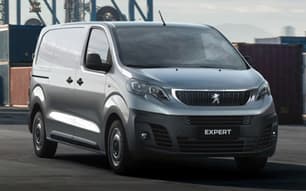
One of those is Peugeot’s Expert, which is available with a choice of wheelbases, transmissions and model grades. It currently represents just 1.3 per cent of sales in this segment, so we recently spent a week behind the wheel to see how it compares to the market leader.
Traditionally, offering a smaller engine in a particular make or model has been a manufacturer’s way of stripping a few dollars out of the price-tag. In the case of the ute market, that’s more often than not an attempt to rope price-sensitive fleet customers into the family. Not to mention responding to the cut-throat pricing of some of the Chinese newcomers.
A handful of years ago, we saw Mazda do just that with a 1.9-litre turbo-diesel variant for its BT-50 range to give us the XS, entry-level trim specification. But it seems Mazda has had a bit of a rethink about that strategy (in line with Isuzu’s plans, given the BT-50 and D-Max share their major structures and drivelines) and has now upgraded the small-engine variant of the BT-50 with a new engine and the return of the 4X4 option (which was dropped after about 12 months in the previous XS model due to lack of demand).
But perhaps most importantly, the engine in this base-spec BT-50 has now grown from the original 1.9 litres to 2.2 litres. As a result, there’s more torque, more power and an extra couple of gears in the transmission. And with the option of four-wheel drive again, the new XS BT-50 might just get a look in where the previous XS didn’t.
In the end, of course, the XS closes the gap to the other BT-50s in the line-up, perhaps muddying further the question of whether you need to stump up for the full 3.0 litres in the other BT-50s, or take an enough-is-enough stance and save some coin.
Positives are higher payload and tow ratings than the Toyota HiAce along with superior fuel economy. Negatives are inferior safety, evidence of questionable build quality and a list price more than $3000 above a HiAce equivalent. So, whether the positives outweigh the negatives to justify its higher price, only a potential buyer can decide.
Key to the success of the BT-50 XS will be acceptance by fleet buyers. The vehicle, however, seems to be pretty well considered as far as that goes, although as with any stripped-down model, there are features that will be missed. Things like the manual air-conditioning probably won’t make much difference, but the lack of a tyre pressure monitoring system is a bigger issue for a working vehicle. Performance from the smaller engine is still well within acceptable parameters, but we reckon any buyer considering using much of the 3500kg touring capacity would be better off with the 3.0-litre engine offered in the rest of the BT-50 range.
The Mazda is not the best riding of its ilk, and there are competitors with bigger cabins, although, notably, at this point on the pricing ladder, these are often from China rather than Thailand where the Mazda is built. Ultimately it will come down to whether the smaller engine and reduced performance is an issue and also whether the money saved over the bigger-engined BT-50 is enough to justify that and the loss of some creature comforts. But since fleet managers are notoriously hard-nosed about this stuff, there’s a good chance to BT-50 XS will find a market.
Note: CarsGuide attended this event as a guest of the manufacturer, with meals provided.
Our 'Long' example rides on a 3275mm wheelbase with 5309mm overall length, 1920mm width and 1948mm height, so compared to the HiAce it's slightly longer in wheelbase and overall length but narrower and not as tall. It’s also significantly lighter with a kerb weight that’s almost 500kg (or half a tonne) less than the Toyota; a big factor in its spirited performance and superior payload rating.
The Peugeot’s front-wheel drive underpinnings include MacPherson strut front suspension, coil spring semi-trailing arm rear suspension, rack and pinion steering and four-wheel disc brakes. Its 12.4-metre turning circle is also more than a metre larger than the HiAce.
The Pro’s work focus can be seen in its black plastic front and rear bumpers and side mouldings where most scrapes and dents occur in hard-working vans. There’s matching black on other high-wear surfaces like the door mirrors, door handles, hubcaps, rear wipers and rego plate shroud.
The cabin has seating for three with a driver’s bucket seat and separate two-passenger bench seat. Although all occupants have ample headroom, the dashboard’s protruding centre console leaves little legroom. In fact, the centre passenger must travel with both knees skewed to the left of this extension, which then encroaches on the outer passenger’s legroom. So, for a crew of three we’d recommend short trips. Our only other criticism was the lower dash panel on the passenger’s side, which kept popping loose despite repeated attempts to click it back into place.
Targeting tradies and fleet customers has meant Mazda has embraced the concept of factory accessories. Right now, there are options for tougher front bumpers, bull-bars, snorkels, drop-side trays, an awning, wheel-arch flares (for bigger, aftermarket wheel and tyre packages) driving lights, roof racks, canopies, tub-drawer systems and even a dual battery set-up. All these factory options carry the full Mazda warranty.
But Mazda has gone even further with accessory packs aimed directly at different fleet markets. For instance, there’s the Mine-Spec Pack which incorporates a park-brake alarm, high-mounted brake lights, a reversing buzzer, work-lights, LED rear lighting and pre-wired switches for auxiliary and beacon lighting.
Externally, Mazda's design brief for the BT-50 has clearly been to not frighten the horses. But it's better than that, because it has actually emerged as one of the better looking utes out there. In XS trim, even the steel wheels add a no-nonsense flavour to the overall effect. And where some of the competition appear to be trying very hard to ape the full-sized US-made pick-ups, the Mazda is its own thing.
Inside, the smaller info screens and simple layout in basic black tell the budget story. At the same time, there's a lot to like in terms of the clear, simple analogue gauges and the no-fuss controls including the conventional T-bar, park-brake and ignition key. There's a look and feel that also suggests this is a ute that should be able to take a few knocks in the course of earning a living.
Its relatively light 1743kg kerb weight combined with a 3100kg GVM allows for a sizeable 1357kg payload that’s almost 300kg more than the HiAce. It’s rated to tow up to 1800kg of braked trailer, which is also 300kg more than the Toyota. And with its 4900kg GCM, the Expert can legally tow its maximum trailer weight while carrying its maximum payload. These are excellent numbers for a multitude of working roles.
The cargo bay and cabin are separated by a stout steel bulkhead, which insulates the cabin from tyre noise emanating from the rear wheel housings and doubles as a cargo barrier. Its central window provides vision for the rear-view mirror and the ability to check on loads.
Lined to mid-height, the Expert’s cargo bay is accessed through large sliding doors on each side with handy 935mm-wide openings, while rear access is through glazed barn-doors which open to 180-degrees to aid forklift access. Each is equipped with its own windscreen wiper and demister.
The load floor is 2780mm long and 1628mm wide with 1258mm between the wheel housings, so it can carry up to three 1200 x 800mm Euro pallets or two 1165mm-square Aussie pallets, held in place by a total of eight floor-mounted load anchorage points. The 6.1 cubic metres of load volume splits hairs with the HiAce’s 6.2 cubic metres.
Cabin storage starts with a cavernous bin in the base of each front door that can easily hold a big 1.5-litre bottle and lots more. Each door also has two other compartments for smaller items. The dash-pad has a cup holder at each end and there’s a shrouded storage compartment in the centre. There are also two small storage nooks near the gearshift dial, plus on the passenger side is a glovebox and additional storage compartment (with 12V accessory plug inside).
The bench seat’s hinged base cushion also tilts forward to reveal two large storage bins below, with one thoughtfully lined with polystyrene foam to keep items either hot or cold.
With a choice of cab-chassis of pick-up tub, not to mention the option of a single or dual-cab body in cab-chassis form, the XS allows for a fair bit of creativity in how it’s configured. The cab-chassis, for instance, will accept a conventional drop-side alloy tray or any number of service body configurations right up to camper bodies.
The stock tub on the pick-up version gets a drop-in liner but there’s no power outlet or light that some of the competition offer. The tie-down points are also a bit disappointing with two lower points in the rear of the tub and a pair of higher points in the front. Experience tells us that high-mounted tie-down points are vastly less practical than anchor points mounted close to the cargo floor.
The move to the larger engine has, however, increased the Mazda’s towing ability. From the previous version’s 3000kg towing limit, the new 2.2 can now legally tow 3500kg (with a braked trailer and approved tow-hitch). Payloads vary according to specification, but range from about 1000kg right up to 1379kg for the XS singe-cab-chassis.
The factory-option drop-side tray carries it’s load up high, but offers a flat floor with no wheel-arch intrusions. The standard tub is not as large in any direction, but does have a damped tailgate for safety (you can’t drop it) and convenience (the gas struts help raise it).
In the cabin, you get USB charging ports (two in the front, one in the rear seat) and there are central air-vents for the rear seat of dual-cab models. The dual-cab also has an under-seat storage area, two gloveboxes and a 60/40 split fold rear bench. The doors feature bottle holders and there’s a flip-down glasses compartment in the roof lining.
While the front seats are comfy enough for bigger drivers, the rear seat also goes against dual-cab tradition a little by having plenty of room in every direction, as well as a rational seat-back angle.
Our test vehicle is the Pro Long Auto variant. ‘Pro’ means it’s the lower-priced and more work-focused of two Expert model grades. ‘Long’ means it has the longer of two wheelbases and ‘Auto’ denotes auto transmission as opposed to the manual alternative.
Powered by the same 2.0-litre four-cylinder turbo-diesel shared by all Experts, it has a list price of $50,075 plus ORCs which is significantly more than its LWB HiAce auto equivalent at $46,760. And our example is finished in Artense Grey metallic, which is one of several premium colours available at extra cost.
The Pro Long Auto is built for work with 16-inch steel wheels and 215/65 R16C Michelin tyres plus a full-size spare. Useful workhorse features include rear parking sensors, 12-volt accessory socket, automatic headlights and wipers, front fog lights, cruise control and a multimedia system with 7.0-inch colour touchscreen and multiple connectivity including Apple CarPlay/Android Auto.
While the XS remains the entry-level BT-50 variant, you once again have the choice of two or four-wheel drive, with price-tags to match. So, starting at the start, the 4x2 XS single-cab cab-chassis now kicks off at $37,900 before on-road costs with the dual-cab pick-up (styleside) 4x2 variant at $46,710.
Move up to all-wheel drive and there’s no single-cab option. Instead, things start with the dual-cab cab-chassis 4x4 at $53,120 and the dual-cab pick-up at $54,720.
Aside from the bigger engine and stronger performance, you now get an eight-speed transmission and there’s fuel-saving stop-start tech that was once only available on higher-spec BT-50s.
Other additions for the XS include LED headlights, adaptive cruise control, wireless connectivity for both Apple Car Play and Android Auto, a reversing camera and an 8.0-inch touchscreen. There’s also digital radio and hill-descent control.
But the XS’ place at the bottom of the BT-50 ladder is confirmed with the cloth-trimmed interior, vinyl flooring and plain steel wheels for all but the dual-cab pick-up 4X4 variant which gets alloy wheels.
Which is all fine and gives the Mazda something of a pointy stick with which to poke at the incoming competitors (mainly) from China, but where does that place the XS relative to the 3.0-litre BT-50? Well, if you take the XT variant with the 3.0L engine and the same body and driveline layout, the XS comes in at just $2500 less. That’s not a huge saving either as an outright number or in terms of the monthly lease repayments.
Part of that is because Mazda has also hiked prices across the BT-50 range in tandem with announcing the new XS. Which means that spec-for-spec 1.9 versus 2.2-litre XS is now $1500 more than it was. But even if Mazda had held prices on the XS variants, would $4000 be enough of a difference? For reference, the original XS sliced $3000 off the 3.0L price when it was launched back in late 2021.
There are areas where you can see where Mazda has pulled a few dollars out of the vehicle, starting inside with the small centre touchscreen, the truly tiny central dash-cluster screen, and the cloth trim. There’s also a bit of hard plastic in evidence and the air-conditioning lacks the set-and-forget function of climate control systems. The keyless entry and start has gone and the XS is started with an old fashioned ignition key. The XS specification also loses the front and rear parking sensors and the tyre-pressure monitoring system.
You might also imagine the drum rear brakes are another giveaway but, in fact, they’re standard across the whole BT-50 line-up.
The Expert’s punchy 2.0-litre four-cylinder diesel is one of its strengths. Turbocharged and intercooled, it has Euro 5 emissions compliance and produces 110kW at 4000rpm and 370Nm at 2000rpm. The eight-speed torque converter automatic has near-seamless shifting and offers the choice of sequential manual-shifting using steering wheel paddle-shifters.
The new engine capacity of 2.2 litres is up from the 1.9 of the previous XS version but still well short of the 3.0 litres of the more expensive BT-50 versions. And the specifications are pretty much exactly what you’d expect with the new 2.2 just about splitting the difference between the old 1.9 and the 3.0.
In this case, that equates to 120kW of power and 400Nm of torque, while the 1.9 was good for 110kW and 350Nm, and the 3.0 sports 140kW and 450Nm. So, yep, somewhere right about the middle. And that makes sense given the new 2.2 uses the basic mechanical architecture of the 1.9.
But the switch up to the new engine brings one very important change and that’s the adoption of an eight-speed automatic to replace the six-speed unit fitted to the previous XS and the other BT-50s. That has an obvious potential benefit for drivability, but also for fuel economy.
Mazda has also added stop-start tech to the XS in the name of efficiency. But, as we’ve found many times before, the fuel economy benefits seem restricted to the official test results rather than the real world where this technology serves to annoy many drivers more than anything else.
If you opt or the four-wheel-drive variants, you’ll get a rear diff lock but you miss out on an on-road 4x4 setting. Considering the 2.2-litre’s newfound towing capacity (the full 3500kg of the competition), that lack of a 4x4 Auto setting is a shame, but not an unexpected one at this price-point.
Peugeot claims a combined average consumption of 6.3L/100km and the dash display was close to that at 7.6L after 386km of testing, which included about one third of that distance carrying a full payload. Our own figure calculated from fuel bowser and tripmeter readings came in higher again at 8.3L/100km, which is still outstanding economy for a vehicle of this size. So, based on our numbers, you could expect an extensive driving range from its 70-litre tank of around 840km.
While one of the expected benefits of the 2.2-litre engine compared with the three-litre unit is a reduction in fuel consumption, the new 2.2 engine goes one big step further by actually being more frugal than the 1.9-litre engine it replaces. Well, in terms of the official government test, anyway.
The single cab-chassis model in new 2.2-litre, two-wheel-drive form posted a combined (urban-highway) fuel number of a creditable 6.9 litres per 100km. Compared with the mechanically similar 1.9 single cab-chassis, that’s a saving of 0.1 litres per kilometre, and a corresponding drop in tailpipe carbon emissions of 1 gram per kilometre.
To be honest, this small improvement is probably largely due to the stop-start system now fitted, which many drivers will turn off at the first opportunity. Even so, the new eight-speed transmission must also be playing a part, so let’s call the old and new engines line-ball in the real world.
The rest of the XS line-up scored official figures of 6.3 litres per 100km for the double-cab pick-up 4x2, 7.1 litres for the double cab-chassis 4x4 and 6.6 litres per 100km for the dual-cab pick-up 4x4.
With the BT-50’s standard 76-litre fuel tank, the theoretical range is more than 1000km. In reality, that’s going to be closer to 800km.
The BT-50 engines do not require AdBlue additive to reduce exhaust emissions.
It has a comfortable driving position as the steering wheel is adjustable for height and reach, the bucket seat has a fold-down inboard armrest and there’s a prominent left footrest. Although the driver’s seat base has no rake adjustment, it’s long enough to provide good under-thigh support with enough rake to avoid sliding towards the front of it like some rivals.
The steering is responsive and nicely weighted, which combined with competent handling and braking makes the Expert feel sure-footed. The supple four-coil suspension provides a smooth unladen ride quality.
The energetic drivetrain with its 370Nm of torque has spirited acceleration and good agility in traffic. Although peak torque is at 2000rpm, the 2.0-litre turbo-diesel pulls cleanly from 1500rpm which showcases its flexibility.
The eight-speed automatic gets good results from this engine, but sequential manual-shifting using the paddle-shifters is handy when more driver input is required. The cabin is acceptably quiet at highway speeds, thanks to the cabin bulkhead and low tyre, engine and wind noise.
Our only major criticism is the absence of blind-spot monitoring and rear cross-traffic alert. In our opinion every van, particularly with solid side-walls and doors like this one, should at least have these active safety features as standard (like the HiAce which also has standard front parking sensors).
The Expert’s relatively small mirror on the passenger door is not sufficient in eliminating the large and potentially hazardous blind-spot over the driver’s left shoulder, particularly in heavy traffic and when reversing from driveways into busy streets.
Striking the right balance between ride comfort and load-lugging capacity has always been the big trick with utes in general. The fact is, there’s probably no ideal setting, especially considering the range of payloads a ute can be expected to carry on any particular day. In the BT-50’s case, Mazda has opted to go for a stiffer suspension tune. That means it can technically tow and haul with the best of them, but it also dictates that ride quality is far from what you’d call plush, even in this market segment.
The ute handles bumps best when the undulations don’t come too hot and fast. But strike a patch of high-frequency lumps and bumps and the suspension, particularly at the rear, starts to pogo about with a corresponding decline in ride control. The steering, too, seems to lack a little feel and is relatively slow-geared (although that has its benefits off-road).
The engine certainly does the job in isolation, but it’s likely to struggle a little with the full three-and-a-half tonnes on the hitch. It’s pretty noisy, too, and definitely sounds like a diesel, unlike some modern diesel designs that are more refined. There’s also a sense that Mazda has ditched some of the sound deadening of other BT-50 models, as the engine is certainly heard and felt. The optional snorkel moves the induction noise right into the driver’s window when it’s open, too.
But the new eight-speed automatic transmission is a beauty. Upshifts are crisp and smooth and even the downshifts as you approach a full stop are measured and calibrated to never intrude. And it’s nice to see a conventional T-bar shifter with no separate park button or non-intuitive movements required.
We didn’t get a chance to try the BT-50’s off-road chops, but past experience tells us that the Mazda will be pretty good. As with many four-wheel-drive utes, the limiting factor will be the standard tyres fitted at the factory.
No ANCAP rating and although it’s equipped with AEB, emergency brake assist and forward collision warning there are only front airbags for driver and passenger, which looks threadbare compared to the HiAce’s seven airbags. It also misses out on important active safety features previously mentioned.
While alloy wheels and carpets on the floor might be negotiable on a vehicle like this, a basic level of safety gear is not. So, the XS gets front, knee and side-curtain airbags, as well as givens such as anti-lock brakes and stability control.
But it doesn’t stop there with the BT-50 XS also fitted with the bulk of the current driver aids. Those include blind-spot monitoring, lane keeping assistance, lane-departure warning, rear cross-traffic alert and the reverse camera system. There’s also autonomous emergency braking which can also identify pedestrians and cyclists.
You also get Mazda’s own take on the controversial driver-attention monitor which many ute makers simply haven’t managed to get right in terms of the system’s calibration and how aggressively it acts. The BT-50’s is one of the less intrusive ones.
What’s missing? On a vehicle designed to tow big loads, a tyre pressure monitoring system is a great addition, but not one you’ll get on a BT-50 at this price. We’d also like to see an on-road 4WD setting which would allow the use of all-wheel drive when, say, towing on a bitumen road. More expensive competitors have this, but the Mazda is hardly alone in not offering this tech at this entry-level price.
The XS variant picks up the five-star ANCAP safety rating already awarded to the rest of the BT-50 line-up.
The Expert is covered by a five years/200,000km warranty. Scheduled servicing every 12 months/20,000km whichever occurs first. Five years of capped-price servicing totals $3049 or an average of $609.80 per year.
Mazda’s standard five-year/unlimited-kilometre warranty applies to the BT-50 range, and includes the first five years of roadside assistance, too.
Service intervals are every 12 months or 15,000km, whichever comes first. Capped-price servicing is available with the first five years of servicing costing $2188 on 4x2 versions and $2302 for 4x4 variants.
It’s worth mentioning that the BT-50’s new engine is Euro 5 compliant but doesn’t require AdBlue, reducing running costs.