What's the difference?
Mid-sized (2.5 to 3.5-tonne) commercial van buyers have a variety of makes and models to choose from, even though most buy the venerable HiAce.
Latest VFACTS figures confirm Toyota’s long-standing dominance, as the HiAce commands just under 40 per cent market share with the remainder spread across ten competitors from Europe, China and Korea.
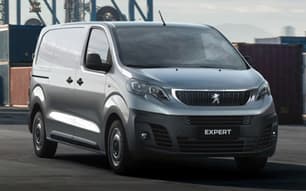
One of those is Peugeot’s Expert, which is available with a choice of wheelbases, transmissions and model grades. It currently represents just 1.3 per cent of sales in this segment, so we recently spent a week behind the wheel to see how it compares to the market leader.
The number of Chinese players in Australia’s 4x4 ute market continues to rise, with BYD, GWM and LDV recently joined by JAC Motors (Anhui Jianghuai Automobile Company Ltd) with its T9 offering.
Although unfamiliar to most Aussies, JAC has more than six decades of experience in Chinese automotive design and manufacture, starting in 1964 as a domestic truck maker before diversifying into passenger vehicles, utes and minivans. It now exports to 132 countries.
We recently assessed the new T9 from a tradie’s perspective, to see if it has the credentials needed to become a serious player in the local 4x4 ute market for budget-priced utes.
Positives are higher payload and tow ratings than the Toyota HiAce along with superior fuel economy. Negatives are inferior safety, evidence of questionable build quality and a list price more than $3000 above a HiAce equivalent. So, whether the positives outweigh the negatives to justify its higher price, only a potential buyer can decide.
The budget-priced JAC T9 Haven is a traditional one-tonne turbo-diesel ute with plenty going for it. Sure, there are things that could be improved like any ute, but those issues are more about refinement than major design flaws. And when you consider it has five-star safety and is backed by a generous warranty, capped-price servicing and a 60-strong Australian dealer network, it represents excellent value for tradies on a sub-$50K budget.
Our 'Long' example rides on a 3275mm wheelbase with 5309mm overall length, 1920mm width and 1948mm height, so compared to the HiAce it's slightly longer in wheelbase and overall length but narrower and not as tall. It’s also significantly lighter with a kerb weight that’s almost 500kg (or half a tonne) less than the Toyota; a big factor in its spirited performance and superior payload rating.
The Peugeot’s front-wheel drive underpinnings include MacPherson strut front suspension, coil spring semi-trailing arm rear suspension, rack and pinion steering and four-wheel disc brakes. Its 12.4-metre turning circle is also more than a metre larger than the HiAce.
The Pro’s work focus can be seen in its black plastic front and rear bumpers and side mouldings where most scrapes and dents occur in hard-working vans. There’s matching black on other high-wear surfaces like the door mirrors, door handles, hubcaps, rear wipers and rego plate shroud.
The cabin has seating for three with a driver’s bucket seat and separate two-passenger bench seat. Although all occupants have ample headroom, the dashboard’s protruding centre console leaves little legroom. In fact, the centre passenger must travel with both knees skewed to the left of this extension, which then encroaches on the outer passenger’s legroom. So, for a crew of three we’d recommend short trips. Our only other criticism was the lower dash panel on the passenger’s side, which kept popping loose despite repeated attempts to click it back into place.
The T9 rides on a 3110mm wheelbase with 5330mm overall length, 1983mm width (with door mirrors folded) and 1920mm height.
It adheres to a traditional body-on-frame design with double-wishbone coil-spring front suspension, leaf-spring live rear axle, electronic power steering and four-wheel disc brakes.
Off-road credentials include 27 degrees approach and 23 degrees departure angles, 210mm ground clearance and 650mm wading depth.
The Haven's styling has a chunky and purposeful appearance and its spacious interior offers a tasteful blend of tones and textures with chrome and satin chrome highlights, contrasting red stitching and numerous soft-touch surfaces including curved diamond-quilting on the seat facings and door trims.
Its relatively light 1743kg kerb weight combined with a 3100kg GVM allows for a sizeable 1357kg payload that’s almost 300kg more than the HiAce. It’s rated to tow up to 1800kg of braked trailer, which is also 300kg more than the Toyota. And with its 4900kg GCM, the Expert can legally tow its maximum trailer weight while carrying its maximum payload. These are excellent numbers for a multitude of working roles.
The cargo bay and cabin are separated by a stout steel bulkhead, which insulates the cabin from tyre noise emanating from the rear wheel housings and doubles as a cargo barrier. Its central window provides vision for the rear-view mirror and the ability to check on loads.
Lined to mid-height, the Expert’s cargo bay is accessed through large sliding doors on each side with handy 935mm-wide openings, while rear access is through glazed barn-doors which open to 180-degrees to aid forklift access. Each is equipped with its own windscreen wiper and demister.
The load floor is 2780mm long and 1628mm wide with 1258mm between the wheel housings, so it can carry up to three 1200 x 800mm Euro pallets or two 1165mm-square Aussie pallets, held in place by a total of eight floor-mounted load anchorage points. The 6.1 cubic metres of load volume splits hairs with the HiAce’s 6.2 cubic metres.
Cabin storage starts with a cavernous bin in the base of each front door that can easily hold a big 1.5-litre bottle and lots more. Each door also has two other compartments for smaller items. The dash-pad has a cup holder at each end and there’s a shrouded storage compartment in the centre. There are also two small storage nooks near the gearshift dial, plus on the passenger side is a glovebox and additional storage compartment (with 12V accessory plug inside).
The bench seat’s hinged base cushion also tilts forward to reveal two large storage bins below, with one thoughtfully lined with polystyrene foam to keep items either hot or cold.
With its 2055kg kerb weight and 3100kg GVM, our test vehicle offers a sizeable 1045kg payload rating so it’s a genuine one-tonner.
However, it’s only rated to tow up to 3200kg of braked trailer, which is 300kg less than the category benchmark. And with its 5630kg GCM (or how much it can legally carry and tow at the same time), to tow that weight would require a substantial 670kg reduction in payload to avoid exceeding the GCM.
That would also leave only 375kg of payload capacity, which could be used up by a crew of four tradies before you could throw their tools on board. Fact is, most owners would rarely (if ever) need to tow the maximum 3200kg, but should be aware of these GVM/GCM numbers to avoid overloading.
The load tub is protected by a spray-in liner and is 1520mm long, 1590mm wide and 470mm deep, with 1175mm between the wheel arches allowing just enough room for a standard Aussie pallet.
However, the front and rear load-anchorage points are positioned in the upper half of the sidewalls, which is not ideal for securing loads of lower height (anchorage points near floor level are ideal).
Even tall people will find the interior accommodating, given I’m 186cm and have ample space to not only find a comfortable driving position but also sit behind the driver’s seat (set to my position) with plenty of knee clearance.
There’s also generous rear headroom and enough floor space behind the centre console for the centre passenger to sit with their feet together, rather than either side of a transmission hump like numerous rivals. However, like all dual cab utes short of a full-size American pick-up, shoulder room is squeezy for three adults, so a limit of two would be preferable for long trips.
Front of cabin storage includes a large-bottle holder and bin in each front door plus an overhead glasses holder, single glove box and a handy drawer for small items near the driver’s right knee.
The centre console, with its two USB ports, 12-volt socket and wireless phone-charging pad, has a large-bottle and cupholder plus a small box at the rear with an internal air-con cooling vent and a padded lid that doubles as a driver’s centre elbow rest.
Rear passengers get a large-bottle holder and bin in each door plus three storage pockets on each front seat backrest. The centre seat’s backrest also folds down to reveal two cupholders while the centre console offers adjustable air vents, a pair of USB ports and a handy 220V three-pin domestic socket.
The rear seat is split 60/40 and both base cushions can swing up and be stored vertically if more internal load space is required.
Our only criticism is that the rear seatbelt buckles fall into deep recesses in the base cushions when not in use and can be difficult to fish out by hand when you need to buckle-up.
Our test vehicle is the Pro Long Auto variant. ‘Pro’ means it’s the lower-priced and more work-focused of two Expert model grades. ‘Long’ means it has the longer of two wheelbases and ‘Auto’ denotes auto transmission as opposed to the manual alternative.
Powered by the same 2.0-litre four-cylinder turbo-diesel shared by all Experts, it has a list price of $50,075 plus ORCs which is significantly more than its LWB HiAce auto equivalent at $46,760. And our example is finished in Artense Grey metallic, which is one of several premium colours available at extra cost.
The Pro Long Auto is built for work with 16-inch steel wheels and 215/65 R16C Michelin tyres plus a full-size spare. Useful workhorse features include rear parking sensors, 12-volt accessory socket, automatic headlights and wipers, front fog lights, cruise control and a multimedia system with 7.0-inch colour touchscreen and multiple connectivity including Apple CarPlay/Android Auto.
The T9 range is only available in 4x4 dual cab specification with a 2.0-litre, four-cylinder, turbo-diesel engine, eight-speed automatic transmission and part-time, dual-range 4x4.
It’s offered in two model grades, comprising the entry-level Oasis for a list price of $42,662 and the top-shelf Haven (as per our test vehicle) for $45,630, which is competitive with Chinese turbo-diesel rivals. Our example is finished in ‘Karak’ black metallic paint, which is an extra cost option ($595).
The T9 Haven offers compelling value when you consider how much standard equipment is included for well under $50K.
Like the Oasis, the Haven comes standard with 18-inch alloy wheels and 265/60R18 tyres with a full-size steel spare, tubular ‘iron’ side-steps, black metal sports bar, LED lighting with DRLs, electronic parking brake with auto-hold, heated door mirrors, leather-accented interior trim and steering wheel, power-adjustable driver’s seat, climate control, wireless phone-charging, colour 7.0-inch driver’s instrument cluster and six-speaker audio with a 10.4-inch multimedia touchscreen and Apple CarPlay/Android Auto connectivity.
The Haven adds decorative (non-load carrying) roof rails, privacy glass, ‘welcome’ puddle lamps, a 360-degree camera, front/rear parking sensors, auto-folding chrome door mirrors, heated front seats, choice of black or brown leather-accented interior, an auto-dimming rear view mirror, power-adjustable front passenger seat, rear 220V accessory socket and more. JAC also offers a range of genuine accessories.
The Expert’s punchy 2.0-litre four-cylinder diesel is one of its strengths. Turbocharged and intercooled, it has Euro 5 emissions compliance and produces 110kW at 4000rpm and 370Nm at 2000rpm. The eight-speed torque converter automatic has near-seamless shifting and offers the choice of sequential manual-shifting using steering wheel paddle-shifters.
The T9 is equipped with a Euro 5-compliant 2.0-litre, four-cylinder, turbo-diesel engine that produces 120kW of power at 3600rpm and 410Nm of torque at 1500-2500rpm.
It’s paired with a ZF-designed eight-speed torque converter automatic with the option of sequential manual-shifting. It also offers different drive modes ('Eco', 'Sport' etc) and the part-time, dual-range 4x4 system features an electronic rear diff-lock.
Peugeot claims a combined average consumption of 6.3L/100km and the dash display was close to that at 7.6L after 386km of testing, which included about one third of that distance carrying a full payload. Our own figure calculated from fuel bowser and tripmeter readings came in higher again at 8.3L/100km, which is still outstanding economy for a vehicle of this size. So, based on our numbers, you could expect an extensive driving range from its 70-litre tank of around 840km.
JAC Motors claims official average combined cycle (urban/extra-urban) consumption of 7.6L/100km but the dash readout was showing 9.8 at the completion of our 288km test, which comprised a mix of suburban and highway driving of which about one third was hauling a near-maximum payload.
However, our own numbers calculated from fuel bowser and tripmeter readings came in at a lower 8.3L/100km. So, any vehicle weighing more than two tonnes that can achieve sub-10L/100km in daily driving gets a big tick from us in terms of fuel efficiency.
Therefore, based on our consumption, the JAC T9 should achieve an extensive real-world driving range of around 900km from its 76-litre tank.
It has a comfortable driving position as the steering wheel is adjustable for height and reach, the bucket seat has a fold-down inboard armrest and there’s a prominent left footrest. Although the driver’s seat base has no rake adjustment, it’s long enough to provide good under-thigh support with enough rake to avoid sliding towards the front of it like some rivals.
The steering is responsive and nicely weighted, which combined with competent handling and braking makes the Expert feel sure-footed. The supple four-coil suspension provides a smooth unladen ride quality.
The energetic drivetrain with its 370Nm of torque has spirited acceleration and good agility in traffic. Although peak torque is at 2000rpm, the 2.0-litre turbo-diesel pulls cleanly from 1500rpm which showcases its flexibility.
The eight-speed automatic gets good results from this engine, but sequential manual-shifting using the paddle-shifters is handy when more driver input is required. The cabin is acceptably quiet at highway speeds, thanks to the cabin bulkhead and low tyre, engine and wind noise.
Our only major criticism is the absence of blind-spot monitoring and rear cross-traffic alert. In our opinion every van, particularly with solid side-walls and doors like this one, should at least have these active safety features as standard (like the HiAce which also has standard front parking sensors).
The Expert’s relatively small mirror on the passenger door is not sufficient in eliminating the large and potentially hazardous blind-spot over the driver’s left shoulder, particularly in heavy traffic and when reversing from driveways into busy streets.
The steering wheel only has height adjustment, which is notable given that most ute rivals have height and reach adjustment. Even so, the driving position offers ample headroom, a good-sized left footrest and, although lacking adjustable lumbar support, a comfortable and supportive seat.
It has good steering feel although we struggled to detect much difference between the various steering modes on offer. Unladen ride quality is firm and a bit jiggly on bumpy roads, but it’s no firmer than a HiLux and acceptable given its one-tonne-plus payload rating.
The engine is reasonably quiet and despite its relatively modest 120kW/410Nm outputs produces good acceleration when unladen, which we suspect is partly a result of its relatively light kerb weight.
However, there's a slight delay in response when using full throttle from standing starts, which feels like turbo lag. However, the response is fine when applying the accelerator with less aggression, so some refinement in this area would be beneficial.
Selecting the Sport mode in the smooth-shifting eight-speed (ZF-sourced) automatic alters the shift calibrations to provide the most eager response. It also displays helpful ‘intelligence’ by automatically downshifting to assist with engine-braking when the driver applies the brakes on descents.
To test its GVM rating we forklifted 890kg into the load tub, which with driver equalled a payload of 980kg that was just under its 1045kg limit. The rear leaf-springs compressed about 60mm yet there was still about 60mm of static bump-stop clearance remaining, which was ample to ensure no bottoming-out on our test route.
It competently hauled this payload around town and proved equally comfortable at highway speeds, where the engine required just under 2000rpm to maintain 110km/h which was right in the middle of its peak torque band.
The adaptive cruise control, which only adjusts in 5.0km/h increments, maintained the set speeds with discipline. However, on some uphill gradients (in cruise control mode) the transmission would rapidly shift between the sixth and seventh gears numerous times before deciding which was the correct ratio.
Even so, it made light work of our 13 per cent gradient, 2.0km-long set climb at 60km/h, decisively downshifting to fourth gear and 2500rpm to easily haul this load to the summit.
We were also genuinely surprised by its powerful engine-braking on the way down. In a manually-selected second gear, it never exceeded the posted 60km/h limit on overrun, with almost one tonne of payload to restrain and no use of the brake pedal.
It was the strongest engine-braking we’ve experienced from a 2.0-litre turbo-diesel on this descent (in either ute or van) which would be most useful when hauling heavy loads, particularly in hilly terrain.
Our only major gripe is the overly sensitive driver attention monitor located at the base of the driver’s windscreen pillar, which ensures you’re directly in the firing line for constant prompts to ‘please focus on driving’ even though you are doing just that.
Such technology, with constant nagging from audible and visual warnings designed to save us from ourselves, is well intentioned. However, if its questionable judgement of what represents driver inattention is so annoying that it becomes distracting, then it defeats the whole purpose.
No ANCAP rating and although it’s equipped with AEB, emergency brake assist and forward collision warning there are only front airbags for driver and passenger, which looks threadbare compared to the HiAce’s seven airbags. It also misses out on important active safety features previously mentioned.
The T9 comes with a five-star ANCAP rating (awarded in 2024) and JAC claims it's "Australia’s safest ute" based on its unmatched aggregate scores across all four ANCAP testing protocols.
So, that means benchmark features including multiple airbags, AEB (including autonomous emergency braking when reversing), lane-keeping, blind-spot monitoring, rear cross-traffic alert, tyre pressure monitoring, speed sign recognition, adaptive cruise control, trailer mode and lots more.
Junior tradies get ISOFIX child-restraint anchorages on the two outer rear seating positions plus three top tethers across the second row.
The Expert is covered by a five years/200,000km warranty. Scheduled servicing every 12 months/20,000km whichever occurs first. Five years of capped-price servicing totals $3049 or an average of $609.80 per year.
The T9 is covered by a seven-year/unlimited km warranty plus seven years' roadside assist.
Scheduled servicing is every 12 months/15,000km, whichever occurs first. Capped-price servicing, which applies to the first seven scheduled services up to seven years/105,000km, totals $3069 or an affordable average of $438 per service.