What's the difference?
The Nissan Juke was meant to herald a new era for Nissan in Australia.
It was the first in a slew of new-generation SUVs and has now been joined by the Qashqai, X-Trail, and Pathfinder as part of a new-look Nissan.
Unlike those others, though, the Juke hasn’t quite resonated with buyers. Since arriving to what Nissan probably expected to be fanfare back in 2020, the new Juke has since sunk to the bottom of its compact SUV segment, outselling only a handful of other models.
So, what went wrong? Is the quirky styling of the Juke too much? Are there too many appealing choices in the compact SUV space? Alternatively, could the Juke be an underrated gem worth checking out?
I find myself in an upper mid-spec ST-L to find out.
It was, perhaps, a matter of time before BYD joined the seven-seat SUV brigade. In fact, the real surprise is that it has taken the Chinese brand as long as it has to begin mining the rich vein of Aussie car buyers looking for a full-sized SUV with the ability to seat a bigger family across three rows. But here it is, finally, anyway, the Sealion 8.
Interestingly, BYD hasn’t started its quest for seven-seat dominance by offering a traditional hybrid driveline. Instead, it’s gone straight for the throat with a pair of plug-in hybrid drivelines, both offering their own distinct take on the concept.
The first is a front-drive variant of the Sealion 8. With a single electric motor and a useful range, it stands as the sensible choice. But for those who want more performance, there’s the almost comically-fast all-wheel drive version with a pair of electric motors and monstrous acceleration. Interestingly, there doesn’t seem to be much in the middle, but the brand’s typically sharp pricing means there’s not a huge price-gap to negotiate in any case.
Of course, this is a pretty crowded marketplace right now, and standing out is the key to success. Whether that’s through value-for-money, performance, practicality or just shock value is open to debate, but it remains that BYD is launching the Sealion 8 into seriously competitive seas.
The Juke is a fun little car. It looks cool, it packs most of the important features and safety equipment, but while it can be fun to drive, it’s also a little clunky around town.
It’s so frustrating, because there is a great car in there somewhere, and it would take only small tweaks and enhancements to bring it out.
There’s quite a bit to like here. There’s plenty of equipment, and lots of choice in price, trim level and mechanical complexity.
The driving dynamics are fine if you’re not looking for anything sporty although the performance offered by the dual-motor variants must be considered excessive, even if it’s pretty exciting the first time.
Perhaps what’s missing from the Sealion 8 experience is anything that stamps the car as something special within its hotly-contested market segment. Which is another way of saying it offers up the same limitations, most notably in the third row accommodation and access.
You only need to drive a one-box people mover and utilise the rearmost seat, to understand that the two-box SUV, while a pretty marketable thing, is compromised once the passenger count exceeds five. Nothing new there, but nothing new in the BYD, either, to change that narrative.
At which point, the front-wheel drive variant emerges as the most pragmatic choice and probably the one that meets all the important family tasks headed its way for the smallest outlay.
Note: CarsGuide attended this event as a guest of the manufacturer, with meals provided.
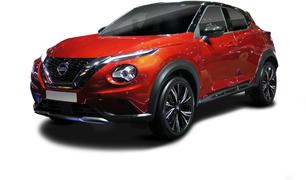
Urban style is clearly what the Juke is about. It’s always been about this, but the original incarnation, while unusual, was a bit bulbous and awkward. The current version is a razor-sharp re-interpretation of the original.
Ugly duckling no more, the Juke blends the elements of Nissan’s current design language with its own unique take, in a clever way.
The roofline and bulbous face of the original car, complete with its ‘eye’ headlights are all maintained, but this time they look more contemporary with a splash of chrome and gunmetal plastic in the face, offset by gloss blacks running down the doorline.
The new light fittings look great and the curviness is also gently off-set with some sharp angles. The massive 19-inch wheels finished in a two-tone gloss black and aluminium brush keep this car looking like a concept come to life. Just don’t crash them into the curb. It would be very easy to.
The cool elements continue inside, with rotary air vents, a blend of textures, including a gloss grey for the vent claddings, with white stitching for the wheel, seat, and into the door cards, too.
There are touches of chrome about the place, and an ambient red LED light surrounding the shifter, which sits on its own little pedestal thing.
It’s quirky and punches above its weight when it comes to soft trims in the doors. Like most higher-grade Nissans the seats are pretty comfy, too, clad in a hard-wearing synthetic leather material.
But it won’t be for everyone, and it’s not without its downsides. The abundance of grey plastic down the centre console is a bit cheap, and the tech offering doesn’t match the youthful style.
The centre screen is adequate, but compared to many rivals it’s a bit small and dull, and the Juke is still missing a digital overhaul for its instrument cluster.
The black headlining, usually reserved for sportier cars, makes the cabin feel smaller than it is.
BYD has done its best to give the Sealion 8 its own character and vibe. In fact, it’s a pretty smart looking thing - although still very much a two-box wagon concept - and that’s no given when you consider how much some big SUVs can start to look like large blobs of nothing when you look closely.
There’s the usual Darth Vader stuff at the front, but in profile, the diagonal vent across the front door makes a bit of a statement. The 'plaited' motif of the tail-lights might be stretching things a bit, though.
Inside, the modern board-room feel is invoked by the angular lines and high-tech look and feel of the large info-screens. The panoramic sunroof of the Premium grade also helps brighten up an otherwise pretty dark space.
The Juke is a small SUV in the true sense of the word, sitting below the Qashqai which is more like a mid-sizer these days in terms of dimensions.
However, it’s quite cleverly packaged on the inside and is more useful than it first appears.
The front seats, for example, offer heaps of headroom and a surprising amount of width, and while the seats are manual, they’re pretty adjustable. I was able to find a great seating position.
There are big pockets in the doors with an integrated bottle holder suitable for even the largest bottles, although the centre console area is a bit less versatile, choosing its funky design over additional storage.
It features two good bottle holders, but a tiny armrest box and a shallow tray with one 12V socket and a USB-A outlet, as well as an auxiliary audio input under the climate controls.
On the topic of climate controls, I love the fact the Juke maintains a dedicated ventilation panel complete with buttons and dials for all the core functions. No touchscreen nonsense here.
The media screen, as mentioned, is a tad small, and falls victim to glare easily.
The stock Nissan software is a massive upgrade on the brand’s previous-generation products, but while it’s functional it’s far from the prettiest or the fastest on the market.
The back seat offers more space than you might assume, but it’s not as well thought-out as the front of the cabin. At 182cm tall I fit behind my own driving position with just enough space for my knees and just enough headroom.
There are decent bottle holders in the doors, and a further two small ones in the drop-down armrest. The backs of the front seats are clad in that synthetic leather material, which is nice, and have soft pockets, too.
The back of the front centre console offers just a single USB-A outlet and a small cubby. There are no adjustable air vents for rear passengers. It also feels a little claustrophobic back there thanks to the black trim on everything and smaller windows.
Boot capacity for the Juke is impressive for an SUV in this class, with 422 litres on offer, which is close to the volume we’d expect from something a size-bracket up, and 1305L with the second row folded down. There is a space-saver spare under the boot floor.
BYD has made sure all three rows of the Sealion 8 are fit for purpose while attempting to make the rearmost row (traditionally the trickiest to get right) less of a downmarket place to be. With that in mind, both rear rows get air vents and climate-control adjustment for that part of the car. There's also a pair of USB-C charge ports in the second row and a single USB-C and USB-A port in the third row. The third row also has cupholders bult into the wheel arch on each side.
With the third row in place, there’s a decent amount of luggage space (270 litres) largely thanks to the Sealion’s five-metre overall length. There’s no spare tyre, but a puncture repair kit lives under the floor (as does the removable cargo blind) and the rearmost luggage space also incorporates a 12-volt socket and luggage hooks.
A pair of pull-tabs drop the headrests and then the entire split third row in a single movement, at which point you suddenly have a five-seater with a huge, 960 litres of luggage space. And if you need to cart gear over people, the second row also folds flat to open up 1960 litres of space.
Up front, the feeling of spaciousness is amplified due to the low scuttle height and what the aviation industry calls the glass cockpit (no analogue dials or gauges at all). The 15.6-inch central info-screen runs the usual apps and control displays but, thankfully, the climate control touch-controls are tethered to the bottom of the screen, so they’re always visible regardless of what else is going on.
The 10.2-inch driver’s display adds a head-up function in Premium trim and displays the usual array of information required to operate the vehicle. But even better is the steering wheel which features a thick, well-padded rim that looks and feels pretty luxe. It also houses the usual buttons for stereo, phone and cruise-control functions.
A really nice touch is the addition of an extra set of tilt controls on the inside of the passenger’s front seat, allowing the driver to control that seat to allow people in or out without leaving their own seat. Nice one.
It is, of course, the centre row of seats that will make or break a car like this for many families. Even though many clans will not use the rearmost seat much of the time, the central row will get a huge workout. So it’s nice to see that leg, foot and headroom are all sufficient for even growing teenagers. Again, the car’s overall length appears to be the key, but it’s also worth noting the centre row seat is comfy and supportive. The outboard positions in the second row also feature heating and ventilation functions.
The third row, however, follows SUV tradition by being strictly for smaller kids. Access past those huge wheel arches is tight, and once you’re in, there’s a combination of dark trim and tiny windows to limit joy.
While it won’t matter to many buyers, the front-drive Sealion 8 is rated to tow 1800kg with a braked trailer, and up to two tonnes in the all-wheel drive version. But there’s no spare tyre fitted, and roadside flats need to be addressed by the included tyre repair kit.
The Juke range kicks off from just $28,390 which gets you into a base ST and reaches to $36,890 for the top-spec Ti.
We’re driving the $34,440 (before on-road costs) ST-L which is the upper mid-grade car.
It scores concept-style 19-inch alloy wheels, synthetic leather interior trim, an 8.0-inch multimedia touchscreen with Apple CarPlay and Android Auto connectivity, a 7.0-inch digital screen between the analog dials, a surround camera system, single-zone climate, keyless entry and push-start ignition, and LED headlights.
The quite attractive ‘Magnetic Blue’ paint our car wears is a $700 option. For an additional $1133 you can also step up to the ST-L+ grade which adds alternate two-tone seat trim, chrome and black highlights and a 10-speaker Bose audio system.
While this ST-L grade gets the lion’s share of Juke equipment without the price-hike to the Ti (and is therefore the pick of the range) there are some notable items missing at this price.
For example, there’s no wireless phone charging, no head-up display, no fully digital instrument cluster, and no electrical adjustment for the seats. The 8.0-inch multimedia screen is starting to look a bit dated, too.
Still, it looks trendy and those massive wheels are well above the standard for a car at this size or price. So, if you’re going for style over equipment there is a choice to be made here.
Nissan also hasn’t cheaped out on safety equipment, with most active stuff coming standard, even on the base ST. More on this later.
Pricing is about line-ball with its most direct competitors. It’s a tad cheaper than some like the outgoing similarly-styled Toyota C-HR (Koba 2WD - $35,695), or slightly more expensive than others like the current equivalent Ford Puma (ST-Line - $33,190) or Mazda CX-3 (Touring SP - $34,300) although it is also ever so slightly larger than those last two by width, height, and wheelbase.
BYD will offer the Sealion 8 in three trim levels, starting with the front-drive Dynamic at $56,990, before on-road costs, then moving to a pair of all-wheel-drive variants, the first with the same Dynamic trim level at $63,990 and the range-topping Premium AWD at $70,990.
The Dynamic trim level on both the front-wheel drive and the all-wheel drive variant gets you three-zone climate-control, air vents in both rear rows, full connectivity including wireless Apple CarPlay and Android Auto. There’s also wireless phone charging. The Dynamic specification also takes on 20-inch alloy wheels and there’s full LED lighting as standard.
Pony up for the Premium trim and you make the switch to 21-inch alloys, a 21-speaker sound system and even a massage function for the first two rows of seats. The Premium also includes a head-up display for the driver.
Not as easy to quantify is the level of plush inside the cabin. There are lots of soft-touch surfaces and the whole interior design looks pretty fresh and modern and well put together. But more than that, there’s a bit of design flair that makes the BYD feel perhaps a bit more expensive than it really is. That’s not an easy thing to pull off. But it seems to work here, even in the entry-level Dynamic trim.
Against the competition, the Sealion 8 can't match the similarly specified Chery Tiggo 8 on price, even though on performance and EV range, the Tiggo 8 and the entry-level Sealion 8 are quite similar. The more expensive Sealion 8 Premium, meanwhile, lines up pretty neatly on price with the Kia Sorento S PHEV. But that vehicle can't get close to the epic straight-line performance of the BYD.
In the Juke’s messy engine bay lies a 1.0-litre, three-cylinder, turbo-petrol engine which sends 84kW/180Nm to the front wheels.
Nissan has its own 'HR10DET' engine code for this unit but it’s actually a Renault 'H5Dt' engine as evidenced by Renault logos all over the place.
Power is communicated by a seven-speed dual-clutch automatic which has been a source of strife for this car since it arrived. This very European engine and transmission combination is one which the Juke shares with its Renault Captur cousin.
I can’t believe I’m actually saying this, but I would prefer a continuously variable transmission (CVT) which Nissan uses elsewhere in its range. It would solve maybe the main issue with this car, which we’ll explore up next in the driving section of this review
BYD has managed to keep a lid on the price of the entry-level version of the Sealion 8, by specifying it with front-wheel drive rather than the all-wheel drive of the other two variants. It still gets the same driveline beyond the lack of a driven rear axle, although battery capacity is the other difference.
As such, you’re looking at a 1.5-litre petrol engine (kind of the default powerplant for Chinese SUVs right now) with a turbocharger. With the 19kWh battery chiming in to power the electric motor, the driveline can achieve outputs of 205kW and 315Nm.
In the case of the AWD variants, the larger 35.6kWh battery and extra electric motor ups the potential outputs to 359kW and 675Nm which is a huge jump any way you look at it and gives the Sealion 8 a huge bandwidth when it comes to matching buyer performance aspirations.
All the variants have the potential for a claimed electric-only range of greater than 100km if owners use the plug-in facility to charge either at home or at work. For the AWD variants, the larger battery stretches the EV range to a claimed 152km. On longer journeys or whenever the battery has reached about 25 per cent capacity, the Sealion 8 acts just as any other hybrid with regenerative braking and electric assistance to aid performance.
In suspension terms, the BYD is pretty conventional but if you do pay the extra for the Premium variant, you’ll gain adaptive dampers.
One of the reasons this car comes equipped with a dual-clutch automatic is to chase fuel efficiency as well as emissions output. On paper DCT autos don’t suffer the inherent losses of a traditional torque converter transmission.
The official combined cycle fuel consumption figure is 5.8L/100km. My week of driving, weighted slightly more towards freeway conditions, produced a marginally higher average of 6.8L/100km. It’s not the claim, but it’s pretty good.
This little engine requires mid-shelf 95RON unleaded fuel, and the Juke has a 46-litre fuel tank, suggesting a driving range of 793km using the official fuel consumption number.
BYD claims a range of more than 1000km for both variants of the Sealion 8, provided you start with a fully charged battery and a full 60-litre fuel tank.
The BYD can also make use of commercial fast-chargers and, when using the maximum 40kW on the FWD version and the 74kW possible for the AWD variant, the charging times from 30 to 80 per cent are both under 20 minutes. The Sealion 8 can also charge at 11kW on an AC socket and the vehicle also offers V2L (Vehicle to Load) capability, meaning it can power on-site work tools, camping gear or even your house at night.
Provided the EV battery is kept at 25 per cent capacity or above, BYD claims a 1.0-litre per 100km fuel consumption figure for the car based on the laboratory test. In the real world, the results will vary enormously depending on where you drive and how the car is used. Deplete the battery and continue to drive at highway speeds, and your actual fuel consumption might easily increase to many times that 1.0-litre claimed figure.
The Juke can be fun to drive, and I wanted to like it more, but the transmission its peppy little engine is paired with is frustrating.
Outputs of 84kW/180Nm doesn’t sound like a lot, but power isn’t the problem. The little engine has a fun turbo-surge which pairs with the Juke's light frame to make for a car which is quite athletic when you push it.
The issue is a mountain of turbo-lag conspires with the clunky dual-clutch automatic to make it far too sluggish off the line.
There’s a full second (or two, at times) to wait for any power to arrive, which simply isn’t good enough at T-junctions and roundabouts, the kind of situations a little urban SUV like this will constantly be encountering.
Nissan says the transmission software was even updated after the Juke’s launch, but it’s still not where it should be.
It has good traits, too. When you’re out on the open road, it has quick, snappy and well-defined shifts, and the engine is much better when it’s being properly pushed, too.
It has a gruff, entertaining tone, and the Juke’s light frame, firm ride, and comparatively heavy steering make it a joy to throw into some corners.
The long wheelbase for such a small SUV, paired with a decent set of tyres, also keeps it confident when its predecessor was a little clumsy.
Again, though, the reasonably hard ride, not helped by the very large wheels, isn't its best trait in an urban environment. The Juke is by no means uncomfortable, it just seems like the priorities for this little SUV aren’t in the right place.
I’ve said this before but there’s a great car in here somewhere. The Juke is fun to drive in the right environment, it’s just this environment is not where most prospective buyers will primarily be looking to use it.
What could fix this issue? A different transmission perhaps. Better yet, an e-Power hybrid powertrain.
The first thing you’re going to do in a Sealion 8 is wonder where the gearshift is. It’s a column-shift, but it's not only located where a traditional indicator stalk would be, it looks very much like one, too.
This promises two things. One, you’ll spend a few seconds finding it and two, you’ll try to turn the indicators on with it at least once every drive. (The real indicators are on the other side of the steering column.)
Another note to those test driving a Sealion 8. Sample the front-drive version first. (I’ll get to why in a minute.) When you do, you’ll soon figure out this is a driveline that prioritises electric running. That is, the petrol motor barely ever actually drives the wheels (only at full throttle and higher speeds). Any other time, if the petrol engine is running, it’s to charge the battery that keeps the electric motor purring away. This is how efficiency is defined by BYD.
You’ll also find that the Sealion’s acceleration is purposeful in that electric-motor way, but hardly startling. And when you do smash the throttle and force the petrol engine to drive the axle, you’ll notice that this takes a fair time to play out, and that when everything is grunting as hard as possible, the petrol engine is quite noisy and even a little harsh sounding. Use the driveline sensibly, though, and it’s all smooth and quiet, even if that then means you can hear a little suspension noise creeping into the cabin.
That done, you’re now free to drive the AWD variant. Why wait? Because this thing is seriously off the leash. Bear in mind that 359kW of power is getting on for the thick end of 500 horsepower in the old money, so even though the Sealion 8 is a hefty critter at about 2.5 tonnes, all that power and torque will get it from rest in under five seconds, or thereabouts. The relevance of this to family-car technology is hugely debatable, but it’s one heck of a party trick the first time you try it.
The huge torque also magnifies the Sealion 8’s natural tendency to lift its inside front wheel when accelerating out of a turn. A small tyre squeak can sometimes be heard before the traction control gathers it all together, but even the single-motor variant displays the same trait.
In steering and suspension terms, it’s probably fair to say the Sealion 8 doesn’t unlock any new depths of talent. The ride is pretty comfy but at the expense of body control and the steering points the wheels but doesn’t convey much else to the driver.
That said, the fact everything seems to be tuned to the same frequency means it all works okay. You don’t have too-fast steering fighting the tyres or too firm suspension upsetting the interior calm. Use it as a family would, and it’s 100 per cent fit for purpose.
The Juke's standard active safety features include freeway-speed auto emergency braking, lane departure warning with lane keep assist, blind-spot monitoring with rear cross-traffic alert, adaptive cruise control and traffic sign recognition.
Last time I reviewed this car I complained about the way it vibrates the steering wheel when the lane keep function decides you’re going out of your lane. But having since experienced so many more invasive lane keep systems, this one seems comparatively low-key.
Elsewhere, the Juke gets the standard array of six airbags (dual front, side, and curtain) and wears a maximum five-star ANCAP safety rating to the 2019 standards.
Any family car needs to be safe, so BYD has thrown the kitchen sink at the Sealion 8 in terms of its active and passive safety gear. That starts with nine air-bags including full-length curtain side bags and a centre-front airbag to help prevent head clashes.
There’s also a 360-degree camera on all grades, front and rear parking sensors, and the full line-up of current driver-assistance functions including autonomous emergency braking, lane-keeping assistant, rear-cross-traffic alert and assistance, blind-spot monitoring, driver attention monitoring and a tyre-pressure monitoring system.
To that lot, you can add adaptive cruise-control, traffic-sign recognition, adaptive headlights, front and rear collision warning, anti roll-over systems and hill-hold functions. It’s also worth mentioning that the overhead camera system is very, very good with a clear, crisp display and no processing delay.
The driver-attention monitoring seems to behave itself better than some of the over-active systems other makers specify, but the lane-keeping assistance function is still far form perfect. To be fair, it is less aggressive than some such systems and the intervention is more subtle, but the recued aggression seems to be packaged with lower sensitivity. As in, the cameras seem to sometimes miss a critical white line, particularly if its faded or less than freshly painted.
There are also ISOFIX child restraint tether points in both the second and third rows, as well as seat-belt warnings for every position and an electronic child-safety switch for the doors.
The Sealion 8 is yet to be crash tested locally, so no ANCAP star rating is available.
Nissan offers the Juke with a five-year, unlimited km warranty, with five-years of roadside assist included.
It requires servicing every 12 months or 20,000km and the cost is subject to a capped price servicing program for the first six years.
This averages $651.33 annually, which is not cheap for a small SUV in this class.
However, there is also the option of a pre-paid five-year service plan which brings the annual cost over five years down to a more reasonable $429.60.
But, notably, it does not include the pricy $1521 sixth-year interval. It’s worth asking yourself how long you’ll own the car for before splurging on it.
Servicing any hybrid can be a bit more expensive thanks to the presence of two propulsion forms.
In any case, the Sealion 8 requires routine servicing every 12 months or 20,000km.
Warranty is BYD’s normal six-year/150,000km cover, although there’s also eight years and 160,000km of cover for the EV battery.
BYD also claims its 'Blade' battery technology is among the safest in the business, and says the design resists damage (and, therefore, the risk of fire) better than the competition.