What's the difference?
Nissan was one of the first to launch a mainstream electric vehicle (EV) in Australia with the cute Leaf hatchback back in 2010.
While two generations of the Leaf have come and gone, Nissan still hasn’t launched another EV offering in Australia. That’s now finally changed.
The Japanese carmaker has just launched the Ariya mid-size electric SUV in Australia roughly five years after it was first revealed. It’s been available in other markets since 2022.
The EV market has gained momentum in Australia and there are a growing number of heavy-hitting rivals out there now for the Ariya to go up against.
Is it too little, too late for Nissan? Read along to find out.
We appear to have reached a tipping point in the acceptance of electric vehicles in this country. The early adopters have made their switch but the technology has become more widely accepted, so now carmakers need to woo buyers with conventional means.
That means the tried and tested methods for making any car more appealing to a customer - lower cost and more equipment.
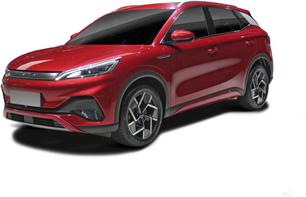
No car demonstrates this better than the BYD Atto 3, which is one of the most popular electric vehicles in Australia. But after an initial surge of buyers happy for a more affordable EV, BYD needs to find fresh ways to attract new customers.
So, for this updated 2024 Atto 3, BYD has made it cheaper and added some key new equipment, while retaining its previous strengths in terms of value and technology.
I can see how the Nissan Ariya would have changed the game if it launched in Australia back in 2022.
While it is a solid car that’s quiet, comfort-oriented and tech-heavy, there’s now little separating it from the competition apart from the fact it has a Nissan badge and a cracking aftersales package. This is disappointing as we’ve waited a long time for this car to arrive.
Note: CarsGuide attended this event as a guest of the manufacturer, with accomodation meals provided.
BYD hasn’t made dramatic changes to the Atto 3 for 2024, but has it done enough to lure in more buyers?
The additional equipment, namely the larger infotainment screen and new tyres, will certainly help make the Atto 3 more appealing. And the technology behind EVs is more understood by the average motorists, so the barriers to making the switch to electrification are dropping.
But the single biggest factor is likely to be the price. At a time when inflation (and other reasons) is driving the cost of new vehicles up, having your updated model go in the wrong direction will only help make potential buyers take notice.
Especially when you consider Toyota’s closest rival to the Atto 3, the bZ4X, starts at $66,000, while the Tesla Model Y is priced from $55,900, making both significantly more expensive propositions. Heck, the cheapest Toyota RAV4 hybrid model starts at $42,260, only marginally cheaper than the Atto 3 Standard Range.
So, if BYD can make its value argument strongly it will help lure more new buyers to take the plunge into the world of EVs.
Back when the Ariya was revealed, it started a new design language for Nissan, but five years later almost every model in the Japanese carmaker’s line-up has taken some element of this car’s design.
What this means is while the Ariya was unique, it now doesn’t stand out from the crowd as much as it once did. This doesn’t help given there are now so many competitors out there.
However, in person the exterior of this car is stunning. I’m particularly a fan of the two-tone copper paint available on the Advance+ and Evolve e-4orce.
At the front there is a slim and striking LED lighting set-up that stands out, plus the gloss black faux grille is an interesting take on the brand’s ‘V-Motion’ grille. It has illuminated sections that are only noticeable in dark conditions.
Around the side the Ariya appears to be a lot more coupe-like than you’d expect. There’s a body line that runs from the A-pillar all the way to the tailgate. It gives the car a floating roof effect, which is a current design trend.
Other notable design elements on the side include the charge flap on the passenger side front quarter panel, aero covers for the alloy wheels, and an extensive use of gloss black around the wheel arches and door sills. It’ll be interesting to see how the latter hold up in the long run.
At the back there isn’t a whole heap going on beyond the large rear spoiler, which is intricately designed and there to improve aerodynamics.
There’s also a full-width LED light bar for the tail-lights, which is sandwiched by a Nissan wordmark badge. These lighting set-ups are so common now that they’re a little cliche.
Inside, the Ariya is befitting of its flagship status for the Nissan brand. In the top-spec Evolve trim with the blue Nappa leather upholstery and suede dash highlights. I don’t think it pairs well with every exterior paint colour, but it still looks great.
This also isn’t to belittle the lesser trims. While they have darker interiors, this is likely more preferable for many buyers as they’re less out there. The materials, at least in the Advance+, are still at a high quality.
The steering wheel is leather-wrapped and feels buttery soft in the hand. While I loathe the fact there are gloss-black covers over the physical buttons on the steering wheel, it’s still a step in the right direction.
Ahead of the driver are dual 12.3-inch screens across the line-up. It took me a while to notice there’s a wave between the screens as it’s covered by the steering wheel rim. The touchscreen is incrementally closer so you can reach it more easily.
Another major element of the Ariya’s interior design is the centre console. In the Advance+ and Evolve it has electric sliding adjustment, allowing you to customise the position to your desire.
The use of the faux wood trim looks premium, especially because you don’t expect there to be haptic buttons on it. This helps for a clean, button-less look.
In a couple of words, not really. At least when it comes to the exterior design.
In fact, the biggest design change for 2024 is actually the colour of our test car, the new Cosmos Black. Apart from that, the rest of the Atto 3 is unchanged visually, which is becoming something of a trademark for EVs, at least from newer brands like BYD and Tesla.
Instead of worrying about adding a new grille, different headlights or an alternative alloy wheel design, brands like BYD are focusing on updating batteries, the technology and other software enhancements to keep their models fresh.
The only exterior change is at the rear, where the previous 'Build Your Dreams' lettering has been replaced by a simple 'BYD' badge.
As for the interior design, kudos to BYD for not following Tesla down the cost-saving-disguised-as-minimalist-design path, but personally the design aesthetic and the variety of colours and trims used aren’t to my taste, but I can see why others may love it. The ‘guitar string’ door pockets are likely a particularly polarsing design choice.
BYD has added a new interior option, with a black/blue trim for the examples finished with grey and black exteriors, while white and blue painted cars get a blue/grey interior.
This car is built on a dedicated electric architecture which theoretically gives it many benefits as there’s no space needed for a combustion engine, nor its transmission or driveline components.
While the Ariya benefits from this by pushing the wheels to the extremities, it underwhelms in others. More on this in a bit.
As standard the driver’s seat is mounted very high. I’m 182cm tall and in the seat's lowest position I was only a few centimetres off my hair tickling the roofliner. While this is nice from a forward visibility standpoint, I instinctively want to sit lower in the cabin.
Despite this, the front seats are deliciously comfortable. They offer plenty of electric adjustability, allowing you to find your desired seating position. Depending on the trim they’re heated and ventilated, which is a treat in fickle Melbourne weather.
As noted before, the steering wheel features physical buttons, which is a major plus. They’re clearly labelled and are easy to understand.
Ahead of the driver the digital instrument cluster is classic Nissan. There are a range of informative pages to cycle through, as well as two layouts to choose from. All of them look high-res.
Moving across, the touchscreen multimedia system is also a classic Nissan unit. Almost every Nissan model has a variation of this touchscreen now, which kind of makes the Ariya feel less special.
Thankfully however, the user interface is clear and easy to understand. It’s hard to get lost and even if you do, there are shortcut buttons on the side of the screen.
As standard there’s wireless Apple CarPlay, which is great if you have an iPhone and almost expected nowadays, however Android Auto is only offered in wired form only. This is disappointing from a high-tech flagship.
I appreciate there are haptic buttons for the climate control under the touchscreen. It’s much better than having these functions built into the touchscreen. However, the seat heating/ventilation and the steering wheel heating is in the touchscreen, but you can program it to an automatic mode so it’ll turn on and off with the climate control.
The haptic buttons extend onto the centre console which electrically slides in the Advance+ and Evolve. These ones are for the drive mode and ePedal selection.
Speaking of the centre console, it’s a big bulky unit but it barely offers any storage. Under the centre console lid there’s a wireless charger and a miniscule amount of storage. There’s also a tiny phone-sized slot at the front of the centre console, plus a 12V socket and some USB ports.
It’s disappointing Nissan hasn’t taken better advantage of the flat floor accommodated by the dedicated electric architecture. There’s open space between the driver and passenger, which makes it feel like you’re in dedicated recliners.
As a result of the paltry centre console storage, there are two gloveboxes. One on the passenger side and another in the centre. Both look like they’re sizeable, but that’s just the lid as the actual storage space is a fraction of this.
Moving to the second row I have a decent amount of legroom behind my own driving position. Toe room is negligible however and headroom suffers from the panoramic glass sunroof.
Despite this the second-row bench is still comfortable. It’s laid back, though there’s not much lateral support. This means in the bends you’ll be thrown into the door or into the centre of the car.
There continues to be a flat floor in the second row, plus a minimal hump in the rear bench means you could technically go three-up if you wanted. The limitation at this point is shoulder space.
In terms of amenities there are centre console-mounted air vents, USB-C ports, heated outboard seats (depending on the trim) and a fold-down armrest with cupholders. It’s fairly standard.
From the Advance trim and up there’s a standard hands-free power tailgate. This is handy if you’ve got your hands full.
For the boot space itself, it’s fine but not standout. Two-wheel-drive variants are notably better with 466L of boot space with the rear seats upright. The Evolve e-4orce only has 408L due to the rear electric motor.
As expected there’s no spare tyre at all across the line-up. Instead there’s a tyre repair kit under the boot floor.
No Ariya trim has a front boot.
The Atto 3 remains classified as a ‘Medium SUV’ but blurs the line between mid-size and small in terms of dimensions, especially inside. It’s not in the same size game as the Toyota RAV4 or Mitsubishi Outlander, but is close in size to the likes of the Honda ZR-V and Mazda CX-5.
While there’s a few key practical storage spaces, there aren’t as many as some newer rivals, which does suggest the Atto 3 design is starting to date or just wasn’t well thought-out enough in the first place; such as putting all the switchgear in the centre console rather than on the dashboard.
This was probably done, at least in part, to accommodate the rotating touchscreen, which seems like a poor design and practicality choice to me. Especially the new one, which at 15.8-inches when rotated to the portrait mode it starts to interfere with your vision and the layout is more user-friendly in landscape mode - both when using the native multimedia system or your smartphone connection.
Space is respectable in the back seats, and there’s both a USB-A and USB-C port for charging devices. While out the back the boot measures 440 litres, which is a respectable amount of space for an SUV this size, but there’s only a tyre repair kit instead of a spare wheel.
The Nissan Ariya is launching in Australia with four trim levels – Engage, Advance, Advance+ and Evolve e-4orce.
Pricing starts from $55,840 before on-roads and extends to $71,840 before on-roads. This is more than top-selling rivals like the BYD Sealion 7 and Tesla Model Y. It’s more on par with the likes of the Kia EV5 and Zeekr 7X.
With the Ariya Engage at $55,840 before on-roads, you get 19-inch alloy wheels, LED headlights, dual 12.3-inch screens, wireless Apple CarPlay and wired Android Auto, a wireless phone charger, a six-speaker sound system, dual-zone climate control and charcoal fabric upholstery.
Stepping up to the Advance at $59,840 before on-roads brings a hands-free power tailgate, a 10-speaker Bose sound system, heated front seats and steering wheel, as well as black cloth and synthetic leather upholstery.
The Advance+ at $63,840 before on-roads gains a larger 87kWh battery pack as standard, plus a panoramic glass sunroof, a power sliding centre console, ventilated front seats, heated rear outboard seats, as well as black synthetic leather upholstery with suede inserts.
Lastly, the flagship Evolve e-4orce at $71,840 before on-roads gets an all-wheel drive set-up, 20-inch alloy wheels, adaptive high beams, a digital rear-view mirror, electric steering column adjustment and blue Nappa leather upholstery.
This is a generous spread of variants and while the pricing and equipment list doesn’t stand out from the crowd, none of the trims miss out on the basics.
As we just mentioned, price has been a critical tool for carmakers looking to keep demand for EVs rolling along as the early adopters fade, and BYD is not immune from this. Earlier in 2024 the Atto 3 Extended Range, the model we’re testing here, started at $50,011 before on-road costs. Then in April 2024, BYD announced a drive-away deal for $45,990 for pre-registered demos.
Now this updated model is priced from $47,499 (plus on-road costs), which is a jump up from the sale price, but is more than $3500 cheaper than the Atto 3 was at the start of 2024. Meanwhile, the Standard model is priced from $44,990 (plus on-road costs), which is also a saving of more than $3000 on the previous model.
The key difference between the Standard and Extended Range models are the batteries, so the specification is similar. Both variants are equipped with LED headlights, power tailgate, synthetic leather upholstery, power-adjustable front seats, 5.0-inch digital instrument panel and in-built satellite navigation.
One of the big ticket item changes for 2024 is the upgraded 15.8-inch multimedia touchscreen, which comes with BYD’s signature trick - rotating between portrait and landscape modes. This is upsized from 12.8-inch in the old model. Wireless Apple CarPlay and Android Auto are now standard too.
There are only two electric powertrain configurations available in Australia.
The Ariya Engage and Advance are powered by a single, front-mounted electric motor that produces 160kW of power and 300Nm of torque. The Advance+ bumps the power figure up to 178kW to compensate for the larger battery pack.
The flagship Evolve e-4orce is the only trim with all-wheel drive. It has a dual-motor set-up with total system outputs of 290kW and 600Nm. This trim is claimed to be able to do the 0-100km/h sprint in 5.6 seconds.
As with the design there isn’t much to say about what’s powering the Atto 3 because it’s the same as the 2023 model. Both the Standard and Extended Range use the same front-mounted electric motor, which makes 150kW/310Nm and drives the front wheels through a single speed transmission.
With 0-100km/h times of 7.9 seconds and 7.3 seconds respectively for the Standard and Extended Range, the Atto 3 won’t shove you back in your seat, but it has adequate performance for a mid-size SUV.
There are also two battery pack options in Australia.
The Ariya Engage and Advance come with a 63kWh lithium-ion battery with a WLTP claimed range of 385km. This isn’t much for a car that’s around $60,000.
The Advance+ and Evolve e-4orce, on the other hand, get a larger 87kWh lithium-ion battery. WLTP claimed range is 504km and 487km, respectively, which is much more like it for a vehicle of this size.
All variants have a Type 2 CCS combination charge port on the passenger side front quarter panel with a maximum DC charge rate of 130kW. At this rate this will see the battery charge from 10 to 80 per cent in 35 minutes.
AC charging is offered at rates up to 7.4kW on the Engage, Advance and Advance+ trims. 22kW AC charging is optional on the Advance+ and standard on the Evolve e-4orce.
However, thanks to a launch offer for the first 400 vehicles, all Ariyas are getting standard 22kW AC charging, even the ones that typically don’t get it at all. This is a cool offer and an interesting incentive if you are on the fence on actually buying one.
There’s also a free 22kW AC home charger provided as an additional launch offer. You’ll need to install this unit at your own expense.
For energy consumption it depends on the trim level. It ranges between 18.4 and 20.8kWh/100km. During our testing of the Advance+ we saw an average of 14.2kWh and the Evolve e-4orce we saw an average of 18.0kWh/100km. This would give a theoretical range of 613km and 483km, respectively.
It’s worth noting these average energy consumption figures were according to the trip computer and the driving was on higher speed roads on the outskirts of Melbourne.
The Standard Range has a rated driving range of 345km (WLTP) from a 49.92kWh ‘Blade’ lithium-iron phosphate (LFP) battery while the Extended Range’s bigger 60.48kWh unit increases that to 420km.
Charging is capped at 70kW (DC) for the Standard and 80kW (DC) for the Extended.
One of the major hurdles for EV brands is convincing people that they won’t run out of charge every day. At 420km the Extended Range Atto 3 will get most people through multiple days of commuting, so even with public charging you shouldn’t worry about range anxiety.
Those drivers with commutes longer than 420km per day should be looking at something other than an electric car (and probably a job closer to home).
We only got to experience Ariya trim levels with the larger 87kWh battery pack at this launch. It’d be interesting to see how trims with the smaller battery pack fare from a comparative standpoint as they’re lighter but offer less range.
With the Ariya Advance+, it has a single electric motor that offers a decent amount of power and torque. It’s probably all that you’d ever need in everyday traffic.
However, it’s far from being a sporty offering – it’s more comfort-oriented – but when you push it, the limitations of it being front-wheel drive become apparent. Traction control cuts power as soon as the corners get too sharp, but thankfully it never feels like this car is out of line.
For more oomph, this is where the flagship Evolve e-4orce comes in with its dual-motor all-wheel-drive set-up. Although 290kW and 600Nm sounds like a lot, it doesn’t provide neck-snapping acceleration. Instead, acceleration intentionally ramps up incrementally to maintain a serene vibe in the cabin.
This isn’t to call this Ariya trim slow, though. It can do 0-100km/h in 5.6 seconds, which is far from a slouch. The way the power piles on though feels nice during rolling acceleration, making it a lovely tourer. If you do lean into the performance this trim offers however, be prepared to pay for it with a higher energy consumption.
There are multiple regenerative braking modes offered in the Ariya. ‘D’ is normal, ‘B’ exaggerates the effects, then ‘ePedal’ is the closest you get to a one-pedal driving mode. All the modes require you to press the brake pedal to come to a complete stop.
Thankfully, there’s no awkward interaction between the regen brakes and the traditional friction brakes. This helps make it feel like a regular car that just happens to be electric.
The steering changes its weight depending on the drive mode. Regardless of this, however, there is a direct feel through the wheel which is confidence-inspiring, especially out on the open road.
As standard the suspension set-up comprises MacPherson strut front and a multi-link rear across the line-up. With the smaller 18-inch wheels across the majority of the line-up there’s plenty of tyre sidewall to play around with, which makes the ride feel composed and comfortable. It balances the line between being too bouncy and too firm nicely.
The top-spec Evolve e-4orce with its larger 20-inch alloy wheels, however, has less tyre sidewall and as a result the ride is much busier. The effects are made worse when you load more people or weight into the car as it becomes very reactive to every road imperfection, especially large bumps.
Lastly in terms of noise, vibration and harshness levels, it’s extremely quiet in the cabin. This is surprising because the lack of a combustion engine typically makes other noises more apparent.
Driving the updated Atto 3 feels… fine. Nothing special or class-leading, but within the expectations buyers should look for in a mid-size SUV. Which is meant as a compliment to BYD, as it is still a relatively new brand in this very competitive market and there are certainly some noticeably worse rivals in this same segment.
The Atto 3 may not be the most comfortable, most powerful or most dynamic mid-size SUV, but it’s a perfectly nice thing to drive and it will get you from Point A to Point B quietly and smoothly.
Another of the major changes for 2024 is BYD’s decision to ditch the fantastically named, but not very good Atlas Batman tyres, replacing them with Continental rubber. The Atlas tyres were a major drawback on the old model, lacking grip and detracting from the driving experience, with the new ‘Contis’ solving those problems.
The Nissan Ariya has a five-star ANCAP safety rating based on testing conducted by Euro NCAP in 2022.
Standard safety equipment includes seven airbags, autonomous emergency braking (AEB), blind-spot monitoring, rear cross-traffic alert, lane-keeping assist, lane centring, adaptive cruise control, driver attention alert, front and rear parking sensors, as well as a reversing camera.
Stepping up to the Advance brings surround-view cameras. This is pretty standard on the safety front.
The AEB system is active from 5km/h and lane-keep assist is active from 60km/h.
In terms of safety, both Atto 3 variants get a comprehensive list of both passive and active safety features, enough to score a five-star ANCAP rating.
There’s airbag coverage for all occupants, 360-degree parking cameras, adaptive cruise control, autonomous emergency braking, forward and rear collision warning, blind spot detection, lane departure warning, lane keeping assist, rear cross-traffic alert, rear cross-traffic brake and door open warning.
Most of these systems behaved themselves during our testing, although the forward collision warning did seem overly sensitive at times, and sounded alarms over potential accidents that simply weren’t a problem. Still, compared to some modern brands, the BYD systems performed well.
Like other Nissans, the Ariya is covered by a 10-year/300,000km warranty, providing you service at authorised Nissan service centres when required. If you don't, there's only five years of coverage.
The battery pack on the other hand is covered by an eight-year/160,000km warranty.
There’s also up to 10 years of roadside assistance if you service at authorised Nissan service centres.
Logbook servicing is required every 12 months or 20,000km, whichever comes first, and the first five services are capped at $299 each.
Overall this is a fairly compelling aftersales package, plus it helps that Nissan has a substantial dealer network around Australia.
BYD offers a six-year/150,000km warrant for the vehicle, with eight years/160,000km coverage for the batteries.
Service intervals are every 12 months of 20,000km and while a minor service is only $165, every second visit is more expensive, ranging from $498 to more than $600. There may be less oily bits under the bonnet but there’s still a cost to owning an electric car.