What's the difference?
Road testing the Nissan 370Z in 2011, I noted it was getting on. Yes, the rear-wheel drive two-seater had been given a design freshen up and a bigger engine a couple of years prior, but the 350Z it was based on had hit the local market way back in 2003. And it wasn't unreasonable to expect replacement or retirement in the not-too-distant future.
Okay, so that was seven years ago, which means if you (like many) consider the 370Z to be an update of the 350Z (the transition happening in 2009), this car has been on sale for 15 years straight. Can you imagine Apple trying to sell any one product without entirely reinventing it for that long?
You might say that makes it a modern classic; so good it's only required an occasional touch up to keep it on the Sports Car Most Wanted list. And in recent years, a consistent average of 30 Aussies a month have slotted a shiny new 370Z in their driveway.
But a less-charitable type will tell you time waits for no car, and with arch rival Toyota about to lob a Supra-shaped hand grenade over the parapet, this enduring campaigner is under the pump.
So, Nissan's reached into its bag of tricks and given the 370Z yet another cosmetic tszuj-up and added a high-performance clutch to the manual version.
Is it enough to keep Nissan's eternal Z-car flame burning?
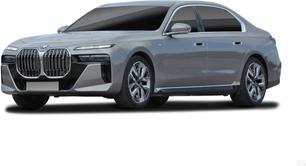
It was always going to happen - an electric version of the BMW 7-Series - but how well does the i7 handle the limousine fundamentals - comfort, power, room and style?
Well, luxury transport has been missing one major component all these years and the i7 has it.
Let me explain...
It's hard not to be ageist when it comes to the current Nissan Zed, because 15 years in market (nine if we're generous) is a lengthy stretch in anyone's book. But somehow the 370Z is more than the sum of its parts. It has fantastic front-engine/rear-drive balance, an increasingly rare atmo engine, and a beautiful manual 'box. The value equation is decent, and it's nicely put together. Just don't expect to be dazzled with the latest safety, driver-assist and multimedia technology.
The i7 xDrive60 M Sport is close to the perfect 7 Series. From the comfort of being driven in it, to the ease of driving it, even for hours on end.
The i7's range of 625km is outstanding for an electric vehicle, but a petrol powered 740i will get you about 900km on a full tank. How many kilometres a day will you cover? Do you have time and a way to charge the i7 daily if you do cover a lot of distance?
If driving range isn't an issue, the i7 will reward you with a smooth, effortless driving experience and your passengers will have a serene journey in luxurious, high-tech surroundings. Just don't bump the door release button accidentally!
If you want to go all the way back, the 370Z clearly takes its design direction from Datsun's star of the '70s, the original 240Z.
Inspired by Ferrari, and (along with the Toyota 2000GT) a sports-car breakthrough for the Japanese industry, the first Zed's front-engine, long-nose proportions have remained largely intact in successive iterations over the decades.
With a broad, flat nose, distinctively jagged headlights, and steeply raked rear profile, there's no mistaking the 370's signature stance, with pumped-up guards sitting over fat, 19-inch alloy rims.
Sharp-eyed car-spotters will notice the update's new design RAYS forged wheels, smoked front and rear lights, and a similar smoked finish on the exterior door handles.
A new colour, 'Cherry Red' also replaces 'Bordeaux Black' in an eight-shade colour palette. Our test example was finished in 'Gun Metallic'.
Inside, echoes of Zeds past abound, with a trio of hooded gauges (clock, voltmeter, oil temp) sitting in the centre of the dash top, and the tachometer in the middle of a cowled, three-instrument main cluster shaded by an exaggerated tube.
And aside from consciously retro design touches, some elements have been present inside the car for so long they're just... ancient.
For example, old-school orange graphics for the odometer, gear position and trip computer are dated, and the small (7.0-inch touchscreen) multimedia display has the feel of an early noughties edition of Tekken 6.
Forget a digital speedo or head-up display. A CD slot still sits proudly in the centre stack, and matt silver highlights scattered around the cabin are as on-trend as double denim.
And the steering wheel (joined with the instrument binnacle) adjusts for height, but annoyingly, not reach.
That said, friends and family who rode in the car during the week I had the keys all commented on the swoopy exterior and cozy cockpit feel of the interior. So, what do I know?
At 5.4m long and 2.2m wide the i7 xDrive60 M Sport is enormous and imposing - as a 7 Series BMW should be.
What's significantly different in the look of this latest incarnation of BMW flagship limousine is its show stopping face.
That LED-lined grille has Vegas pizazz and the pretty glittering Swarovski Crystal headlights are mesmerising. I doubt the words 'pizazz' and 'pretty' have ever been used to describe any previous generation BMW 7 Series.
Fear not, though, from every other angle the i7 looks business-like and serious… and solid as though carved from a single slab of marble.
Solid is also a good word for the i7's interior. Look at the seats in the images - they're hotel lobby sized and I'm still uncertain how they managed to fit them through the i7's doorway.
Our car had the Merino Tartufo brown leather upholstery which suited the 1970s-style futuristic design of the seats with their headrests wrapped in carbon fibre and the satin aluminium trim throughout the cabin. They look like seats from the bridge of a spaceship in a sci-fi series.
The enormous 31.3-inch screen in the rear is a show-stopper as are the tablets in the rear doors to control the screen functions along with the seat heating and adjustment.
Disappointing in comparison is the smaller media and instrument displays up front. And it's not just the lesser proportions but the styling of the screens that's a let down.
Surely this was a chance for BMW to integrate a large, flowing interactive screen over the dashboard and not something which looks propped up and an afterthought to the design of the cabin.
I also find the crystal-effect plastic that trims the dashboard and extends into the doors a little over-the-top, especially when it's backlit with LEDs.
Two seats means practicality is a relative term when applied to the 370Z. For example, getting in and out is an athletic exercise requiring gymnastic levels of flexibility and poise. As with most low-lying coupes, I found the outer hand on the A-pillar technique helps with swinging down into the car, or lurching up out of it.
Once ensconced behind the wheel, you're confronted with a relatively modest amount of storage space, running to a medium-size glove box, a lidded bin at the rear of the dividing console, a single cupholder, and door pockets incorporating recesses for small bottles only.
There are two lined recesses for soft bags or coats behind each seat, including a fold-out map pocket, but they're not exactly convenient for retrieving things when you're on the move. What's missing is a tray where you can easily stow things likes keys, coins or a phone.
There are also two 12-volt power outlets, a USB port and an aux-in audio connection.
Rear load space is limited to 195 litres, mainly due to the boot's shallow floor (an alloy space-saver spare sits underneath). It does incorporate a cargo blind and four tie-down hooks, but we only managed to squeeze in the largest (105-litre) suitcase from our three-piece hard set, or a combination of the two smaller ones (35 and 68 litres).
We also had a crack at stuffing in the CarsGuide pram (there is a top-tether hook provided for child seat fitment) and managed it with only a couple of beads of perspiration expended.
Forget the nappy-bag paraphernalia, though. The soft bags with all the baby stuff would have to go in the storage bays in the cabin behind the seats.
Sure, the i7 isn't an SUV but a sedan like this needs to be roomy and comfortable, it also needs to be an ergonomic place to work for passengers in the back with laptops, and it needs to be well appointed with internet connectivity and charging outlets. A boot that can take at least two passenger's luggage is also vital.
The i7 has all of that covered with good legroom in the second row even for me at 189cm tall. I spent two hours back there writing my script for the video for this review while the i7 was charging.
As I typed away I had plenty of elbow room but I could have done with a tray table for the computer.
There's a wireless phone charger in the fold-down rear centre console, along with USB ports galore.
You'll find another wireless phone charger up front and more USB ports. The i7 also has its own internet hotspot.
The sumptuous seats in the rear are power adjustable and also heated, but lack a massaging function.
There's also rear dual-zone climate control and sun-blinds which cover the back and side windows.
Cabin storage is good with large covered areas in the front and rear centre consoles, plus there are two cupholders in the rear and another two up front, with large door pockets, as well.
The cargo capacity of the boot is a healthy 500 litres but it's quite shallow due to the electric vehicle batteries eating into the luggage space.
The automatic doors can be opened several ways from the inside.
First there's a button inside which is high on the rear door and another on the dashboard which will open them automatically while using sensors to ensure they don't hit anything.
There's another button much lower down which will pop the door open slightly for you to push it the rest of the way.
Finally there's an emergency handle which will override the electric opening.
You can open the doors from the outside automatically by pushing a button near the door handle or by using the exterior door handle normally.
Closing involves pressing the high placed button if you're inside or by tapping the exterior button on the outside door handle if you've exited the car.
We did have a door mishap twice during our week with the i7. The first was when bags placed on the front passenger seat bumped the release button and caused the door to pop open, followed quickly by me lunging across to pull it shut again. It's lucky my arms are long.
The second was when my eight-year old son bumped the door release button with his knee again popping open the door but this time at 110km/h on the motorway. He was able to close the door but it rattled both of us, understandably and I kept the child lock on for the rest of the week.
He's been in a different test vehicle every week of his life since he was born and this is the first time we've ever had a door open unintentionally like this. I've also never had a door open, just because a bag has leaned on it, either.
So, the auto door opening function might create a nice impression and make opening and closing the heavy doors easier, but I think manual doors would be more practical.
The arrival of the tricked-up 370Z NISMO in August last year, offered Nissan Australia an opportunity to reposition the regular model, dropping the MSRP for the manual version from $56,930 to $49,990.
Aside from adjusting the car's value-for-money proposition (and pissing off those who'd bought one in July), that close to seven grand haircut delivered more pricing headroom up to the Roadster (starting at $60,990), and NISMO (from $61,490) versions.
For that money the standard equipment list includes, keyless entry and start, cruise control, climate control air, go-fast alloy finish pedals, 'HDD' (Hard Disc Drive) sat nav with 3D mapping, a 7.0-inch colour multimedia touchscreen, and Bose eight-speaker audio with 9.3GB 'Music Box' hard drive.
You'll also pick up sports seats with lots of features. First, they're 'leather accented', which is code for genuine hide in all the places you regularly contact, and a faux equivalent everywhere else. Not uncommon, and not necessarily unpleasant. Then they're heated and four-way power-adjustable, (with manual lumbar and height adjustment for the driver).
The steering wheel and gear knob also cop the 'leather accented' treatment, plus you can expect LED DRLs and tail-lights as well as auto headlights. It's worth noting that the headlights are garden-variety xenons, and things you might expect in a $50k coupe, like, rain-sensing wipers, dual zone climate, Apple CarPlay and Android Auto connectivity or tyre-pressure monitoring are 100 per cent absent.
Lining up direct competitors for the 370Z isn't easy, because there aren't any. But the closest is arguably a 2.3-litre EcoBoost version of Ford's Mustang at $45,990 for the manual. A further stretch of the imagination could haul in the Mazda MX-5 RF ($43,890) or the 86 GTS+ ($39,440) and Subaru BRZ tS ($39,894).
The BMW i7 xDrive60 M Sport sits in the middle of the 7 Series range with a list price of $306,900. That places it above the $273K 740i which is the only combustion engine variant in the line-up and below the $345K i7 M70 xDrive.
Whatever you do, don't dismiss the i7 xDrive60 M Sport as an overpriced electric version of the 740i because it has many more standard features that enhance the luxury and chauffeuring experience.
We're talking automatically opening doors, a 31.3-inch media display in the second row and control tablets for it in the rear doors.
There's a 35-speaker Bowers & Wilkins surround sound system (not the 740i's 18-speaker stereo), power adjustable and heated rear seats plus an 'Executive Lounge' console, and a BMW Individual Gran Lusso interior with a choice of Merino or Cashmere upholstery.
Our car had the Merino Tartufo brown leather upholstery and carbon-fibre M interior trim.
The i7 also rolls on larger 21-inch wheels which fill the giant wheel arches perfectly.
The rest of the standard features list is almost identical to the 740i's and includes the imposing LED-outlined grille, the Swarovski crystal headlights and the panoramic glass roof.
Inside, the double screens for media and driver instruments are also standard, there's sat nav, Apple CarPlay and Android Auto, a head-up display for the driver, front row seats are heated, massaging and power adjustable, there are also electric sun-blinds for the rear.
Our car wore the 'Oxide Grey Metallic' paint which made my videographer very happy because apparently it shows contours better than any other colour even on a bright, sunny day.
At the time we published this review BMW was also supplying as standard a charging wall box and a five-year Chargefox subscription.
The 370Z is powered by an all-alloy, 3.7-litre (VQ37VHR), naturally aspirated, quad-cam V6, producing 245kW at 7000rpm and 363Nm at 5200rpm.
Serving in a vast array of Nissan, Infiniti, Renault and Mitsubishi models, the VQ V6 engine series has been around in various displacements for over 20 years.
It features the 'Continuously Variable Valve Timing Control System' (CVTCS) with 'Variable Valve Event and Lift' (VVEL) on the intake side. And while all that may sound new and ultra-high tech, it was actually introduced in 2007.
Transmission choice is between a seven-speed auto (with manual mode and paddles) or six-speed manual gearbox, as tested here. And this 2018 upgrade brings a high-performance clutch from Japanese specialist Exedy.
Drive goes to the rear wheels via a carbon-fibre composite drive shaft, connecting with a viscous limited slip differential (LSD).
Additional features that won't necessarily be music to purists' ears include 'Active Noise Cancellation', and 'Active Sound Enhancement'.
The former monitors and measures engine sounds, using the audio speakers to produce "acoustically opposing signals to cancel undesirable sounds". So, okay, maybe filtering out the messy noise is a good thing.
But at the same time Active Sound Enhancement employs "digital signal processing to enhance the engine note, using the vehicle's sound system to augment or modify the spectrum of select powertrain sounds in the cabin". Yuck.
I can cop a tube that channels a bit of genuine engine noise into the interior, but in this context, the phrase 'digital signal processing' is a turn-off.
The i7 xDrive 60 M Sport has two electric motors - one at the front one at the rear - making this large saloon all-wheel drive.
The combined output is outrageous. We're talking 400kW and 750Nm. That's enough oomph to fire this electric missile from 0-100km/h in 4.7 seconds.
When EVs first came out a lot of people saw the technology as lending itself to small city cars, but with the smoothness of motion is offers, the silent operation and the colossal grunt it can supply nothing suits a big limo like the 7 Series better than electric motors.
The Nissan 370Z is actually the car many want the Toyobaru 86/BRZ to be. I can sense some of you spluttering out a sweary response to that notion. But hear me out.
If you, like many others, think the 86/BRZ would be perfect with an extra 50kW/80Nm, just bolt on a turbo or supercharger, and voila. You'll get that extra grunt, but remember, the 86/BRZ was conceived to be light, tactile, and, not least of all, affordable.
Up the outputs and you light the wick on an engineering arms race that should also lead to bigger brakes, an engine with more exotic pistons and a tougher bottom end, a stronger gearbox and clutch, a beefier diff, sturdier chassis, fatter rims and rubber... the list goes on, and on. Until you end up with something very much like the spec, weight, and price of the 370Z.
That's not to say this car isn't a fun drive. It is. Just don't expect the quick reflexes of an MX-5 or 86/BRZ.
Despite light-weighting tricks like an aluminium bonnet and all-alloy suspension, the 370Z weighs in at a not inconsiderable 1467kg. And although its 3.7-litre V6 develops a solid 245kW/363Nm, first impressions are dominated by its hollow mid-range.
Much as I love the free-revving nature of a naturally aspirated engine, there's no denying a modern turbo typically delivers lots of torque low down, with peak power also available within a useful rev range.
All the action here is at the top end, with maximum torque arriving way up at 5200rpm, and peak power taking over at a nose-bleed 7000rpm (the rev ceiling is 7500rpm). Not exactly an easily accessible sweet spot.
The gearbox is a sweet reminder of what a pleasure it is swap ratios in a top-notch close-ratio manual.
But there's still so much to like about this evergreen Zed. Its classic front engine/rear-drive layout results in a 53/47 front to rear weight distribution and the car feels balanced and beautifully predictable.
Suspension is double wishbone front, multi-link rear, and ride comfort, even over choppy bitumen surfaces is surprisingly good. On the flip-side, rumble coming up from the Bridgestone Potenza RE050A rubber (245/40 f / 275/35 r) is always noticeable, and often intrusive.
The steering is supported by old-school hydraulic power assist and while connection with the front wheels is impressive, overall feel is light. Hello 'Merica.
The gearbox is a sweet reminder of what a pleasure it is swap ratios in a top-notch close-ratio manual, and hats off to Exedy for producing a wonderfully progressive clutch. Personal preference was to turn off the standard 'SynchroRev Match' function, because I like having a go at the ol' heel 'n' toe tap dance myself.
Brakes are ventilated front and rear with almost equal size rotors (355mm f / 350mm r) clamped by four-piston calipers up front and two piston units at the rear. They are reassuringly powerful and consistent.
Age has not wearied the 370Z's ergonomics. Although the lack of a digital speedo and no reach adjustment for the steering column is annoying, the sports seats are snug and comfortable, the moderately chunky wheel feels great, and all the major controls are simple to use. Who needs slick screens and 'piano black' finishes?
There are removal trucks shorter and narrower than the i7 but this limousine is possibly the easiest and most comfortable car I've driven in almost 15 years of testing vehicles from Toyotas to Bentleys.
The steering is pinky-finger light but accurate, the ride (as driver and passenger in the second row) is superbly composed and the electric powertrain add a smoothness to movement that no combustion engine on the planet can come close to.
The xDrive60 M Sport comes standard with BMW's 'Executive Drive Pro' feature which includes the 'Active Roll Stabilisation' and 'Active Roll Comfort' systems used on Rolls Royces.
The systems use motors to level the body through dips and corners, and the result has to be felt to be fully appreciated.
It's oddly amazing - you could have a bowl of molten lava in your lap and not spill any of it.
And then there are the seats. As a driver the under thigh support offered by the big, thick, wide seat base is exactly right for long distances, while the back rest is supportive without being too firm.
If I was to name any downsides to the driving experience it would be the limited forward visibility due to the narrow windscreen and thick. short A-pillars.
I found myself always having to peer around those pillars at intersections and pedestrian crossings.
Rearward visibility is completely blocked when the second row's large screen is folded down and the rear vision mirror doesn't have a camera function to get around this issue.
Sure there's a reversing camera but being able to see what's coming up behind you in traffic is important to for safe situational awareness.
I'm also not a fan of the synthesised driving sounds. It's unnecessary, especially in something like a chauffeur-operated limousine.
I think it only serves to cheapen what is such a high-end experience. Thankfully you can turn it off.
The same goes for 'Boost Mode' which provides all available grunt once a paddle behind the steering wheel is pulled and counts down like a missile launch. Seriously? Come on - this isn't a 2 Series!
The 370Z must feel like a wall flower at the crash-test disco because it currently isn't rated for safety performance by ANCAP, its Euro NCAP affiliate, JNCAP in Japan, or the USA's NHTSA (National Highway Traffic Safety Administration) or IIHS (Insurance Institute for Highway Safety).
That said, in terms of active safety features you'll find ABS, BA, EBD, traction control, 'Vehicle Dynamic Control' (stability control), and a rear-view camera with 'Predictive Path' guidance lines.
But if you're looking for more current active tech, look elsewhere, because things like AEB, blind-spot monitoring, rear cross-traffic alert, active cruise, lane-keep assist, auto high beam or any kind of pedestrian detection are missing-in-action. They're not even available on the options list.
If all else fails and a crash is unavoidable, primary passive safety runs to active head restraints and eight airbags (driver and passenger front and side airbags, plus roof- and door-mounted curtain airbags).
The BMW i7 has not been assessed by ANCAP and like many ultra high-end cars it probably won't be. But we would expect it to perform well given this is the flagship of the brand and fitted with every safety feature in BMW's arsenal.
There's AEB which works from car park pace to motorway speeds, there's lane keeping assistance and blind spot warning, rear cross-traffic alert and manoeuvre braking which will stop you from bumping into objects while revving and there are more than 35 different sensors.
One radar constantly gazes 300m ahead into the distance, although it would probably be bored in Australia with our lack of autobahns.
The i7 also has BMW's 'Evasion Assistant' technology which scans traffic in all directions and will activate an evasive manoeuvre into an empty safe lane if it detects you swerving to avoid a collision.
There are seven airbags onboard, including one between the front seats, full length curtains for the front seats and head protecting curtains for the rear occupants.
The xDrive60 M Sport also emits an acoustic warning to alert pedestrians that you're nearby.
Nissan offers a three year/100,000km warranty, which isn't exactly ground-breaking in the age of Kia's seven year/unlimited km commitment.
But it does include 24-hour roadside assistance for three years, and Nissan's 'myNissan Service Certainty' capped-price servicing program applies for up to six years/120,000km.
The scheduled maintenance interval is six months/10,000km, with charges ranging from a low of $283, to a high of $831 (100,000km), averaging out to roughly $428 per service.
The i7 xDrive60 M Sport is covered by BMW's five-year, unlimited kilometre warranty. The battery is covered for eight years or 160,000km.
There's no regular servicing schedule but the car will identify any faults and maintenance issues and notify you. A six-year unlimited service plan is offered by BMW and is included in the purchase price of the i7.
The i7 also comes with a five-year subscription to the charge for charging network, and a home wall box charger.