What's the difference?
The meteoric rise of the Chinese-owned MG brand continues with the HS, a family-focused SUV stepping into the most hotly contested segment in Australia.
When the first generation HS arrived in December 2019, it should have been MG’s big sales driver, yet it sat in the shadows of the cut-price MG3 hatch and ZS small SUV as they lifted the storied MG badge into Australia’s overall top-10 sellers.
The HS has so far been MG’s missing link and that’s down to the segment being full of such strong name plates such as the Mazda CX-5 and Toyota RAV4. The mid-size SUV has also been the focus of other strong value rivals that were better, namely the GWM Haval H6.
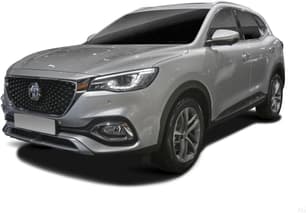
The MG HS +EV Essence is a smart-looking hybrid medium SUV that comes well-stacked with features and has a price point that will make you swoon.
Add the plug-in hybrid engine/motor combination and it’s pitched as a firm competitor against heavyweights like the Ford Escape, Toyota RAV4 and the newer-kid on the block – the Haval H6.
For the top model, it has the goods on paper but how does it perform in real life? I’ve been driving it with my family of three to find out for you.
There are a few niggles with the latest MG HS, for example the annoying driver-attention monitoring and expensive maintenance costs. We’ve not had a full sample of its open-road performance yet either, which may prove more telling.
Yet the HS is shaping up to be one of the most successful product updates of recent years, second only to, I don’t know, the MG3? The family SUV is also backed by a 10-year warranty and, despite the drastic improvements, doesn’t cost a whole lot more than before.
The entry-level Vibe is our pick, there's no need to spend more. It features all manner of safety equipment and a quiet drive but with cloth upholstery that doesn't get all sticky and sweaty in the Australian climate.
The end of 2024 is the tipping point where MG goes from cheap and cheerful to a real headache for established players. Perhaps not for the strongest in the segment like the RAV4 and Nissan X-Trail, but the HS is now an easy car to recommend for a family looking for a spacious SUV that drives their dollar further. The hybrid will boost appeal further when it arrives next year.
Note: CarsGuide attended this event as a guest of the manufacturer, with meals provided.
The MG HS +EV Essence is a nicely specified medium SUV that should suit a lot of people. It looks really nice and I love that it's fairly practical with its features and size but would like some of the tech to improve. It’s not always seamless to use and in this market, tech is very important. The price tag and the on-going costs are hard to beat and if you’re looking for a greener option that will happily cruise in the city or on the open-road, this isn’t a bad option.
Though the previous HS had shapely bodywork, the wheels sat too far in-board and the rear end looked awkward. It’s not the same story with the new model which is designed as a family SUV first, rather than a converted hatchback platform.
Part of the improved looks are better proportions. The new HS is 81mm longer, 14mm wider and rides on a 45mm longer wheelbase yet sits 21mm lower for a sleeker appearance.
The front end takes cues from the new MG3 and ZS design language with a broad grille and thin LED headlights. At the back, MG’s design team references the UK’s capital with ‘Shard’ lighting signatures that also appear in the alloy wheels.
It is still fairly anonymous, though perhaps that comes from a lack of familiarity with the brand. The painted wheel arch cladding and metallic-only paint give it a premium boost.
The biggest improvement is inside, where the HS takes plenty of inspiration from the excellent MG4 electric car with the hexagonal steering wheel (though here with perforated leather finishing), high-set controls and confident lines. It’s a welcome, modern change after the old car’s bloated cabin design.
There are soft-touch rubbery materials in all sorts of prominent places, including on the dash top, front and rear door cards as well as where the driver’s knees rest on the doors and transmission tunnel.
It has an inoffensive exterior design that you won’t be embarrassed to be seen in. Curvy in all of the right places, it still manages to look sharp with its tapered LEDs and chrome accents.
It sits firmly within the medium SUV specs at 4574mm long, 1876mm wide and 1685mm high, so navigating your local shopping centre car park will be manageable.
The interior looks polished with the Bader leather sports seats and their suede-like inserts. The air vents are cute and add some personality to the robust dashboard.
There’s a plethora of soft touchpoints throughout that enhance the overall comfort and refinement, too.
There is nothing especially ground-breaking about the MG HS’s front cabin. The cupholders are medium-sized and the door bins have enough storage for a one-litre bottle, so this is no Skoda Karoq when it comes to clever cabin solutions.
Telling a tale of the HS’s Roewe RX5 base car’s earlier 2022 launch (and the staggering development speed of personal technology) the lack of USB-C charging ports is now frustrating with all USB ports regular old-school items. Apple CarPlay or Android Auto phone mirroring requires a cabled connection.
The centre multimedia screen is high resolution with day selectable light and dark modes. It was a little laggy to use MG’s software, however, especially when swiping across menu screens.
There are four hard shortcut buttons beneath it that can jump to the home screen, activate the HS’s front and rear demister and turn the ventilation on and off.
To adjust the temperature you need to go into the touchscreen, though there is a persistent shortcut on the main menu.
A 12.3-inch digital cluster has several selectable info displays and can show navigation mapping and directions in Excite and Essence trims.
The seats are comfortable and supportive and it's easy to find a good driving position thanks to power-adjust driver's seat and tilting/telescoping wheel adjustment. The front passenger does not get height adjust, though, and is set too high.
Where the extra size pays dividends is in the back seat which has ample room for passengers beyond 185cm, especially when it comes to leg space. The fold-out armrest is sturdy, too, with twin cupholders. Rear air vents are fitted to only the top-spec Essence.
For baby capsules or child seats the HS has ISOFIX anchors fitted to all three rear seats matched with a trio of top tether points.
The MG HS’s boot is about average for the class measuring 507 litres. It grows to 1484L with the 60:40 backrest folded. For reference, class leaders include the Toyota RAV4 (580L), Nissan X-Trail (585L) and Volkswagen Tiguan (up to 615L with rear seats slid forward).
There are few amenities, with no 12-volt socket, only one (dim) boot light and no shopping bag hooks. The carpet isn’t bargain basement and the luggage cover is sturdy with additional separated storage compartments below the floor and netted cubbies off to the side.
MG has also been smart in packaging a space saver spare tyre beneath the boot floor (and a cumbersome Styrofoam piece).
The cabin space is very practical with its size. Each row has a decent amount of head and legroom. The big sunroof also makes the cabin feel airy and light-filled, which adds to that roomy feeling.
The leather-accented sports seats are quite comfortable and both are electric but the passenger side misses out on additional lumbar support.
I did have a few comments this week about the front seats, though, mainly that it feels like you’re perched forward in them. It would have been nice to be able to dip the bottom of the seats back.
The individual storage options are solid for this sized SUV with a glove box, two cupholders, drink bottle holders in the doors for front occupants and an air-cooled middle console box.
I missed having a utility tray next to the two USB-A ports and 12-volt outlet, as the Essence features wired Apple CarPlay and Android Auto, but there is a dedicated phone holder next to the cupholders.
Back seat passengers enjoy two cupholders in the fold-down armrest, map pockets and drink bottle holders in the doors.
The seats in the back are well padded but you feel like your knees are propped up a bit because of the shallow footwell. Taller passengers may feel like they’re folding in on themselves.
The technology looks good but isn’t always easy to use. The 10.1-inch touchscreen multimedia system is simple to understand but regularly feels laggy.
It has built-in satellite navigation but a lot of the controls are found via accessing the touchscreen – like the climate control and heating function for the front seats.
The 12.3-inch digital instrument panel is very easy to read but not really customisable.
Charging options are okay and I like the two USB-A ports in both rows but there’s no wireless charging pad or USB-C port which would provide faster charging speed.
The boot is a decent size for the class at 451L and you can bump that up to 1275L if you fold the back seats down. The rear seats have a 60/40 split for added practicality.
There’s a cargo blind and some underfloor storage for the charger and a tyre puncture repair kit. I liked using the powered tailgate but found it a bit glitchy, it sometimes stopping mid-action.
Shock horror, the new HS is 10 per cent more expensive than before… but that still makes it $33,990, drive-away, for the basic Vibe — easily undercutting established rivals from Honda, Mazda, Toyota and others.
You get a lot for that extra $4000, too, right down to basic presentation. There’s no fridge-like solid white paint with all six hues either metallic or pearlescent for no extra cost. MG even offers the upper trims with the option of an eye-catching tan upholstery colour.
The three-strong trim line-up starts with the Vibe: dusk-sensing LED headlights, 18-inch alloy wheels, adaptive cruise control, auto wipers, tyre pressure monitoring, a six-speaker sound system, nice cloth upholstery and six-way power adjust driver’s seat are standard.
The Excite sprinkles in 19-inch alloy wheels, perforated synthetic leather upholstery, navigation, fog lights and MG’s 'iSmart' connectivity system for a smart $36,990, drive-away.
The range-topping Essence gains a panoramic sunroof, rear privacy class, a power tailgate, front parking sensors, wireless phone charging, eight-speaker audio, 10-way power adjustable driver’s seat with memory, seat heating, dual-zone climate control, rear air vents and wireless phone charging for $40,990, on-the road.
The short of it is that, although MG’s prices are up, even the basic Vibe is a more enticing proposition on price than the new Chery Tiggo 7 Pro Urban ($39,990, drive-away) and established Mazda CX-5 Maxx (currently on offer for $37,990, drive-away).
It also is much closer to the popular GWM Haval H6 ($31,990-$37,990, drive-away) — if only MG had brought ventilated seats to the flagship Essence then this mid-sizer would be (almost) sold on paper alone.
There are only two models in the HS +EV line-up and the Essence is the top dog.
It will cost you $51,990 drive-away and that positions it as one of the most affordable options relative to its rivals. Only the Haval H6 is more affordable at $41,990 (drive-away) but admittedly, it’s by a fair chunk of change - almost $10K!
The Essence is well-specified with Bader leather-accented trims, heated front seats, electric front seats with four-way adjustment for the passenger seats and six-way for the driver, a powered tailgate, as well as a massive panoramic sunroof. The middle console is even cooled with air-control for added convenience.
The exterior hosts full LEDs with its daytime running lights, headlights and tail-lights, as well as, a heated rear window with timed cut off.
It also sports dual-zone climate control up front and directional air vents in both rows, plus multiple charging options add to interior practicality.
Its technology feels up to category standard with the sizing but the usability isn’t as great as its rivals. More on that later.
And an added bonus. All the paintwork colours are included in the price.
The new HS petrol has a 1.5-litre, turbo-petrol, four-cylinder engine that develops 125kW at 5000rpm and 275Nm from 3000-4000rpm, with those outputs up 6.0kW and 25Nm on the old car.
MG claims new engine features, including the variable geometry turbocharger, centre-mount variable valve timing and a lighter dual-mass flywheel, add up to a 30 per cent improvement in engine response.
More importantly, the insulation is excellent. You barely hear any unpleasant engine noises out on the road and although the four cylinder’s tone isn’t sexy at full-throttle, it is warm and pleasant enough.
The HS petrol is front-wheel drive only which may rule it out for some buyers, but there is a saving grace. The new seven-speed type dual-clutch transmission behaved itself impeccably on a brief first encounter taking in awkward hill starts and reverse manoeuvres. It’s a huge improvement over prior efforts and more refined than even a Hyundai or Kia dual-clutch.
MG claims a 0-100km/h acceleration time of 9.6 seconds, which is about right for entry-level versions of the HS’s typical rivals.
MG no longer offers a more powerful 2.0-litre turbo but a plug-in hybrid with a punchy 223kW and an all-new full-hybrid option will join the line-up in the first quarter of 2025, details of which are yet to be confirmed.
Both HS +EV models share a 1.5-litre, four-cylinder petrol engine and electric motor hybrid combination. Maximum outputs are 189kW of power and 370Nm of torque.
It’s very responsive with its power output and you definitely will be surprised by how much grunt this thing has.
Drive goes to the front wheels via a 10-speed auto transmission but it’s clunky and a bit too slow to shift out of the lower gears. This can make it feel like the engine is pulling back even when you’re accelerating, which I didn’t like.
On the electric motor side of things – the lithium-ion battery has a 16.6kW capacity and 63km (NEDC) driving range.
It has a Type 2 AC charging port but it can’t be hooked onto a fast charger as it lacks the CCS enhanced port. On a 7.0kW system you should see a full charge be completed in around five hours.
In the ADR combined (urban-extra urban) fuel efficiency cycle, the MG HS petrol is rated at 6.9L/100km, emitting 156 grams of CO2 per kilometre in the process. A 55-litre fuel tank gives the HS a theoretical driving range of around 800km.
We weren’t able to get a true read on the fuel consumption but the trip computer showed 8.1L/100km after an hour-long run. It lacks an idle start-stop system and requires 95 RON premium unleaded petrol.
With the electric motor being used, the official combined cycle fuel figure is 1.7L/100km and the urban figure comes out at 5.8L/100km.
My real-world usage came to 6.6L. That’s not bad at all, but I have done a lot of open-road driving this week.
Based on the urban figure and the 55L fuel tank, you should see an approximate driving range of 948km.
MG recommends a minimum 95RON petrol be used.
MG’s launch drive program was too brief to really get under the skin of the HS, which is a shame because the initial signs are extremely positive.
Compared to the old ZS, in which a gumnut hitting the roof was loud enough to distract you from your thoughts, the new car is packed with sound deadening for a vastly more premium experience.
The electronic power steering system has a natural ratio (2.6 turns lock-to-lock) and weighting in 'Comfort' and 'Sport' modes, which cannot be said for rivals such as the Chery Tiggo 7 and Haval H6.
This new HS rides nicely, too, with enough compliance from the suspension without sacrificing body control — at least around town. It has struts up from with a multi-link rear end which is not a given, even in this segment.
There were a few sharp-edged bumps that sent a shock through the body but that is to be expected on Sydney's awful roads. The new HS rides about as well as a Mazda CX-5 and believe us, that is a dramatic improvement.
Visibility out the front and sides are good as is the comfortable driving position, however I wasn’t able to move the driver’s side mirror far enough out for my liking. That’s a small blip in an otherwise strong first showing.
I’ve been pleasantly surprised by the overall driving experience. Besides the slower gear shifting, it’s generally smooth to handle. The power is there and makes it easy to keep up with traffic or overtake if you need to.
The suspension handles bumps very well and the steering is responsive. You can tackle corners or a winding road with confidence and without too much roll!
The cabin is quiet, even at higher speeds but you will note the whining of the engine at lower speeds as those gears shift.
On a windy day at higher speeds, the car moves about in the lane more than I like but otherwise, is firmly placed.
The regen braking isn’t customisable but it’s firm enough that you’ll feel it when you pull off the accelerator.
Going down a mountain let me gain five per cent charge on the battery and despite driving over 500km this week I only popped it on charge once (with 15 per cent left) - just to give you an indication of its performance.
I kept the EV mode on default but you can switch it over to a full EV if you want to wring out the most from the electric range.
This is not a difficult car to park and you’ll love its size in a small car park. However, the 360-degree camera view, while pretty clear, is jumpy.
At first, I thought it was laggy but the image just shudders, like a bad connection. I's prefer to see front parking sensors, too, as this MG only has them at the rear.
The MG HS has not yet been evaluated by an independent safety testing body such as ANCAP or Euro NCAP.
MG has fitted the new HS with seven airbags, including driver and passenger, front side, side curtain and a centre airbag.
The HS has a long list of active safety and driver assistance features, such as front and rear auto emergency braking with junction detection, lane-keep assist, blind-spot monitoring, adaptive cruise control with stop and go and driver-attention monitoring.
I can’t say all the aids are perfect but the adaptive cruise control and lane-keep assist systems were less intrusive than those in Chery and Haval products.
The regularly-beeping driver-attention monitoring remains a constant frustration as it does across almost every brand at the moment.
The safety features are good on the HS and I like the 360-degree camera view but don't like the way the image shudders while in use.
It has a blind-spot monitoring system but the interior ‘alert’ light is in a blink-and-you’ll-miss-it position.
Other features that come standard, are LED daytime running lights, forward collision warning, rear cross-traffic alert, lane keeping aids, lane departure warning, intelligent seat belt reminders, rear parking sensors, traffic sign recognition, a driver fatigue monitor and adaptive cruise control.
It has autonomous emergency braking with car, pedestrian and cyclist detection which is operational from 0-80km/h.
The HS +EV hasn’t been assessed by ANCAP but its fuel-based sibling achieved a maximum five-star rating in 2019.
It only has six airbags, which is pretty low for an SUV, but the curtain airbags cover the back row.
There are ISOFIX child-seat mounts on the outboard seats and three top-tether anchor points but two seats will fit best.
Front passenger space may be compromised a little when a 0-4 rear-facing child seat is installed but overall, it was very easy to install my booster seat this week.
MG has recently moved to a 10-year/250,000km new car warranty in Australia which covers the HS and is the longest non-conditional offer in the market.
GWM/Haval, Kia and SsangYong remain at seven years while Mitsubishi requires you to service the car at a main dealer for its 10-year guarantee.
This long warranty period should help allay concerns for new MG buyers that the brand stands behind its products.
Less impressive is the cost of maintenance, which adds up to $2354 over five years/75,000km with a particularly steep $936 service at the four-year mark. There’s a big $1647 service at 120,000km, too.
The ongoing costs are great on this! It comes with a seven-year/unlimited km warranty, which includes the hybrid battery.
It also has a seven-year capped-price servicing plan, which is above average for the class, and services average $426 which is competitive.
Servicing intervals are every 12 months or 10,000km, whichever occurs first, which is fine if you don’t clock a lot of kays every year.