What's the difference?
This story has been updated in February 2022 to reflect market changes and pricing adjustments for the MG3. It was originally published in the first half of 2020.
My time at CarsGuide started in October 2017, and since then I’ve booked literally thousands of cars across Australia. One car that has eluded me - and the CarsGuide team - over that period is the one you see here: the MG3. Or the MG MG3, or MG 3, if you wish.
Despite asking MG’s Australian arm countless times to loan an MG3 hatchback over that period, the company in charge of the brand’s PR in Australia refused to agree to loan us a vehicle to test. Now the company has an in-house PR team with a pretty decent fleet of press cars, yet still, no MG3.
Over the years, our desire to review the MG3 hatch - and to help you decide whether it's right for you or not - has only gotten stronger because sales have skyrocketed. Back in late 2017 the brand was averaging only a handful of cars per month - indeed, just 52 examples of the MG3 were sold in total in 2017.
Since then, the MG3 has skyrocketed, and it is the best-selling light car in Australia. In 2021, the brand moved more than 13,000 MG3s - meaning it is averaging 250 cars sold per week. Makes the paltry 2017 numbers look a bit meagre. In becoming the number-one seller in the segment, it has beaten big-name rivals including the Kia Rio, Mazda 2 and now defunct Honda Jazz, while also being well clear of the cheaper Kia Picanto, which is what many people will be shopping this car against if price is a key driver for their decision.
And that's the case in point, really - a lot of its success comes down to the price of the Chinese-built, British-badged city car. It’s cheap - but is it a cheerful experience? We got the chance to find out in 2020, thanks to a friendly MG dealership in NSW - and this review has been updated with the most current pricing, because nothing else has changed.
The icon is electric. Well, kind of.
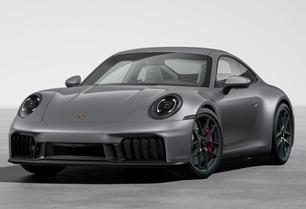
This is the new Porsche 911 Carrera GTS, which ushers in a facelift for the brand’s most famous model — and it’s one that introduces a pretty major change.
That faint whistling you hear is most likely the distant wails of the Porsche purists, because this new 911 is now a hybrid.
Yes, the Carrera GTS features Porsche’s clever T-Hybrid engine, which is the brand’s take on electrifying the world’s most famous sports car.
It’s faster than the model it replaces, but it also fundamentally alters the formula that has made the 911 the world’s most iconic sports car.
The question is, does it alter it for the better?
Aside from its safety shortcomings and underwhelming powertrain, it’s easy to see why the MG3 has become a successful part of the brand’s line-up. If you’re driving around a rural centre like I was, it makes a lot of sense.
Whether you choose the Excite model, which has a bit more visual pizzazz, or the Core model, which is our pick of the range, the MG3 is well priced, has the media tech buyers are after, is a charming looking thing that comes in a range of great colours, and is smartly packaged, too.
Thanks to the team at Orange MG for assisting us with this the loan vehicle for this review. Head to Orange MG for more information.
The more things change, the more they stay the same. The t-hybrid might be an entirely new propulsion system for the 911, but the net result is unchanged – power, poise and performance on tap.
Note: CarsGuide attended this event as a guest of the manufacturer, with travel, accommodation and meals provided.
It’s a fresh looking thing, the MG3.
From its attractive front-end with “London Eye” LED daytime running lights, its Euro-look angular front bumper and chrome-trimmed grille, and its angular window lines, it really does have a distinct personality.
It looks a lot more modern and enticing than the first version of the MG3 sold here, and I have no doubt that a lot of buyers of the MG3 have been attracted by its sharp styling first and foremost. MG has done a tremendous job of creating a family look - it just happens that the family looks like it has been taking good care of itself, keeping active and trim, too.
The rear end isn’t quite as attractive, with the vertical tail-lights making it seem taller than it is. It’s still a nicely sculpted back-end, though.
On the Core model you’ll get some lower blacked-out design trim bits, and the wheels fitted are 15-inch alloys.
The Excite model seen here is a little more, dare we say it, exciting to look at. That’s down to its body kit, consisting of lower chrome elements on the front bumper, a set of black side skirts, and a hatch-mounted rear spoiler. You get 16-inch alloy wheels, too.
In terms of dimensions, it’s closer in size to the Kia Rio than it is the Picanto. With a length of 4055mm (on a long-for-its-size 2520mm wheelbase), a width of 1729mm and height of 1504mm, it’s a pretty chunky little unit.
It is rather conventional in the way its interior is designed, however - there’s no sliding second row (like the Suzuki Ignis) or flip-folding seats (a la the Honda Jazz). Check out the interior pictures below to see for yourself.
This facelift debuts a revolutionary exterior design that has completely reshaped the 911.
Just kidding. If it ain’t broke and all that. The front air vents and exhaust have changed, the former now an active intake system that deploys via vertical flaps, but elsewhere it’s largely evolution over revolution.
Instead, Porsche has focused most of the updates in then cabin. In here, you’ll find a new digital instrument panel, they’ve changed some of the levers and the steering wheel.
In true Porsche fashion, though, this new 911 mimics the older versions in that it's one of the more intuitive cabins you’ll ever sit in. Everything feels as though it’s exactly where it should be, and all feels entirely centred on the driver.
If you’ve owned the same old car for years and you’re setting foot in an MG3 for the first time, you’ll probably feel amazed that you can get an interior with interesting finishes, a high-tech screen and decent materials at this price point.
Earlier versions of the MG3 were nowhere near as good inside as the current model, which has been on sale since 2018. It’s not perfect, but there are plenty of things to like.
The seats offer plenty of adjustment, including a huge amount of height adjustment for shorter drivers. The seat is comfortable, though some drivers might find it hard to get the right position: there is no reach adjustment for the steering wheel (only rake adjust), and you can’t adjust the seatbelt height, either.
I really like the seat trim which is a broad tartan design (with “synthetic leather” bolsters and contrast stitching in the top-spec Excite), mirrored by an etched tartan aluminium trim piece on the dashboard - it looks really smart, even if my OCD radar was set off by the fact the trim wasn’t aligned to match perfectly between the cushion sections. Take a look at the interior pictures to see what I mean.
There are some really nice elements to the cabin. Things like the 'lock' and 'unlock' button on the driver’s door, which looks like it has been stolen directly from Audi’s parts catalogue. The same can be said for the speedo instrument font.
There’s no doubt that it’s built to a price, but it doesn’t feel anywhere near as cheap as you might expect. We’ve criticised Audi, VW and Skoda for cutting costs with hard plastic trims on doors and dashboards, and the MG has plenty of hard plastics, too - but it’s expected at this price, not double it.
There’s a standard 8.0-inch touchscreen media system with AM/FM radio and Bluetooth phone and audio streaming, plus USB connectivity and smartphone mirroring - meaning you get Apple CarPlay, essentially negating the need for sat nav if you use an iPhone. You can option a GPS navigation system on the Core model, but satellite navigation comes standard on the Excite. There's no Android Auto mirroring available at all, though.
In previous models from the SAIC stable - including the LDV T60, and MG ZS - I had troubles with the media screen, but the version in the MG3 Excite I drove was quick and problem free, even when disconnecting and reconnecting my phone multiple times.
There are other little things that could be improved, like the fact the trip meter is difficult to navigate, and there’s no digital speedometer. Also, the digital climate control in the Excite model shows up on the media screen, though by way of a graphic rather than a temperature number. In the base model Core there’s a simpler manual a/c system.
The steering wheel has a part leather trim with perforated edges which makes it look and feel a little bit sporty – and it has a flat bottom as well, which will appeal to the sporty-minded buyer. There are stereo and cruise control buttons on the wheel, but the stalks behind are “back to front”, with the left stalk for indicators and lights, and the right for wipers.
As for storage, up front there is a single cup holder between the seats, a couple of small storage sections including a trench for a wallet, and another storage section in front of the gear selector - that’s where the MG3’s single USB port is, too.
The front door storage includes bottle holders, and there are soft padded elbow pads on the front doors - which is more than we can say for some of those aforementioned Euro brands.
With the driver’s seat set in my position (I’m 182cm tall), I had enough back seat space to be comfortable. There was enough knee room and toe room, and reasonable headroom if I sat perfectly still - although the slightest tilt of my head to the outer side of the car saw my noggin contact the headlining. Rear seat comfort is okay - the backrest is a firm, but there’s good visibility out the windows. There are dual ISOFIX child seat anchor points, and three top-tether points for baby seats.
In the back the storage is minimal. There are two map pockets, but no door pockets, and there’s no flip-down centre armrest with cupholders. But there is one large pocket in front of the middle-seat rear passenger which would do for a bottle. The back seat also misses out on soft elbow pads on the doors.
Boot space is good for a car in this size segment. You’ll only really do better if you buy a Honda Jazz or Suzuki Baleno, as the MG3 offers a deep and boxy cargo zone, with a cargo capacity of 307 litres to the cargo cover.
Need more luggage capacity? The back seats fold down in a 60:40 split, alleviating 1081L of space - though the load-through is limited as the seats don’t fold completely flat. Or you could fit a roof rack.
This probably falls under the ‘next question, please’ umbrella, given that, while the Porsche 911 is known for a lot of things, vast acres of space with loads of practicality perks just ain’t a part of its portfolio.
The new 911 measures a not-insubstantial 4533mm in length, 1852mm width and around 1294mm in height, and it rides on a 2450mm wheelbase. Luggage space is a paltry 135 litres under the bonnet, plus whatever else you can fit in your pockets.
There’s seating for four, should you not like the people you’re squeezing back there very much, but really the 911 is best enjoyed as a two-seat proposition – which is why you can also delete the backseat, should you wish.
It also weighs a minimum 1595kg, or up to 1745kg, but Porsche says the hybrid tech only adds about 50kg to the total kerb weight.
The success of the MG3 in Australia has been largely driven by its price.
And no wonder - pricing for cars of this size has increased steadily, and plenty of brands have found their light cars in the "too hard" basket as a result.
But the MG3 is still relatively cheap. Prices have jumped over the time since we drove this particular car, but they're still sub-$20K for all models in the range.
For context, the 2020 model started at just $16,490 drive-away for the Core model and topped out at $18,490 drive-away for the top-spec Excite, and those prices were the RRPs listed on MG’s site at the time.
But now the MG3 has become a bit pricier - the current pricing for the range is up, with the base model Core now $18,490 drive-away, while the Core with Nav model costs $18,990 drive-away, and the top-spec Excite grade is a Macca's meal short of twenty grand at $19,990 drive-away.
Wondering what features you get when it comes to the models in the range? It's pretty simple, so let’s run through what each model gets.
The Core gets 15-inch alloy wheels, cloth tartan finish seat trim, auto on/off halogen headlights with LED daytime running lights, manual air conditioning, electric windows, electric mirrors, and a leather steering wheel with audio and cruise control buttons. There’s a space-saver spare wheel, too.
The media system includes a 8.0-inch touchscreen with USB connectivity, Apple CarPlay (no Android Auto), Bluetooth phone and audio streaming, and AM/FM radio. There’s no CD player, and the Core model gets four speakers. If you're keen on sat nav, you can step up to the Core Nav model, which adds $500 to the bill.
Stepping up to the Excite nets you a few extras like 16-inch two-tone alloy wheels and a body kit, body-coloured mirrors, vanity mirrors in the sun-visors, and synthetic leather trim on the seats with contrast stitching.
The Excite also includes GPS sat nav as standard, and steps up the sound system to be a six-speaker unit with “Full Vehicle Yamaha 3D Sound Field”.
Interested in the safety spec inclusions? Read the safety section below for what’s included, and what’s missing.
Our friendly MG dealer let me know that he can’t get enough of the Tudor Yellow models, and that colour - as well as Dover White and Pebble Black - are no-cost optional hues. You should bare in mind that Regal Blue metallic, Scottish Silver metallic and Bristol Red metallic (as seen here) will set you back an additional $500. Looking for orange, green or gold paint? Sorry, no can do.
As for accessories, beyond floor mats there’s not a lot to speak of. Oh, and those wishing for a sunroof? No chance… unless you’re handy with a Sawzall. Note: do not cut a hole in the roof of your car.
While the prices have gone up since we originally published this review, the MG3 still scores strongly for pricing and specs, because the market has moved up, too, and like-for-like it's still cheaper than almost all of its rivals - Picanto excluded.
Yikes. Perhaps I wasn’t paying close enough attention, because the Porsche 911 range now suddenly seems very expensive.
In fact, it inspired some research. Some 10 years ago, in 2015, the Porsche 911 range kicked off at around $208,000. Today, though, you’re looking at more like $280,500 for the entry-level 911, and if you want this bahn-storming Carrera GTS, you’re looking at more like, deep breath, $381,200, before on-road costs.
If you want four-wheel drive, a cabriolet roof, or both, the price climbs from there, with the GTS range topping out with the Carrera 4 GTS Cabriolet listing at $437,900.
Now in Germany’s defence, the Porsche has gotten progressively faster and more powerful over the years, and that’s true again with the T-Hybrid version, but we’ll come back to the tech stuff in a second.
Outside, it rides on staggered alloys (21 inch at the rear, 20 inch at the front), and there are standard matrix LED headlights, vertical-mounted active cooling flaps, and you can have it as a hard top, a Targa roof or as a full Cabriolet.
The biggest updates (apart from the driving stuff, of course, occur in the cabin, where the 911 has now push-button start, and introduces a new digital dashboard, which defaults as a digital version of the old analogue setup. The screen is 12.6 inches, and there’s a second 10.9-inch screen in the centre cabin which does your phone streaming.
There’s also a BOSE Surround Sound System, 14-way adjustable comfort seats, and digital radio.
Keen to know the engine specs for the MG3? Well, it’s pretty simple on the specifications front.
There’s just one motor available: a 1.5-litre four-cylinder non-turbo petrol engine, dubbed NSE Major by MG.
It has class competitive outputs of 82kW (at 6000rpm) and 150Nm (at 4500rpm). It is only available with a four-speed automatic transmission and front-wheel drive. There’s no manual transmission available anymore - it was available in the earlier MG3s, but no more.
While some competitors offer higher-powered flagship variants that act as the horsepower hero of the range, there’s no such variant in the MG3 range. Not yet, anyway. For now there’s just one engine size, no turbo, and no diesel or EV models to speak of either.
The tare mass/tare weight for the MG3 hatch is 1170kg, which is a bit heavier than a Mazda 2, but pretty much on par with a Kia Rio.
Considering a caravan holiday with your new MG3? Maybe think twice - the maximum towing capacity is just 200kg.
If you’re worried about engine problems, clutch problems, or have questions about the battery, gearbox, or the oil requirements, be sure to stay tuned to our MG problems page. And if you're curious about whether it has a timing chain or timing belt? It's a chain.
A new (or at least, massively altered) 3.6-litre petrol engine has been developed for this T-Hybrid, which combines with two electric motors to produce a total 398kW and 610Nm. It’s only available with Porsche’s very good eight-speed Porsche Doppelkupplung (PDK) automatic, largely because the brand admits it would be… well… unpleasant to drive as a manual.
Now, there is lots of magic at work here, and I don’t want to bore you, but the Porsche setup sees a lightweight 1.9kWh battery placed basically in the middle of the front axle, and a 12-volt battery now behind the front seat. Then, a tiny e-motor lives as part of the gearbox (it’s just 55mm long) and delivers up to 150Nm at low speeds to supplement the petrol engine.
It’s joined by what Porsche calls an “electric exhaust gas turbocharger”, which essentially removes the spooling time from the turbo, delivering instant power.
The aim of the game here is excitement, not efficiency, and the launch-control-aided spring to 100km/h takes just 3.0 seconds. And it somehow feels, and sounds, faster.
The latter being important, with Porsche aware that if the new powertrain didn’t sound good, "nobody would like it”.
The combined cycle fuel consumption claim - which is what the brand claims the vehicle should use across a mix of driving situations - is the same across the MG3 line-up: 6.7 litres per 100 kilometres.
During my time with the car - which consisted of exactly 100km of mixed driving - I saw an at-the-pump fuel economy return of 7.7L/100km, which is decent.
The fuel tank capacity of the MG3 is 45 litres - meaning a theoretical mileage per tank of about 580km. It runs on regular unleaded (91RON), too.
Just be aware, the filler neck of the fuel tank is a little less angled than some other cars, so you might find it can splash back when it ‘clicks’ the first time.
Porsche in Australia is yet to lock in local fuel use for the Carrera GTS T-Hybrid, but international testing has it at 10.5-10.7L/100km, C02 emissions of between 239-244g/km.
Those aren’t exactly Toyota Prius numbers. But again, that was never Porsche’s intention. The electric power on offer here is intended to improve acceleration, not fuel use.
It’s fitted with a 63-litre fuel tank, which should deliver a driving range of around 600km per tank.
You might think of MG as a sports car brand - that’s what they built back in history, after all, and those are the reminiscences the company is hoping you’ll have when you see the famed octagonal badge.
And of the current crop of models that MG sells in Australia, the MG3 is undoubtedly the sportiest.
That comes down to its driving manners, steering and ride - but not the engine and transmission.
The powertrain feels to be lacking enough power and torque to make it feel light and zippy when accelerating. The automatic transmission doesn’t make the greatest use of the engine, and can be indecisive when climbing hills or when you ask more of the car. Oh, don’t even think about a 0-100 performance claim - no such number exists.
In urban driving at lower speeds it’s fine. Between traffic lights and encountering roundabouts, and there’s not much to complain about. It doesn’t have any lag or lurch from a standstill, and is smooth and quick enough to get away from rest, too.
It’s just once you start to ask more of the engine and transmission that you notice that things could be better. There is, at least, a manual shift mode for the transmission to allow you to take control of the shifts, and there’s a sport mode too, which will hang on to gears and quell the indecision of the transmission to a degree.
On the open road it gets along fine, sitting at the speed limit without much fuss - although once you encounter a hill, you will notice the speed drop off a little. And the cruise control seemingly has a bit of a mind of its own, with a set speed displayed at 100km/h, I noticed the speed varying between 90km/h and 110km/h, depending on the terrain.
It’s the road holding, grip, handling and steering that help it live up to the badge, with steering that has a nice hefty weight to it and good directness at pace or around town. It even offers a little bit of feel through the wheel, which is welcome. That grip was surprising given the tyres fitted to the Excite’s 16-inch alloy wheels (Giti GitiComfort 228 tyres in 195/55/16 size).
The ride is tuned with a firmer character to it than you might expect. It’s not to the point of discomfort, and nor is it fidgety or clumsy over potholes or sharp edges. And that tune for the Macpherson strut front suspension and torsion beam rear suspension means that it feels plenty grippy in corners. Over my drive loop - incorporating sweeping bends and tighter twists - the MG3 stuck itself to the road commendably, with no noticeable skittishness to speak of.
Indeed, I kept thinking that the suspension tune reminded me of a VW, Skoda or Audi city car - assured, confident, and ultimately a bit of fun.
The braking performance was good, too - it pulled up true and straight under heavy braking, and offered decent response at city speeds, too.
One minor criticism was some noticeable wind noise from around the windscreen pillar / mirror area, which was evident at speeds from 70km/h up.
Porsche did just about the Porschiest thing to ever Porsche in launching the 911 Carrera GTS T-Hybrid, in that we piled into cars in Melbourne, drove the many, many hours (well, it feels that long, at least) to the Phillip Island race circuit, beat the hell out of the cars on track and on the drag strip for several hours, then trundled back out on the road and drove them back to Melbourne.
The subliminal messaging here is pretty clear. This new 911 might have a new powertrain, but it can still deliver the road-track-road experience without breaking a sweat — or, more importantly, without breaking any expensive bits.
So let’s do this in order, shall we? On the road, this new 911 is every bit as sweet as it has ever been. Comfortable, quiet enough when you want it to be, and — save some road noise from those big wheels – quiet enough to let you forget you're driving something with one of Peter Dutton’s nuclear reactors hidden beneath its svelte metal work.
Mind you, that T-Hybrid powertrain will happily remind you of its presence every time you press the accelerator in anger, the exhaust erupting into life and the 911 genuinely rocketing into the future, but stay gentle with your inputs and this hybrid 911 is a genuinely comfortable, genuinely liveable daily driver.
Its split personality appears when you rumble out onto a race track though, where you quickly discover the electrified, and electrifying, Porsche is properly, properly rapid, both in a straight line or around Phillip Island’s fast and flowing circuit.
It’s so rapid, in fact, that it feels most closely related to a performance EV, like the Taycan. Of course it is louder and more engaging, but that’s the best way I can think of to describe the instant power on offer here. There’s no ICE-like lags or lumps in the way that 398kW and 610Nm finds its way to the tyres and into the tarmac. Instead it’s just this constant, savage flow of power that never seems to let up.
Porsche says this new powertrain is about 50kg heavier, but you’d need to be plugged into the race track like its the Matrix to ever feel it, with the T-Hybrid feeling lithe, grippy and athletic, aided by near-perfect steering, the best automatic gearbox in existence, and exactly zero roll through the body. In fact, the only thing that really moves when cornering hard in this new 911 is the driver, and I genuinely got out after several laps with a sore neck from trying to stay vertical.
Downsides? Well, it’s faster in a straight line (it will be some 7.0m further down the road after 2.5sec when compared to the older GTS) and faster around corners (8.7sec faster around the Nurburgring than its predecessor), but there’s something delightfully analogue about the outgoing car, which also manages to feel more aggressive under heavy acceleration, too, owing to the little ebbs and flows of power, and after driving both back-to-back, I still can’t decide which one I like more.
Safety technology is the MG3’s biggest shortfall. There’s no ANCAP crash test safety rating to speak of, and the MG3 doesn’t come with any form of auto emergency braking (AEB), which is disappointing given the tech has been available on affordable city cars since 2013 (the VW up! was an early benchmark).
Even the facelifted Mitsubishi Mirage has AEB with pedestrian detection, but the MG3 doesn’t. Nor does it come with lane keeping assist, lane departure warning, blind spot monitoring, rear cross-traffic alert or rear AEB.
So what do you get? The range comes standard with a reversing camera, rear parking sensors, electronic stability control, and six airbags (dual front, front side, full-length curtain). And that may be enough for you, but we know you can get more safety tech in rival cars, so it can’t score well against this criteria.
Where is the MG3 built? It’s made in China.
This 911 arrives without an avalanche of active safety kit, but the key stuff is covered. There are airbags up front for the driver and passenger, side impact protection including thorax and curtain airbags, auto emergency braking (AEB) with pedestrian detection, a surround-view camera with parking lines, lane change assist, lane keeping assist, adaptive cruise control and a driver fatigue monitor.
I kept thinking about one particular thing over my time in the MG3 - the warranty. It’s such a great peace of mind move from the company to back its cars with a seven-year/unlimited kilometre warranty plan.
If your brain works like mine, you could calculate it out and see the purchase of the MG3 completely differently: what about thinking of it as a $2500-ish-per-year investment, and at the end you get a free car…! The same can be said of the Kia Picanto and Rio, though.
That warranty should put your mind at ease when it comes to reliability, problems, common faults and issues, as any required fixes are set to be covered by the brand over that period. And buyers get seven years of roadside assistance included, too.
Maintenance is required every 12 months/10,000km, whichever comes first. That’s a bit more regular than some rivals (most have 15,000km intervals), but the brand backs its cars with a seven-year fixed service cost plan. Servicing costs averaged out over the first seven years/70,000km of ownership equate to $382 per visit (before GST), which isn't cheap, but nor is it expensive.
Here's a rundown of the recommended service costing (all prices pre-GST): 12 months/10,000km: $231.76; 24 months/20,000km: $385.23; 36 months/30,000km - $379.72; 48 months/40,000km - $680.74; 60 months/50,000km - $231.76; 72 months/60,000km - $533.19; 84 months/70,000km - $231.76.
Keep the service logbook stamps up to date in your owners manual - it’s a ticket to better resale value.
The 911 Carrera GTS is covered by a pretty underwhelming three-year, unlimited-kilometre warranty, with servicing required every 12 months or 15,000kms. We don’t have the hybrid service pricing yet, but as guide, the last 911 split the services into minor and major, and charged either $785 or $1285 for each.