What's the difference?
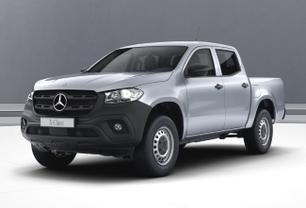
If there was a feeling at Stuttgart that any vehicle displaying a three-pointed star could do no wrong, the X-Class should be a wake-up call. It's a vehicle that appears to have drawn a line in the sand in terms of what people are prepared to accept as an authentic Mercedes-Benz.
Sure, the fastest and cheapest way into the booming dual-cab ute segment was to piggy-back an existing player, in this case the D23 Nissan Navara, as M-B has a tech-share agreement with the huge Nissan-Renault-Mitsubishi alliance. The Navara/X-Class relationship is similar to Ford Ranger/Mazda BT-50 or Isuzu D-Max/Holden Colorado.
But we are talking Mercedes-Benz here. Given the high esteem in which the German marque is held and its pre-eminent off-road heritage, with icons like the Unimog and G-Wagen, the end result has fallen short of understandably high expectations. It's even built in a Nissan plant. Put simply, it over-promised and under-delivered.
However, are perceptions of the X-Class being a rush job or little more than a badge-engineered Navara fair or accurate? We recently put the work-focused entry-level X-Class to work in our search for answers.
BMW’s X1 has changed. In a good way. Especially if you’re thinking about buying one as a family car.
Yep, last year the third-generation X1 arrived and after 13 years and three different attempts on a design, BMW has nailed it. And by ‘it’ I mean built a super practical and spacious small SUV that’s great to drive.
See, as a dad of two kids, when it comes to cars and my family ‘it’ means something totally different to what ‘it’ meant 10 years ago.
And that’s what this review is about: does the BMW X1, and specifically this xDrive20i M Sport variant we’ve tested here, make a good family car?
If you're thinking of buying it for your family then you need to read this and also consider the likes of Audi’s Q3 and the Mercedes-Benz GLB.
The X-Class Pure 4x2 is good, but that's its major problem, because three-pointed stars and their high price tags bring with them a justified expectation of being not just good - but great. If a second-generation X-Class needs to borrow some components again, we hope they're from the legendary G-Wagen next time. In fact,a platform share between X-Class and G-Wagen (like Ranger/Everest or Colorado/Trailblazer etc) would have much greater appeal.
This new BMW X1 feels like it's been built by a team of parents because it’s one of the most practical and easy to use small SUVs my family and I have ever lived with and, trust me, they’ve seen a lot of test cars come through the Berry garage.
We loved the roomy interior with high ceilings, the clever storage everywhere from the giant door pockets to the floating centre armrest up front and big boot for our pram.
Entry and exit is easy through the tall and wide doors, something my back was thankful for every time I had to put our baby into her car seat.
Driving is easy, with great visibility and the engine that comes in the xDrive20i M Sport makes this X1 sporty and fun to pilot, too.
The only drawback is the price, it's a bit expensive but at the same time you are getting a high-quality feeling SUV.
Benz has re-engineered the Navara's steel ladder-frame chassis for greater rigidity and topped it with a restyled body that's 85mm longer and 126mm wider with a new M-B interior. There are also new front suspension components and a new coil-spring multi-link live rear axle assembly with disc brakes, which result in track width increases of 82mm front and 75mm rear (compared to RX Navara 4x2).
These engineering changes, combined with revised springs, shocks, anti-sway bars and steering, result in sure-footed handling with sharp steering response, excellent ride quality and a feeling of solidity that are all X-Class strengths. However, they have also resulted in a hefty 236kg weight gain.
The X-Class Pure 4x2 rides on a 3150mm wheelbase with a 5340mm overall length, 1916mm width and 1839mm height. In comparison to Ford's Ranger, which is considered the 'bigfoot' of Aussie dual cabs, the X-Class is 70mm shorter in wheelbase and 22mm shorter overall, but 56mm wider, 24mm taller and lineball on turning circle at 12.8 metres. So, like the Ranger it's quite a large and imposing vehicle.
Critical rough road credentials include 222mm of ground clearance with 30 degree approach and 25 degree departure angles. Its wading depth of 600mm is better than Amarok (500mm) but considerably less than Ranger (800mm).
It's nice to see sizeable grab handles on the window pillars for front and rear passengers and the driving position is pretty good. However, the Pure's front seats lack sufficient lumbar support and the base cushion (at least the driver's) needs some rake adjustment, as it can feel like you're sliding off the front at times.
For such a sizable vehicle we're surprised by how cramped the rear seating is for taller adults in terms of length and height, with knees touching the front seat backrests and, thanks to the higher 'grandstand' style rear seating, heads touching the roof lining. The rearward location of the B pillar also makes for quite tight entry and exit for those long of limb and large of shoe.
This current generation of X1 arrived in late 2022 and finally looked more like part of the BMW SUV family with tall and boxy styling rather than the sleek, but raised hatchback it seemed to be before.
My test car had 'M Portimao Blue' metallic paint - a flattering hue that showed off the X1’s lines as you can see in the images.
I like the X1’s oversized grille which suits the angry looking front bumper that comes with the M Sport inclusions, but balanced by pretty headlights.
Inside, the X1 xDrive20i M Sport is modern and minimalist in design. I like the floating centre armrest in between the driver and front passenger and the way it creates a feeling of more space and adds more storage.
The double screens are nice, but we’re seeing this same design and tech now in budget cars such as the Chery Omoda 5 and Haval H6. BMW needs to be even slicker and more stylish if it wants to maintain its edge.
If you like your SUVs sporty looking then check out the BMW X2, X4 and X6. These are coupe style SUVs (but with four doors).
Deducting the 4x2 Pure's 2046kg kerb weight from its 3200kg GVM would normally equal a payload of 1154kg, but the official payload figure is 68kg under that at 1086kg, which is an extra safety margin should the payload (but not the GVM) be exceeded.
The Pure 4x2's braked towing capacity of up to 3200kg is less than the 4x4 models' 3500kg rating. Even so, its generous 6139kg GCM allows for a substantial 884kg payload while towing its heaviest trailer load, which is impressive.
The load tub is 1581mm long, 1560mm wide and 475mm deep, with 1215mm between the wheel arches ensuring it can carry an 1160mm-square standard Aussie pallet. As mentioned earlier, our test vehicle was equipped with the optional $490 rear window guard frame, which should not only be standard but also have tradie-friendly pivoting load retainers or 'book-ends' on each side for carrying long lengths of timber, PVC pipe, etc.
The test vehicle's adjustable load-securing rail system mounted near the top of the tub (as seen on Navara) works well for securing loads of matching height or more, but there also needs to be four tie-down points in each corner at floor level to secure lower loads as well. The absence of load retainers and floor level tie-down points are glaring omissions for such a work-focused vehicle.
With tradies in mind there's also a lack of cabin storage, limited to bottle holders and storage pockets in each front door, an overhead sunglasses holder and small glove box. The multimedia system's sizeable rotary controller and touch-pad occupy a big chunk of potential storage space in the centre console, which only offers a tiny front storage slot, single cup holder and small rear lidded box (and there's no box if you opt for the 1-DIN audio ports as fitted to our test vehicle).
Rear seat passengers get a bottle holder and smaller storage pocket in each door and the bench seat base pivots upwards to a vertical position if you want some extra internal cargo space. But there are no flexible storage pockets on the front seat backrests and no cupholders. This needs a re-think because you quickly run out of places to store things.
My family found the X1 xDrive20i to be one of the most practical small SUVs we’ve lived with thanks to its spacious interior, clever cabin storage and plenty of convenient features.
I need to point out the door pockets - they’re the biggest I’ve ever seen. They’re more door buckets than pockets and super helpful over the week not just for bottles but for everything else that I needed to dump out of my own pockets and into them.
The floating centre armrest up front looks like an ironing board and has a tonne of storage underneath.
The wireless charging is handy but the holster is a bit un-user friendly in terms of access, but it held the phone tight and stopped it becoming a projectile when driving, which is what you want.
There are power outlets galore, too, proximity unlocking, and a gesture tailgate.
Legroom in the back is excellent and there’s so much headroom throughout.
The X1’s 540-litre boot capacity is excellent for the class and meant we could fit our baby’s big pram and the seven-year old’s scooter and still have room for the grocery shopping.
Our test vehicle is as basic as an X-Class can get - the X220d Pure 4x2 dual-cab with six-speed manual transmission for $46,400. It's effectively a 'Hi-Rider' in industry speak, even if M-B doesn't use that term.
Given its work-focused specification, with hose-out vinyl floor, 17-inch steel wheels with 255/65 R17 road-biased tyres and matching spare, plus black bumpers, door handles, hub caps, etc, with not a hint of bling anywhere (bar the shiny three-pointed star on the grille), pricing north of $46K (before on-road costs) is Pikes Peak steep compared to the competition.
For example, the Ford Ranger Hi-Rider 4x2 in base-level XL trim with 2.2-litre diesel and six-speed manual is only $36,390 and Toyota's HiLux Workmate 4x2 Hi-Rider with 2.4-litre diesel and six-speed auto is $39,490.
And keep in mind our test vehicle also has the $1300 'Plus Package' ('Parktronic' and adjustable load-securing rail system), optional 1-DIN audio access ports ($150) and rear window guard frame ($490), raising the price to $48,340. That's a lot of money for a new player to be asking at base level, regardless of how much its star may twinkle.
Even so, the X220d's standard equipment list does include useful stuff like front fog lamps, DRL and dusk-sensing head lights, cruise control, tyre pressure monitoring, rear view camera, four 12-volt sockets, load tub light, four-speaker audio system with big 7.0-inch screen, multiple connectivity including Bluetooth and steering wheel controls, plus benchmark safety.
In the space of driving this SUV and writing this review the list price of the X1 xDrive20i M Sport has risen from $68,900 to $73,400.
That price hike was part of an increase across the model range and all grades now cost more, even the entry-level sDrive18i which is now 13K less than the xDrive20i M Sport.
But you’re paying for the more powerful, athletic and only all-wheel drive one in the X1 range.
You’re also getting loads of standard features in the xDrive20i M Sport.
There’s the 10.25-inch instrument display with three different styles for your speedo and other gauges, while flowing into that is the 10.7-inch media screen with sat nav, wireless Apple CarPlay and Android Auto, and digital radio.
There are LED headlights, plus proximity unlocking, a head-up display, dual-zone climate control, a power tailgate, sports seats (the front ones are heated and power adjustable) and adaptive cruise control.
As the name suggests the xDrive20i M Sport is fitted with BMW M Sport goodies as standard. These include adaptive M Suspension, M leather steering wheel, M roof rails, M headliner and M interior trim.
My test car also had $8900 worth of options fitted including the sunroof, Harman Kardon stereo, the ‘Vernasca Black’ leather seats and 20-inch M light alloy multi-spoke wheels.
Is it good value? Well, you do get a lot of nice things here but at a $13,000 premium over the entry grade, plus the $3500 price jump in the past few weeks, I’d say the value isn’t great.
If you’re trying to keep the cost down, the sDrive18i is the budget pick.
The X-Class shares the Navara's engines and transmissions, but Nissan's superb YS23DDTT 2.3 diesel with sequential twin turbocharging and 140kW/450Nm is reserved only for the X250d variants.
The entry-level X220d Pure 4x2 and 4x4 models (like the entry-level Navara RX) make do with the less powerful but still excellent single turbo version with variable vane technology, producing 120kW at 3750rpm and 403Nm of torque between 1500-2500rpm.
The RWD Pure's six-speed manual gearbox (backed by hill start assist) has a pretty low (4.685:1) first gear which is handy for getting big loads underway from standing starts, while the over-driven top gear allows economic engine rpm at highway speeds. There's no rear diff lock like the Ranger Hi-Rider.
The X1 xDrive20i M Sport has a more powerful engine than the grades below it in the range - it’s a 2.0-litre, turbo-petrol, four-cylinder making 150kW and 300Nm.
A seven-speed dual-clutch automatic transmission does the shifting for you.
This is also the only all-wheel drive X1 currently in the range.
Mercedes Benz's official combined figure is 7.6L/100km and the instrument display was showing that figure at the end of our test, which covered more than 660km on different roads (sealed and unsealed) and with a variety of loads, including our usual GVM run.
By comparison, our figures calculated from trip meter and fuel bowser readings came in at 9.0L/100km. Any dual-cab ute, particularly one this size, which can deliver genuine single-digit fuel economy in 'real world' driving gets a big tick from us. Based on our figures, you could expect a realistic driving range of 850km-plus from its 80-litre tank, which is fuel efficiency with a capital E.
BMW says that after a combination of open and urban roads the X1 xDrive20i M Sport will use 7.4L/100km.
In my own testing my driving was mainly city and suburban, which uses quite a lot of fuel. We did dashes to birthday parties, the grocery shopping, school drop offs and all of it in busy traffic.
I recorded 8.9L/100km, but that’s not overly thirsty considering I was carrying two car seats with children, and all the gear that goes with them.
A small 45 litre tank means the xDrive 20i M Sport has a range of about 608km, which is on the shorter side.
It might be based on a Nissan Navara, but it doesn't drive like one. Even at 4x2 entry level, the X Class's excellent un-laden ride quality, sure-footed 'wide track' handling and steering feel/response are benchmark for the class, which is the minimum you'd expect from this brand. Cabin noise is also low.
The single-turbo Nissan engine is a strong point. Despite the X-Class having a higher kerb weight, the Navara engine does not feel sluggish, with ample low and mid-range punch making it a spirited enough performer under light loads with more than enough torque for heavy load-hauling. The six-speed manual gearbox shifts sweetly and its ratios are well matched, keeping the engine in its maximum torque band on the highway with 2000rpm at 100km/h and 2300rpm at 110km/h.
To test the 3200kg GVM rating we forklifted 920kg into the load tub, which with a 100kg driver was only about 60kg under its 1086kg payload ceiling. The rear coil springs compressed a full 80mm and the nose rose 21mm, resulting in the rather ungainly tail-down-nose-up 'praying mantis' stance similar to the coil-sprung Navara from which it is derived.
A look under the tail revealed the top of the rubber bump-stop cones just kissing the underside of the chassis rails. Once underway, though, there was none of the Navara's riding-on-rubber feeling, as the Merc's thicker rising-rate rear coils maintained a modicum of springing. However, the sloping tail felt less stable, with some noticeable suspension squirm in a straight line and wagging through some corners, particularly on unsealed roads.
Even so, its Nissan engine made light work of our 2.0km 13 per cent gradient set climb, proving its excellent load-lugging ability by climbing it so easily in third gear that we made a second successful ascent in fourth. Engine braking in second gear on the way down, though, could not restrain such a big payload on its own, requiring regular prods of the brake pedal to maintain the 60km/h limit.
Only a week before testing the X1 xDrive20i M Sport I’d been reviewing a BMW 330e and going from the 3 Series to the SUV was like changing my seating position from being in a bathtub to sitting on a bar stool.
Actually, the X1’s seat is far more comfortable than a stool and the refined quality is what you’d expect from BMW.
But compared to the low slung 330e the visibility and the upright driving angle of the X1 is very different.
It’s something you want in an SUV that puts practicality before performance.
As much as I liked the sporty sedan, as a dad I preferred being able to see better when parking in the X1, and this made life a lot easier.
Easy is a good word to describe what the X1 xDrive20i M Sport is like to drive - from that visibility to the light steering, comfortable ride and that great engine with all-wheel drive.
That 2.0-litre four-cylinder has more than enough grunt to run up the steep hills in my neighbourhood without struggling, the transmission is smooth and the all-wheel drive system adds a bit more reassurance in the wet weather.
All of this makes for an easy, enjoyable drive.
Maximum five-star ANCAP rating and first dual-cab ute to bring AEB to this segment gets a rare perfect score from us. Passive safety includes driver and front passenger front, thorax, side curtain and driver's knee airbags, child restraint top tethers plus iSize and ISOFIX anchorages on outer rear seat positions.
Active safety also includes lane-keeping assist and vital ute features like brake-force distribution, trailer stability assist, hill start assist and tyre pressure monitoring.
The X1xDrive20i M Sport like all X1s scored the maximum five-star ANCAP rating in 2022.
A score of 88 per cent was given to child protection and the ANCAP report found that a 10-year old and six-year old in the second row had adequate to good protection in a front offset collision and a side impact.
For child seats there are two ISOFIX points and three top tether anchor mounts across the second row.
As you would expect from a model that’s hasn’t even been around a year yet, the X1 xDrive20i M Sport has the very latest in advanced safety tech.
There’s AEB which is operational from 5.0km/h to 210km/h and also works at road junctions. There’s lane keeping assistance, blind-spot warning and rear cross-traffic alert.
There are curtain airbags for front and rear passengers, a centre airbag for the driver and co-pilot along with frontal airbags plus side chest and side pelvis airbags.
Warranty cover is three years/unlimited km with 24/7 roadside assist.
Service intervals are 12 months/20,000km, whichever occurs first. Under M-B's 'Service Care Promise' the first three scheduled services will cost between $585 and $930.
The X1 xDrive20i M Sport is covered by BMW’s five-year/unlimited kilometre warranty.
A five-year/80,000km service plan through BMW will cost $2150. You’ll be looking to pay an average of $430 per service every 12 months.