What's the difference?
The latest VS20 Vito range, comprising Vito/eVito light commercials and Tourer/V-Class people movers, brings the first major facelift to Mercedes-Benz’s mid-sized (2.5-3.5-tonne GVM) van since 2015, along with numerous comfort, convenience, technology and safety upgrades.
The workhorse fleet is available in medium wheelbase (MWB) and long wheelbase (LWB) Panel Vans and Crew Cabs, with a variety of drivetrain specifications including the all-electric eVito LWB van.
We were recently handed the keys to one of the latest turbo-diesel variants to see how it measures up from a tradie/business perspective in one of Australia’s most competitive vehicle markets.
The small van segment (Under 2.5-tonne GVM) is one of the smallest in Australia’s light commercial vehicle market, as it currently caters for only three contenders, the Volkswagen Caddy Cargo, Peugeot Partner and Renault Kangoo.
Although total sales in this category are a fraction of those achieved in the mid-size (2.5-3.5-tonne GVM) van division, these compact commercials are ideal for buyers not requiring the big one-tonne payload ratings and cavernous load volumes of their larger siblings.
Petrol and diesel-powered models are typically equipped with small displacement engines offering excellent fuel efficiency, combined with cabin ergonomics and driving dynamics which are the most car-like of any LCV offering.
French manufacturer Renault released its third generation Kangoo range in Australia in 2024, comprising a mix of petrol and full-electric variants. We were recently handed the keys to one of the petrol models to see if it has what it takes to win costumers in this three-way fight.
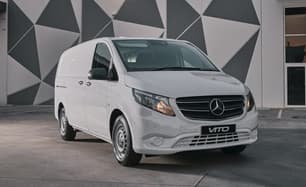
The Vito 119 Panel Van LWB offers excellent performance and driver comfort, with styling and all-round refinement that could make it an appealing business partner. However, the absence of an ANCAP star rating and a sub-one-tonne payload limit could be deal-breakers for some tradies and fleets alike, along with a list price that exceeds its Toyota HiAce LWB equivalent by almost $30K. Therefore, only a potential buyer can decide if its positives outweigh its negatives.
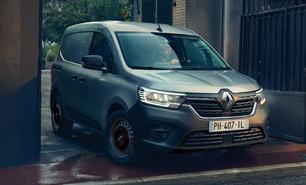
The latest petrol-powered Kangoo has the pricing, practicality and performance to win friends in Australia’s small commercial van class. If you can afford an option pack or two, like those fitted to our test vehicle, it's even better.
Our LWB test vehicle rides on a 3430mm wheelbase, with 5370mm overall length and 1928mm width. Its 1916mm height ensures comfortable access to height-restricted areas like multi-storey car parks and underground loading zones and it has a reasonably tight 11.8-metre turning circle.
The rear-wheel drive chassis includes MacPherson strut front suspension, independent semi-trailing arm/coil-spring rear suspension, four-wheel disc brakes and rack and pinion steering.
It’s arguably the best-looking mid-sized van on the market with its bold frontal styling, purposeful wedge-shaped profile and elegant contours along its flanks.
The neat and functional interior has fabric-trimmed seats with an attractive speckled pattern on their facings. It also comes standard with a chrome interior package including air-vents, air con switch panel, interior door handles/surrounds and more.
The minimalist dash design results in a clean and uncluttered appearance. Even so, it still (thankfully) includes mechanical 'piano key' buttons for numerous functions and knurled barrel-style switches for controlling audio volume, cabin temperature, airflow direction and drive modes, to avoid the potential driver distraction of touchscreen prompts.
Our test vehicle is less than 4.5 metres long (4488mm) and well under 2.0 metres in width (1859mm) and height (1830mm), making it ideal for those with either limited parking space and/or needing to access space-restricted areas in their working roles.
Its compact 2716 wheelbase results in an 11.3-metre turning circle. This is larger than you might expect, given it’s no tighter than Toyota’s shortest HiAce mid-sized van.
However, it’s also line-ball with its small van rivals, which highlights the restrictions in steering lock shared by front-wheel drive vehicles compared to rear-wheel drivers like the HiAce.
The Kangoo features MacPherson strut front suspension and its rear suspension uses torsion bar primary springing supplemented by a pair of secondary coil springs for carrying heavy loads. There’s also rack and pinion steering and a quartet of disc brakes.
Bodywork and wheels confirm its no-frills work focus, with unpainted dark grey plastic prominent on the hubcaps, front/rear bumpers and along the sides where bumps and scrapes usually occur.
It has tidy styling for a commercial van, including the sharp cabin design that combines a tasteful blend of grey and satin chrome hard surfaces with the practicality of wipe-clean fabric upholstery and vinyl floors.
With its 2068kg kerb weight and 3000kg GVM, our test vehicle has a 933kg payload rating which falls short of the one-tonne-plus capabilities of numerous rivals.
However, it’s also rated to tow up to 2500kg of braked trailer, which is 1000kg more than Toyota’s dominant HiAce. And with its 5500kg GCM rating (or how much it can legally carry and tow at the same time) the Vito can carry its maximum payload while towing its maximum trailer weight.
Access to the cargo bay is through sliding doors on each side with 822mm openings, or the single tailgate (optional rear barn-doors are also available). With load floor dimensions of 3061mm length and 1695mm width, along with 1270mm between the rear wheel-housings, it will carry up to two standard Aussie pallets or up to three Euro pallets, secured with a choice of eight load-anchorage points.
Standard equipment includes the cargo bay’s internal walls and doors being lined from floor to roof height. The optional Cargo Pack's solid metal bulkhead serves as both a noise insulator for the cabin and a sturdy cargo barrier, with large assist handles on each side and a full-width open storage area at its base ideal for storing ropes, straps, load-padding etc.
Access to the driver’s cabin is through doors with a relatively narrow opening angle. The seat padding is firm and well-bolstered, with the Cargo Pack’s two-seater bench offering sufficient knee clearance from the dash for central passengers.
However, central seat foot-room is limited for those with large boots and the bench seat also has no adjustment, so we’d recommend only short trips for a crew of three.
Cabin storage includes a large-bottle holder and bin in the base of each door, with a smaller bin above. The dash offers storage slots below the air-vents, plus small-bottle/cupholders and three handy open storage areas across the dash-pad.
There’s also a single glove box, overhead glasses-holder and a useful-sized compartment hidden beneath the passenger seat which is accessed through a side hatch.
Our test vehicle’s 1447kg kerb weight and 2010kg GVM results in a useful 563kg payload rating.
It’s also rated to tow up to 1500kg of braked trailer and with its 3510kg GCM (or how much it can legally carry and tow at the same time) it can carry its maximum payload while towing its maximum trailer weight for optimum versatility.
Cargo bay access is through asymmetric rear barn-doors which can be opened to 180 degrees for forklift and loading dock access, or sliding doors on each side with (according to our tape measure) 625mm openings. The walls and doors are lined to mid-height and there’s internal lighting.
The cargo bay’s load volume is a competitive 3.3 cubic metres and with more than 1.8 metres in length, almost 1.6 metres in width and more than 1.2 metres between the rear-wheel housings, it can easily swallow one standard Aussie pallet or two Euro pallets.
The load floor, which does not include a protective liner as standard equipment, offers a choice of six load-anchorage points.
The solid bulkhead doubles as a sturdy cargo barrier and insulates the cabin from cargo bay noise, most of which comes from the tyres emanating through the rear-wheel housings.
Given its compact dimensions, the cabin is surprisingly spacious and accommodating even for someone my height (186cm), thanks to front doors that open to a full 90 degrees, generous leg and elbow room plus a high roof relative to the seating position that adds to the airy feel.
Storage includes a large-bottle holder and bin in the base of each door, single glove box, full-width overhead shelf, large open tray in the centre of the dash-pad and (in standard form at least) a centre console with two cupholders and trays for small items.
However, given our test vehicle is equipped with the optional Business Pack, the standard console is replaced with a more elaborate version, which in addition to a pair of cupholders has a wireless phone-charging dock up front and a box with hinged lid at the back.
There’s also a sizeable clamshell-lid compartment set into the dash-pad ahead of the driver, which includes a smartphone holder on a stalk that can be easily moved to either side of the compartment depending on driver preference.
Our only criticism is the lid on the optional console box. Although it’s been thoughtfully angled downwards at the front to provide the driver with comfortable elbow support, there’s no mechanism on the hinge to hold it in the open position.
This makes it awkward to access the box, as the angled lid naturally wants to keep closing on your hand, so a detent in the hinge would be useful.
And, in a similar context, we’d also like to see hinge detents (or struts) to firmly hold the rear barn-doors open in their 180-degree positions, given their propensity to slam shut if hit by wind gusts during loading/unloading.
This can potentially injure the operator, so these devices should be standard issue, not only for Kangoos but all barn-door vans.
Our test vehicle is the Vito 119 Panel Van LWB, which like all light commercial models (except the eVito) comes standard with a 2.0-litre four-cylinder turbo-diesel engine and nine-speed automatic for a list price of $79,796.
Our example has also been fitted with a couple of factory options including a digital rear-view camera ($1031) and the 'Cargo Pack' ($2287) which adds a two-passenger front bench seat and full-width metal bulkhead with window, plus sturdy wood-flooring and bright LED lighting for the cargo bay.
These options bump the list price to $83,015, plus on-roads, so for such a sizeable spend you’d rightfully expect to get a lot more than just a prestigious badge as standard equipment.
Externally, the Vito delivers on that expectation with stylish 17-inch alloy wheels and 225/55 R17C tyres with a full-size steel spare, colour-coded front and rear bumpers, chrome grille highlights, black roof rails, rear window tint, multibeam LED headlights, LED tail-lights and classy LED puddle-lamps that project a Mercedes-Benz logo.
MY25 equipment upgrades fitted as standard include the latest 'MBUX' multimedia system with a big 10.25-inch LCD colour touchscreen, 'Hey Mercedes' voice command, wireless Apple CarPlay/Android Auto connectivity and more.
The driver’s instrument cluster gets a 5.5-inch central colour display and all models are now fitted as standard with a multifunction steering wheel with touch-sensitive controls, plus keyless start and an electronic parking brake replacing the old spring-loaded pedal version.
Standard safety has also been upgraded with active lane-keeping assistance, traffic sign recognition and tyre pressure monitoring.
Our 119 model also comes with complimentary metallic and non-metallic paint finishes, so the latest Vito is more indulgent than your typical steel-wheeled workhorse without compromising its core load-carrying capabilities.
The Kangoo petrol range is available in SWB (short wheelbase) with a choice of six-speed manual or seven-speed dual-clutch automatic, plus a LWB (long wheelbase) model available only with the auto.
Our test vehicle is the SWB auto, powered by the same 1.3-litre four-cylinder turbocharged engine shared by all petrol models, for a list price of $41,990.
That figure sits comfortably between petrol rivals in the small van class, including the Peugeot Partner Pro Short ($39,990) and Volkswagen Caddy Cargo TSI220 ($43,990).
Our example has been enhanced with genuine accessory carpet mats ($167) plus some desirable options including 'Highland Grey' metallic paint ($800) and the ‘Peace of Mind Pack’ ($1500) comprising blind-spot monitoring, front/rear/side parking sensors, driver attention alert, high-beam assist, navigation, overspeed prevention and traffic sign recognition.
It’s also equipped with the ‘Business Pack’ ($3000) which adds tyre pressure monitoring, hands-free key card, body-coloured external door handles, climate control, adaptive cruise control, centre console with armrest and storage, wireless smartphone charger, extra tinted rear barn-door glass, front fog lights, LED headlights and a leather-wrapped steering wheel.
This is in addition to its work-focused standard equipment list which includes 16-inch steel wheels and 205/65 R16 tyres with a full-size spare, plus auto-door lock when driving, rain-sensing wipers, a reversing camera and more.
The two-seater cabin, which is separated from the cargo bay by a solid bulkhead, is equipped with an electronic parking brake, two USB ports, two 12-volt sockets, a colour 4.2-inch driver’s info display and a multimedia system controlled by an 8.0-inch central touchscreen with wireless Apple CarPlay/Android Auto connectivity and smartphone dock.
In addition to its option packs, Renault also offers numerous single options including a 200kg GCM upgrade, different cargo bay sliding-door configurations, a smart digital rear view mirror and more.
The 2.0-litre four-cylinder intercooled turbo-diesel meets Euro 6 emissions standards using AdBlue.
It produces 140kW of power at 4200rpm and 440Nm of torque between 1350-2400rpm. This is paired with a smooth and intuitive nine-speed torque converter automatic, which offers three drive modes comprising 'Comfort' (the standard default setting), 'Sport' and 'Manual'. The latter’s sequential manual-shifting is via steering wheel-mounted paddles.
The Euro 6 emissions-compliant 1.3-litre turbocharged four-cylinder engine produces 96kW at 5000rpm and 240Nm at 1600rpm.
Its seven-speed dual-clutch automatic provides the option of sequential manual-shifting plus three drive modes comprising 'Normal', 'Eco' and 'Performance', which alter the shift calibrations to optimise engine efficiency in each setting. They are selected using a button on the dash.
Mercedes-Benz claims official combined average consumption of only 6.7L/100km but the dash readout was showing 8.3 at the completion of our 342km test, of which about one third was hauling a heavy payload.
This was lineball with our own figure, calculated from fuel bowser and tripmeter readings, of 8.5L/100km. Any mid-sized van that can produce genuine sub-10L economy in 'real world' urban use gets a big tick from us and, based on our figures, should produce an excellent driving range of around 800km from its 70-litre diesel tank.
Renault claims average combined consumption of 6.4L/100km and the dash display was showing 7.8 when we stopped to refuel at the completion of our 254km test, of which about one third of that distance was hauling more than half a tonne of payload. We also had the annoying engine auto stop/start function switched off for the duration.
Our own figure, calculated from fuel bowser and tripmeter readings, was higher again at 8.6 which was still within the usual 2.0-3.0L/100km discrepancy between official and ‘real world’ figures.
So, based on our consumption number, you could expect a ‘real world’ driving range of around 630km from its 54-litre tank which should only be filled with premium petrol (min 95 RON).
The Vito offers exceptional comfort for the driver, with the prestige look and feel of its leather-wrapped and height/reach adjustable steering wheel combined with a driver’s seat offering a fold-down inboard armrest, height/reach-adjustable lumbar support plus adjustable base-cushion rake and length.
A left footrest would be icing on this comfort cake, but in its absence there’s plenty of clear floor space in which to rest your left foot.
Eyelines to all mirrors are good and although the centre-seat headrest for the Cargo Pack bench partly blocks the central mirror’s rear view, most of the tailgate’s window remains clear.
Given the huge blind-spot over the driver’s left shoulder created by the cargo bay’s solid walls, the Vito’s blind-spot monitoring, rear cross-traffic alert, 360-degree camera etc are effective in creating a safety zone in such a vulnerable area.
The steering feel is superb, as we’ve come to expect from Mercedes-Benz commercial vehicles. Cabin noise remains commendably low even at highway speeds, during which the engine needs only 1700rpm to maintain 110km/h. However, tyre noise can become intrusive on coarse bitumen surfaces.
Engine response in city and suburban use is excellent, as the nine-speed auto efficiently keeps the turbo-diesel operating within its 1350-2400rpm peak torque zone. And 440Nm of torque is competitive for a van this size, ensuring strong acceleration with or without a load.
The driver-selectable Sport and Manual drive modes provide greater driver engagement and direct control respectively, but for most driving the default Comfort setting provides a commendable balance of comfort and engine response which allows the Vito to shine in a working role.
We proved this after loading 770kg into the cargo bay, which with driver equalled a total payload of 870kg which was only about 60kg under its legal limit. The coil-spring rear suspension compressed 50mm under this weight, which still left more than enough suspension travel to ensure there was no bottoming-out during our test drive.
This included our usual 13 per cent gradient, 2.0km set climb at 60km/h, in which it downshifted to fourth gear and 2000rpm (bang in the middle of its peak torque band) to easily reach the summit.
Engine-braking on the way down, in a manually-selected second gear, was impressive for an engine with relatively small displacement restraining almost 900kg in payload, requiring only one firm application of the brake pedal. Overall, it proved to be a competent load-hauler.
Apart from the huge and unavoidable solid-walled blind-spot over the driver’s left shoulder, the Kangoo feels more like a nippy small car than a commercial van.
The driver’s seat has no adjustments for lumbar support or base-cushion rake and the backrest angle is restricted by the bulkhead close behind it, but there’s still enough room even for tall people to find a comfortable driving position.
Its leather-rimmed wheel feels nice in your hands and the unladen ride quality is excellent, with nicely weighted and responsive steering feel, reassuringly strong braking and suspension settings that combine good handling response with supple bump absorption.
The turbocharged 1.3-litre four is a refined and willing performer, albeit with softer response below its peak torque band which is tapped at 1600rpm.
From there it happily spins its way to maximum power at 5000rpm, with the dual-clutch auto getting the best out of this engine in all drive modes, when either unladen or hauling a heavy load.
Its diminutive size and agility are well suited to zipping through heavy city traffic, squeezing into tight loading zones or negotiating narrow and crowded city lanes for delivery work.
Manual sequential-shifting allows more direct control if preferred when hauling heavy loads, or for those simply wanting a more engaging drive experience (particularly in Performance mode).
It's impressively quiet up to 80km/h in city and suburban use, but at highway speeds tyre noise becomes more intrusive (particularly on coarse bitumen surfaces) and some wind noise is evident.
The engine requires only 2000rpm to maintain 110km/h cruising speeds and the (optional) adaptive cruise control is resolute in maintaining its speed settings, even on long and steep descents.
To test its GVM rating, we forklifted 415kg into the cargo bay which with driver equalled a payload of just over half a tonne, or about 50kg under its legal limit.
The rear suspension compressed 55mm, which engaged the long cone-shaped jounce rubbers positioned inside the rear coil springs to provide a second stage of load support.
The Kangoo coped commendably with this payload, floating smoothly over bumps and with minimal effect on handling, braking and engine performance.
It also made light work of our 13 per cent gradient, 2.0km-long set climb at 60km/h, quickly self-shifting down to fourth gear to easily reach the summit.
Engine-braking on the way down was not as robust, as you’d expect from such a small engine with more than half a tonne on its back, but still within expectations for small vans.
Our only gripes are the absence of a full-width driver’s left footrest and that the thick panel separating the bulkhead windows almost completely blocks the central mirror’s view through the LHS barn-door. You can option a smart digital mirror with rear-facing camera to resolve this issue, but that’s another $800.
The Vito comes with a five years/250,000km warranty which includes 24-hour roadside assistance.
Scheduled servicing is 12 months/25,000km whichever occurs first. Capped-price servicing for first five scheduled services totals $5555, or a pricey average of $1111 annually.
The Kangoo petrol is backed by a five year/200,000km warranty, whichever occurs first. There's also complimentary roadside assist for up to four years/120,000km, with annual renewals available after that.
Scheduled servicing is every 12 months/30,000km with capped-pricing for the first five scheduled services totalling $2385, or an average of $477 per year.