What's the difference?
Peter Anderson road tests and reviews the 2016 Mercedes-AMG SL63 with specs, fuel consumption and verdict.
Well. They don't make cars like this anymore, do they? Time was, a big coupe or convertible were de rigeur for the well-heeled banker, with 12 cylinders almost a given and fuel consumption measured in super tankers, or more likely just not talked about at all.
The world has changed but Mercedes’ SL hasn't. That's not strictly true, of course. The SL63 may drop four of the SL65's 12 cylinders, but at just half a litre smaller and still with twin-turbos it generates the enormous thrust a luxo-barge like this needs. The things that made it an icon are indeed still there - lots of tech, a style all its own and a name everyone recognises.
Zeekr is making waves in Australia at the moment but it's not because of the car you see before you.
Nope, it’s the 7X mid-size SUV that’s captured a heap of attention and a whole lot of sales. In fact, of the 1832 sales the brand has managed over the first three months of 2026, just 54 were for the X.
But that was the old X and this is the new one. With more power, more performance, faster charging and a whole heap of pretty special equipment, especially for the small SUV segment.
So, is that enough to finally put the X on the map?
The SL's overall score is somewhat skewed by everyday concerns, and rules are rules - an average punter will find the price of this car somewhat confusing and the devil-may-care attitude to fuel consumption bewildering.
If neither of these things are a problem, then the SL63 makes plenty of - well, not sense, because it's not a particularly clever or considered car - but it fills a niche that not so long ago we all thought would go the way of the dodo.
The fact it sells so few examples is betrayed by some of the cabin amenities and the fact that Mercedes hasn't put much effort into reducing the car's weight to improve its consumption or sharpen up the handling.
The fact it still exists at all is pretty damn cool, though, and for certain people an SL63 purchase is the culmination of a lot of hard work.
If it is your dream car, the SL63 won't disappoint. Everyone who rode with me said it was mightily impressive, but you've got to really want it. When you're not far off buying a Ferrari California T or Aston Martin V12 Vantage S for the money, you'll need a real yearning for the three-pointed star to go this way. And if you do, good luck to you - you've probably worked quite hard to get here.
It's a good thing in a small package, this Zeekr X, and there are a lot of things I like about it. In fact, the only sticking point for me is the price. But that's all about perspective. If you see this as a newcomer Chinese brand, then yes, there are a lot of more affordable options out there. But if you see it as a premium player, it's really a more affordable version of a Volvo.
Note: The author, Andrew Chesterton, is a co-owner of Smart As Media, a content agency and media distribution service with a number of automotive brands among its clients. When producing content for CarsGuide, he does so in accordance with the CarsGuide Editorial Guidelines and Code of Ethics, and the views and opinions expressed in this article are solely those of the author.
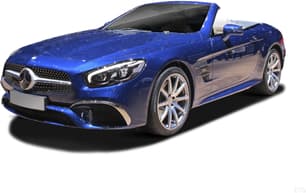
The SL has always been completely unapologetic about its size and seems to be designed to accentuate rather than hide its length and width. The long bonnet screams power and prestige, and get out of my way, and is reminiscent of the little-loved McLaren SLR project of some years ago.
The size of the Mercedes logo on the huge front grille leaves you in little doubt about the brand of car that’s about to pass you at speed and some might say (okay, I would) that its large surface area is a little vulgar.
Like the SLR, the design doesn't seem to have a particularly cohesive strategy, with a number of Mercedes elements from around the traps that climb over each other. Roof up it looks awkward because of the gigantic posterior while with the roof down it looks overly long and, again, tail-heavy.
Folding hardtops are notoriously cumbersome and need a lot of room to hide them, but the silent operation is something to behold.
Elements that are worth deleting if possible are the dodgy 'Biturbo' badges. It's that kind of bling that gets people raising their little finger at you.
The visual changes aren’t massive. This AWD version welcomes a couple of new exterior colours, including the 'Matt Khaki Green' of our test car. It also gets the two-tone black roof and there are new 20-inch alloy designs.
Elsewhere, it's the futuristic-style of design we’re used to which differentiates the X from its Volvo EX30 twin under the skin.
Inside, this is a seriously well-equipped and polished-feeling small SUV, and — unlike some of the newcomer brands to Australia — it all feels very high quality and well put together. And that includes the material choices.
I don’t even hate the fact that most of the functions are controlled via this screen, thanks to the little shortcuts glued to the home screen. I do, however, hate the fact that there’s no easy way to change the wing mirrors or shortcuts for toning down some of the safety stuff.
That aside, though, it’s a nice and high-quality feeling space.
“Practicality” is about as relevant to this car as a code of ethics is to a drug dealer or a contract killer, because the SL63 buyer is hardly worried about cupholders and boot space. For what it's worth, there are four cupholders in the two-seater cabin (which might explain why owners aren't worried about their liquid carrying prospects) and a minimum boot space of 364 litres and a maximum - with roof up - of 504, which is actually not bad.
Cleverly, there's a little robot-operated luggage cover inside the deep boot that stops your gear from being crushed when the roof goes down.
There's also space in the long doors where you might secrete a bottle of wine that would get a NSW Premier fired if he thanks you for it, and a bin in the console to hide your phone.
You know you're in a small vehicle when you can't fit two large (not those crazy American-style jumbo cups, just normal coffee-shop takeaway) coffees in the cupholders, but so it is with the Zeekr X.
The small SUV's 4432mm length, 1836mm in width and 1566mm height doesn't leave much room to spread out up front. There's ample room for driver and passenger, of course, but we are talking about a small vehicle here.
Clever storage helps to mitigate that, though, especially the super-deep storage space in the centre console and the very clever fridge that separates the driver and passenger seats.
Weirdly, though, the space doesn’t feel overly tight in the back seat. We had a massive baby seat in there, and that fit without issue. And full size humans can genuinely get pretty comfortable. I'm 175cm, and I had enough knee and headroom.
In the boot, there’s 404 litres of volume with the rear seats upright and 1247 litres with them folded flat. And it’s worth pointing out this isn’t intended to be a family car, but there’s certainly enough space for the shopping... and a pram.
It’s difficult to ponder the idea of value when a car is already approaching $400,000 at a rapid rate even before you start piling on the options. On the plus side, for a list price of $368,715 you do get an extremely long list of standard equipment.
The SL has always been completely unapologetic about its size.
Edited highlights include leather on almost every available surface, heated and cooled electric seats with a fan heater for your neck, a B&O stereo that will shatter the windscreen on request, aluminium trim that's real aluminium (mostly), Active Ride suspension, sat nav, dual-zone climate control, active cruise, LED headlights and a huge swag of safety gear.
The 12-speaker stereo also has DVD, limited smartphone integration via Mercedes' COMAND system, a seven-inch screen and, of course, Bluetooth.
This is a small SUV with a LOT of stuff. There are two trims in the Zeekr X range – the entry-level rear-drive model is $48,900, drive-away, while the all-wheel drive version we've tested is $57,900 on the road.
The obvious comparison is to the Volvo EX30, which shares its platform with the Zeekr X through both brands' Chinese parent company Geely.
As of right now, the cheapest single-motor Volvo is $56,051, drive-away in NSW, or $49,990 plus on-roads, making the Zeekr version much, much cheaper.
Anyway, outside there are 19- or 20-inch alloys, though our test car is fitted with the optional 20-inch black alloys, paired with a black-with-red-highlights interior treatment, which adds $2000 to the price.
Ours is also fitted with the electric front doors which open or close at the push of a button, and back doors that unlatch, but don’t fully open, the same way, which adds another $2000.
Both trims also get heated and cooled front seats, and heating in the rear window seats, but this AWD version also adds a massage function for front seat riders.
There’s also wireless charging, a 13-speaker Yamaha sound system and — very cool, literally — is the little drinks fridge between the front seats in the AWD variant.
Tech is handled by a 14.6-inch touchscreen with Apple CarPlay and Android Auto and there’s a head-up display for the driver.
The SL63 is powered by Mercedes’ increasingly famous V8, with two turbos along for the ride to add oomph and cut the car's famous consumption, at least slightly. The 5.5-litre unit produces a massive 430kW and a scarcely believable 900Nm of torque.
All of that heads rearward via a seven-speed dual-clutch transmission that helps sling the 4.6m, 1848kg machine to 100km/h in 4.1 seconds.
The big news here is a more powerful rear motor – meaning you get more grunt whether you opt for the rear-wheel drive or this all-wheel drive.
In rear-drive form, that boosts your outputs from 200kW to 250kW, dropping the sprint to 100km/h to 5.6 seconds. In AWD guise, your new outputs are 365kW (up from 315kW) and 573Nm, and your sprint to 100km/h falls to 3.7 seconds.
Much as is the case with the price, there's no real way to soften the blow here - the SL63 drinks like a footballer on Mad Monday, except it does it every day. The official combined cycle figure of 10.2L/100km is quite easy to double, as we did, averaging 21L/100km in mostly flowing suburban traffic. In the car’s defence, the accelerator pedal spent a good deal of time near the firewall.
The SL does have stop-start to help reduce its considerable environmental impact.
This is where it starts to get weird. The rear-drive Zeekr X is fitted with a 61kWh LFP battery, which can accept up to 230kW DC fast charging, taking you from 10 to 80 per cent charged in just 18 minutes. Total claimed range is 405km.
The flagship AWD, though, charges at a slower rate. It gets a 66kWh NMN battery and can only be charged at 150kW, meaning the same charge takes 30 minutes. Zeekr is promising a 415km driving range between charges.
There are a number of impressive things about the way the SL drives. Firstly, astronauts will be familiar with the galactic thrust of the V8. It seems endless, seamless and ready to sling the big coupe into the outer atmosphere. Few engines of any kind can match the relentless go on offer in the SL and much of the credit should go to the seven-speed twin-clutch transmission.
When you jump on the brakes and shift down, the exhaust keeps the show going with angry crackles and pops.
Containing a torque figure like the twin-turbo V8's requires a lot of electro-trickery to stop you from being launched off the road. The great thing about all that stuff is that it works unobtrusively and smoothly.
Mashing the carpet in an SL without traction control would create much sound and smoke but little forward progress, such is the twist on tap. The SL has a range of modes from full-nanny (which is meant to keep you on the slippery Alpine road you've chosen to get you to some Swiss ski resort) while turning the dial all the way around to Race loosens the bonds.
It's in this mode you'll have the most fun and it does seem that the intermediate settings are a bit of a waste of time. Race mode does little to diminish the amazing ride quality provided by the active suspension setup, but relaxes the reins on the huge rear tyres. Exiting roundabouts is suddenly a huge laugh, with the tail cheerfully breaking traction and the two-mode exhaust thundering in a most pleasant way.
Better still is that when you jump on the brakes and shift down, the exhaust keeps the show going with angry crackles and pops, with more on the way when you lift off. There's little to match the aural pleasures of a properly tuned V8 and Mercedes has resisted the temptation to quieten it down on the outside and generate a fake noise for the inside. Although that would be stupid in a convertible, if you think about it.
The SL63, despite its AMG badge, isn't about all-out handling, of course. The Ferrari California would definitely show it how it’s done on a winding country road. The SL is more about flow, building momentum and rarely shifting down to second gear. The monstrous torque is enough to keep things rolling but should you wish for a bit more of the exhaust bellow, second is there for the taking.
Hustling the big convertible feels wrong, not because it can't do it, but because it's not really what it's for. Having said that, it offers a kind of fun that nothing else on Earth will provide, not even a Bentley GTC.
With the roof up, the SL63 is a quiet place but not remarkably so. The huge sticky tyres do the cabin's hush no favours, with an annoying roar on a wider range of surfaces than you might expect.
Roof down, it's hardly a paragon of virtue. A lot of wind noise reaches the cabin, even well below the huge speeds the SL can reach. So if you want to talk, it's windows up you'll need to deploy the mesh screen that bridges the roll hoops.
Short answer? Pretty good, with some caveats.
I'm partial to a firmer ride. I find some Chinese car companies can feel like they get their suspension bits from Captain Snooze, such is the soft, pillowy ride served up. And to be honest, it makes me a little seasick at times.
The Zeekr is not like that. It has firmness dialled into the ride equation and can feel harsh at times, but also improves the drive experience, delivering connection and engagement at the cost of some sharpness on the wrong road.
It's also faster than the model it replaces, but it's also one of those cars in which the real-life feeling doesn't quite match the on-paper promise.
This thing serves up supercar speed, but it doesn't feel like it from behind the wheel. Instead, the acceleration - especially from a rolling start - feels potent, but not biblical.
From a standing start it pauses for a moment, almost like an internal-combustion vehicle might, before delivering a quick (but not stratospheric) flow of power. None of that is a bad thing, by the way. Who wants their small SUV to accelerate like a supercar?
It's otherwise an entirely pleasant drive. The cabin is serene and quiet and it's a small car that doesn't feel like one. There's nothing light or tinny about the drive experience, instead there's a heft and quality.
Six airbags, ABS, stability and traction controls, blind-spot sensor, lane-departure warning, brake assist, active safety bonnet, lane-keep assist, driver attention detection, AEB.
The Zeekr X wears a maximum five-star ANCAP safety rating, earned in 2024, which means the long list of required active safety stuff is present and accounted for, all wrapped up in what Zeekr calls its 'Intelligent Driving Assist System'.
There are five cameras, five radars and 12 sensors, which is a crazy number for a car this small.
And this is also not a car in which I was desperately trying to figure out how to deactivate any of the active safety systems – save the overzealous over-speed warning – which is a win these days, too.
There are also seven airbags, including a centre front airbag.
The Zeekr X is fitted with ISOFIX anchors on the rear outboard seats and top tether anchorages for all rear seating positions.
The SL63 is covered by Mercedes' three-year/unlimited kilometre warranty. And, er, that's it.
Zeekr's coverage is an underwhelming five-year, unlimited-kilometres, while the drive battery is covered for eight-years or 160,000km. There’s five years' of roadside assistance thrown in, too.
Service intervals are 20,000km or 12 months, with five years' of ownership setting you back a hefty $3072; an average of $614 per workshop visit.
There are currently 16 Zeekr dealers in Australia - two of which are 'pop-up' sites rather than full retail centres.
Multiple locations in Melbourne, Sydney and Brisbane with the ACT, Adelaide and Perth also covered. Others include Geelong and the Sunshine Coast but so far you're out of luck in Tassie or the NT.