What's the difference?
ONE of the great motoring successes of the past decade has been the Mercedes-Benz GLA, catapulting the brand to unparalleled prominence in the premium small SUV field and kicking off the posh little coupe-hatch crossover craze.
Cynics might say that it is essentially a jumped-up A-Class hatchback, much like the Subaru XV is basically an Impreza in stilettos. But while the small German crossover is built on the same MFA2 platform as its smaller transverse-engined Benz brethren, no body panels are shared, granting it a distinct look and personality. Unlike the little Suby…
The H247-series GLA launched in Australia in 2020 is second-generation, featuring a longer wheelbase and appreciably more space, but a shorter overall length than the popular original from 2013. It's also substantially taller.
Here we take a long, hard look at the bestselling GLA 250 4Matic.
Is there a class of vehicle more overlooked in Australia than the humble light van?
While the pragmatic and often hatchback-based small van is dwarfed in size and sales by the popular ute as the commercial vehicle of choice here, the case is completely reversed in Europe, where light commercial vans dominate city streets, favoured for their compact nature and relative fuel efficiency.
What is it about Australia which makes the ute more successful? Is it just our history of locally producing them? Do you really even need one, or are the Europeans on to something?
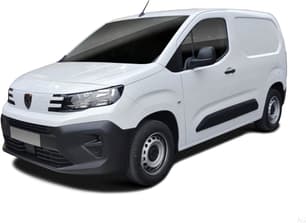
I spent a week reacquainting myself with the freshly facelifted 2025 Peugeot Partner to find out.
With Mercedes-Benz’s vast number of SUVs, there is room for an urban luxury crossover niche, and the GLA delivers in spades.
Indeed, in 250 4Matic guise, it is that rare thing – a high-riding hatch with dynamics to shame most dedicated pocket-rockets. It really is a hoot if you find the right road, regardless of weather conditions. The Benz has towering talent.
However, even without desirable options like adaptive dampers and a full suite of driver-assist safety technology, the GLA is expensive, does not quite carry off the price tag from an interior quality point of view, and struggles to maintain the degree of comfort and refinement expected from a Mercedes – with or without the $3K necessary to score adaptive dampers.
Still, especially because of the way the GLA looks, goes, stops and steers, if you can afford it, you’ll be rewarded. There’s never been a more rounded GLA.
It might not be the most modern looking or feeling small van, but amongst its competitors, the Partner stands out for its relative value and load-lugging capabilities.
It’s somewhat fun to drive but now feels a bit plain on the inside, and could benefit from a few extra options and features to make it more comfortable and maybe even a little more customisable.
Still, I think the Peugeot Partner will fit the needs of many primarily city-based small businesses or tradies who want to work out of a compact and easy-to-drive van instead of an unwieldy and often overkill dual-cab ute.
Looking like a mini-me GLC, today's GLA trades some of its predecessor’s edgier design elements like the slammed roof and exaggerated broad-shouldered stance for a more amorphous if elegant appearance. Even with the cliché plastic cladding around the squared-off wheel arches, it’s still a looker.
The net result is arguably the most attractive of all the MFA2 A-Class offshoots. It sits well within the Mercedes hierarchy of SUVs, bringing a swoopy coupe-like silhouette compared to the ultra-upright GLB.
Along with being 30mm wider, it’s also visibly taller than before, with a handy 213mm of ground clearance compared to just 157mm last time around. And the wheelbase has been stretched to the benefit of rear-passenger room – a bugbear of the old GLA. That's progress.
The Partner’s recent update brings with it a new, more contemporary face, with the ‘claw’ style light fittings clasping a body-coloured panel in place of the usual grille fitting. It also updates all the badgework to match the French brand’s passenger car range.
Thanks to these upgrades, as well as the fetching colour and Premium body-matching highlights, it looks pretty schmick at a distance, but up close you can start to tell the Partner’s relative age.
It simply doesn’t look as contemporary or coherent in its design as the much newer ground-up fifth-generation Caddy or third-generation Renault Kangoo with which it competes.
A big part of this is due to the Partner being based on a much older platform which is shared across a lot of Stellantis brands. It started life as the third-generation Citroen Berlingo in 2018, and needs to warp its look overseas to fit the Fiat Doblo, Toyota Proace and Vauxhall Combo (although the Partner is the only version sold in Australia).
As a result, up close you can see its somewhat pieced together brand identity bits and boxy, upright bodywork.
There are some odd touches, like the plastic bumper at the front not matching the gloss black highlights or body coloured bumper at the rear, and the contemporary badgework finished in a matt grey adds yet another texture and colour to the mix.
The theme continues inside, with a huge plastic dash piece jutting into the cabin space. Here, the bits from Peugeot’s passenger car range have been integrated, including the cool 'squircle' steering wheel, digital dash elements and the multimedia screen.
In the centre, the electric shifter part from cars like the current 2008 small SUV has been embedded in the sea of plastic.
It technically matches the brand identity, but it doesn't stop the Partner’s interior from feeling a bit cobbled together, rather than the more unified corporate identity which is so well executed in the VW Caddy, which is almost hard to tell apart from a Golf.
The software is another area the Partner could use some work. It’s fairly simple and straightforward to use, but the layout isn’t very customizable, both for the multimedia suite and digital dash.
Again, the Caddy runs rings around Peugeot in this department, with its more impressively-featured and nicer-looking software it shares with other VW Group passenger cars.
There are also little areas which feel like they’re behind the pace for a top-spec variant. The steering wheel is hard plastic without even the option for a softer wrap, for example, and the Caddy offers an alternate optional synthetic leather seat trim for an operator willing to dish out a little extra cash.
Compared to before, the 2021 GLA is some 122mm taller, so ushers in a higher hip point for loftier seating – reducing that jumped-up hatch feel. Headroom improves obviously, as does rear legroom, a corollary of a 30mm wheelbase stretch (to 2729mm).
Wide apertures also make entry into and out of the German-built GLA child's play, though the solid heft of their doors is serious business at this end of the segment, very satisfyingly Teutonic and totally on-brand. This is something you won’t enjoy in a Subaru XV.
Then you s-c-r-a-p-e the underside of the front doors on the pavement literally every time you swing it to get out, and wonder whether Mercedes engineers have ever been to Australia. This fail drove us spare. Heaven help the GLAs in towns and cities with bluestone sidewalks. Maybe all that extra AMG packaging is the culprit.
Still, most of the other basics are spot-on and can’t really be faulted; cosy yet spacious for four adults – especially up front, ample vision, an excellent driving position aided by heaps of seat and steering wheel adjustability, cosseting front sports buckets that you just sink into, torrents of ventilation from those delectable turbine vents and stacks of storage. Collectively they make the GLA a welcoming, opulent place to travel in. Only the hapless fifth occupant squished between the outboard rear-seat passengers might think otherwise. But nobody buys this Benz for carting people around. That's the GLB's job.
Several years ago, Daimler poached a senior Audi designer and since then Mercedes’ dashboards have morphed into a multi-coloured multimedia diorama of touchscreen technology that threatens to completely take over the universe. Choose the right combination of colours and lighting and it's like your very own White Night on wheels. Starting with 2018’s A-Class, the striking, spangly MBUX system that underpins all this has come to be widely admired and imitated. For aesthetics anyway, with its vivid hues, panoramic displays and simple, tiled applications, it’s been a real trip.
Anyway, back to reality. From a tactility and functionality point of view, there’s still work to be done.
Access to the multimedia (including our GLA's banging optional audio system) and car settings areas is possible via a mildly fiddly finger-pad arrangement down forward in the centre console, or smaller yet much more annoying thumb sensor tabs on the wheel spokes. These are not easy to modulate on the move. Additionally, their menus can be confusing to navigate through and sometimes counterintuitive in operation. Mercedes obviously realises this as a quick-guide pamphlet is provided on old-fashioned cardboard paper. How quaint.
Eventually all areas can be mastered over time, but the functionality is complicated and may overwhelm the not-so-tech savvy. Additionally, the ‘Hey, Mercedes!’ voice control is impressive for getting MBUX to perform basic multimedia and vehicle settings-related changes, but it too-often erratic, unreliable and ultimately frustrating for more complicated commands. Perhaps elocution lessons on behalf of the operator may help.
But not as much as the profound disappointment we endure from the cheapness of some of the materials, the wincing cellophane-like sounds when pressing on some of the surfaces such as the door cards, or that emanate after a particularly bumpy section of bad roads. Sheeny reflections and hard textures in a car optioned with extras that total up to nearly $82,500 just don’t cut it.
At least in this latest-gen GLA, the rear seat area seems much improved over the previous models, with more space, comfy and supportive seating (remember ours featured the $607 sliding function that ought to be standard) and a reclining backrest. All amenities are present, with deep pockets, fresh air from twin vent outlets, reading lights and thoughtfully placed armrests – but, again, the latter’s extendable cupholders feel brittle and cheap.
Further back, the 435-litre cargo area is sufficiently sized and practical for smaller family use (at last), aided by a 40/20/40 backrest fold and that slide-able cushion to extend capacity further. There is no spare wheel, but a tyre inflation kit is fitted in lieu.
Overall, then, better than before, with that fundamental rock-solid heft, luxurious aura and alluring premium-car aroma. The dazzling MBUX screen-related visuals, too, are endlessly entertaining to explore when the vehicle is not moving, but the GLA’s cabin is still not quite up to Mercedes’ reputation for exacting over-engineered excellence.
Or even to the standards of some mainstream alternatives.
So design-wise the Partner might barely hit the brief when it comes to matching it up with Peugeot passenger car design, but one area where it manages to shine is in-cabin storage.
There’s lots on offer, massive bottle holders and pockets in the doors, storage areas galore in the big plastic dash, with trays in the centre and passenger side, as well as behind the multimedia screen and under the shifter.
There are a set of non-variable bottle holders cut out of the top of the dash, as well as hidden storage compartments under both front passenger seats.
I should mention at this point the Partner has a three-across front bench, although actually putting three people in there will be quite the squeeze, especially given the centre of the dash juts quite far into the cabin area, leaving the centre occupant with nowhere to put their knees.
Maybe it will suit a child in a pinch if you plan to have this as a small business vehicle which may need to be dual-purpose from time to time.
There’s also a fold-down rotating table thing in the backrest of the centre position, designed to be used with a laptop. Another feature of the Partner’s dash is physical toggles and buttons for the climate controls, which are increasingly rare in favour of touch-based menus.
In terms of load area dimensions, the Partner LWB offers 3.9 cubic metres (excluding the bulkhead) and dimensions come in at 2167mm long, 1527mm wide (1229 between the arches) and 1243mm tall. This should accommodate two Euro-sized palettes.
Loading and securing should also be relatively breezy thanks to sliding doors on both sides, a barn door rear which hinges out of the way for forklift loading, and no less than 10 tie down rings.
It also scores decent LED lighting in the roof, so you can see what you’re doing in a poorly lit warehouse, or when using the load area at night.
As for capacities, the Partner LWB has a payload of 898kg. It claims a 950kg braked towing capacity (not much more than the unbraked of 740kg) although in reality 740 seems to be closer to the limit thanks to the 74kg towball download rating.
How does this compare to the Caddy? I was surprised to find the Caddy 5 in equivalent LWB form has a smaller load area (3.7 cubic metres) and a significantly lower payload of 695kg.
However, it can tow slightly more (up to a claimed 1500kg - however has a 75kg max towball download). Additionally, the Partner isn’t able to be fitted with a tailgate to replace the barn doors (an option which some buyers may prefer on the Caddy).
A full size spare wheel is present on all variants to keep you on the road.
The latest GLA’s evolved dimensions is presumably to put some space between it and its GLB 5+2-seater SUV fraternal twin, giving Mercedes-Benz blanket SUV market coverage. From GL (for Geländewagen, or off-road vehicle) A, B, C, E and S (as well as the G-wagen icon that started it all back in '79), there’s a premium option for everybody… if not every budget.
In the GLA’s case, the entry-level 200 front-driver starts from $55,100 (before on-road costs); moving up to the $66,500 250 4Matic, and then to two performance powerhouses – the AMG 35 4Matic and supernaturally fast AMG 45 S 4Matic+ flagship, from $82,935 and $107,035 respectively.
Even the base GLA 200 includes new and improved autonomous emergency braking (AEB) among other safety-related technologies, as well as the brand’s glamorous MBUX multimedia system with wireless Apple CarPlay/Android Auto, digital radio, satellite navigation, reverse camera, climate control, wireless phone charging, powered tailgate, automatic parking, auto high beam, rain-sensing wipers and 19-inch alloys.
All the extra techy stuff doesn’t come for free though – prices jump almost $10,000 over the less-powerful previous-generation GLA 180 that the 200 replaces – though we expect the former badge to return in time.
In contrast, the GLA 250 4Matic is ‘only’ $3500 more expensive than its predecessor, gaining a terrific 2.0-litre four-cylinder turbo instead of a Renault-Nissan-sourced 1.3-litre turbo, all-wheel drive (with an Off-Road Engineering Package that gives the car some very light off-road capability), and other niceties such as heated electric front seats with memory function, a panoramic sunroof, more direct steering and lowered suspension (for a sportier drive).
Note that adaptive cruise control costs extra – a curious oversight at this price point. It’s part of a $1531 optional Driving Assistance Package, which also includes Active Lane Change Assist, extended semi-autonomous driver assistance in traffic jams (meaning full stop/go capability) and route-based speed adaptation. Do it.
Our test car had it, along with a $915 Vision Package (includes fancier adaptive headlights and a 360-degree camera), $1915 Sports Package (with AMG styling upgrades inside and out, perforated disc brakes, privacy glass, shift paddles and lowered ‘Comfort Suspension’), a Night Package (less brightwork, more black finishes) and sports direct-steering with corresponding wheel), $1531 20-inch AMG Black alloys, a $1915 Communications Package with upgraded audio and head-up display among a litany of other gear, $2838 AMG Exclusive Package with adaptive dampers, cooled as well as heated front seats, an ‘Energising Comfort’ ambience-enhancing 'experience' and special leather upholstery, $1531 Patagonia Red metallic paint and $607 rear-seat fore/aft adjustment. Total cost after the added luxury car tax: $82,446. Gulp.
Not cheap in anybody’s language. Nor, for that matter, are the GLA’s rivals, which owe their existence to the original’s spectacular sales trajectory and the trail that this blazed last decade.
Lexus’ loaded UX 250h hybrid AWD and Audi Q3 Sportback 40TFSI quattro slip slightly below the standard GLA 250 for both pricing and power, while the BMW X2 M35i and its Mini Countryman JCW cousin, along with Jaguar’s E-Pace E250, also offer in-the-same ballpark pricing but quite a bit more space as well as pace.
It’s also worth noting that Volvo’s XC40 T5 AWD conspicuously undercuts all from just $57,000, though now we’re talking about putting square pegs into round holes. Speaking of which…
Given the uniquely European nature of a van like this, it makes sense the remaining options offered to us are only from French and German makers.
In fact, this Peugeot Partner is one of just three left for you to choose from. Starting from $39,990, before on-roads (for a Pro SWB), the Partner goes into battle against its Gallic nemesis, the Renault Kangoo, and the defending small van champion in the form of VW’s popular fifth-generation Caddy.
Unlike its rivals, though, the Partner range is automatic only and exclusively powered by a three-cylinder, turbo-petrol engine (if you exclude the electric ePartner).
This immediately gives it a leg up, as in its most affordable form, it already undercuts the base manual Caddy (TSI220 SWB - $40,990) and most affordable automatic Kangoo (SWB auto - $41,990) although the Renault holds onto the most affordable price-tag in the segment if you’re happy shifting yourself, at $38,990 for its SWB manual.
The specific version we’re looking at for this review is the Premium LWB, which wears a price-tag of $45,990 and adds an additional 350mm to its length over the SWB.
Standard kit on Premium versions includes items otherwise missing on the Pro, like 16-inch alloy wheels instead of steel wheels, LED headlights instead of halogen, push-start ignition instead of turn-key, dual-zone climate instead of single-zone as well as body-coloured highlights, rails and door handles in place of plain plastic fittings.
Standard items across the range include a 10-inch central touchscreen with wireless Apple CarPlay and Android Auto, a digital instrument cluster, cloth seat trim, a 180-degree reversing camera, a digital rear vision mirror to make up for the standard windowless barn doors, a glaze-finish bulkhead to separate the cabin and load area, as well as an array of active safety items we’ll explore later.
The fetching blue scheme our car was painted in comes at an additional $690, and from there you can modify further with an array of factory options.
Key among them are a choice of windows for each sliding door ($486 each) or the barn door ($503), a metal cargo barrier to protect the bulkhead ($1146), an LED cargo light kit ($350), roof racks ($536) or a more comprehensive roof kit ($2610).
Additionally, long-wheelbase versions can be equipped with a cargo bay floor kit ($894), wall protection kit ($960) or the rubber floor mat which our van had ($600).
A complete towing set-up will set you back $1045 for the towbar and $510 for the wiring harness.
From a base of nearly $50K then, you can easily add a few thousand to the price once you start ticking boxes, but it is important to note not every commercial van, even ones a size up, offer this level of factory customisation.
This gives the Partner deeper (and warranty-covered) customisation for various trade purposes straight from the factory.
For what it’s worth, I matched our test car in the configurator and ended up with a final price of $52,429 with drive-away pricing set to Sydney.
Out of curiosity, I also priced up a VW Caddy Cargo LWB petrol auto with as close as I could get to the same equipment as this Partner Premium, and was surprised to find I had to tick a lot more option boxes to get LED headlights, alloy wheels (although the Caddy alloys are larger at 17-inches), premium paint, colour matching body panels, keyless entry with push-start and a rubber floor mat.
The total price for the spec-matching Caddy came in at $57,952 drive-away in Sydney.
Mounted transversely, Mercedes’ M260 1991cc 2.0-litre four-cylinder petrol engine features a twin-cam, 16-valve design, a twin-scroll turbocharger and variable-valve timing, to help deliver 165kW of power at 5500rpm and 350Nm of torque at a low 1800rpm. With an impressive 97.2kW per tonne, it can hit 100km/h in 6.7 seconds, on the way to a 240km/h top speed.
All four wheels are driven by an eight-speed dual-clutch transmission (DCT), though most of the torque at lower speeds or during reduced throttle loads is delivered to the front wheels until extra traction is required out back. The gearbox is one of the very best of its type we’ve experienced – seamless, strong and largely lag-free.
There is just one combustion engine option in the Partner range, a three-cylinder 1.2-litre turbocharged petrol unit producing 96kW/230Nm which drives the front wheels via an eight-speed automatic transmission.
The only alternative to this is the E-Partner which sports a 100kW/260Nm electric motor instead.
The three-cylinder petrol is a perky unit sourced from Peugeot’s passenger car line-up, although the Partner range doesn’t quite offer the VW Caddy’s breadth of options; the choice of a 1.5-litre four-cylinder petrol or a 2.0-litre diesel in two states of tune.
Weighing in at 1668kg (kerb), and with a bluff nose and high ground clearance also not helping, we didn’t expect great fuel economy, particularly given how hard and fast the GLA 250’s performance bandwidth is. It’s tempting to just blast your way from point A to point B.
However, at the pump we averaged 9.8 litres per 100km, which isn’t too bad at all considering the available muscle. The official figure is 7.5L/100km, for a carbon dioxide emissions rating of 170 grams per kilometre. With a 51-litre fuel tank, the theoretical range is around 680km.
Note that the GLA 250 requires 95 RON premium unleaded petrol as a minimum.
One of the key downsides of the Peugeot’s Euro-compliant turbo-petrol engine is it requires mid-shelf 95RON fuel, which could be a blow to those who want to drill down on running costs.
Claimed fuel consumption on the official combined (urban/extra-urban) cycle is decent, at 6.3L/100km. Ours spent the week mainly urban commuting and landed closer to the official urban number of 7.3L/100km with a total of 7.2L/100km over a few hundred kilometres.
The 60-litre fuel tank should allow for roughly 950km of driving range at the official consumption. More like 830km using our test figure.
A soaring 2.0-litre turbo engine application, this is a slick, stirring and robust performer that can also do efficiency as effortlessly as launch the GLA 250 4Matic towards the horizon. Let’s not mince our words. This is a fast and fiery mover.
Three drive modes – Eco, Comfort and Sport – provide a wide spectrum of acceleration and throttle responses, and all deliver precisely what you’d expect. Eco’s fine for pottering around town smoothly and serenely; Sport morphs into a searing and seamless speed demon; and the default Comfort sits somewhere in the middle as the best of both worlds. There really is no faulting Mercedes’ M260 masterpiece.
The DCT also happens to be one of the better dual clutch autos, avoiding the lag and clunkiness pitfalls usually associated with this sort of gearbox. It’s even comparatively smooth off the line on hills. Ours came with the optional handy set of manual-mode paddle shifters, adding a welcome level of interactivity autos tend to overlook. Too bad Mercedes persists with that fiddly column lever that is forever prone to knocking the car out of drive. Even after 15 years, it's still so annoying.
What all this means for the urban driver is strong acceleration for flitting in and out of traffic gaps, as well as incredibly instantaneous point-to-point responses for commanding manoeuvrability, thanks to ultra-eager steering and assisted by outstanding brakes.
With struts up front and a multi-link rear end as standard, the GLA 250’s chassis, too, is a transformative for what is essentially a high-riding hatchback – but only if your pockets are deep enough.
Fitted with that near-$3K AMG Exclusive Package that includes adaptive dampers, our Benz displayed a definite hot-hatch attitude that really would make it the darling of Golf GTI owners who’ve outgrown their rides but not their girl/boyracer desires. Superb handling and hunkered-down roadholding really do make this the driver’s premium compact crossover. You can pretty much point and shoot this Merc as you might a Golf R, and likewise in most weather conditions thanks to all that reassuring tenacious grip.
Plus, if you’re put off by the hard ride in Sport, the Individual mode allows the driver to engage the soft damper mode while the engine and steering retain the hardcore settings. It’s a win-win situation – as long as you can stretch to that AMG Exclusive pack. We strongly recommend it, given the balance between ultimate high-speed control and comfort.
However, while this is all good news for rural and country folk seeking hot crossover fun, back around town, poor urban road conditions can reveal a flaw in the chassis’ ability to properly smother bumps and ruts. It’s the small frequency stuff that seems to transmit through, never really settling down.
The result is a jittery ride, that may somewhat undermine the GLA’s upmarket sheen. There’s also a fair degree of road noise coming through. Perhaps sticking with the 19-inch alloys instead of those lovely 20-inch rims is the solution here.
One thing which I always like about these little European vans for trades is they’re usually very humane and easy to drive compared to a dual-cab or a van in a larger market segment.
They tend to offer closer to the feel of a passenger car, with some of the little luxuries which are missing in big hollow diesel units like some form of refinement and less noise.
The Partner is no different, and shone in some ways I did not expect.
The brand has done a good job of making it feel like a Peugeot passenger car from a touch-point perspective with the dash elements and the small chuckable steering wheel.
It also has a swift steering ratio, making even this LWB version feel nimble and agile for darting around corners and down tight laneways just as I’m sure its French creators envisaged.
The peppy three-cylinder engine helps the hatch-like feel. It offers a punchy turbo surge and a satisfyingly gruff soundtrack, which makes this little commercial offering quite fun to drive.
The ride is also remarkably smooth for a commercial vehicle, even completely unladen. Car-like suspension handles the bumps and potholes of the city environment well, which could make this a good choice for delivery drivers who will spend a lot of time in urban environments, and maybe are less concerned about getting so close to the GCM rating.
However, it’s not quite as polished as the Caddy, which won me over big time when the fifth generation version arrived in 2022.
The Peugeot can suffer from significant bouts of turbo lag, and its eight-speed transmission can be occasionally jerky from a stand-still, making for the odd awkward moment at T-junctions and roundabouts where this van takes a second to get going again.
Additionally, some of the fun, refined feeling wears away over time as you constantly come into contact with the hard plastic trims of the interior, and the scratchy urethane steering wheel.
This can get a bit jarring over a full day of driving. It’s for this reason VW puts a leather-bound steering wheel in even basic versions of the Caddy these days.
The software also leaves a lot to be desired, with minimal customisation and laggy interfaces.
Sure, the reality is you’ll spend most of your time working with Apple CarPlay or Android Auto which worked perfectly in my time with the car, but it would be nice to have more customisation for the dash and a few nicer menus for the multimedia screen.
All in all, then, it’s a nice little van to drive, and is excellent at urban duties, but it has a slightly industrial character which will eventually catch up with you after a long day behind the wheel.
The Caddy is better in pretty much every way behind the wheel, but then it also costs over $5000 more in equivalent spec and can't carry as much stuff.
Unlike many luxury brands that persist with a sub-par three-year warranty, Mercedes-Benz offers a five-year/unlimited kilometre warranty.
Intervals are every year or 25,000km, with a capped price service plan starting at $550 for the first year, $750 for the second year and $1250 for the third year, totalling $2550. Alternatively, buyers can also choose a Service Plan, starting at $2050 for the first three years (saving $500 from the normal capped-price service plan), $2950 for four years and $3500 for five years.
The Partner is covered by a par-for-the-course five year and 200,000km warranty which applies to the rest of its light commercial range, paired with five years of roadside assistance.
The Partner requires servicing once every 12 months or 15,000km.
When it comes to pricing, you can package the car up with either a two- or four-year service plan (priced at $400 or $1000, respectively) which Peugeot claims can save you up to $437 compared to a-la-carte servicing.