What's the difference?
The Mercedes-Benz EQS is a car faced with multiple momentous responsibilities.
Not only is it the latest purely electric offering from Mercedes-Benz, but it also has to represent the future of the historic S-Class limousine, and in the AMG-spiced 53 trim we’re reviewing, it has to represent the future of the brand’s driving experience, too.
So can this oddly-shaped EV really take it all on and succeed? Read on to find out.
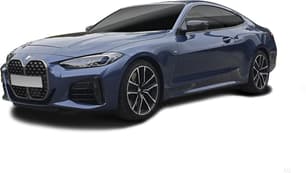
To say the BMW M4 CS is a hot ticket in Australia is something of an understatement.
Consider this. There is an even more expensive one, the M4 CS Edition VR46 – at a cool $346,900 – and it sold out in less than an hour. Now, granted, Australia only got four examples, but still, demand was running hot.
That car makes this one, the regular M4 CS, seem like an absolute steal. It's only $254,900 (yes, the word 'only' is doing a lot of heavy lifting in that sentence), and it shares the same upgrades, and makes the same monstrous power, as the VR46 – for Valentino Rossi’s 46th birthday – only it does it for around $100K less.
See? A bargain. At least, that's how I'd be justifying it to myself if I had a quarter of a million burning a hole in my pocket.
So, this or a Porsche 911? Read on.
It’s unquestionably fast, certainly luxurious, but I’ll be honest, I don’t think the EQS is going to be for everyone. The styling will be challenging for some and the glittery interior tech offering might be a bit much, even for the more rusted-on Benz traditionalists.
Then again, shouldn't an electrified flagship be all about challenging the status quo, trying new ideas, and bringing new fans to the brand? If anything, I think that might be what the EQS does best.
Brutal, bruising and utterly brilliant, the M4 CS will be an acquired taste due to its no-compromise approach, but those willing to take the leap will find a performance car like few others at their disposal.
We’re going to start with design, because from the outset it is a topic which simply must be addressed.
Mercedes has flipped the script when it comes to its next-generation design language worn by its dedicated range of ‘EQ’ electric cars. It follows a trend we’re seeing across the industry of larger, more amorphous vehicles which need the space to accommodate batteries, but also the aerodynamic traits to extend driving range and keep energy efficiency as high as possible.
The issue when it comes to the EQS is it essentially puts the iconic S-Class shape, refined over generations, in the bin, and replaces it with something a bit more challenging to the eye.
Gone are the angles, louvres, and deeply three-dimensional grilles, replaced by sleek rounded edges, wheels which reach to the very edges of the chassis, a blank, almost plasticky grille and a more liftback-like profile than one of a traditional sedan.
You’d better get used to it, too, because the smaller EQE is near identical in shape, a trend which will no doubt continue across other EQ models.
It’s the finer details that add character, particularly for the 53 with its AMG-leanings. The lack of shapeliness down the side makes the massive 22-inch wheels stand out more, and the rear three-quarter might be this car’s best angle, with a colour-matching spoiler flicking up off the small bootlid, and delicate badgework illustrating this car’s place in the world. Our car, which appeared in a silver shade timeless on Mercedes-Benz models, made the black AMG highlights on the front and rear bumpers shine, and some of the usual Benz shape is claimed back through the EQS’s LED light profile, both at the front and rear.
There’s no doubt it’s a step into the future, and an overall shape which is a marriage of both form and function. While looks are always subjective, I still think it may be a hard sell, even to some of the most committed fans of Mercedes design.
The M4 CS is familiar in all the right ways, but definitely looks significantly jacked up compared to its lesser siblings.
Part of that is the extensive use of carbon everywhere, from its bonnet panels to its roof, front lip, side skirting and boot spoiler. But also because of its super-muscular angles and creases, including the huge dome in its bonnet.
Also exclusive to this M4 CS is the light treatment, with the front LEDs lighting up with yellow highlights the brand says are supposed to be reminiscent of GT racing cars.
At the back, the rear lights are flush with fibre optic lighting, lending a flowing and unique light signature that looks epic at night.
Inside, it's a sea of carbon, with the lightweight racing seats, the dash inserts and the centre console all lined in it. It is a perfectly finished space, though, and one that's also flecked with red, including a 12 o'clock band on the thick-rimmed steering wheel, the seat backs, the contrast stitching and the paddle shifts.
Be warned, though, it takes some acrobatics to climb into or out of the CS. The seat bottoms have these super high edges that double as grab handles, but require some awkward contortions to navigate.
In short, it looks angry, this M4 CS, inside and out.
The EQS is enormous, so it’s a good thing there’s huge amounts of interior space, even for what is ostensibly an S-Class, and with its bespoke electrified underpinnings, it also scores the kinds of innovations we like to see from electric cars.
These include things like a huge cutaway under the floating dash for extra storage, which the brand has seen fit to add elastic tie-downs so your objects don’t go flying in corners!
Storage up front is otherwise excellent with decent bins in the doors with height-limited sections for bottles, a flip open tray which houses the wireless charger and a set of fold-away bottle holders, and split-opening armrest console box which is deep and features yet another set of USB-C outlets.
Adjustability is great for front passengers, but ergonomically I found something a little weird about the digital dash. For me to rest my arms and hold the wheel, I had to set it so low the top of the wheel obscured the instruments, and if I set it high enough to see the full cluster, to comfortably hold the wheel my elbows would need to float above the armrests. Weird.
It doesn’t end there for the entirely touch-based controls either. While the (admittedly very cool-looking) wheel is packed full of buttons and touch sliders, they require near-surgical precision to operate with your thumbs, distracting while you’re driving, and the enormous centre screen’s main drawback is the fact CarPlay, for example, was not designed for the buttons and functions on the far left to be a metre away from where the driver’s hand is. Again, it’s distracting to have to lean out of your seat to hit the ‘back’ button on most context menus.
I would like to tell you at this point the Mercedes-Benz menus are mercifully simple to aid you with such an overwhelming system, but this isn’t true either. For some reason, there’s a ‘vehicle settings’ menu accessed easily through the main panel, or another menu with a separate set of key functions activated by a car-shaped shortcut button on the floating console. Why? Why aren’t these menus the same? I discovered this in my attempts to use the ‘raise vehicle’ function when faced with a steep driveway. You’re going to need to use this function often in a car measuring over 5.2 metres long, so hiding it in a confusing menu is an interesting choice.
The back seat is where the EQS should shine, and in terms of space it’s stellar. I can barely touch the seat in front of me when set to my own (182cm tall) driving position. It comes with some soft pillows which attach to the headrests, the sunroof extends back there nicely while not impeding on the great headroom, and the lavish trims all continue into the doors and seat bases, too.
The drop-down armrest has a trick pop-out bottle holder in it, and there are a further two on the doors. Amenity-wise rear passengers score four adjustable air vents with two climate zones adjusted via their own touch-panel, but I was interested to see there was a lack of screens back there.
This is particularly notable as most S-Classes are bought to be driven in rather than to drive, and the screens are so much in the front, I was expecting a matching offering for rear travellers. Not so.
You also can’t adjust the rear seats at all, and unlike some EVs coming out in this space, there’s no recliner mode for the full business-class experience.
The boot is much larger than in the smaller EQE, with the EQS making use of its extended dimensions nicely. The floor is fully flat, and has a secret compartment underneath for the storage of both your included Type 2 to Type 2 public AC charging cable, and Type 2 to wall-socket converter for garage charging.
With a total space of 580 litres, the EQS comfortably consumed our entire CarsGuide luggage set with space to spare.
It all boils down to how you classify practicality in a car like this. I mean, the basic stuff is all there – it's got two doors, four seats and a boot capacity of 440 litres.
It measures 4801mm in length, 1918mm in width and 1399mm in height, and room for front seat riders is good, but less so for anyone you squeeze into the back. There are even ISOFIX points for a child seat.
But if you consider practicality the practical pursuit of performance, then the M4 CS has plenty of perks.
At a whopping $328,400 before you start ticking options boxes or apply the necessary on-road costs, the EQS 53 is at the pointy end of the price scale, even for an electric car.
Dig a little deeper though, and there are some surprises. For example; this top-spec EQS still manages to be more affordable than the top-spec combustion S-Class ($335,100) and when compared to its rival from Porsche, the Taycan Turbo S ($351,000), it comes out with a cost-advantage.
It is significantly more expensive than BMW’s electric flagship, the upcoming i7 sedan, which starts at $297,900 before on-roads for the xDrive60.
Still, falling between BMW’s core EV offering and the Porsche Taycan is a fitting sweet-spot for our Mercedes EQS.
Equipment is out-of-this world, with the EQS not only having ridiculous performance figures we’ll talk about later, but also standard four-wheel steer, all-wheel drive, adaptive suspension, full leather interior trim with multi-way adjust for the front seats, complete with heating, cooling, and several message programs.
It also has the (again, completely over-the-top) 1.4-meter long MBUX ‘Hyperscreen’, which is made up of two large screens for the instrument cluster and passenger touchscreen, as well as an enormous centre panel for the climate and multimedia functions, wireless Apple CarPlay and Android Auto connectivity with matching wireless phone charging bay, augmented reality sat-nav, a panoramic sunroof, LED headlights, LED interior lights with selectable RGB settings, and an auto tailgate.
Enough stuff for you? Wait! Says Mercedes, there’s more! The Dynamic Plus package ($7690) boosts performance even more and adds an extended cooling system and launch mode, an aesthetic Night Package ($3990) which adds mainly black and chrome trim pieces as well as 22-inch wheels, ceramic composite brake package ($9990), augmented reality head-up system ($2690) and a wall box home charger ($1450).
Plenty for buyers to work with then. For now though, they’ll only be able to choose the top-spec AMG-tinged 53 version, as lower grades are yet to arrive in Australia. It will be the same for the smaller but near-identically specified EQE 53 when it arrives in Australia, so the message is pay big or go home to get on the latest EQ tech early.
We're talking a $254,900 entry price for the M4 CS, which – despite my attempts at justification – is a lot. Remember, the regular M4 is $168,700, and the M4 Competition is $186,500, so we're talking a sizeable premium here.
BMW justifies that price increase in two ways. The first is scarcity, with the M4 CS limited to just 50 examples in Australia. And the second is by dialling up every aspect of the M4's performance to terrifying levels.
The engine outputs are up, the weight is 20kg down, there are better brakes, better seats, a louder exhaust, a stiffer chassis – it goes on and on.
We'll get to some of the performance stuff in a moment, but here's what else your money buys you with the M4 CS.
It starts outside with staggered alloys, 19-inch up front and 20-inch at the rear, wrapped in track-ready rubber. There's also hi-po 'M Compound' brakes with red calipers, lightweight carbon racing seats that are heated up front, an Alcantara-trimmed steering wheel, the 'M Carbon' exterior package with carbon bonnet and roof, adaptive 'M Suspension' and a titanium exhaust that howls like the winds of hell.
The less performance-focused stuff is similar enough to the other M4 models including a 12.3-inch centre screen with digital radio, Apple CarPlay and Android Auto, a second 14.9-inch screen that handles your driving data and a head-up display. There's also twin-zone climate control, Merino leather upholstery and ambient interior lighting.
But all of that is secondary, really. This is about performance, specifically of the brutal kind.
In the electric era, do performance figures matter? AMG would argue a resounding ‘yes’ although I would argue the art for premium automakers like Mercedes is now in producing suspension setups that can handle the weight of batteries.
Regardless, the EQS has a dual-motor setup, capable of providing a whopping 484kW/950Nm in its standard form, or an even more incredible 560kW/1020Nm with the Dynamic Plus package. Look, you’re spending over $328,000 already, what’s an extra $8k or so to put pretty much any other four-wheeled object in your rear-vision mirror? With the Dynamic Package, a sprint time of 3.4 seconds is… brutal.
The four-wheel drive system is necessary to keep all that power under control. While some enthusiasts may be turned-off by the four-wheel steer function, I’d read on to the driving section to see why it’s not only worth having (try turning a 5.2-meter long sedan around without it) but also not as intrusive as you think it’s going to be in the corners.
BMW has found yet more grunt lurking in its trusty 3.0-litre 'M TwinPower' six-cylinder petrol engine, with the M4 CS now pumping out 405kW and 650Nm.
That's a decent jump from the 390kW and 620Nm served up by the M4 Competition, and a giant leap from the outputs of the 'base' M4 – 353kW and 550Nm.
Predictably, then, the CS is the fastest of the lot, knocking off the run from 0-100km/h in 3.4 seconds, compared to 3.5 and 4.2 in the Competition and M4, respectively. The top speed is also dialled up to 302km/h.
All that power is channeled through an eight-speed automatic and sent to all four wheels on demand, with the help of an 'Active M Differential'.
Even at the official energy consumption of 23kWh/100km, the EQS’ drivetrain is essentially the electric equivalent of wielding a massive V8 under the hood. It’s not by any measure impressive, but then, with 107.8kWh of lithium batteries under the floor, it’s perhaps impressive it’s not worse than an Audi e-tron, particularly since the EQS weighs in at nearly three tonnes.
The battery is one of the largest on the market in Australia, offering the EQS a driving range of 585km on the WLTP cycle. Very impressive.
On the charging front, the EQS can charge at up to 200kW on DC thanks to an advanced cooling system, and on AC charges at 11kW in its stock form or 22kW with an optional $2490 upgrade. Again, at $328k, why wouldn’t you want the best charging system you can get for so little extra?
You can also package in a Mercedes-Benz branded wallbox for your home garage, valued at $1450 before installation costs.
To give you an idea of charging times: Expect a little over two hours (from 10 per cent) on a common 50kW DC public charger, nearly ten hours from an 11kW AC public charger, and a number not even worth mentioning from a home wall socket.
The M4 CS is fitted with a 59-litre fuel tank, which – given the BMW's official fuel claim of 10.2 litres per hundred kilometres – should deliver a driving range on a full tank of 541 kilometres.
But... BMW also says the regular M4 – you know, the one that makes 52 fewer kilowatts and 55Nm less torque – uses 10.1L/100km, so do with that information what you will.
The EQS is quite surreal to drive, and you’ll notice a whole bunch of odd things first.
Immediately the driving position will be surprising. It’s nothing like what a traditional sedan feels like. This is because you sit high in the EQS. This helps facilitate extra under-floor space for the batteries, but the way Benz puts it, this driving position is deliberately SUV-like to grant buyers the more desirable view of the road which they now (apparently) seek.
It has some oddities, as mentioned earlier, with the fixed digital instrument cluster, and the way the wheel can block it depending on your height, but on the whole I found visibility in the EQS to be pretty good, despite limitations out the distant rear window.
Sound-wise AMG has created a bespoke soundscape for its electric models, two soundscapes, in fact. One sounds like a facsimile of a distant, digitised, V8 (weird) while the other is a bit more sci-fi. I can’t decide which one I really like, but props to the brand for thinking of individual sounds for things like accelerating, regenerative braking, as well as turning the car off and on. There’s even a humming tone for when the car is idling.
AMG says “it doesn’t work without sound” and I suppose it does add some sort of feedback to the experience which would otherwise be missing. I’d rather have it than not I suppose is the take-away here.
The acceleration is completely over-the-top in Sport or Sport+, allowing you to move such a large vehicle forward in an almost comically quick fashion. It has the sudden urge of a Tesla, but with an element of grace that follows courtesy of the adaptive suspension which, not only settles the ride, but keeps the car comfortable.
It is the suspension though which sets cars like the EQS (and even rivals from BMW) apart from the likes of Tesla. The ride in the EQS is superb, befitting the heir apparent to the S-Class throne. It’s hard to find a ride so void of issues, particularly in the everyday Comfort drive-mode. It’s not just the fact I can’t complain about brutality from this car’s oversized 22-inch wheels, but also there has clearly been delicate work conducted to control the rebound, body-roll, and jiggle which can occur as a result of moving around a near-three-tonne chunk of aluminium, steel, lithium and leather at enthusiastic speeds.
This settled ride combines gloriously with the four-wheel steer system to make the EQS a keen corner carver, despite gravity constantly working against it.
I was surprised to find the four-wheel steer system to be pretty much identical in feel to the system also employed in the EQE and new C43, in that it is unobtrusive to the overall feel of the car, only helping to add a little extra turn-in to the corners when need be.
In a vehicle as long as the EQS it’s a bit more noticeable, and requires a moment of brain-adjustment, as the car (bizarrely) goes exactly where you point it, requiring no over- or under-adjustments, the grip from the enormously capable four-wheel drive system refusing to let any shift under sensible driving conditions.
So, it’s comfortable enough to be an S-Class, fast enough to be an AMG, but I must say there is something a bit clinical about how it attacks the road. Missing some of theAMG drama we’ve become so used to from the brand’s combustion range, perhaps?
The hardest and angriest M4 of all time is, perhaps unsurprisingly, hard and angry. This is a race track specialist, but because I don't happen to own one of those, my first experience with the barking (and barking mad) M4 CS was navigating my way back from BMW's inner-city dealership.
Like it or lump it, you're going to read some Porsche comparisons here, because you're talking not too far off base 911 Carrera money, and suddenly I find the two Germans doing battle for a spot in my dream garage.
First things first, the BMW won't be much chop for daily driving for most people. Happily, I have a sickness for uncomfortable sports cars. It tells me that no compromises have been made in the pursuit of punishing performance.
A good thing, too, because the BMW, at city speeds, can be punishing. Everything feels heavy, the seats aren't overly comfortable – especially the hard bits that tend to dig in when cornering – and it stiff-arms its way over road imperfections, that exhaust booming and barking as it does.
Again, I loved it, and you probably will, too. But it's still not the kind of car I'd relish sitting in the morning peak hour rush in.
But escape the confines of the city and the BMW M4 CS suddenly makes a whole heap of sense. The acceleration is genuinely brutal, and wonderfully theatrical, with that quad-tipped titanium exhaust barking and snarling as you rocket towards 100km/h.
The steering is brilliant, with feedback fed to your wrists via that thick-rimmed wheel, and the entire experience feels sharp, super engaging and edgy.
You can push the M4 hard and fast, and I'm certain my limited talents would run out far before the BMW's would, but there's this thrilling sense of peril sparked by the aggression of the experience, that I love.
It's like the magic of a roller-coaster, I guess. Even if you know nothing is going to happen, you never really know, right? And in that lies the magic.
But back to original question, this or a Porsche 911? There's no doubt a Carrera is a better all-rounder, in terms of comfy commuting and race track fun, but this angry M4 is all shouty theatrics, all of the time.
I bloody love it.
The S-Class has always been a safety leader, and it appears the EQS is no different.
On the active front expect Autobahn-speed auto emergency braking with pedestrian and cyclist detection, lane departure warning with lane keep assist, blind spot monitoring with rear cross traffic alert, traffic sign recognition and driver monitoring.
The Mercedes semi-autonomous adaptive cruise control suite is just as good (perhaps better in some areas like distance control) as the stuff from Tesla in my experience, and this car also had a notably comprehensive 360-degree parking camera which is brilliant enough to show you the top-down and full rear view cameras all in one screen.
The EQS is yet to be officially rated by our local crash authority, ANCAP, but it received a maximum five-star Euro NCAP safety rating in 2021.
Expect no ANCAP rating here, I'm afraid. But the BMW 4 Series does wear a five-star rating from 2019.
The M4 CS gets six airbags (driver and passenger, side airbags, head airbags), along with what BMW calls its 'Driving Assistant Professional', which bundles active cruise control (with stop and go function), front and rear cross-traffic warning, 'Steering & Lane Control' and 'Lane Keeping with Side Collision Warning'.
Like many electric cars, the warranty on the EQS is twofold. Firstly, there is the whole vehicle warranty, which from Mercedes-Benz is five years and unlimited kilometres, but the high-voltage battery is covered by a separate, and quite healthy, ten-year, 250,000km promise.
Benz throws in a three-year subscription to ChargeFox, offering owners free charging for the duration (to give you an idea, it cost me about $30 to charge the EQS to nearly full from 20 or so per cent).
Service intervals are surprisingly standard, at 12 months and 15,000km, and the EQS’ pre-paid service program is $1750 for three years, $2750 for four years, or $3250 for five-years, working out to about $650 a year. Far from the cheapest we’ve seen for an EV, but chump change for owners considering the up-front cost of this vehicle.