What's the difference?
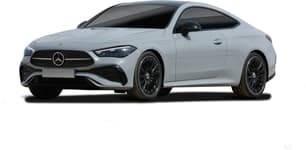
You’re looking at what Mercedes-Benz dubs “The AMG for all occasions”, the CLE 53.
Now, in case you haven’t been paying attention, the CLE replaces both the previous C-Class and E-Class coupes, so we’re talking about a relatively practical two-door four-seater here.
So, 53? Not the full-fat 63 flagship, then (that’s coming eventually), but something that comes close to the slightly more-powerful (and a bit more expensive) Audi RS5 and BMW M4 range-topping alternatives.
Like Goldilocks’ preferred porridge, this particular flavour of coupe is meant to leave well-heeled enthusiasts not too hot or too bothered, meaning it’s been engineered to be refreshingly refined as well as rousingly rapid.
Is the AMG CLE 53 just right, then? Time to find out.
Almost 30 years after Lexus launched its original LS flagship sedan, the fifth generation of the car has arrived in Australia in what appears to be the brand’s never-ending battle to hunt down and beat Mercedes-Benz, BMW and Audi at their own game.
In some markets it looks as though Lexus is making headway. In the United States last year Mercedes-Benz was the best-selling luxury brand, followed by BMW and then Lexus. To give you even more insight, 50 per cent of all Lexus sales globally are in the US.
The story is different in Australia, with Lexus hardly a threat to the big three Germans, selling about a third less each month.
The Lexus LS is the Japanese prestige brand’s flagship and comes with a price that nudges up against formidable rivals. There’s the Mercedes-Benz S-Class, BMW 7 Series and Audi’s A8. Only the best cars from a few of the best brands in the world – no pressure, Lexus.
This may even be a reason to buy one – in that it’s not one of the traditional three. You could see Lexus as the popular underdog that in some ways does a better job than the usual suspects. A people’s favourite perhaps?
Just look at how often it’s mentioned in songs. According to lyrics.com.au the word Lexus has been used in 873 songs. Meanwhile Mercedes Benz appears in 500, Audi in 402 and BMW in 307.
With all this in mind we headed to the Australian launch to drive the LS 500 and its hybrid twin the 500h.
The AMG CLE 53 4Matic+ is formidable yet friendly, ferocious yet refined and fun yet functional.
Yes, the price is edging up to previous 63 flagship levels, and it can become a bit noisy inside, but the four-seater coupe’s specification, speed, sophistication and balance are compelling reasons to consider this if your shortlist also includes an Audi RS5 or BMW M4.
Note: CarsGuide attended this event as a guest of the manufacturer, with travel, accommodation and meals provided.
The Lexus LS 500 and 500h are both exceptional cars. The ‘obnoxious’ styling especially to the grille makes the offerings from BMW, Benz and Audi look bland and overly corporate inside and out. It’s really in the dynamics department that the LS falls short of its rivals and only the LS 500 is enjoyable if you like to drive with a degree of conviction.
Both the LS500 and 500h, though, have wonderfully comfortable rides and this together with those sumptuous interiors makes these the perfect place to be if you’re in the back being swiftly and quietly taken to you next meeting.
For me the sweet-spot pick would be the LS 500 F Sport for its value and dynamic ability.
Crisp and aero clean with a handsome fastback silhouette, the CLE’s design is very much in the mould of a modern-day C-Class coupe, but with larger proportions in line with what a contemporary E-Class coupe would look like.
It employs the same architecture as the W205 C-Class and W214 E-Class sedans.
Length, width, height and wheelbase measurements are 4850mm, 1861mm, 1423mm and 2865mm, respectively.
Wearing the AMG suffix means the CLE 53’s body differs in small but important ways to the regular C236 coupes.
The front end, for instance, adopts what Mercedes calls a ‘shark nose’ look, for a suitably more macho visage, with vertical slats in the grille and larger air intakes that ultimately aid cooling and performance.
Meanwhile, the tracks are broader by 61mm at the front and 45mm at the rear, and are matched by mudguards that are 58mm and 75mm wider, respectively. This certainly gives the AMG a hunky appearance.
Speaking of which, further AMG visual titivations include a discernibly larger bulge on the bonnet feeding into (functional) side air vents, along with 20-inch specific alloy wheels, as well as a 'Night Package' I and II, comprising black trim elements all around.
A model-specific wider body kit, lip spoiler, twin pairs of tailpipes, diffuser insert and 20-inch AMG alloy wheels complete the CLE’s gymnasium makeover.
Result? The sleek and muscular body’s extra girth, fatter footwear and darkened highlights make the 53 look as menacing as any AMG forbear, setting a very high bar for the CLE 63 to beat when it eventually surfaces. Great work, Affalterbach!
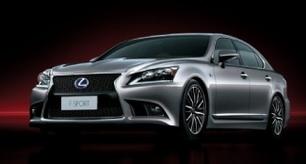
“You’re either going to love them or hate them.” You can bet that whenever you’re told this just before being introduced to somebody then that somebody is going to be downright obnoxious. The same goes for the LS, well it’s face anyway, because those are the kinds of statements made about that grille.
The thing is, the LS needs an obnoxious face because its up against The Establishment - the Mercedes-Benz S -Class, BMW 7 Series and Audi A8, and given there’s no way they’ll ever let Lexus into their little ‘club’ it’s good that the LS has steered clear of imitating them and is boldly different.
This was also the type of thinking which inspired the grille’s creator, Tokuo Fukuichi. The so called ‘spindle grille’ first appeared in 2010 on the CT200h before rolling out to the rest of the Lexus line-up. The look polarised the opinions of fans and even executives inside Lexus. But Fukuichi was adamant the key to the brand’s survival and success was to not to be boring.
That massive gaping mouth is anything but boring, and for this new-generation LS the spindle grille has been overhauled. Yes, some car companies might make a few tweaks to a grille, but not Lexus. Using a CAD computer program, it took designers six months to refine each of the 5032 surfaces on the F-Sport’s grille and the more than 7000 on the Sports Luxury’s. If only you didn’t have to slap a number plate on these exquisitely spun net-like structures.
New LED headlights and the ‘Zorro blade-slash’ LED running lights are equally obnoxious and therefore perfectly suited for the LS’s face. So too are the enormous air inlets below them in the bumper. If only the rest of the car’s exterior was as wild and not mild and milder the further you get from the grille. The rear looks stately, modern and sleek but could have done with something more adventurous (similar to IS’s taillights).
But the LS’s insides make up for that dullness, with a cabin that’s decadent and alien at the same time. A dash which sweeps from door to door features asymmetrical string-like design elements which are a theme carved through wood and glass and stitched into leather throughout the cabin. The quality is superb, while the fit and finish is better than I’ve seen on some of its competitors.
There are four no-cost interior packages on the Sports Luxury ranging from 'Moon White' trim with walnut decorative inlays to black trim with 'Crafted Latte' inserts. But it’s the $9800 optional 'Black with hand-pleating' and 'Kiriko' glass which is a stand out. It’s an intriguing look, the pleated fabric which cascades around the hand-cut Japanese glass.
The F Sport’s cabin is less decorative with seats that hold you tighter in three no-cost option leathers from 'Moon White' to 'Flare Red' with aluminium door and dash decorative elements.
Both cabins are sumptuous, although they fall a little short in gob-smacking tech like those amazing, expansive, floating dash screens and the virtual instrument cluster in the S-Class. Yes, there’s the large screen up front and the seat-back screens in the rear but the styling of the graphics and typeface reveal the Toyota DNA.
The LS has the presence a prestige brand’s flagship car should - imposing, long and wide. Look at the LS’s dimensions. At 5235mm end-to-end and 1900mm across, the LS is longer and wider than a Mercedes-Benz S-Class, but swoops in lower at 1450mm. The LS’s wheelbase is longer than a regular S-Class’s at 3125mm, too.
Apart from the grille you can tell an F Sport from a Sports Luxury by its black brake calipers and black elements in the front bumper, boot lid and sill.
To tell a 500 from a 500h, the difference is subtle. There are the badges, of course, but the 500's rear bumper also has a different design with chrome exhaust surrounds.
The interior dons a C-Class-in-drag-race do-over. Frankly, the latest – and much more modern-looking – E-Class sedan’s dashboard would have been preferable, however, given its tech-heavy panorama of screens.
For its AMG 53 outing, the cabin boasts an AMG-specific steering wheel with performance mode knobs, a 12.3-inch driver display brandishing a variety of instrumentation styles (including 'Race', 'Sport', 'Classic' and minimal screens) and a multimedia system with track telemetry data within a tablet-style 11.9-inch touchscreen.
There's also electric and heated ‘integral’ sports seats with memory, 'Anthracite' trim elements set against high gloss black inserts, 64 questionable shades of ambient lighting and banging Burmester premium audio with no fewer than 17 speakers.
This is a roomy and well-presented cabin, offering space to spread out up front, a superb driving position, exceptional seat support, quality materials and a decent level of practicality.
Storage is plentiful, most switchgear is within easy reach and the multimedia system is easy to fathom after you’ve taken the time to familiarise yourself with it.
On the other hand, the glossy plastics do not look or feel as elevated as, say, a Porsche’s interior, the air vents feel flimsy to the touch, while trim squeaks were occasionally heard over some rougher road surfaces. It’s not as solid as you’d expect from a Mercedes at this price point.
Rear access is tight due to a slim aperture, as almost all coupes are, but once sat on the contoured rear bucket seats, most adults should find it tolerable unless they’re especially long-legged or over 185cm or so tall.
Further back, a handy 410-litre boot is provided, with a folding rear seat backrest to boost cargo capacity even further, underlying the CLE’s family-friendly packaging.
Note, though, that this is 10L shy of the regular non-AMG models, and smaller than the Audi RS5 (465L) or BMW M4's (440L) boot.
Plus, no spare wheel is available – just a tyre repair kit.
Anything with a 3.1m wheelbase has to be practical right? Well, legroom in the back is excellent, but I can’t properly stretch out in that reclining rear seat with the ottoman without my feet hitting the seatback.
Headroom is also a bit a restricted in that rear row for me, too. That’s something to keep in mind for taller passengers (I'm 191cm tall).
A cargo capacity of 480 litres is 30 litres shy of the Mercedes-Benz S-Class, while the cooler box in the rear (that comes with the Sports Luxury trim) eats into the boot space and drops the total to 440 litres.
The LS is a five-seat sedan, but that centre rear seatback folds forward to become the armrest and houses the controls to the massage and reclining functions, plus two cupholders.
There’s another two cupholders up front and pockets in all the doors. While the storage area under the centre console armrest in the front and back is good – that’s about it for storage.
An access mode will raise the car by 30mm when getting in and lower it by 10mm when getting out. Those wide opening doors also make entry and exit easier.
Starting from $158,900 (all prices are before on-road costs), the 330kW/560Nm CLE 53 4Matic+ is an AMG product with a reputation to uphold. Thus, it comes with performance-enhancement items, like all-wheel drive, four-wheel steering (4WS), adaptive dampers and variable-ratio steering.
Additionally, for Australia, the 'AMG Dynamic Plus Package' is standard, bringing a 12-second over-boost that bumps torque up to 600Nm and special engine mounts that harmonise with the adaptive dampers for better performance response.
There's also a ‘Race’ mode offering maximum power and traction-off settings for track-work shenanigans, a brand-specific steering wheel with fast-access driving-control buttons, performance telemetry data display, galvanised paddle shifters, and 20-inch AMG alloys shod with performance tyres, amongst other goodies.
These come on top of LED headlights (with 1.1 megapixels of light), a head-up display, panoramic sunroof, 12.3-inch customisable digital instrumentation, a driver-orientated 11.9-inch touchscreen display, 64-colour ambient lighting, heated electric front seats, dual-zone climate control, wireless charging, Apple CarPlay/Android Auto integration, 17-speaker Burmester premium audio, powered boot closing, a 360-degree surround-view camera, adaptive cruise control, 10 airbags and Mercedes’ 'Pre-Safe' accident anticipation system. More on that in the safety section below.
Fairly well equipped for the money, then. April 2025 brings a cabriolet version, as well.
Option packs include an $8900 'Carbon Package' with carbon-fibre exterior elements and 'AMG Performance' seats at $5400.
These features are in line with the equivalent Audi and BMW coupes.
And while the pricing is only about $10K shy of the 331kW/600Nm RS5 and around $15K short of the 353kW/550Nm M4 manual flagships.
The latter, in blistering 390kW/650Nm M4 auto guise, starts from $190K, neatly opening up the gap for the coming CLE 63 – and that’s going to come with a V8 hybrid, we hear.
The line-up is simple. There are two powertrains: the turbo-petrol V6 LS 500, and the petrol-electric LS500h hybrid, and there's no price difference between them. Then, there are two trim levels: the F Sport for $190,500 and Sports Luxury for $195,500.
Coming standard on the F Sport are 'F Sport' seats with leather upholstery, heated front and rear seats, dual-zone climate control, 28-way power adjustable front seats and head-up display. The multimedia system comes with a 12.3-inch screen, sat nav, DVD player, DAB+ digital radio, Bluetooth connectivity and a 23-speaker Mark Levinson sound system.
There’s also LED headlights, 20-inch alloy wheels and a kick-open tailgate. While the F-Sport misses out on some of the plush features of the Sports Luxury it does get hardware for better on-road dynamics which you can read about in the driving section below.
The Sports Luxury has that large screen, those power adjustable front seats and the multimedia system with that Mark Levinson stereo, too, but adds much more. The front passenger seat slides and folds itself forward to allow the seat behind it to recline and extend its ottoman-style leg rest.
Both rear seats are 22-way power adjustable and heated. If you’re lucky enough to be lounging back there, you’ll also two 11.6-inch seat-back screens with a DVD player. Plus, there’s four-zone climate control, a rear cooler box and power sun shades.
The F-Sport and Sports Luxury have their own choice of no-cost interior options. The Sports Luxury also gives you the option to buy (for $9800) one of four special interior packs – you can read about the standout one with the hand-cut glass below.
There are 11 body colours to choose from: Sonic Quartz, Sonic Silver, Titanium, Liquid Metal, Onyx, Graphite Black, Vermillion, Scarlet Crimson (a dark red), Metallic Silk, Deep Metallic Bronze and Deep Blue.
Under the bonnet is a 3.0-litre, in-line, six-cylinder petrol engine. Mercedes-AMG calls it “double charged”, with a single, 1.5-bar turbo augmented with an electric compressor as part of a 48-volt Integrated Starter Generator (or ISG).
The latter makes 17kW of power and 205Nm of torque, for a system total of 330kW at 6100rpm and 560Nm from 2200-5000rpm. Up to 600Nm is possible thanks to a 12-second overboost.
It also recuperates brake energy, offers “almost imperceptible” stop/start fuel saving and allows for an off-throttle, engine-off ‘sailing’ mode.
Not interested in economy? Tipping the scales at a hefty 2015kg the CLE 53’s power-to-weight ratio is a sparkling 164kW/tonne.
All Australian-bound CLE 53s feature the Dynamic Plus Package, with a launch-control function that helps deliver an eager 0-100km/h sprint time of 4.0 seconds. Top speed is governed to 250km/h.
Drive is sent to all four wheels via a nine-speed torque converter automatic transmission. It can simulate double-declutching and offers variable shift modes according to drive settings.
The AWD system, meanwhile, varies torque from 50:50 front/rear to 100 per cent rearwards.
To aid handling, the 4WS system allows the rear wheels to turn in the opposite direction to the fronts, up to 2.5 degrees at up to 100km/h, and 0.7 degrees in unison with the fronts above that speed.
Keeping things in control is a four-link front and five-link independent rear suspension set-up, with AMG ride control featuring adjustable dampers and sports spring rates.
Let's talk engine specifications .The LS 500 has a 3.5-litre twin-turbo petrol V6 making 310kW/600Nm, with drive being sent to the rear wheels via a 10-speed automatic transmission. That's impressive horsepower, but this car is heavy is a weight of about 2.3 tonnes.
The LS 500h has a 220kW/350Nm 3.5-litre V6 (a different engine to the 500’s) plus two electric motors driving the rear wheels. The total power output is 264kW. Shifting gears in the 500h is a continuously variable transmission (CVT). Just a reminder, too, the LS 500h is not a plug-in hybrid. Regenerative braking re-charges the lithium-ion batteries.
If you're looking for a diesel, you won't find one here. Same goes for a manual gearbox. And, while buyers can choose an all-wheel drive (awd) Lexus LS in other markets around the world, ours are all front-wheel drive.
Considering the performance on offer, the CLE 53’s 9.6 litres per 100km combined (urban/extra-urban) cycle fuel consumption rating is not too bad. That equates to a carbon-dioxide emissions figure of 219 grams/km. City/highway numbers are 13.2 and 7.6L/100km.
With a 65-litre fuel tank filled with 98 RON premium unleaded petrol, expect an average range of about 685km.
What did we achieve? Driven fairly hard on some of Tasmania’s most beautiful rural roads, the trip meter showed an indicated 9.5L/100km.
The LS 500 has an official fuel consumption of 9.5L/100km while the 500h’s is 6.6L/100km after open and urban road driving. We drove both cars on mainly country roads and saw an average of 10.1L/100km in the LS 500 and 9.1L/100km in the 500h.
The new AMG CLE 53 might look much like several of its AMG 63 predecessors, with its brutish stance and bulging bits, but does the German performance coupe drive and feel like an AMG flagship?
With a 63 range-topper (as yet unconfirmed) in the pipeline, that’s a bit of a moot point here, because that will be an altogether harder, faster and more expensive proposition.
But we can tell you that, even without the bellowing V8 of old, the 53 does a damn-fine impression of a charming high-performance GT with the straight-six .
At the heart of the matter is the inline six-cylinder turbo-petrol engine incorporating an electric compressor working the lower revs for punchy off-the-line acceleration and a big twin-scroll gas turbo for more-instantaneous responses further up the rev range.
This makes for an impressively rapid real-world tearaway. Not brutally fast in the way even middling EVs can manage to be nowadays, but still with an urge and character that puts you in the mood for speed.
The steering, meanwhile, is alert, faithful and remarkably reactive, with that 4WS rear end tucking in neatly through the tight turns and twisty bits, allowing a feverish pace with a pleasing grace to be maintained.
Assisting that immersive agility is an almost unshakable sense of grip – no surprise given the variable-torque AWD as well as the late-summer warmth and dryness of the roads we were testing on.
Yet, even beyond these factors, it’s clear the AMG’s immense roadholding provides a reassuring layer of confidence and control.
No opportunity was provided to unleash the CLE 53’s full fury on a track, so we can’t tell you how easily sideways or catchable this thing steers in Race mode with all the safeties turned off, but this coupe’s dynamic bandwidth was obvious during the all-too-few occasions we did manage to fang it.
Another positive is the suspension’s ability to soak up the bumps without too much disturbance inside, allowing for easy and effortless cross-country touring. No truly terrible roads were encountered during our half-day in this civilised beast, though, so we’ll have to reserve our judgement on whether this is the comfortable all-rounder that Mercedes claims it is.
What we can tell you is that there is too much road-noise intrusion inside an otherwise isolated cabin. And we’re no fans of the lack of a spare wheel – an absolute necessity in Australia.
Still, first impressions are very positive.
Its maker calls the CLE 53 the AMG for all occasions, and we cannot argue with this logic.
That there’s a decent wad of thrills and emotion on offer to counterbalance this car’s comparative refinement and civility just proves there is a place for the penultimate version of this series.
My first experience of the new LS was from the back seat of a 500 Sports Luxury being driven from the airport to the venue where Lexus Australia would deliver the presentation on its fifth generation of the car.
Seat reclined, I was whisked quietly and comfortably through the traffic, barely any road or wind noise, the ride was superb on that air suspension, a little floaty but still damped well enough for it not to become bouncy, with minimal head sway (the movement that makes you car sick).
Cocooned in leather with seat-back screens for audio and DVD the ride and environment was just right for a limousine chauffeuring important business types who need swift and tranquil transportation. Not for weirdos like me who were only interested in the way the front and back multi-link suspension kept a 2.3-tonne car with a 3.1m wheelbase so civilised, even through roundabouts. I wondered if this was actually the best way to experience the LS – from the back seats, being driven?
When I did drive the 500 and 500h in the two trims later it more or less confirmed that first impression. The 500 in F Sport trim was the best to drive, while the 500 in Sports Luxury was the best to be driven in. Why? I’ll explain.
The LS 500’s 3.5-litre twin-turbo V6 makes more power than the hybrid for starters, which is always a good thing when you need to move a car this heavy. Even then the LS 500’s acceleration isn’t super quick, and the engine needs to work hard when asked to get a wriggle on. That 10-speed automatic transmission is excellent though.
The same can’t be said for the CVT in the 500h which under harder acceleration does what CVTs do in that situation, make more noise without seeming to get the drive effectively to the wheels.
The 500h’s naturally aspirated V6 is a good thing, but it seems the weight of the car and the CVT work against it being exciting to drive. After a couple of hundred kilometres in a 500h blasting through the countryside steering it became tiresome rather than rewarding with the engine constantly kicking in and whining incessantly when asked for more beans, please.
This car is far better suited to slipping silently through city streets than it is galloping through the bush – that’s where the 500 is a lot more at home.
The 500 and 500h are rear-wheel drive cars, and this, along with an almost 50-50 balance, sets the ground work for good cars to pilot. The F-Sport trim adds an active rear stabiliser bar as standard equipment and brings a more sophisticated version of Lexus’s 'Vehicle Dynamic Integrated Management' (VDIM) – a stability system using data from suspension, ABS, traction control, electric power steering, the stabiliser bar and rear steering. The result is the control of longitudinal, vertical, yaw, roll and pitch movements for better ride and handling.
The F Sport trims adds bigger brakes, too with 400mm x 36mm discs on the front and 359mm x 30mm at the back, plus staggered tyres with 245mm rubber at the front and 275mm at the rear.
The electric steering is light, which makes it easy to manoeuvre in carparks, and an 11.2m turning circle is great for the class.
On the open road at speed the steering is pinky-finger light even in Sport+ mode, and while it’s smooth and accurate, I want to feel more connected to the wheels and where they’re pointed.
While the LS 500 is more the driver’s car than the 500h neither perform as well dynamically as Benz’s S-Class, but from the back seat the LS feels just as comfortable and even plusher.
Unlike its maximum five-star ANCAP-scoring C- and E-Class cousins, the CLE comes with no rating.
But the brand’s boundary-pushing reputation on this front does hold the coupe in good stead, backed up by a slew of active, passive and driver-assist safety features.
These include wide-spread autonomous emergency braking (AEB) and lane-support systems, as well as Mercedes’ 'Pre-Safe' tech that anticipates a crash and prepares the car for impact.
Other tech includes 'Active Lane Change Assist', 'Active Lane Keep Assist', 'Cross-Traffic Assist', blind spot monitoring, active brake assist, traffic sign assist, active-distance-assist, adaptive cruise control, evasive manoeuvre support, 360-degree camera views, 10 airbags, adaptive high beams and a 1.1-megapixel LED lighting set-up.
In other contemporary Mercedes models, AEB operating parameters are roughly between 7.0-80km/h for pedestrians and cyclists, and from about 7.0-250km/h for vehicle-to-vehicle, while the lane-keep support systems operate between about 60km/h and 200km/h.
ISOFIX child-seat anchorages are located in the front passenger seat and two in the rear seats.
The Lexus LS has not been crash tested, but all the signs are there that this is an exceptionally safe vehicle, from the structure of the car to the advanced safety technology such as AEB (forward and reverse) with pedestrian detection, lane keeping assistance and adaptive cruise control.
For child seats there are three top tether anchor points and two ISOFIX mounts across the rear seats.
Both the 500 and 500h are fitted with run-flat tyres.
Somewhat average for most mainstream and luxury brands, Mercedes-Benz offers a five-year/unlimited km warranty, with five years of roadside assistance.
Intervals are every 12 months or 25,000km, and while no capped priced servicing is offered, pre-paid three-, four- or five-year service plans are available, ranging from $4190, $5310 and $7760, respectively at the time of publishing.
The Lexus LS is covered by a four-year/100,0000km warranty. Servicing is recommended every 15,000km or 12 months. There is no capped price servicing program. Being a Toyota family product the Lexus LS also comes backed by the same reputation for reliability and you may experience lower maintenance costs than perhaps its German rivals.