What's the difference?
Freedom of choice has been the focus for the luxury car industry for more than a decade. Buyers were free to choose from a seemingly endless amount of variations and bodystyles to suit their taste and lifestyle.
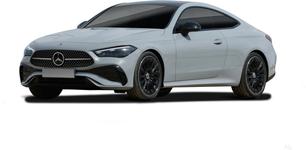
It gave birth to the ‘four-door coupe’ then the ‘SUV coupe’ and so many more. But now it seems car makers have reached their limit, as evidenced by Mercedes-Benz’s newest offering - the CLE Coupe and Cabriolet.
While technically a new addition to the range, the CLE actually replaces not one existing model, but two. The CLE will fill the gap left by both the C-Class Coupe and E-Class Coupe, allowing the German brand to simplify its line-up (ever so slightly).
So, what is the CLE Coupe and how will it live up to expectations of two different car buyers? Read on to find out…
Feels like lately all the Mercedes-AMG buzz has been at the smaller end of the scale.
Most recently, the screaming GLA 45 S has arrived in Australia, pumping out more kilowatts and newton-metres than any compact SUV has a right to.
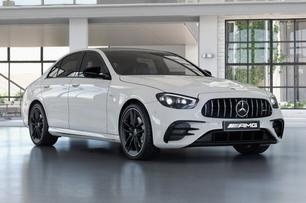
But here, we're doubling the cylinder count to eight, arranging them in a vee, and lighting the wick on AMG's powerhouse mid-size sedan, the recently upgraded E 63 S.
While the ferocious twin-turbo V8 and the rest of this beast's powertrain are unchanged, the car has been brought up to speed with some aero-focused styling tweaks, Merc's latest 'Widescreen' digital cockpit, as well as the MBUX multimedia system, and a tricky new multi-function sports steering wheel.
The CLE Coupe really feels like a car of the times. As the electric vehicle market continues to suck in resources, the days of endless variants and body styles is going to wane. But the truth is the CLE does a nice job of filling the demands that both previous C-Class Coupe and E-Class Coupe buyers are looking for.
It’s a stylish model with plenty of technology on the inside, so it should appeal to those who want something refined and elegant for their lifestyle. It has a hint of sportiness on road, without being overtly dynamic or uncomfortable; although Mercedes-AMG will cater to those buyers soon enough. And it offers the kind of space inside that buyers of both models will find acceptable (as long as they don’t have to climb into the back regularly).
The biggest challenge will be convincing C-Class customers to take the big jump up in price over the model it replaces, while at the same time convincing E-Class buyers that this is still something special and different given its similarities to the old model.
Note: CarsGuide attended this event as a guest of the manufacturer, with travel, accommodation and meals provided.
The E 63 S fills its niche in AMG's Australian line-up perfectly. More mature than the brand's four-cylinder hatches and SUVs, but not as overbearing as some of its bigger sedan, GT and SUV stablemates. And its ability to seamlessly switch between serene comfort and dynamic performance has nailed the objective for this 2021 update.
Thankfully for the German brand its family look across its range means the CLE seamlessly integrates into both the C-Class and E-Class line-ups.
Mercedes does use some colourful language to describe the looks, with terms like 'sharknose' for the front end, and these ‘powerdomes’ on the bonnet, and there’s a swooping design that wraps around the tail to create a dynamic-looking vehicle.
The biggest question about design, though, is the size of the CLE, specifically how it compares to the two coupes it replaces. While based on the same basic underpinnings as the C-Class sedan, Mercedes has stretched and pulled the body to try and fill the space between it and the old E-Class Coupe.
The result is a car that is 164mm longer than the C-Class Coupe and +15mm longer than the E-Class overall, with the wheelbase stretched 25mm over the C-Class but actually 8mm shorter than the old E-Class two-door. It’s also 50mm wider than the previous C-Class but exactly the same width as the E-Class. So it’s definitely on the bigger size without actually matching up with either model it supersedes.
The E 63 S has been massaged for 2021 starting with flatter headlights, AMG's now signature 'Panamericana' grille, and a high gloss black flap across the top of the curved 'Jet Wing' section defining the lower part of the nose.
At the same time, the vents on either end of it are larger and feature twin transverse louvers to guide cooling air to wherever it's needed.
It's all about what AMG calls 'optimised aerobalance' but the form is just as appealing as the function. The characteristic 'Power Domes' in the bonnet dial up the muscle, as do the fat wheel arches (+27mm each side), and 20-inch rims with distinctive aero inserts.
This car's optional exterior carbon package consists of a front splitter, side sills, a flash near the fender badges, the exterior mirror covers, the boot lid lip spoiler, as well as the lower apron around the redesigned diffuser and quad tailpipes.
New, intricately styled LED tail-lights are also flatter, but there's even more going on inside.
A new AMG sports steering wheel features three rounded twin-spokes with new switches on the bottom to control the car's dynamic set-up.
It also picks up a new take on the small touch-sensitive controllers used to adjust the instrumentation and manage other functions like phone calls, audio and the cruise control.
Not sure I'm in love with them at this stage. In fact, the words fiddly, imprecise, and frustrating come to mind.
Nappa leather covering the superb AMG sports seats, upper dash, and door beltlines remains standard, but the show-stopper is the 'Widescreen Cockpit' - twin 12.25-inch digital screens for the MBUX multimedia interface on the left and instruments on the right.
The instrument cluster can be set to 'Modern Classic', 'Sport' and 'Supersport' displays, with specific AMG read-outs such as engine data, gear speed indicator, warm-up status, car set-up, as well as a G-meter and 'RaceTimer.'
To borrow an official automotive design term, it looks schmick. Overall, with touches like open-pore black ash wood trim, and brushed metal highlights, the interior looks efficient but classy, with an obvious attention to detail in the layout and its execution.
Not surprisingly given the exterior growth over the old C-Class Coupe, Mercedes is talking up the increased interior room and practicality. Which is crucial to the success of the CLE because in replacing both the smaller C-Class and larger E-Class coupes, it now needs to appeal to both audiences.
Front seat room is generous, with plenty of shoulder room and the seats offer good comfort and support. In the back Mercedes’ designers have managed to create 95mm more legroom than the old C-Class Coupe, but fractionally less than the E-Class Coupe (just 1mm less). The rear seats are wider than both outgoing models, both across the shoulders and the mid-section. Headroom has been increased by 10mm over the C-Class but decreased by the same amount compared to the E-Class.
Putting the measuring tape aside, while the rear seats are fine for short trips, the back of the CLE is clearly not the place to be and if you plan on using the rear seats regularly then you should be looking at one of the brand’s sedans.
As for the boot, at 420 litres it’s 60 litres bigger than the old C-Class but five litres smaller when compared to the E-Class Coupe; so once again there’s a trade-off between the two.
At just under 5.0m end-to-end the E-Class sits in the upper range of the mid-size luxury spectrum. And almost 3.0m of that is accounted for by the distance between the axles, so there's plenty of space inside.
The driver and front passenger are provided with heaps of room to breathe, and there's a surprising amount of space for those in the back as well.
Sitting behind the driver's seat set for my 183cm (6'0”) position I had more than adequate head and legroom. But access to and from the back is a struggle for full-size adults.
The rear doors open out a long way, but the limiting factor is the size of the aperture, necessitating excessive contortion of the head and limbs to fold in and out of the car.
Connectivity runs to two (power-only) USB-C sockets in the front centre storage bin, as well as another USB-C (for power and multimedia) and 12-volt power outlet in the centre console.
Speaking of the front centre storage bin, it's a decent size and has a padded split lid so it can double as an armrest. There are two cupholders in the front console, a generous glove box, as well as long door compartments with recesses for large bottles provided.
There's a pair of USB-Cs along with another 12-volt socket in the back, sitting under the climate control panel with adjustable vents in the rear of the front centre console. Nice.
The fold down centre armrest incorporates a lidded (and lined) storage box as well as two pop-out cupholders. Again, there are bins in the doors with room for smaller bottles.
The boot offers 540 litres (VDA) of volume, and is able to swallow our three-piece hard suitcase set (124L, 95L, 36L) with room to spare, or the substantial CarsGuide pram, or the largest suitcase and pram combined! There are tie-down hooks to help secure loads, too.
Don't bother looking for a spare of any description, a repair/inflator kit is your only option. And the E 63 S is a no-tow zone.
The initial range consists of just two models - the CLE200 and CLE300 4Matic, but an AMG variant, the CLE53 is due to follow soon (as is the expected-but-not-confirmed V8-powered CLE63), but not before the Cabriolet arrives. While the CLE300 Cabriolet was on hand for us to look at, we weren’t allowed to drive, so we’ll focus this review on the hard-top models.
The CLE200 is priced from $103,900 and the CLE300 is $124,900 (neither price includes on-road costs). While it’s hard to do a like-for-like comparison between the old models and this new one, the CLE is more than $20k more expensive than the old C-Class but around $9-12k cheaper than the equivalent E-Class Coupe.
For future reference, the CLE300 4Matic Cabriolet will be priced from $135,900.
Standard features on both models includes 19-inch alloy wheels, AMG Line exterior and interior packages, a panoramic sunroof, 64-colour ambient cabin lighting, heated front seats with memory function, a head-up display, a 12.3-inch digital instrument display, plus the latest MBUX infotainment system which runs through an 11.9-inch touchscreen as well as Burmester surround sound system. One of the key specification differences between the CLE200 and CLE300, aside from the powertrain, is the interior trim, with the cheaper model using synthetic leather while the more expensive one gets the genuine article.
So, first of all, let's get the price out of the way. At $253,900, before on-road costs, this car's competitive set is a bruising, all-German trio comprising the Audi RS 7 Sportback ($224,000), BMW M5 Competition ($244,900), and Porsche Panamera GTS ($309,500).
And no surprise, it's loaded with all the luxury features you'd expect in this part of the market. Here are the highlights.
On top of the standard performance tech and safety equipment fitted to the E 63 S (covered later in this review), you'll also find: Nappa leather trim (seats, upper dash, upper door cards, and steering wheel), MBUX multimedia (with touchscreen, touchpad, and 'Hey Mercedes' voice control), 20-inch alloys, three-zone climate-control, interior ambient lighting, auto LED headlights (with 'Active High Beam Assist Plus'), eight “energising comfort programs” (with 'Energising Coach'), an 'Active Multicontour' front seat package, the 'Air Balance' package (including ionisation), and keyless entry and start.
Also included are the the 'Widescreen' digital cockpit (twin 12.25-inch digital screens), 13-speaker Burmester audio with digital radio, Apple CarPlay and Android Auto, a panoramic sunroof, adaptive cruise control, a head-up display, augmented reality satellite navigation, 'Parktronic' self-parking, electric front seats, seat cooling and heating front (heated rear), heated front centre armrest, a power-adjustable steering column, auto rain-sensing wipers, a wireless device charger, illuminated door sills, as well Amazon Alexa, etc, etc, etc.
And our test car also featured a couple of tasty options. An exterior carbon package ($7500), and AMG's professional grade ceramic composite brakes ($15,900), for an as-tested price of $277,300.
The CLE200 and CLE300 are both powered by four-cylinder turbocharged petrol engines, albeit in different states of tune, and each assisted by a mild-hybrid integrated starter generator.
The CLE200 Coupé makes 150kW and 320Nm and sends it to the rear wheels via a nine-speed auto transmission. While the CLE300 4Matic Coupé gets 190kW and 400Nm but also gets (as the name gives away) Mercedes’ 4Matic all-wheel-drive system.
While not really a hybrid in the conventional sense, the integrated starter generator adds an extra 17kW/205Nm boost when required while also helping to save fuel.
The E 63 S is powered by the M178 version of the all-alloy 4.0-litre twin-turbo V8 engine used across numerous AMG models from the C-Class up.
Thanks in no small part to direct injection and a pair of twin-scroll turbos (located in the engine's 'hot vee' to optimise throttle response), this all-alloy unit produces 450kW (that's 612hp) from 5750-6500rpm, and 850Nm from 2500-4500rpm.
And as per standard AMG practice for its Vee engines, this car's powerplant was built from scratch by a single engineer in Affalterbach. Thank you Robin Jäger.
AMG calls the nine-speed transmission used in the E 63 S an MCT, which stands for Multi-Clutch Technology. But it's not a dual-clutch, rather a normal auto transmission using a wet clutch as opposed to a conventional torque converter, to connect it to the engine on take-off.
Drive goes to all four wheels via Merc's '4Matic+' AWD system, built around an electromechanically controlled clutch connecting the permanently driven rear axle (with locking diff) variably to the front axle.
Make no mistake, the integrated starter generator is a mild-hybrid system, so don’t expect to see miserly returns from the CLE. Instead, the official figures for the pair are quite close, despite the different drivetrains.
The CLE200 has a claimed fuel rating of 7.2L/100km, while the CLE300 uses 7.4L/100km.
Claimed fuel economy for the combined (ADR 81/02 - urban, extra-urban) cycle is 12.3L/100km, the E 63 S emitting 280g/km of CO2 in the process.
That's a pretty hefty number, but in line with this car's proportions and performance potential.
And Merc-AMG has gone to great lengths to minimise fuel use. As well as the standard 'Eco' stop-start function, in the 'Comfort' drive program cylinder deactivation becomes active, the system able to drop four cylinders anywhere between 1000 to 3250rpm.
There's no physical hint of half the cylinders leaving the party. The only clue is a blue icon on the dash indicating a temporary shift to V4 operation.
Despite all that effort, however, we saw a dash-indicated 17.9L/100km over a mix of urban trundling, highway cruising, and some spirited dynamic assessment.
Recommended fuel is 98 RON premium unleaded (although it'll run on 95 at a pinch), and you'll need 80 litres of it to fill the tank. That capacity translates to a range of 650km according to the factory claim, and 447km using our real world result.
To judge the CLE on its driving merits you first need to understand where it fits within the broader Mercedes-Benz line-up. Put simply, while coupes are seen as sporty cars, the German brand has other models that are designed to appeal to driving enthusiasts; such as the upcoming AMG versions of this car and the AMG GT Coupe.
So within that context, the CLE200 and CLE300 do an admirable job of being stylish cruisers that feel at home in the city but not out of place on a winding country road.
Sports suspension is standard on Australian delivered models, making it 15mm lower than overseas versions and fitted with firmer passive damping too. But still, it doesn’t translate to a dynamically agile and engaging sports coupe suddenly, instead it just gives the CLE a bit more sharpness when turning, at the expense of some comfort on pockmarked roads.
The engines perform nicely, the CLE200 feels adequately endowed with its 150kW/320Nm, so naturally the 190kW/400Nm CLE300 just feels like it has a bit more pep in its step. But I’d question the value of the all-wheel-drive system in a car like this, especially in Australia where the roads are rarely very slippery.
AMG's major goal with this upgrade of the E 63 S was to maintain its dynamic response and ferocious performance, but dial in the extra comfort customers had said they wanted.
So, the 4Matic+ AWD system has been fine-tuned for more smoothness as has the Comfort option in the dynamic set-up. But we'll investigate that shortly.
First, that 4.0-litre turbo V8 in the nose is claimed to slingshot this roughly 2.0-tonne sedan from 0-100km/h in just 3.4 seconds, and it feels every bit that fast.
With 850Nm available from 2500-4500rpm and nine gear ratios to help keep you operating in that Goldilocks band, mid-range thrust is monumental. And thanks to the bi-modal sports exhaust it sounds beautifully brutal.
The nine-speed auto's wet clutch, as opposed to a conventional torque converter, is designed to save weight and optimise response. And while some will tell you an auto with one input shaft is never going to be as fast as a dual-clutch with two, shifts are rapid and direct. The wheel-mounted shift paddles are larger and set lower, as well.
The AMG 'Ride Control+' suspension with multi-chamber air suspension and adaptive damping is amazingly good. The underlying set-up is by multi-links front and rear, and despite riding on big 20-inch rims wrapped with low-profile, high-performance Pirelli P Zero rubber (265/35 fr - 295/30 rr) the Comfort setting is incredibly... comfortable.
Slip into 'Sport' or 'Sport+' and the car immediately feels tauter but far less compliant and forgiving. An impression reinforced by the engine, transmission, and steering shifting to a more buttoned-down mode at the same time.
The standard dynamic engine mounts play a big part here. Able to make a soft connection for maximum comfort, but switch to a rigid link when required.
But no matter which mode you're in, the car is well damped and feels beautifully balanced in quick cornering. And the E 63 S's electro-mechanically-assisted variable-rate steering is progressive, feelsome, and accurate.
The 4Matic+ AWD system is built around an electromechanically controlled clutch connecting the permanently driven rear axle (with locking diff) variably to the front axle.
Torque distribution happens imperceptibly, the big V8 putting its power down emphatically, with various electronic systems tieing up the loose ends as you aim up for the next corner.
There's even a 100 per cent RWD Drift mode available in the Race setting, but without a race circuit at our disposal this time around that'll have to wait for another time.
The optional ceramic brakes feature huge rotors and six-piston front calipers, and stopping power is immense. And the good news is they operate quickly but progressively at normal pottering around town speeds. No warming up required to get them in an optimal temperature zone (as can be the case with other ceramic set-ups).
Both CLE models come with all the usual passive and active safety features you’d expect on a modern luxury car, including autonomous emergency braking, ‘Active Lane Keeping Assist’, ‘Active Brake Assist’, blind spot monitoring, traffic sign assist, active cruise control and Mercedes’ ‘Pre-Safe’ accident anticipation system. There’s also a ‘Parking Package’ with 360-degree camera view to keep you and those around you safe at low speeds.
There’s no ANCAP rating for this new model announced yet, but previously both the C-Class Coupe and E-Class Coupe were tested.
The three-pointed star's white-coated boffins have gone to town on the E 63 S, and the car is as good as it currently gets in terms of active and passive safety technology.
You could argue this car's dynamic ability is its strongest contributor to crash-avoidance. But a broad suite of features, specifically designed to keep you out of trouble includes, forward and reverse AEB (with pedestrian, cyclist, and cross-traffic detection), traffic sign recognition, 'Attention Assist', 'Active Blind Spot Assist', 'Active Distance Assist', 'Active High Beam Assist Plus', 'Active Lane Change Assist', 'Active Lane Keeping Assist', and 'Evasive Steering Assist.' That's a lot of assists.
There's also a tyre pressure monitoring and pressure loss warning system, as well as a brake priming function (monitors release speed on the accelerator pedal, moving pads factionally closer to the discs when required), and brake drying (when the windscreen wipers are active the system periodically applies just enough brake pressure to wipe water off the brake rotors to optimise wet weather efficiency).
But if an impact is unavoidable the 'Pre-Safe Plus' system is able to recognise an imminent rear-end collision and fire up the rear hazard lights (at high frequency) to warn following traffic. It will also firmly apply the brakes once the vehicle is stationary to minimise the risk of whiplash injuries if the car's then hit from behind.
If the potential crash is coming from the side, 'Pre-Safe Impulse' inflates air chambers in the side bolsters of the front seat backrest (within a fraction of a second) moving the occupant to the side towards the centre of the car, away from the impact area. Amazing.
As well as that, there's an active bonnet to minimise pedestrian injuries, an auto emergency call function, 'Crash Response Emergency Lighting', even a first aid kit and hi-vis vests for all occupants.
For the record, the current E-Class received a maximum five-star ANCAP assessment in 2016.
The CLE is covered by Mercedes Australia’s usual five-year/unlimited kilometre warranty.
The brand offers pre-purchased service plans for maintenance covering three, four or five years, starting at $3325 then $4535 and then $6800.
All AMG models sold in Australia are covered by Mercedes-Benz's five year/unlimited km warranty, with 24-hour roadside and accident assistance included for the duration.
Recommended service interval is 12 months or 20,000km, with pricing for a three-year (pre-paid) plan set at $4300, a $950 saving overall relative to its three year, pay-as-you-go 'Service Solutions' capped price program.
And if you're happy to fork over a little more up-front, there's a four-year service deal at $6300, and five years coming in at $7050.