What's the difference?
Australia's relationship status with the Mercedes C-Class has long been… complicated.
Over 40 years and five generations, the German midsized luxury sedan has been a paragon of efficiency and safety on one hand, but on the other, well, the quality and ride comfort haven't lived up to brand expectations.
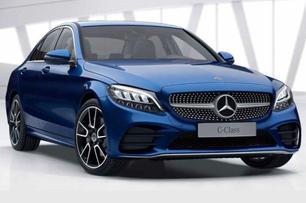
Now the completely redesigned version has landed in Australia, with shrunken S-Class limousine styling to take on not only the BMW 3 Series, Audi A4 and Genesis G70, but rivals as disparate as the Hyundai Ioniq 5 and Tesla Model 3.
The question is? Is this latest, sixth-generation, new-from-the-ground-up C-Class good enough to take on all those and more? Let's find out.
Large SUVs like the Toyota LandCruiser, Nissan Patrol and Land Rover Defender have dominated in Australia for decades now, however there’s now something new to shake up the segment.
BYD’s luxury spin-off brand, Denza, has launched in Australia with two plug-in hybrid (PHEV) off-road SUVs. The B8, which is the larger of the two, is on test here.
With three rows of seating, a bucketload of standard equipment and a jaw-dropping starting price, the B8 is being pitched as a PHEV alternative to the currently diesel-only LandCruiser 300 Series among other more premium alternatives like the Land Rover Discovery and Mercedes-Benz GLS.
We’ve already driven the B8 over in China and this is the first time we’re getting to test it out on Australian roads, so let’s see how it stacks up.
Over five decades, the Mercedes-Benz C-Class has pivoted between mastery and mediocrity, and all-too-often relied on that three-pointed star up front to win over buyers.
Thankfully, the W206 is one is one of the better generations. It's easier on the eye, comfier to travel in, more intuitive to use, safer across the board and a huge improvement to drive. On the evidence of the C200 and C300 launch grades, there's newfound depth and consistency to savour.
Sure, prices have gone up, the C200 could use a bit more power, the steering could benefit from a bit more feel, the odd build-quality glitch made itself heard and there's a fair bit of road noise at times, but overall, the C-Class now deserves to be at the top of your luxury medium sedan shopping list.
Particularly if you can afford to stretch to the rorty C300.
The Denza B8 is an incredibly luxurious car that has a lot going for it, including three rows of seating, a 3.5-tonne braked towing capacity and an eye-popping price tag, but it's held back by its overall heft and cumbersome ride.
If you don’t absolutely need the third row of seating, the smaller B5 is arguably the better pick and while it’s also not perfect, it’s a very compelling package and you’ll be saving thousands of dollars in the process.
Note: CarsGuide attended this event as a guest of the manufacturer, with travel, accommodation and meals provided.
If you're checking out the new C-Class for the first time from the front, you'll probably think… hmm, it looks just like the old one, and that's largely true.
But a side view reveals proportions that have changed significantly, thanks to the more raked windscreen, shorter overhangs and cleaner lines, which give it a slightly smaller S-Class look.
Which is more in fitting with where Mercedes wants to place this car against its 3 Series and A4 competitors.
Additionally, the taillights are split for the first time, allowing for a wider boot aperture since the lid now contains some of the lighting elements.
The shrunken limo looks aren't just the whim of some designer or Mercedes-Benz marketing department copywriter, either.
Underneath is an albeit highly modified version of the latest S-Class' MRA2 platform, which results in the longest (at 4755mm) and widest (at 1820mm) C-Class in the series' 40-year existence, as well as the first with this level of electrification capability.
Height and wheelbase dimensions also see a stretch, by 8mm and 25mm to 1450mm and 2865mm over the previous model respectively, and to the benefit of passenger accommodation.
Speaking of which, get used to this new interior aesthetic and general layout – it's a look that's probably going to filter through to most coming non-EQ-branded Mercedes models over the next few years.
From S to C to future E and A classes and beyond. It's a rare instance of trickle-down economics actually working!
There’s no way around it, the Denza B8 is a big car. It’s almost 5.2 metres long which makes it larger than a LandCruiser 300 Series and more in line with the likes of the Land Rover Defender 130.
It looks quite boxy and tough on the outside, though it doesn’t have any features that define it specifically as a Denza beyond the inconspicuous badging. There are many angles that are reminiscent of the aforementioned Defender.
The body lines look crisper than the smaller B5, as does the semi closed-off grille and LED light script that connect the big LED headlights.
Unlike the B5, the tailgate-mounted spare wheel is much more prominent in the B8 and this therefore exaggerates its heft, not in a good way.
Inside, it’s luxurious and high-end with lots of visual appeal. I particularly like the amount of soft-touch finishes around the cabin and the overall lack of glossy piano black.
While luxurious, there’s also a rugged edge to the interior. This is most present in the large grab handles which you do need to use when getting in and out.
The amount of physical buttons and switches inside is a nice touch as you don’t need to relate on the touchscreen all the time. The fact the gear shift lever rises up when you turn on the car also adds to the special, luxurious feel.
One of the best things about the new C-Class is that it's larger and therefore roomier than before. It's also higher quality, easier to use, more comfortable to sit in and - overall - more of a delight to behold.
In contrast, the old C-Class dash looked and felt like it was designed for a much cheaper car, especially compared to Audi's efforts.
Obviously related to the S-Class this time around, it's clear Tesla provided the inspiration for the twin floating screen look and layout, which are just right in their driver orientation and ease of functionality.
There's never really been anything wrong with Mercedes' old front seats, but these AMG Line items are both sumptuous and bracing, keeping their occupants well located ahead of the clever and thoughtfully laid out dashboard.
The brilliantly high-resolution MBUX multimedia and voice-recognition system now works as it should - intuitively and logically, with the screen menus simple to recognise and easy to use, and most without the need to get lost in confusing sub-menus. Just like BMW has managed for years.
If you want to change the instrumentation design, it's now a couple of clearly marked steps, using handily placed switchgear. The same goes for the superb climate control and audio systems. And the wireless Apple CarPlay/Android Auto connected faultlessly and worked a treat. Effortless see-and-push operation all round, backed by concise and classy graphics.
No more degree in Earth-to-Mercedes comm skills required to master this C-Class interior.
Yet there's just enough old-school Benz features to appeal to brand diehards, from the eternal door-card mounted electric seat controls and column-mounted gear shifter, to the deep centre console and turbine face-level air vents. They meld together beautifully with the advanced tech also on offer, like the optional augmented-reality head-up display with 3D-graphics.
Annoyingly, on one of our test cars, that tradition also extended to a couple of squeaks and rattles, proving that maybe Mercedes hasn't quite conquered all its past quality gremlins. And, like most luxury cars nowadays, endless ambient lighting choices are available of dubious taste.
Never mind. This is the finest C-Class front-seat environment since, well, probably the original W210 190E's of the 1980s.
And all those extra dimensions pay dividends in terms of interior space in the back seat.
There's plenty of knee room even with the tester sat behind their 178cm frame; head room is adequate even with the optional sunroof fitted, and there's ample shoulder space. So, it's more comfortable than any C-Class ever has been in terms of sheer dimensions.
Additionally, the rear backrest is well angled, while the cushion is deep enough to provide sufficient thigh support. But the centre perch is a bit of a squeeze for all concerned. Best avoided.
There's also added practicality to be found with the large and deep door pockets, front seat-back map pockets and folding centre armrest, that not only has a tablet holder, but when pressed in twice, also reveals sliding cupholders as well. Clever.
The C-Class rear seat is really lacking for nothing, with face-level air vents, overhead lighting, grab handles and coat hooks all highlighting the level of thought that went into making this a practical compact family sedan.
Plus, the C-Class comes with this folding ski port, which along with the folding rear seats, increases boot volume from 455L to, well, a lot more. While that's not quite as good as others like the BMW 3 Series, it's big enough for this car.
Note that there is no spare wheel, as the tyres are of the limited-distance runflat variety.
Hopping into the B8 you need to acquaint yourself with how the flush door handles operate. Generally they pop open when you unlock the car but sometimes they can be a little delayed.
Also inside the car there are electronic door release buttons which are nowhere near as intuitive as regular door pull handles. Sure you’d likely get used to this over time but you’ll need to explain it to new passengers all the time.
The seats in Chinese cars usually look nice but aren’t that comfortable or supportive for long-distance journeys. The B8’s are the opposite, offering great support and almost limitless adjustability. Adding to this is the standard heating, ventilation and massage functions.
Ahead of the driver is a leather-wrapped steering wheel which feels nice and has plenty of physical buttons with a tactile click when pressed.
Behind this, the digital instrument cluster is clear and high-resolution and offers a number of different layouts and informative pages you can cycle through. This allows you to customise the display.
In the centre of the dashboard is the mammoth 17.3-inch touchscreen multimedia system which is the largest central screen I have seen in a car to date. It’s a big screen for a big car and Apple CarPlay satisfyingly takes up the entire screen.
Thankfully, the screen is snappy and has a native user interface that is easy to navigate around without getting lost. I particularly like the swipe-down control centre menu that allows you to change key settings without diving into sub-menus.
My only hassle with the screen is I struggle to reach the far left-hand side due to its overall size. Perhaps a trackpad would solve this.
As I noted previously, the amount of physical switchgear around the cabin makes adjusting key functions easy. Examples include physical buttons to change the drive mode, activate the surround-view camera, adjust the suspension position and switch between EV and hybrid driving.
In terms of storage up front there are two non-ventilated 50W wireless phone chargers, two cupholders with adjustable depths, a shallow storage section under the centre console, plus a fridge/hotbox under the centre armrest.
Moving to the second row and the luxury continues. The seven-seat model features a three-seat bench that three people can easily fit across as the floor is flat, whereas the six-seat model gets uber-plush captain’s chairs.
Regardless of variant, there’s plenty of room in the second row, even for adults.
Second-row amenities include a small screen on the back of the centre console box that allows you to change the climate control and change the seat heating/ventilation, among other functions.
There’s also a button that opens the fridge/coolbox so the second-row passengers can access it. This is a nifty touch though you’d want to make sure small fingers don’t get caught as the anti-pinch function isn’t the strongest.
A feature that’s unique to the six-seat version is a massaging function on the second-row captain’s chairs. This is a very cool touch that no other SUV at this price point offers.
Accessing the third row in the six-seat version is rather easy as you only need to walk down between the captain’s chairs. It’s also simple enough in the seven-seat version as long as you access it from the kerb side.
Third-row space is decent for adults, but this shouldn’t be surprising as the B8 is such a hulking vehicle. The backrests also recline allowing for extra comfort. Amenities include air vents in the headliner, USB-C ports and scattered storage. It’s enough for seats that will likely only get occasional use.
Around the back the B8 has a side-hinged tailgate which is a little problematic as you need to allow space for it to open up in parking spaces. This is hard when the car is already 5.2m long…
With all three rows upright there is 147L of boot space, which is fine, but this expands to a much more usable 920L with the third row folded.
The boot space is square and usable, though there is a large load lip which is body-coloured and would easily get scratched if you drop something on it. Not the best in a family-oriented vehicle.
Boot-related amenities include buttons to electronically fold the second and third row seats and lower the suspension to make things easier to load into the boot, a 12V socket, scattered hooks, as well as a small underfloor section to store the changing cables.
Although it stands out like a sore thumb, it’s great to have a full-size spare wheel on the back of the tailgate. This is very helpful in the unlikely and unfortunate event you get a puncture.
Initially, there are two sedan versions of the new W206 series C-Class on offer – the base C200 from $78,900 before on-road costs, and the more-powerful C300 grade from just over $90,400 before ORC.
There's no sugar coating this. These prices represent a shocking $12,000 and $15,100 jump, respectively, over the outgoing W205 equivalents. Which means that, now, even the cheapest C-Class costs significantly more than any of its corresponding direct rivals.
For example, the Audi A4 35TFSI kicks off from $59,900, Volvo S60 B5 Inscription AWD from $62,490, Genesis G70 2.0T from $63,000, Alfa Romeo Giulia Sport from $63,950 and BMW 320i Sport Collection from $69,900 (drive-away). And even the Tesla Model 3 Standard Range (SR) Plus RWD and Polestar 2 SR EVs slip in at under $60K apiece. All before ORCs, BMW-aside.
But the news isn't all bad, because even though prices have jumped, Mercedes reckons it gives you more, as well as the very latest in technology, design and engineering, since the W206 is the newest kid on the block by some margin.
Let's begin with equipment levels.
On top of the front electric seats, satellite navigation, automatic parking, dual-zone climate control, artificial leather Mercedes brands ARTICO, digital radio, remote boot lid closing and 18-inch alloys that the base C200 all came with previously, the new one now adds an AMG Line body kit and interior trim, adaptive cruise control, Lane Keep assist, a 360º camera, auto high-beam headlights and keyless entry/start. These go a long way to offset that $12,000 price hike.
Plus, for the first time, you'll also score a centre airbag between the front seats, fingerprint scanner ID tech for the new 11.9-inch media display and a 48V mild-hybrid system to help cut fuel consumption and emissions. Most of these items are segment-firsts. Note, too, that the engine's been downsized from 2.0 litres to 1.5L. More on that later.
Meanwhile, the C300 gains all of the gear above, as well as a new 2.0L mild-hybrid engine, leather trim, privacy glass and a Driver Assistance Package Plus – a very worthwhile addition since it brings Active Blind Spot Assist, Active Brake Assist with Cross-Traffic Function, Active Emergency Stop Assist and Active Lane Keeping Assist, among heaps more driver-assist safety features.
More details follow in the Safety section below.
Of course, these are just the start of a wave of fresh C-Class models. Soon they'll be joined by the AMG 43 and thunderous AMG 63 sports sedans, as well as plug-in hybrid versions.
So, from a pricing perspective, yes, the new C-Class sedan does come at a premium compared to its direct competitors. But all that kit – including the advanced hybridised and safety technologies that are now either standard or available – presents a compelling value proposition.
Especially as the W206 sedan is measurably larger and thus roomier than before.
The 2026 Denza B8 line-up starts at $91,000, before on-road costs, for the seven-seat version, which is strategically just under the Luxury Car Tax (LCT) threshold, whereas the flagship six-seat version is $97,990, before on-road costs.
Despite nearing $100K, this notably undercuts key rivals like the Toyota LandCruiser 300 Series and Land Rover Defender by a considerable margin, especially once you take the level of standard equipment into account.
The B8’s closest rival is currently the slightly smaller GWM Tank 500 PHEV which is priced even more competitively at $77,990, drive-away.
As a base there are 20-inch alloy wheels, adaptive LED headlights, soft-close doors, a 12.3-inch digital instrument cluster, a 17.3-inch touchscreen multimedia system, 18-speaker Devialet sound system, tri-zone climate control, leather upholstery, plus heated and ventilated seats in the first and second row.
Moving up to the six-seat version brings second-row captain’s chairs with adjustable legrests and a massage function, as well as a digital rear-view mirror, head-up display and Nappa leather upholstery.
This amount of standard equipment in a car that’s under $100K is wild and should definitely be enough to put in your consideration list if you’re after a big, three-row SUV. The smaller B5 offers similar levels of specification but goes without the third row.
Probably the biggest departure compared to any previous C-Class is this generation's switch to direct-injection four-cylinder-only powertrains – including the coming Mercedes-AMG high-performance versions. Now that should be interesting.
As mentioned earlier, the C200's four-cylinder turbo engine is now about 25 per cent smaller in capacity, down from 2.0L to a 1496cc 1.5L twin-cam 16-valve turbo engine. Dubbed the M254, it pumps out 150kW of power at a high 6100rpm and 300Nm of torque between 1800-4000rpm.
That's not to say it's lacking in muscle, though, since it can sprint from zero to 100km/h in 7.3 seconds, on the way to a 245km/h top speed. These outputs are at least a match for the bigger-engined 3 Series and A4 equivalents, by the way.
If it's more you want, then the C300 features a 1999cc 2.0L turbo version of the M254, delivering 190kW at 5800rpm and 400Nm between 2000-3200rpm. This slashes that 0-100km/h time to a speedy six seconds flat. There's also an extra 20kW of overboost available for short periods if you're really in a hurry, while - where legal - it's possible to hit 250km/h.
Both send drive to the rear wheels via a nine-speed torque-converter automatic transmission, while the 48V mild-hybrid system, dubbed EQ Boost, employs an integrated starter-generator and lithium-ion battery that provides an additional 15kW and 200Nm of electric boost at low engine speeds.
So, while it doesn't ever run purely on electricity, the electrification tech certainly either brings more punch or takes the load off the petrol engine, depending on how you're driving it.
Power comes from a plug-in hybrid set-up combining dual electric motors and a 2.0-litre turbo-petrol four-cylinder engine.
Total system outputs are a meaty 425kW and 760Nm. They need to be, as the B8 has a kerb weight of 3.3 tonnes. Despite this, Denza claims it can still do the 0-100km/h sprint in just 4.8 seconds.
Power is sent to all four wheels with a rear mechanical diff lock as standard across the line-up. A front diff lock is only offered on the six-seat version.
What’s most surprising about this big beast is it offers a segment-meeting 3500kg braked towing capacity. It also has up to 700kg of payload, depending on the variant.
Remember when I said that the C-Class moved to an all-four-cylinder engine range? Well, that's primarily to help it better meet fuel consumption, efficiency and lower emission targets.
On the Australian combined fuel consumption cycle, the C200 manages 6.9 litres per 100km – and that's extremely impressive for a medium-sized sedan weighing almost 1.8 tonnes. So is the fact that the larger-engined C300 returns only 0.4L/100km more at 7.3L/100km. Fitted with a 66-litre tank, these numbers suggest that the former can average nearly 960km between refills while the latter can manage just over 900km.
These figures translate to averages of 157 and 164 grams per kilometre of carbon dioxide emissions respectively. On the flipside, both these Euro-6 emissions rated engines require 98 RON premium unleaded petrol to deliver their best.
So much for lab tests. Out in the real world, we drove both cars for several hundred kilometres on a hot summer's day, from inner Melbourne during peak-hour traffic, to some great curvy rounds out in central Victoria, featuring some tight corners and ample opportunity to really stretch both cars' legs.
Over these routes, we averaged an indicated 8.4L/100km in the C200 and – astonishingly – 7.4L/100km in the C300. Yes, the larger and more powerful engine proved more economical.
Clearly, along with the advanced aerodynamics, engine stop/start system and 48V mild-hybrid tech, all that downsizing works. No wonder Mercedes deemed it unnecessary to bother with diesel engines for this generation C-Class.
Feeding the dual electric motors is a 36.8kWh lithium iron phosphate (LFP) battery. Denza claims it allows for an electric range of 115km, according to NEDC testing.
The battery can also be used as a power source for appliances using vehicle-to-load (V2L) functionality at rates up to 6.6kW.
AC charging is offered at rates up to 11kW, whereas DC fast-charging is offered at rates up to 120kW.
Additionally, there’s a 91L fuel tank. Denza claims this allows the B8 to have a total range of 1040km (NEDC).
Fuel consumption depends on how often you charge the battery. Denza claims the B8 will use 2.0L/100km from 100 to 25 per cent battery charge and 9.9L/100km under 25 per cent battery charge, both according to NEDC testing. Regardless, this is better than all similarly sized petrol- or diesel-powered SUVs.
There has been a philosophical shift in how the C-Class is presented.
Even with their standard-in-Australia AMG Line package, the regular grades like the C200 and C300 are now leaning into the brand's luxury heritage, while the BMW-baiting sports sedan versions will be left to the coming AMG versions.
And this in turn profoundly informs how the W206 drives.
Even with the optional Sports Pack on 19-inch wheels, the C200 as tested finally feels like a premium midsized sedan experience. Muted at start up, the 150kW/300Nm 1.5L turbo steps off the line smartly and smoothly, its nine-speed auto shifting effortlessly through the gears to keep the engine feeling lively and lusty.
Around town it's easy to mistake the engine as a larger-capacity unit, since throttle response is instantaneous, with little to no lag detectable. It's a strong start for a base powertrain, especially as the C200 settles into a relaxed cruise at freeway speeds. Cycling through the driving settings also reveals how feisty the 'Sport' mode is.
But the 1.5L's lack of size becomes obvious the moment you need to overtake quickly, or when a quick squirt of acceleration up a hill is required, because the engine needs plenty of revs to approach that 6100rpm power peak. While still pretty brisk in these situations, it's also fairly vocal too, with a sense of having to work hard to maintain momentum.
Switching to the C300 highlights how much better suited the 190kW/400Nm 2.0L turbo is to highway driving, leaping forward with much more force and conviction, across the entire performance spectrum. In every metric, this is a better choice – throttle response, mechanical refinement, cruising ease. And the fact that the onboard computer showed less fuel consumption cements our preference for the larger-hearted C-Class.
In fact, both models possess a chassis that feels like it could do with a whole lot more power. Light and tight around town, the steering weighs up nicely at higher speeds, with a linear and reassuringly planted feel. The same also applies to how confident and controlled the Mercedes feels through fast, tight turns, yet settles into a relaxed and comfortable tourer along long, straight stretches of road.
It's a pity, then, that such dynamic agility and prowess doesn't really involve the driver, since the steering feels quite isolated from what's going on underneath; for the vast majority of C-Class buyers, that's fine. But, as a quick spin in any latest BMW 3 Series or Jaguar XE will reveal, there isn't an intimate, two-way connection going on here. That's probably going to be reserved for the AMG models.
Our C200 rode on bigger wheels and steel springs, while the C300 was fitted with optional adaptive dampers. In the previous-generation C-Class, the differences would be stark: a busy and jittery ride in the former, compared to soft yet still unsettled suspension in the latter.
That's all ancient history now, as even the 'passively' suspended C200 now isolates its occupants from the rough and tumble of our inconsistent roads. Still firmish, but no longer harsh.
And the C300 with adaptive dampers seems downright plush by comparison, while offering the driver personalisation options within the aforementioned driving models to tailor the steering, performance and engine sound settings that best suit the prevailing mood.
Too bad there's some road and tyre noise intrusion heard inside when driving over coarse bitumen roads. This is a common pitfall amongst German vehicles in Australia.
Still, it doesn't detract from the fact that the whole chassis set-up can at-last cushion and cosset occupants like, well, a mini S-Class.
Which is the whole point of the W206 C-Class. It now majors on comfort and reassurance like the better Mercedes-Benz models used to, while still being suave and sprightly enough to be a memorable – if not over-exciting – drive.
As a result, the C300 especially is a much-more likeable car than past iterations. Just remember to tick the adaptive damper option for the most optimal experience. Job well done, Mercedes.
Behind the wheel, the Denza B8 primarily acts as an electric vehicle (EV), meaning it’s largely quiet inside the cabin when driving around normally.
Once the battery charge gets down lower, the petrol engine typically switches on to top up the battery. It largely acts as a generator and a lot of the time you can’t tell whether it’s on or off.
You’ll likely only notice it if you floor the accelerator or go up a steeper hill. Even then the engine largely stays quiet and in the background.
When the battery charge gets down low enough and you gun it, the petrol engine can directly power the front wheels. This is rare, though, because the car leaves at least 25 per cent battery charge in reserve.
With 425kW and 760Nm thanks to the dual electric motors and 2.0-litre turbo-petrol engine, the B8 is far from slow. In fact, for a 3.3-tonne beast it absolutely hauls thanks to the instantaneous torque the electric motors provide.
However in the standard drive mode there is a noticeable input lag from when you push the accelerator pedal hard and when the car starts accelerating. This is reduced in the 'Sport' drive mode.
Although the B8 may produce lots of power and torque, it feels its weight. When you accelerate hard it pitches back dramatically, much like the Jeep Grand Cherokee. It’s much more pronounced than in the smaller B5, but still smile-inducing.
As standard, the B8 line-up gets an adaptive hydraulic suspension system that is claimed to be able to self-level the car. Despite this, the B8 gets a considerable amount of body roll regardless of which drive mode you select.
Many Chinese cars have floaty, comfort-oriented suspension tunes over firmer and a more dynamic-feeling ride, and the B8 is no exception. It feels like a 3300kg+ SUV.
The kicker is, like many body-on-frame vehicles, the ride gets busy on harsher roads with more frequent bumps. As a passenger you get jostled about in the cabin.
The steering tries to disguise the overall heft of this SUV but as a result it can feel overly assisted and vague at certain points. Depending on the drive it either artificially adds or reduces resistance.
Unlike the related BYD Shark 6, the B8 gets diff locks and a low-range mode which uses a clutch pack on the rear electric motor to allow for more controlled, low-speed crawling.
The adaptive hydraulic suspension allows the car to be lowered down or lifted up. In its highest mode there is a 890mm maximum wading depth.
Interestingly, compared to the smaller B5, the B8 feels more sorted off the beaten path. Its added heft helps round off bumps more easily, plus there’s added momentum behind it.
Lastly, in terms of noise, vibration and harshness (NVH), the B8 is a very quiet car to drive. As I mentioned above, the electric-first nature automatically makes this a quiet car.
Surprisingly, given the B8 is a huge 3.3-tonne box on wheels, there is very little road and wind noise. It seems Denza has put a big emphasis on sound insulation.
The W206 C-Class has not been crash-tested yet by ANCAP or European affiliate EuroNCAP, so does not have a star rating. However, Mercedes-Benz claims it has striven to create one of the safety vehicles on the planet.
To that end, there are now 10 airbags fitted, including dual-front combined pelvic/thorax airbags, front centre airbag, rear side airbags, window airbags and driver's knee airbag.
Plus, you'll find Autonomous Emergency Braking front and rear (including for cyclists and pedestrians, at speeds from 7km/h to over 200km/h), adaptive cruise control with active stop/go, a 360 degree camera, Active Parking Assist, drowsy driver monitor, Active Lane Keeping Assist, Blind Spot Assist, ABS anti-lock brakes with Brake Assist, Adaptive Brakes with Hold function, brake drying and Hill Start Assist, electronic stability control, traction control, dusk-sensing LED lights, rain-sensing wipers and runflat tyres with tyre pressure warning.
The C300, meanwhile, adds Driving Assistance Package Plus, with features such as Active Blind Spot Assist, Active Brake Assist with Cross-Traffic Function, Active Emergency Stop Assist, Active Lane Change Assist, Active Lane Keeping Assist, Active Steering Assist, and Active Stop-and-Go Assist… basically, this is where the car actually intervenes to help avoid accidents and impacts. There's also the PRE-SAFE side accident anticipation and protection system.
Both models also feature two ISOFIX child seat restraints as well as three top tethers for straps.
The Denza B8 received a maximum five-star ANCAP safety rating based on testing conducted on the related B5 in 2025.
There are 14 airbags which notably includes coverage for the third row, plus autonomous emergency braking (AEB), blind-spot monitoring, front and rear cross-traffic alert, adaptive cruise control, front and rear parking sensors and a surround-view camera.
The majority of the active safety systems do a good job, remaining in the background and only activating when absolutely necessary. However, the driver attention monitor is over zealous and struggles to detect your eyes when you’re wearing sunglasses.
Thankfully, you can turn this off using the touchscreen but it needs to be done every single time you drive the car.
Kudos to Mercedes-Benz for being the first luxury manufacturer in Australia to offer a five-year/unlimited kilometre warranty – matching most other mainstream makers. Lexus and Audi have only recently followed suit.
A five-year roadside assistance subscription is also included. Service intervals are 12-monthly or at every 25,000km, whichever occur first.
Additionally, a four-year capped price service plan is available, at $550 for the first year, $900 for the second, $1000 for the third and $2450 for the fourth, totalling $4900.
Alternatively, buyers can also choose three pre-purchase service plans to save a bit of money, but these must be bought prior to the first service.
The Denza B8 is covered by a six-year, 150,000km warranty, whereas the battery pack is covered by an eight-year, 160,000km warranty. There’s also three years of roadside assistance.
This isn’t a standout warranty in the mainstream market, though compared to premium marques it’s a notable step up.
Logbook servicing is required every 12 months or 20,000km, whichever comes first.
The first five years' of servicing totals $3762, which averages out to just over $750 per service. This is just a tad more than the smaller B5, but it’s much cheaper than premium rivals.