What's the difference?
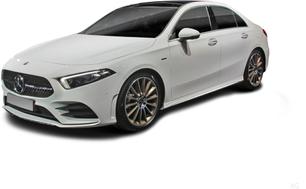
Meet the world’s most aerodynamically efficient passenger car. Mercedes-Benz says the drag co-efficient for this new sedan version of its fourth-generation A-Class is the lowest ever measured for a passenger vehicle.
Which is quite a claim, but you only have to look at it to see how much work has gone into marrying good looks with slippery aero performance.
The A-Class sedan is substantially longer and fractionally taller than its hatchback sibling, but does that mean it’s better, or simply different?
Looking for a small SUV that’s not tiny? The Kia Seltos could be that SUV, and it’s been updated for 2023.
This review covers the entire Seltos range and reviews this small SUV based on its safety, practicality, price and features, plus ownership costs, its fuel economy and what it’s like to drive.
So, if you’re thinking about a Honda HR-V, a Toyota Corolla Cross or something even as large as a Hyundai Tucson or Kia Sportage then you need to be thinking about a Kia Seltos, too.
Mercedes-Benz knows its way around a sedan, and this A-Class is a well-equipped, comfortable and efficient city-sized four-door.
But more than that, to my eyes anyway, it’s a perfect example of restrained form matching aero function with beautiful results.
Note: CarsGuide attended this event as a guest of the manufacturer, with travel and meals provided.
Kia’s updated Seltos is more expensive than the previous version but it's better as well.
The entry grade no longer has hubcaps and gets alloy wheels, all grades have directional air vents in the second row, the jerky dual-clutch auto is gone and an excellent regular eight-speed auto has arrived, plus there’s more safety tech and modern displays screens.
What hasn’t changed is the Seltos’s size. It’s a big, small SUV, that’s easy to park in tight spaces but roomy inside even for tall, awkward humans like me.
The sweet spot in the range is the Sport+ with the 1.6-litre engine, if only it had the LED headlights that only come on the GT-Line.
Note: CarsGuide attended this event as a guest of the manufacturer, with meals provided.
A global carmaker can’t hold its head up in public without a formal design strategy, and Mercedes-Benz uses ‘Sensual Purity’ as a guiding principle in developing the look and feel of its current models. It may sound airy-fairy, but I for one reckon it’s accurate in describing the A-Class sedan.
The overall form is flowing and minimalist, the major exception being a hard character line running down the side of the car from the trailing edge of the angular LED headlights and along the top of the doors to link with the tail-lights.
A rear-biased glasshouse emphasises the length of the bonnet, at the same time delivering a broad, muscular stance with short overhangs front and rear.
Ultra-fine panel gaps, careful sealing around the headlights and curved strakes either side of the bonnet keep the look clean and simple, not to mention super-slippery.
The interior has been styled to within an inch of its life, the dash dominated by the slick twin 10.25-inch widescreen ‘MBUX’ display covering instruments, ventilation, media and vehicle settings.
Five signature, turbine-style air vents (three in the centre, and one at each edge) lift the dash’s visual interest, and the quality of fit and finish is top-shelf.
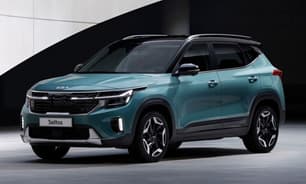
This updated Seltos has had a few styling tweaks, too. The grille is taller and there’s a new headlight design which on the GT-Line is stunning with its LED running lights.
The rear of the Seltos has been restyled as well, with a new tail-light design and again on the GT-Line there’s an LED strip which runs between them.
The Seltos is pretty big for a small SUV. At 4.4m long it’s bigger than a Hyundai Kona and a Honda HR-V and about the same size as a Nissan Qashqai and Corolla Cross.
What’s good about that is you’re getting more space inside with a package that’s still smallish on the outside.
If you think the Seltos’ look is familiar, then I agree. The Honda HR-V and Haval Jolion have very similar tail-light designs and the profile follows many of the same styling cues of the Toyota Corolla Cross.
To my eyes, though, I think the Seltos is the more refined looking of its peers with a more modern and interesting interior.
Speaking of which, keep in mind that the top-of-the-range GT-Line’s cabin is far more fancy than the interior of the entry grade S. The GT-line’s large double digital displays are impressive and the buttons around the shifter for seat heating and ventilation are replaced with blank plastic panels in the S.
Hard plastic armrests were another of my gripes about the previous entry grade Seltos, too.
Still all cabins have a premium look even if the feel isn’t luxurious throughout on all grades.
At a bit over 4.5m long, a fraction under 1.8m wide, and close to 1.5m tall the A-Class sedan is 130mm longer and 6.0mm higher than the hatch version.
The A-Class sedan driver is presented with the same sleek widescreen display as found in the hatch, and storage runs to two cupholders in the centre console, a lidded bin/armrest between the seats (including twin USB ports), decent door pockets with room for bottles and a medium-size glove box.
In a swap to the rear, sitting behind the driver’s seat set to my (183cm) position, I enjoyed adequate knee and headroom, although stretching up a to a straight-back position led to a scalp to headlining interface.
In the A 200 a centre fold-down armrest incorporates two cupholders, again there are generous pockets in the doors with room for bottles, and adjustable ventilation outlets are set into the back of the front centre console. Always a plus.
There are three belted positions across the rear, but the adults using them for anything other than short journeys will have to be good friends and flexible. Best for two grown-ups, and three kids will be fine.
One snag is the size of the rear door aperture. Okay for taller people on the way in, but a limb-unfolding gymnastic exercise on exit.
But of course the reason we’re all here is the boot, and the sedan’s extra length translates to an additional 60 litres of luggage space for a total cargo volume of 430 litres (VDA).
Extra space is one thing, but usability is another. The benefit of a hatch is a large opening that allows bulky stuff to find a home, and Merc has pushed the sedan’s boot aperture to just under a metre across and there’s half a metre between the base of the rear window and the lower edge of the boot lid.
That’s made a big difference and access is good, with the rear seats folding 40/20/40 to add extra flexibility and volume. There are also tie-down hooks at each corner of the floor (a luggage net is included) and a netted pocket behind the passenger side wheel tub (with 12-volt outlet).
At the time of writing Mercedes-Benz wasn’t quoting towing specifications, and don’t bother looking for a spare wheel, the tyres are run-flats.
Some small SUVs are seriously small, which might be fine for some, but if you’re hoping to also have enough space for passengers in the back seats, and a boot which can carry plenty of luggage then the Seltos is a good choice.
Even at 191cm tall I had more than enough room to sit behind my driving position with good headroom back there, too.
Cabin storage is also good with door pockets front and rear, and a deep centre console box. As for cupholders there are two up front on all grades, while the Sport+ and GT-Line get two more in the second row fold-down armrest.
Boot capacity depends on if you’ve requested a full-sized spare wheel or the space-saver spare. With the space-saver you’ll have more room at 469 litres, while the full-sized wheel under the boot floor will leave you with 433 litres. That’s still decent for the class.
The new Seltos has directional air vents for back seat passengers which is a win (motoring journalists had been complaining about the lack of them for years) and there are also two USB ports (Type-C) for the second row along with another two for those in the front, plus a 12V outlet.
The A-Class sedan is launching with two variants, the A 200 at $49,400, before on-road costs, and an entry-level A 180, arriving in August 2019 at $44,900.
We’ll cover active and passive safety tech in the safety section, but above and beyond that standard equipment for the A 180 runs to 17-inch alloy wheels, ‘Artico’ faux leather upholstery, the ‘MBUX’ widescreen cockpit display (two 10.25-inch digital screens), auto LED headlights and DRLs, keyless entry and start, auto-dimming rearview mirror, climate-control, sat nav, multi-function sports steering wheel, cruise control, rain-sensing wipers, ‘Active Parking Assist’ (with ultrasonic proximity sensors front and rear), tinted glass, plus nine-speaker, 225W audio with digital radio, as well as Apple CarPlay and Android Auto.
The A200 steps up to 18-inch alloy rims, and adds a dual exhaust system, four-way electrical adjustment for the driver’s seat (with lumbar support), a folding rear armrest (with twin cupholders), adaptive high-beam assist, and a wireless device charging bay.
The price of the Kia Seltos has increased by about $2000 across the range, but you are getting more in the way of features. Let me take you through the model line-up.
There are four grades: the entry grade S, then the Sport, Sport+ and GT-Line. Those are all available with the 2.0-litre petrol engine and front-wheel drive.
The Sport+ and GT-Line can also be had with a more powerful engine which is a 1.6-litre turbo-petrol with all-wheel drive.
So, the list prices for the 2.0-litre engine start at $29,500 for the S, then step up to $32,700 for the Sport, $35,800 for the Sport+, and $41,500 for the GT-Line.
The 1.6-litre turbo engine is a more expensive proposition and in the Sport+ you’ll pay $39,300, and to pair it with the GT-Line grade you’ll need to hand over $44,900, before on-road costs.
Kia was also doing drive-away pricing at the launch of the new Seltos. So check with your dealership to ensure that the offer is still available.
Coming standard on the S grade for the first time are alloy wheels, they’re small at 16-inches but better than hubcaps, and there’s also roof rails.
Inside, there are cloth seats, an 8.0-inch media display, digital driver’s display, air-conditioning, wireless Apple CarPlay and wireless Android Auto.
The Sport grade adds 17-inch alloy wheels, auto headlights, a 10.25-inch media screen and matching 10.25-inch driver display, digital radio, sat nav, climate control, plus Apple CarPlay and Android Auto.
The Sport+ has all the Sport’s features but brings a proximity key with push-button start, privacy glass, power driver’s seat, synthetic leather upholstery and extra safety tech which we’ll get to soon.
The top-of-the-range GT-Line has all the Sport+ features but adds a power front passenger seat, heated and ventilated front seats, sunroof and a power tailgate.
The GT-Line also comes with the option of two-tone body paint - that is a black roof with 'Clear White' or 'Pluton Blue' body colours. Be advised that this combination is not available with the sun roof.
The value is good, but I don’t agree with Kia’s decision to keep the LED headlights for the GT-Line only and leaving all other grades stuck with dim Halogen headlights.
Being able to seem clearly on dark Australian country roads at night shouldn’t be a luxury. Toyota offers LED headlights across the Corolla Cross range from the entry grade up.
Both models are powered by the same 1.3-litre (M282) direct-injection four-cylinder turbo-petrol engine as the hatch, the A180 tuned to deliver 100kW (at 5500rpm) and 200Nm (at 1460rpm), with the A 200 bumping that up to 120kW (at 5500rpm) and 250Nm (at 1620rpm).
Drive goes to the front wheels only via a seven-speed dual-clutch automatic transmission.
The Seltos range has two engines to choose from: a 2.0-litre four-cylinder petrol engine making 110kW/180Nm and a 1.6-litre turbo-petrol engine producing even more grunt at 146kW/265Nm.
The 2.0-litre engine comes with a CVT which is a type of automatic transmission and the 1.6-litre engine has an eight-speed auto.
CVT stands for Continuously Variable Transmission and some people (me included) find the droning they cause the engine to make to be annoying. They also come with a feeling of less acceleration.
The good news is the eight-speed auto that comes with the 1.6-litre is a great transmission with smooth shifts and a sporty nature that matches the punchy engine.
This eight-speed auto is welcome because it also replaces the jerky dual-clutch transmission that had been paired with the 1.6-litre engine in the previous Seltos.
All-wheel drive is only available with the 1.6-litre engine while front-wheel drive comes solely with the 2.0-litre.
So, if you’re after great acceleration and better traction then the 1.6-litre is the way to go. If you’re not after a sporty driving experience then the 2.0-litre engine will suit you, and it costs less.
Claimed fuel economy for the combined (ADR 81/02 - urban, extra-urban) cycle is 5.7L/100km for both models, with a CO2 emissions figure of 130g/km.
Over roughly 250km of open highway driving on the launch program the A 200’s on-board computer coughed up a figure of 6.3L/100km. So, the real-world highway cycle figure is higher than the claimed combined number. Which is a miss, but not a massive one, and fuel-efficiency is still pretty impressive.
Minimum fuel requirement is 95 RON premium unleaded, and you’ll need 43 litres of it (plus a 5.0-litre reserve) to fill the tank.
The smaller engine actually uses more fuel, but not a great deal more. Kia says the 1.6-litre engine with all-wheel drive uses 7.4L/100km after a combination of open and urban roads. The 2.0-litre engine according to Kia will use half a litre less at 6.9L/100km.
Both engines only need 'standard' 91 RON petrol, too - that’s the cheap one.
Where is the hybrid variant? Good question. The answer is, there isn’t one. And neither is one coming, I’ve asked. That’s disappointing considering the Corolla Cross comes with a hybrid version of each grade in its line-up.
It’s for this reason the Seltos range scores a lower mark for fuel efficiency.
Three things stand out on first meeting with the A-Class sedan – ride comfort, steering feel, and road noise, or rather the lack of it.
The ‘biggest’ compliment you can pay a small car is that it rides like a bigger one, and behind the A 200’s wheel you’d swear the wheelbase was appreciably longer than the 2.7 metres it actually measures.
Over long undulations, even higher frequency bumps and ruts, the A-Class remains stable and composed thanks to a thoroughly sorted (strut front, torsion beam rear) suspension, with beautifully progressive damping a particular highlight.
Electromechanically-assisted steering points accurately and delivers good road feel without any undue vibration. And despite the A-Class launch drive loop covering typically coarse-chip bitumen roads through rural Victoria, overall noise levels remained impressively low.
Acceleration is brisk rather than properly sharp, but in the A 200 there’s more than enough oomph to keep things on the boil for easy highway cruising and overtaking.
With maximum torque available from just above 1600rpm, and a seven-speed dual-clutch auto transmission keeping revs in the sweet spot, the A 200 breezes through the cut and thrust of city traffic, too.
Auto shifts are smooth and quick, with manual changes via the wheel-mounted paddles adding even more direct access to your ratio of choice. And the bonus is no sign of the slow-speed shuntiness sometimes exhibited by dual-clutch autos, especially in twisting, three-point parking manoeuvres.
Special call-out for the cruise control which responds to adjustments quickly (including 10km/h jumps up or down with a firm press of the thumb) and rapidly retards downhill speeds.
Several unbroken hours in the front seat couldn’t generate a twinge of discomfort, the brakes are strong, and over-shoulder visibility is marginally better than in the hatch (not that it’s a weakness in the latter).
Add the sleek and intuitive multimedia system, high-quality audio, plus excellent ergonomics and you have a neatly resolved compact sedan that’s easy to use in the city and suburbs, keeping solid road-tripping ability up its sleeve as well.
The Kia Seltos has two personalities. The laid back Seltos with a 2.0-litre engine and the enthusiastic sporty Seltos with the 1.6-litre engine.
Regardless of which Seltos you pick, the ride is comfortable, the handling is good, and the steering is excellent.
Kia says it's worked to make the Seltos’s cabin more insulated from road noise, but having driven it on country roads for hours I think it could do with more sound dampening.
If you’re considering the Sport+ grade and are not sure if the $3500 premium for the 1.6-litre engine is worth it, my answer would be absolutely, if you can afford it.
That 1.6-litre turbo petrol is a great engine and the new eight-speed transmission is excellent. Even as a daily driver I think anybody would enjoy driving this version of the Seltos more, and for those who like sporty driving then it’s definitely the powerplant for you.
Think automotive safety and Mercedes-Benz will be one of the first names to pop into your mind, and the A 180 offers in impressive suite of active features including ABS, BA, EBD, stability and traction controls, a reversing camera (with dynamic guidelines), ‘Active Brake Assist’ (Merc-speak for AEB), ‘Adaptive Brake’, ‘Attention Assist’, ‘Blind Spot Assist’, ‘Cross-wind Assist’, ‘Lane Keep Assist’, a tyre pressure warning system, the ‘Pre-Safe’ accident anticipatory system, and ‘Traffic Sign Assist’. The A 200 adds ‘Adaptive Highbeam Assist’.
If all that fails to prevent an impact you’ll be protected by nine airbags (front, pelvis and window for driver and front passenger, side airbags for rear seat occupants and a driver’s knee bag), and the ‘Active Bonnet’ automatically tilts to minimise pedestrian injuries.
The A-Class was awarded a maximum five ANCAP stars in 2018, and for smaller occupants there are three child restraint/baby capsule top tether points across the back seat, with ISOFIX anchors on the two outer positions.
The Seltos has the maximum five-star ANCAP safety rating but that’s from 2019. Still, the advanced safety tech is excellent. All grades come with AEB, blind spot warning, lane keeping assistance and rear cross-traffic alert.
All grades also come with the rear occupant alert, which is great for sleep-deprived parents, and there’s also the safe exit feature which will let you and the kids know if a car or cyclist is approaching before you open the door and ruin everybody’s day.
The Sport+ and GT-Line both come with AEB that works at intersections.
It’s good to see front and rear parking sensors standard across the range.
Mercedes-Benz covers its passenger car range with a three year/unlimited km warranty, like the other two members of the German ‘Big Three’ (Audi and BMW) .
That lags behind the mainstream market where the majority of players are now at five years/unlimited km, with some at seven years.
On the upside, Mercedes-Benz Road Care assistance is included in the deal for three years.
Service is scheduled for 12 months/25,000km (whichever comes first) with pricing available on an ‘Up-front’ or ‘Pay-as-you-go’ basis.
Pre-payment delivers a $500 saving with the first three A-Class services set at a total of $2050, compared to $2550 PAYG. Fourth and fifth services are also available for pre-purchase.
The Seltos is covered by Kia’s seven-year, unlimited-kilometre warranty.
Servicing differs between the two engines.
A Seltos with a 1.6-litre engine needs to be serviced every 12 months or 10,000km and over seven years the average service cost comes to $497 per year.
A Seltos with the 2.0-litre engine needs to be serviced every 12 months or 15,000km and over seven years the average service costs comes to $434 per year.
Capped price servicing is good, but the prices can get higher than $600 for some visits.