What's the difference?
The Mazda MX-5 convertible is arguably the best new mainstream sports car available today, but the fourth-generation, ‘ND' model was released in Australia all the way back in August 2015, meaning it's now nearly seven years old.
So, how does Mazda go about making the ND MX-5 even better, especially in the face of the new Toyota GR86 and Subaru BRZ coupes? Well, the MY22 version on test here isn't a late-life facelift - its face is exactly the same - but it does introduce something called Kinetic Posture Control, which promises an improved drive.
Oh, and the MY22 MX-5 also spells the end of the enthusiast-friendly 1.5-litre engine option, with the 2.0-litre alternative now standard range-wide, alongside the full safety package. That said, has Mazda managed to improve the breed? Let's find out.
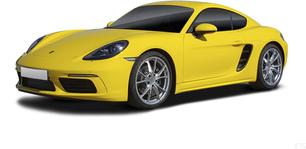
I never have trouble sleeping. I don’t even dream. But I couldn’t sleep the night before I test drove the Porsche 718 Cayman GT4 RS.
I just laid in bed for six hours waiting to drive. The last time I was so excited that I couldn’t sleep was when I was seven and it was the night before we went to the snow for the first time.
Some things are worth losing sleep over. And like my first snow day, the GT4 RS day was a good one.
I’d driven plenty of Porsches before, from basic Boxsters and Caymans to meaty 911s and the king of them all the GT3. I’ve driven Porsche’s future, too, in the fully electric Taycan GTS.
But there’s something about the 718 Cayman GT4 RS that’s different. It’s a hot rod. A ‘Franken’ Cayman that was never supposed to be built but only came about because the head of Porsche's R&D joked to his engineers about how good it’d be to take the company’s screaming 4.0-litre 500 horsepower engine out of a 911 GT3 and squish it into something little like a Cayman.
But they actually did it. And they loved it so much they convinced the company to put it into production, and this is it - the 718 Cayman GT4 RS.
If you’re looking for a sports car that’s comfortable and luxurious, with expansive digital screens and safety tech like AEB, then this isn’t the car for you.
The 718 Cayman GT4 RS is raw, loud, brutal and has never heard of a ‘sport mode’ before. It only has two modes - you turn the key and it’s on. You turn the key back and it’s off. This is a street legal race car.
Well, Mazda has gone and done it again – it's managed to make the MX-5 even better.
It's easy to be cynical about the real-world impact of Kinetic Posture Control, but it does actually make a meaningful difference, building upon an already class-leading drive experience.
Needless to say, if you're in the market for a new mainstream sports car, the MX-5 is still the default option. I'll take a manual RF GT, thanks.
Note: CarsGuide attended this event as a guest of the manufacturer, with meals provided.
The 718 Cayman GT4 RS is a street legal race car that offers outstanding performance while staying easy to drive. That said, if you plan to drive the car daily, be prepared for a less than comfortable experience.
Really, the GT4 RS is a car you can drive to the track and then home again, or for a country road blast, not something you could commute in daily.
Is it as good as a 911 GT3? The answer is no, but it’s not far off.
I'll be honest, when the ND MX-5 was unveiled, I did not love it. In fact, I had question marks over whether it had an angle that looked good. But over time, I've realised that it was me who was off the mark.
Yep, the fourth-generation model's exterior design is ageing gracefully, with those pinched headlights and that gaping grille looking fabulous. And the front end is made stronger by the pronounced fenders, a design flourish also seen at the rear.
Speaking of the back end, it's still not my favourite angle, but the correct paintwork selection can make it pop in all the right ways. Yes, those wedge-circle-combination tail-lights are not for everyone, but they are an undeniable signature.
As mentioned, the MX-5 range is available in two body-styles: the traditional, manually operated soft-top Roadster and the more modern power-operated hardtop RF. Of course, the former is quicker to use, while the latter is more secure.
Either way, the ND is starting to show its age inside, where its basic design (including physical climate controls) is headlined by a ‘floating' 7.0-inch central touchscreen – which can be operated via a rotary controller – and a small, multifunction display next to the traditional tachometer and speedometer.
Again, there's not a lot to it, but leather upholstery adorns the steering wheel, gear selector, manual handbrake and dashboard insert, and there are body-colour accents on the door shoulders. The GT and GT RS also get cow hide on the seats, and that's your lot. I must admit, I actually love the ‘back to basics' interior approach.
A Porsche with a fixed rear wing as big as an ironing board clamped in place by swan neck attachments should be enough to let people know they are in the presence of automotive greatness.
If not, the bonnet with its NACA duct nostrils, the louvres cut into the wheel arches and the funnel-like air inlets where the back windows should be are also obvious signs this is no ordinary Cayman.
You and I know none of these features are just for the look. The GT4 RS is a Cayman redesigned for monster performance.
For starters the GT4 RS is 30mm lower and 35kg lighter than a regular Cayman.
Downforce is increased by 25 per cent thanks to that enormous fixed rear wing and front diffuser.
The NACA ducts in the bonnet pipe air down to cool brakes the size of family pizzas. Actually, at 408mm in diameter they're the same cast iron/aluminium discs you’ll find on a 911 GT3 and 28mm larger than the GT4’s. Also the same as a GT3’s are the rear 380mm discs.
Excess air pressure is released through the wheel arch louvres, while those giant ducts where back windows normally are feed the engine air like a baby prehistoric bird as it screams for more in your ear.
The GT4 RS only weighs 1415kg thanks to that carbon bonnet, a rear window made of light-weight glass, heavy insulation material has been taken out, the door handles inside are just fabric loops and even lightweight carpets have been used.
The optional Weissach package is pretty much there for the look and gives the bonnet, rear wing and side air inlets the carbon weave finish.
The pack also adds titanium exhaust tips styled to look like those from a 1970s Porsche 935 and inside it swaps the steel roll cage for a titanium version along with lots of leather and Race-Tex (synthetic suede) upholstery.
The titanium roll cage is 16kg lighter than the steel version but it’s not FIA-GT approved.
The 20-inch forged magnesium wheels come with the Weissach pack and along with looking stunning they’re also 10kg lighter than the standard alloys.
Measuring 3915mm long (with a 2310mm wheelbase), 1735mm wide and 1230-1235mm tall, the MX-5 is a petite sports car, so needless to say, practicality is not one of its strengths.
For example, the Roadster version's boot has a tiny cargo capacity of 130L, while its RF sibling has 127L. Either way, once you put two soft bags or a small suitcase in it, there's not much room left. And let's not forget the very tall load lip that you need to contend with.
The MX-5 doesn't exactly offer more inside, as the central storage bin is puny, and the glovebox is basically non-existent, alongside tiny door bins. Aside from the decently sized ‘ski port', it's not great news for in-cabin storage.
That said, two removable but shallow cupholders are located between the seats, but they're propped by flimsy arms, which can cause anxiety, especially with hot coffees and the like.
Connectivity-wise, there's a single USB-A port and one 12V power outlet – that's it. Both are found in the centre stack, near a cubby that's appropriate for smartphones.
It's worth mentioning the MX-5 doesn't have anchorage points for child seats, be they top-tether or ISOFIX, so it's a sports car for adults – obviously.
For that reason, you expect some shortcomings on the practicality front, and these ones are not dealbreakers when driving alone.
The 718 Cayman GT4 RS is a two seater sports car that’s probably more practical than you might think.
There’s a spacious cockpit with excellent legroom even for me at 191cm tall, plus good headroom. Those bucket seats were verging on snug for me at 90kg, but they weren’t at all uncomfortable.
Cabin storage is limited to a tiny centre console box only large enough for a wallet, while the door nets are good for phones. The glove box is large and lockable.
For luggage there are two boots: one in the front under the bonnet, and the other is in the back. Both will easily fit an airline carry-on sized suitcase.
For MY22, the MX-5 is still available in two body-styles: the soft-top Roadster and the hardtop RF. It also keeps its three grades, including the unnamed entry-level offering, mid-range GT and flagship GT RS, but pricing is up by $400-1700 for every variant.
In terms of specification changes, Platinum Quartz is a new metallic paintwork option, while the RF GT can now be had with Terracotta Nappa leather upholstery. Aside from Kinetic Posture Control and some key safety upgrades for the unnamed entry-level grade – which we'll explore in later sections of this review – that's the extent of the MY22 adjustments to the MX-5 line-up.
Standard equipment in the entry-level grade, therefore, includes dusk-sensing LED lights, rain-sensing wipers, black 17-inch alloy wheels, push-button start, a 7.0-inch touchscreen multimedia system, satellite navigation, wireless Apple CarPlay and wired Android Auto support, digital radio, a six-speaker sound system, single-zone climate control, an auto-dimming rearview mirror and black cloth upholstery.
The GT adds adaptive headlights, silver 17-inch alloy wheels, heated side mirrors, keyless entry, a 203W Bose sound system with nine speakers, heated seats, an auto-dimming rearview mirror, black leather upholstery and stainless-steel scuff plates.
For $1020, a Black Roof package can be added to the two RF GT variants, which bundles in – you guessed it – a black roof and Pure White or Terracotta Nappa leather upholstery.
The GT RS gets several performance-focused upgrades over the GT, including Gunmetal Grey 17-inch BBS forged alloy wheels, Brembo front brakes package (four-piston calipers and high-performance pads), Bilstein gas-pressurised dampers and a solid alloy strut tower brace.
When it comes to similarly priced rivals, the MX-5 doesn't have many, with the Mini Cooper S Convertible (from $51,530) coming the closest, while the just-launched Subaru BRZ (from $38,990) and yet-to-be-priced Toyota GR86 twins aren't far off.
The 718 Cayman GT4 RS lists for $311,900, which is $88,000 more than a Cayman GT4, and almost $77,000 less than a 911 GT3.
When it comes to the GT4 RS’s standard features, well, power windows, headlights and a steering wheel are pretty much it. No, seriously just about everything on this car is designed to improve performance so you can forget about luxuries and hi-tech touches.
Coming standard are LED headlights and tail-lights, 20-inch alloy wheels in 'Dark Silver' and so too was the paint colour of our car - 'Guards Red'.
Inside, the carbon fibre bucket seats are standard, so is dual-zone climate control, RS steering wheel with 'Race-Tex' upholstery and carbon trim throughout.
There’s the small media display with sat nav and Apple CarPlay, and a Bose sound system is a no-cost option, too.
The carbon-fibre bonnet with air ducts and the enormous carbon-fibre rear wing are standard features, too.
If you look closely at the images you’ll see the bonnet and rear wing of my test car have a carbon weave finish - this comes courtesy of the 'Weissach Pack', which isn’t cheap at $33,210, but also adds a carbon finish to the air side air inlets, titanium exhaust tips, 20-inch forged magnesium wheels, leather and Race-Tex upholstery inside, along with a titanium roll cage and six-point harness for both seats.
If you want the roll cage, but you're oaky with a heavier steel one, the ClubSport package is a no-cost option and also brings a six-point harness, plus a fire extinguisher mounted in the passenger footwell.
If you only tick one option box make sure it’s the front axle lift system. It costs $4900 but the system will probably save you a fortune in damage getting in and out of driveways.
Prior to MY22, the Roadster's entry-level grade was motivated by a delightful 1.5-litre naturally aspirated petrol four-cylinder engine that produced a modest 97kW of power at 7000rpm and 152Nm of torque at 4500rpm – but that option is no more, due to slow sales.
That's right; pour one out for the enthusiasts, as all MX-5 variants now use the familiar 2.0-litre unit that develops a more formidable 135kW at 7000rpm and 205Nm at 4000rpm.
That said, drive is still sent to the rear wheels via a six-speed manual with a rear limited-slip differential, or a six-speed torque-converter automatic with paddle-shifters. However, the GT RS is the only grade that exclusively comes with the former.
The engine in the Cayman GT4 RS makes this car incredibly desirable and fast. It’s the 4.0-litre naturally aspirated flat-six from the Porsche 911 GT3.
This isn’t a Cayman engine and it was never intended to be. Caymans come with turbo flat fours, and there is also a 4.0-litre flat six, but it’s not the same engine found in the 911 GT3 and the GT4 RS.
So, how did it find its way into the Cayman? The story goes that Porsche’s head of R&D Wolfgang Hatz joked to his engineers that they should take the engine from a 911 GT3 and stuff it into a Cayman just to see what it’d be like.
The thing is, once all the laughing stopped they actually attempted to do it. The job proved too difficult though, and Hatz told them to forget it.
As it turned out it was only Hatz that forgot about it because the engineers continued to work on Cayman and even finished the job.
They revealed the Franken-Cayman to Hatz on his birthday and he was so besotted with the thing he pitched the idea of putting the monster into production.
And now here I am reviewing the production version of the car - the 718 Cayman GT4 RS.
Unlike the 911 GT3 which has this engine at the rear of the car, the GT4, like all Caymans, is mid-engined. The driver and passenger are more or less leaning against the engine and the balance this creates is outstanding.
Making 368kW and 450Nm the six-cylinder produces 59kW more than the GT4’s engine and revs to 9000rpm.
The howl from that engine as it storms up to that redline is one of the loudest I’ve heard from any production car. After a day of driving it on some amazing roads I came home and walked through the front door with my ears still ringing and the world’s biggest smile on my face.
Drive the GT4 RS calmly around, however, and it’s quiet. This is not a wake-the-neighbours-up-vehicle-when-you-start-it car. But if you were to arrive home at 8000rpm they’ll be awake by the time you’ve switched it off.
Sending the drive to the rear wheels is a seven-speed 'PDK' dual-clutch automatic transmission. The ratios are super short, the shifts are lightning quick.
The GT4 RS doesn’t have a manual gearbox and there’s no plan by Porsche to offer one, either. Don’t let that put you off. PDKs can shift faster than you or me, and that’s what you want in a race car.
That quick transmission is also part of the reason why acceleration is phenomenal with a 0-100km/h time of 3.4 seconds. A top speed of 315km/h makes the GT4 RS slightly faster than the 911 GT3.
The MX-5's fuel consumption on the combined-cycle test (ADR 81/02) varies from variant to variant, with manual Roadsters managing 6.8L/100km, while their automatic counterparts require 7.0L/100km. Three-pedal RFs need 6.9L/100km, while two-pedal versions drink 7.2L/100km.
That's a strong set of claims for a sports car, and while I wasn't able to get a real-world result for the MY22 version due to the nature of its launch program, my previous experience with a MY21 manual Roadster saw an average around its claim, which is impressive stuff.
For reference, the MX-5 has a 45L fuel tank that takes more expensive 95 RON premium petrol at minimum, with claimed driving range, therefore, in the 625-662km region.
Porsche says that after a combination of open and urban roads the 718 Cayman GT4 RS will use 12.7L/100km.
After leaving the city in peak hour traffic for flowing country roads, only to then join the commuters again on their way home, we measured 14.1L/100km at the fuel pump after 391km.
I’m not surprised by this mileage given I made no effort at all to conserve fuel, and compared to some of its supercar peers the fuel usage is darn good relative to what V8 and V10 sports cars tend to guzzle.
You'll need 64 litres of 98 RON premium unleaded to fill the tank, which translates to a range of just over 500km using Porsche's official consumption figure, and a tad more than 450km using our real-world number.
Let's get straight to the elephant in the room: Kinetic Posture Control. What is KPC? Well, put simply, it uses its electronic smarts to apply brake pressure to the inside rear wheel – when necessary – while cornering, all in the name of improved body control.
So, does KPC actually make a meaningful difference? We tested MY22 MX-5s back-to-back with MY21 versions on-track and on-road to find out, and the short answer is yes.
The GT RS makes better use of KPC due to its sporty chassis upgrades, delivering a more confident drive when cornering hard, but the softer unnamed entry-level grade and GT still benefit from its influence.
Either way, the upshot is how these upgrades make the MX-5 even flatter through the corners. It almost doesn't matter how hard you turn in; it will remain relatively locked down. And given the already graceful way in which it pivots, there are next to no handling issues.
Otherwise, this is the same MX-5 we've come to know and love, which is great news for drivers that, you know, like to drive.
The electric power steering defies convention with its well-judged weighting and high level of feel. It's not the hydraulic system of previous generation, but it's great in its own right.
And the MX-5's suspension set-up (double-wishbone front and multi-link rear axles) still delivers a ride that's not for everyone, especially the jittery GT RS that, again, has Bilstein gas-pressurised dampers and a solid alloy strut tower brace.
The 2.0-litre naturally aspirated four-cylinder engine is still very enjoyable, with its free-revving nature egging the driver on to push towards the redline with every upshift, and with peak power (135kW) produced at a scintillating 7000rpm, you feel obliged to.
This unit is naturally short on torque, particularly down low, and its maximum (205Nm) is developed at 4000rpm, so the driver has to work the right pedal hard, which they'll be willing to do because of the fun factor.
Of course, the key to this memorable experience is the six-speed manual. It ticks nearly all the boxes with its perfectly weighted clutch, short throw and well-judged ratios.
The six-speed torque-converter automatic also does the trick with its smooth shifts, but it doesn't seem that keen to hit the redline, even when the Sport drive mode is engaged and the accelerator pedal is buried. I would pick the three-pedal set-up without hesitation.
Critically, braking performance is strong alongside pedal feel, but the GT RS makes both better with its aforementioned Brembo brakes package.
Now, it'd be remiss of me to not touch on the MX-5's noise levels, as it's not the most peaceful sports car on the market. Naturally, the Roadster is the most disruptive body-style, with the RF providing better insulation. Keep that in mind if it's important to you.
That sleepless night before the day I drove the GT4 RS was worth every hour awake.
I’d planned a route which would take me on a round trip from Sydney’s inner suburbs to (in and around) the Blue Mountains to the west.
The automotive gods had given me a cool, dry and sunny day. The only thing I didn’t have was a racetrack where a car like this can be set free and its abilities truly unlocked.
But I can tell you what it’s like to drive on great roads... and terrible ones.
First, the GT4 RS would be tough to drive daily on our Aussie city streets. Ground clearance is 103mm and higher speed bumps reach up and touch the undercarriage.
This not only meant driving slowly over them, but at an angle. I was honked at for doing this.
Next, the ride is on the granite side of firm and the thin walls on the Pirelli P Zero tyres on our car (245/35 ZR 20 on the front and 295/30 ZR 20 on the rear) meant it fell hard into Sydney’s potholes.
I wouldn’t call driving the GT4 RS in the city painful, but even on the most comfortable adaptive suspension setting it’s not all that pleasurable.
Those race seats aren’t the plushest place in the world, either, but I spent from pretty much 7:00am until 7:00pm pretty in mine and found it supportive and genuinely comfortable, while the driving position is excellent.
This is a low car, too, and if like me you’re over 45 and the height of a baby giraffe then be prepared to crawl in and out.
But it’s all worth it when the right road appears in front of you away from the traffic of the city.
That’s where you’ll glimpse the 718 Cayman GT4 RS's brilliance. It’s all here. Rapid acceleration accompanied by the sound of a tornado around you, but reined in by brutally effective brakes.
Superb handling, balance and stability defy winding roads, while the nose is light and easy to point with the turn-in to corners committed and accurate.
The 718 Cayman is not just one of the best Porsches I’ve driven in the past decade but one of the best cars I’ve piloted in that time.
While Australia's independent automotive safety authority, ANCAP, awarded the MX-5 its maximum five-star safety rating in 2016, the game has changed significantly in the past six years, so keep that in mind if it's on your shopping list.
Either way, advanced driver-assist systems in the MX-5 extend to front autonomous emergency braking (AEB) with pedestrian detection, cruise control, traffic-sign recognition, blind-spot monitoring, rear cross-traffic alert, a reversing camera and tyre-pressure monitoring.
In a good move, new to the unnamed entry-level grade for MY22 – but already standard in the GT and GT RS – are lane-departure warning, driver-attention alert, rear AEB, and rear parking sensors.
That said, lane-keep and steering assist should also be part of the range-wide package alongside adaptive cruise control, but they're looking like they won't be a factor until the next-generation MX-5 – if there is one.
Other range-wide standard safety equipment includes four airbags (dual front and side), anti-skid brakes (ABS) and the usual electronic traction and stability-control systems.
There’s almost no advanced safety tech on board the GT4 RS - that means no AEB, no lane keeping assistance no blind-spot warning - this truly is a race car.
You’ll be happy to know there are full-sized front airbags for the driver and co-pilot, they both also have thorax airbags and head airbags.
Unsurprisingly, the car has not been safety assessed by ANCAP.
Like all Mazda Australia models, the MX-5 comes with a five-year/unlimited-kilometre warranty and five years of roadside assistance, both of which are average when compared to Kia's market-leading seven-year terms with ‘no strings attached'.
Service intervals for the MX-5 are 12 months or 10,000km (whichever comes first), with the distance on the shorter side. But capped-price servicing is available for the first five visits, costing $1755 in total, or an average of $351, which is not too bad.
The Cayman GT4 RS is covered by a three-year/unlimited kilometre warranty and servicing is needed every 12 months or 20,000km.
With Porsche, final service costs are determined at the dealer level (in line with variable labour rates by state/territory).
We'd like to see the warranty coverage increased to five years/unlimited kilometres which will bring it in line with more mainstream brands.
A car like the GT4 RS is special, too, and likely to be owned for longer than just a few years and a longer warranty is good peace of mind.