What's the difference?
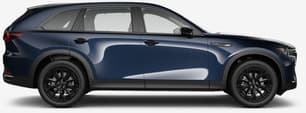
Mazda calls the new CX-70 its "flagship" five-seat SUV, which also makes it yet another flag-bearer for the brands relentless push up market as part of its 'Mazda Premium' strategy.
It might have a different badge, but it's really a five-seat version of the brand's biggest and most expensive offering, the seven-seat CX-90.
And, for reasons that will become clear in a moment, it's something of a bargain, at least in the context of Mazda's plush large SUV range.
How so, you ask? Read on.
Mid-sized (2.5 to 3.5-tonne) commercial van buyers have a variety of makes and models to choose from, even though most buy the venerable HiAce.
Latest VFACTS figures confirm Toyota’s long-standing dominance, as the HiAce commands just under 40 per cent market share with the remainder spread across ten competitors from Europe, China and Korea.
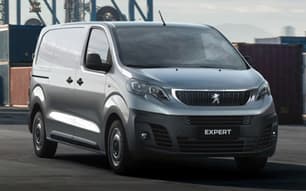
One of those is Peugeot’s Expert, which is available with a choice of wheelbases, transmissions and model grades. It currently represents just 1.3 per cent of sales in this segment, so we recently spent a week behind the wheel to see how it compares to the market leader.
For mine, the CX-70 is the pick of Mazda's premium SUV range, and if you can survive without a third row of seats, it's significantly cheaper than its CX-90 twin, too.
Note: CarsGuide attended this event as a guest of the manufacturer, with travel, accommodation and meals provided.
Positives are higher payload and tow ratings than the Toyota HiAce along with superior fuel economy. Negatives are inferior safety, evidence of questionable build quality and a list price more than $3000 above a HiAce equivalent. So, whether the positives outweigh the negatives to justify its higher price, only a potential buyer can decide.
Yes, the Mazda premium SUV range can look a little same-same, but Mazda insists there are critical differences.
That said, if you can immediately spot the difference between the CX-70 and CX-90 without taking a peek inside, you're doing better than me, given it is the same exact dimensions as Mazda's three-row flagship.
Sure, Mazda talks about things like this design being a “passion pursuer” that serves up "dignified performance” – all of which sounds utterly ridiculous – but the less marketing-speak version is that it looks like a shapely large SUV that ditches the boxy dimensions of a proper 4WD for a more sleek and swooping profile.
Inside, it's a plush and premium-feeling space, with lovely cabin materials, plenty of tech, and plenty of space.
Our 'Long' example rides on a 3275mm wheelbase with 5309mm overall length, 1920mm width and 1948mm height, so compared to the HiAce it's slightly longer in wheelbase and overall length but narrower and not as tall. It’s also significantly lighter with a kerb weight that’s almost 500kg (or half a tonne) less than the Toyota; a big factor in its spirited performance and superior payload rating.
The Peugeot’s front-wheel drive underpinnings include MacPherson strut front suspension, coil spring semi-trailing arm rear suspension, rack and pinion steering and four-wheel disc brakes. Its 12.4-metre turning circle is also more than a metre larger than the HiAce.
The Pro’s work focus can be seen in its black plastic front and rear bumpers and side mouldings where most scrapes and dents occur in hard-working vans. There’s matching black on other high-wear surfaces like the door mirrors, door handles, hubcaps, rear wipers and rego plate shroud.
The cabin has seating for three with a driver’s bucket seat and separate two-passenger bench seat. Although all occupants have ample headroom, the dashboard’s protruding centre console leaves little legroom. In fact, the centre passenger must travel with both knees skewed to the left of this extension, which then encroaches on the outer passenger’s legroom. So, for a crew of three we’d recommend short trips. Our only other criticism was the lower dash panel on the passenger’s side, which kept popping loose despite repeated attempts to click it back into place.
The CX-70 measures a substantial 5120mm long, 1994mm wide, and 1745mm tall, and it rides on a 3120mm wheelbase.
It will tow 2.5 tonnes no matter which engine you choose, and the expansive boot will swallow between 589 litres and 2015 litres, depending on how you configure the backseat.
All of that space translates to a hugely airy backseat experience, with the second row able to be fixed in a position that either prioritises leg room or boot space.
With the former, you've got tons of space in the second row. I'm 175cm, and my knee and leg room was ample, with only the intrusive tunnel that runs down the middle-centre of the cabin eating into leg room for the middle passenger.
There are also air vents and temp controls, twin USB charge ports, seat heating in the window seats and swathes of very nice materials.
The boot is massive, too. I can't even reach the back of the rear seats when I lean into it, and Mazda says it will swallow smaller surfboard or SUPs without needing to resort to roof racks.
Under-floor storage adds a bit more security for precious items, too.
Its relatively light 1743kg kerb weight combined with a 3100kg GVM allows for a sizeable 1357kg payload that’s almost 300kg more than the HiAce. It’s rated to tow up to 1800kg of braked trailer, which is also 300kg more than the Toyota. And with its 4900kg GCM, the Expert can legally tow its maximum trailer weight while carrying its maximum payload. These are excellent numbers for a multitude of working roles.
The cargo bay and cabin are separated by a stout steel bulkhead, which insulates the cabin from tyre noise emanating from the rear wheel housings and doubles as a cargo barrier. Its central window provides vision for the rear-view mirror and the ability to check on loads.
Lined to mid-height, the Expert’s cargo bay is accessed through large sliding doors on each side with handy 935mm-wide openings, while rear access is through glazed barn-doors which open to 180-degrees to aid forklift access. Each is equipped with its own windscreen wiper and demister.
The load floor is 2780mm long and 1628mm wide with 1258mm between the wheel housings, so it can carry up to three 1200 x 800mm Euro pallets or two 1165mm-square Aussie pallets, held in place by a total of eight floor-mounted load anchorage points. The 6.1 cubic metres of load volume splits hairs with the HiAce’s 6.2 cubic metres.
Cabin storage starts with a cavernous bin in the base of each front door that can easily hold a big 1.5-litre bottle and lots more. Each door also has two other compartments for smaller items. The dash-pad has a cup holder at each end and there’s a shrouded storage compartment in the centre. There are also two small storage nooks near the gearshift dial, plus on the passenger side is a glovebox and additional storage compartment (with 12V accessory plug inside).
The bench seat’s hinged base cushion also tilts forward to reveal two large storage bins below, with one thoughtfully lined with polystyrene foam to keep items either hot or cold.
We'll drill down on this a little more in the practicality section, but it's important to note here that the CX-70 is the same size as the CX-90 – both are 5120mm long, 1994mm wide and 1745mm high — which means the only real difference between the two models is the third row of seats in the CX-90.
And, as it turns out, that's a very expensive pair of chairs. The CX-70 starts with the GT trim at $75,970 before on-road costs for the petrol or $77,970 for the diesel, and then climbs to the Azami trim, which is $82,970 or $84,970.
The CX-90, though, is $82,577 or $85,785 for the GT, or $91,461 or $93,030 for the Azami.
That makes the CX-90's third row at least a $6600 option, but as much as an $8000 upgrade. Mazda has made moves to address this, with a drive-away "plate clearance" that closes that gap, but we suspect those offers will become permanent fixtures to make the jump from 70 to 90 less ferocious.
Anyway, Mazda has thrown just about everything they've got at the CX-70. The GT kicks off with plenty of high-end gear, including 21-inch black alloy wheels, adaptive LED headlights, a panoramic sunroof and a handsfree powered tailgate.
Inside, there are twin 12.3-inch screens with Apple CarPlay and Android Auto, a 12-speaker Bose stereo, leather seats that are heated front and rear, three-zone climate control and a heated steering wheel.
The Azami then adds things like ambient lighting, black Nappa leather seats, which are now ventilated in the front, footwell lighting, body-coloured wheel arches and lower cladding and body-coloured door handles.
Our test vehicle is the Pro Long Auto variant. ‘Pro’ means it’s the lower-priced and more work-focused of two Expert model grades. ‘Long’ means it has the longer of two wheelbases and ‘Auto’ denotes auto transmission as opposed to the manual alternative.
Powered by the same 2.0-litre four-cylinder turbo-diesel shared by all Experts, it has a list price of $50,075 plus ORCs which is significantly more than its LWB HiAce auto equivalent at $46,760. And our example is finished in Artense Grey metallic, which is one of several premium colours available at extra cost.
The Pro Long Auto is built for work with 16-inch steel wheels and 215/65 R16C Michelin tyres plus a full-size spare. Useful workhorse features include rear parking sensors, 12-volt accessory socket, automatic headlights and wipers, front fog lights, cruise control and a multimedia system with 7.0-inch colour touchscreen and multiple connectivity including Apple CarPlay/Android Auto.
You can have one of two engines in the CX-70, with the cheapest being a 3.3-litre, six-cylinder turbo-petrol, producing 254kW and 500Nm. There's also a 3.3-litre, six-cylinder turbo-diesel, making 187kW and 550Nm. Both are equipped with a 48-volt mild hybrid system to marginally reduce fuel use.
All models are AWD, and pair with an eight-speed automatic transmission.
The Expert’s punchy 2.0-litre four-cylinder diesel is one of its strengths. Turbocharged and intercooled, it has Euro 5 emissions compliance and produces 110kW at 4000rpm and 370Nm at 2000rpm. The eight-speed torque converter automatic has near-seamless shifting and offers the choice of sequential manual-shifting using steering wheel paddle-shifters.
Petrol-powered cars will sip 8.1L/100km on the combined cycle, while the diesel drops that to 5.4 litres.
Both models get a 74-litre tank, meaning a theoretical driving range of around 900kms in the petrol, and almost 1400kms in the diesel.
Peugeot claims a combined average consumption of 6.3L/100km and the dash display was close to that at 7.6L after 386km of testing, which included about one third of that distance carrying a full payload. Our own figure calculated from fuel bowser and tripmeter readings came in higher again at 8.3L/100km, which is still outstanding economy for a vehicle of this size. So, based on our numbers, you could expect an extensive driving range from its 70-litre tank of around 840km.
Interestingly, the CX-70 has been tagged as the expected smallest seller of Mazda's premium SUV range, but I reckon it just might be the pick of the bunch.
Every one of the CX-0 models (60, 70, 80 and 90) all get slightly different suspension tunes, and while you can find harsh edges in the other models, the CX-70 feels utterly composed and refined, at least on the smooth-ish roads of our launch test route.
Perhaps most surprising, though, is the CX-70's ability to hold its own on a properly twisting road. We expected lots of weight transfer and the high-pitched sounds of tyres screaming out in pain, but instead found Mazda's massive SUV served up grip, composure, and very little in the way of sea-swell-style body roll.
The two big six-cylinder engines also feel perfectly suited to a vehicle in this space. There's tons of power whenever you need it, and solid levels of refinement in terms of engine noise or diesel rattles.
For mine, the petrol engine is the pick though, feeing just a little smoother than the diesel option. The latter can feel a bit jerky at slower speeds, whether that's the power delivery or the gearbox, and it doesn't seem to happen with the petrol engine.
The biggest caveat, though, is that we haven't driven the CX-70 in its natural environment, the city and suburbs, so while it largely shone on flowing country roads, how it performs on roads like the ones near your place remains a bit of a mystery.
It has a comfortable driving position as the steering wheel is adjustable for height and reach, the bucket seat has a fold-down inboard armrest and there’s a prominent left footrest. Although the driver’s seat base has no rake adjustment, it’s long enough to provide good under-thigh support with enough rake to avoid sliding towards the front of it like some rivals.
The steering is responsive and nicely weighted, which combined with competent handling and braking makes the Expert feel sure-footed. The supple four-coil suspension provides a smooth unladen ride quality.
The energetic drivetrain with its 370Nm of torque has spirited acceleration and good agility in traffic. Although peak torque is at 2000rpm, the 2.0-litre turbo-diesel pulls cleanly from 1500rpm which showcases its flexibility.
The eight-speed automatic gets good results from this engine, but sequential manual-shifting using the paddle-shifters is handy when more driver input is required. The cabin is acceptably quiet at highway speeds, thanks to the cabin bulkhead and low tyre, engine and wind noise.
Our only major criticism is the absence of blind-spot monitoring and rear cross-traffic alert. In our opinion every van, particularly with solid side-walls and doors like this one, should at least have these active safety features as standard (like the HiAce which also has standard front parking sensors).
The Expert’s relatively small mirror on the passenger door is not sufficient in eliminating the large and potentially hazardous blind-spot over the driver’s left shoulder, particularly in heavy traffic and when reversing from driveways into busy streets.
The CX-70 hasn’t been ANCAP tested, but it does arrive with a pretty stacked safety offering, including a 360-degree-view camera, blind-spot monitoring, front and rear cross-traffic alert, and a total of eight airbags, including a knee airbag for the driver.
No ANCAP rating and although it’s equipped with AEB, emergency brake assist and forward collision warning there are only front airbags for driver and passenger, which looks threadbare compared to the HiAce’s seven airbags. It also misses out on important active safety features previously mentioned.
Servicing is not particularly cheap in the CX-70, and the service intervals, at least in the diesel, feel a little short, too.
Buy that one, and you’ll be visiting the dealership every 12 months or 10,000kms, and the first five years of ownership will cost you $3298.
Petrol cars require servicing every 12 months or 15,000kms, and five years will set you back $3436.
The CX-70 is also covered by Mazda's five-year, unlimited-kilometre warranty.
The Expert is covered by a five years/200,000km warranty. Scheduled servicing every 12 months/20,000km whichever occurs first. Five years of capped-price servicing totals $3049 or an average of $609.80 per year.