What's the difference?
Mazda has updated one of its most popular, but rather old models.
Yes, the Mazda CX-3 is still around after more than a decade since its reveal, and it remains almost at the tippy-top of Mazda’s local sales charts.
With the brand having shifted 8221 CX-3s in the first half of 2025, it seems the light updates and modest price rise haven’t scared away any potential customers.
We’ve grabbed a CX-3 Evolve, the second-up of four available variants, to see if the popular light SUV still stacks up, or if you’re better off taking your money elsewhere.
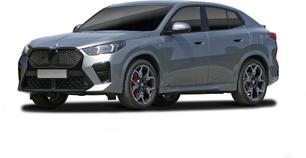
Following its global launch in February this year, the second-generation 'U10' 2024 BMW X2 and iX2 have landed in Australia.
The coupe SUV range comprises four variants with turbo-petrol and pure electric models sitting alongside each other in showrooms with precious few visual differences.
That'll either be a good or bad thing, depending on how much you want to parade your choice to go for current or combustion.
More clear cut is the X2's new – and more sensible – position in BMW's SUV line-up. Rather than a quirky curio that's smaller and less practical than the X1, the 20cm longer gen-two X2 finally makes sense in BMW's X line-up.
To see if the driving experience and build quality live up the shiny new exterior, we've been invited to Tasmania to sample the new car's attributes on typically testing (and picturesque) roads.
‘You get what you pay for’ comes to mind with the CX-3, which is interesting given it’s neither the newest nor most feature-packed SUV in its class.
The ageing light SUV does however offer one of the best-put-together experiences in a car of this size and its engine is powerful for the class. Build quality feels well above par and there aren’t any annoying inclusions that are becoming more common in new cars.
There aren’t many downsides unless you were hoping for a big screen and the ability to play around with software functions, but at this end of the new car spectrum, a car that drives this well and remains stylish a decade on should be applauded.
Put aside its relative (but forgivable) lack of efficiency and somewhat smaller boot than rivals, and the CX-3 nails everything it needs to.
The second-generation BMW X2 is leagues better than the car it replaces. It now sits nicely in BMW's line-up and offers genuinely tempting electric variants.
This isn't an affordable car by any means but next to rivals from Mercedes-Benz and Volvo, the well-equipped iX2 xDrive30 feels a complete package.
Similarly, the entry-level xDrive20i petrol is a very compelling choice with a comfortable ride and sporty drive.
We'd skip the contrived M35i unless your heart is set on going quickly in a straight line. With the thinking cap on, it's also hard to make a case for the X2 over the objectively better (and more affordable) X1. Then there's the more spacious, powerful, efficient and cheaper Tesla Model Y.
That's not really the point of this car, though. It'll never sell in as many numbers as the X1. Those who love its fastback styling will be pleasantly surprised by the new X2. It does what it says on the tin, marrying the BMW badge with a sporty drive and daring style.
Note: CarsGuide attended this event as a guest of the manufacturer, with travel, accommodation and meals provided.
For one, there’s the way it looks inside and out.
The Mazda CX-3 hasn’t remained the most popular car in its segment on price, so the fact its styling continues to age gracefully in the design-focused light SUV segment (aimed at young or first-new car buyers) must have something to do with it.
While it’s been lightly updated a couple of times since 2014, the CX-3 is still in its first generation and has stood the test of time.
Looking like a jacked-up Mazda2, the CX-3 brings some traditional aesthetic to a category peppered with more divisive and daring (but admittedly admirable) designs like the Hyundai Venue, Suzuki Ignis (RIP) or the cute but prohibitively expensive Jeep Avenger.
Some elements of the CX-3, like the chrome trim around the grille or the black plastic cladding along the bottom of the body and around the wheel arches, seemed in the past like they had the potential to age poorly, but Mazda’s design language has only slowly changed since 2015, and the CX-3 still looks at-home in the brand’s line-up.
It’s not the most adventurous - even inside its layout is quite basic - but it does give off a premium vibe and the fact it plays things a little bit safe means the CX-3’s broad appeal is undeniable.
The entire point of the BMW X2 is to grab attention and promote conversation. The X2's new-found success comes mainly from bigger proportions - it's grown 194mm over its predecessor and 54mm longer than X1.
It's 64mm taller and sits on tracks that have been pumped by 21mm. All the changes are built into the latest iteration of BMW/Mini's transverse UKL2 platform.
The result is presence and swagger on the road for the X2. Even the base car grabs attention, while electric iX2 variants get unique closed-off grilles and a different front bumper treatment.
It's the M35i thats most eye-catching, though. A jutting lower spoiler and butch stance highlighted by horizontal kidney grille slats and quad exhaust tips. Our test car was finished with massive (and optional) 21-inch alloy wheels.
As successful as the whole package is, there are fussy elements: the boxy rear end, awkward spoiler and peculiar tail-lights. From some very specific angles there's even a hint of SsangYong Actyon to the proportions.
The iX2 and X2 aren't made to appease everyone, though, so you don't have to love it.
Inside is a different story with elegant simplicity the X2's remit. It's much like an X1 in layout with crisply integrated curved screens running the latest iDrive 'OS9'.
Apple CarPlay was faultless (wireless Android Auto is also included) yet connected navigation makes it easy to rely on BMW's in-house features.
You get 90 days free use of BMW Digital Premium, which includes the ability to download games and apps as well as more advanced connected navigation. After the trial, you'll need to pay monthly ($9.99) or annually ($109) for the services.
The X2's door pulls and handles are particularly nice to interact with, blending visual lightness with reassuring sturdiness.
The Mazda CX-3 isn’t the most spacious light SUV on the inside, but from either of the front seats it’s clear a lot of thought has gone into the best way to make the cabin work.
For example, precious space hasn’t been wasted by two dedicated cupholders, instead there’s a cupholder in the central storage compartment that’s relatively easy to reach into.
Like its design and some of its features, the CX-3’s layout can’t hide its age - there are still big physical controls for the climate settings, the speedometer is a physical dial and the gear selector is a very traditional style.
Mazda’s soon-to-be-gone media control wheel persists in the CX-3, which is by no means a bad thing. It falls nicely to hand, as with many of the controls in the CX-3. Its seating position isn’t too high and the positions you’re able to get the seat and steering wheel into should accommodate most humans.
Behind the front seats it’s a little more spartan. Space is at a premium, with my 178cm frame fitting in the back seat just enough that I had a fair bit of headroom, but my knees were able to brush the seat in front, set to my own driving position.
There are no ports for charging or vents in the second row, but the fold-down armrest has a clever fold-away cupholder. The window shoulder is a little high for young kids to properly see out, but there’s enough light that it doesn’t feel cramped.
The boot is similarly diminutive, a 264-litre space becoming 1174L with the second row folded down. Compare it with the Hyundai Venue and its 355-litre boot, or the Toyota Yaris Cross and its 390 litres, and the CX-3’s simple, well-constructed interior starts to lose points.
Despite the X2 living dangerously in the style department, it hasn't sacrificed cabin practicality – at least in the front seat.
A vertical wireless charging pad holds a phone in like a kid on a rollercoaster (important, as you'll read later, because the X2 range has some serious back-road talent) with nearby USB-C plugs for additional charge.
The door bins easily fit a one-litre camping bottle, there's good storage for small bags beneath the floating armrest (which has a very small cubby for keys or mints) and a sizeable glove box.
As you'd expect from a German-built BMW (all X2s hail from Regensburg) build quality is excellent... save for the flimsy indicator stalks. The latest oblong engage with a limp click that's a far cry from the damped thump of older BMWs, such as the E90 3 Series.
The cabin materials are pleasing to touch with quality stitching and soft padding on heavy touch areas. Geometrically patterned trim inserts add some cabin flare and look sturdy as well.
The X2 and iX2's back seat is not as good as the BMW X1's – none of the proverbial thanks, Sherlock.
Under the sloping roof headroom will be acceptable for 175cm adults and knee room is passable. Despite sharing underpinnings between electric and combustion variants there's minimal spatial compromise.
There are ISOFIX ports and top tether anchors for all seating positions. Vents are mounted in the centre console and there is a fold-out armrest with cup holders. Doors open relatively wide for a 'coupe' as well.
Of some concern is the X2's narrow bench; the body-work sculpted appearance of the coupe tail results in lots of shoulder room intrusion. To put it in simple terms, it's best capped at four occupants.
The boot is at least very generous, offering between 525L (iX2) and 560L (X2) of VDA space.
The load bay is long and there is no load lip to lift items over. Seats fold in a 40:20:40 configuration, growing capacity up to 1400L.
Neither the X2 or iX2 is fitted with a spare tyre, so its mobility kits for X2 owners.
Upon updating the Mazda CX-3, the Evolve variant is now a $32,100 ask before on-road costs, which is $900 more than before. It’s a little step up from the $30,370 entry price of the Pure, but falls well short of the top-spec Akari’s $38,890 sticker price.
The CX-3 range now comes with updated autonomous emergency braking and adaptive cruise control, with the Evolve specifically scoring new fog lights and keyless entry.
The Evolve also comes with black machined 18-inch alloy wheels, synthetic leather interior trim and front parking sensors.
This is all on top of the CX-3’s standard kit which includes a leather-wrapped gear shift knob, handbrake handle and steering wheel, keyless start, an 8.0-inch multimedia display, wireless Apple CarPlay and wired Android Auto plus LED headlights, daytime running lights and tail-lights.
For its segment, the CX-3 isn’t cheap. The Evolve grade is more expensive than pretty much the entire line-ups of rivals like the Kia Stonic or Hyundai Venue, and its price somewhat lines up with the newer, hybrid-powered Toyota Yaris Cross.
But there’s more to the CX-3 than just a list of features.
The 2024 BMW X2 range spans $75,900 to $92,900 before on-road costs. Surprisingly, it's the M35i that's dearest, rather than the electric iX2 xDrive30 ($85,700).
There's no three-cylinder price leader in the X2 range as there is in the X1 and your body kit choice is M Sport, which explains why, trim-for-trim, the X2 xDrive20 $5000 dearer.
Once you've added the $3000 M Sport pack to the X1 xDrive30, though, you're only $2000 off the X2 for equivalent spec levels.
Some highlights include 'Veganza' artificial leather upholstery (in black, Oyster or Mocha), 19-inch alloy wheels, M Sport kit including adaptive dampers, 'Iconic Glow' illuminated kidney grilles, adaptive LED headlights, head-up display and 10.7-inch touchscreen with BMW's slick ninth-gen operating system – this equipment is shared with the iX2 xDrive30.
The $82,900 (before on-road costs) single-motor iX2 eDrive20 is more basic, missing adaptive cruise control, lane-trace assist, power seat adjust and front seat heating. All EV models include tyre pressure monitoring, acoustic pedestrian warning, 12-month Chargefox subscription, and Mode 2 and 3 charging cables.
Being a BMW there are options on the table. An enhancement pack comprises metallic paint, a sunroof, Harman/Kardon sound system, steering wheel heating and adjustable lumbar support with massage function for $3615 on the iX2 xDrive30 and $4700 on the X2 xDrive20.
Cleverly, BMW has priced the iX2 xDrive30 beneath the luxury car tax threshold – significantly benefiting those looking at buy via a novated lease – even with the enhancement pack and metallic paint. Something Mercedes-Benz hasn't been able to achieve with its $102,900 twin-motor EQA350 rival.
An M Sport Package Pro is available for all variants adding dark finish headlights and extended piano black exterior trim, M Compound brakes, M seatbelts and 20-inch 'style 873' alloy wheels.
That pack is gratis on the flagship M35i xDrive which benefits from a higher 233kW tune of its 2.0-litre turbo-petrol four-cylinder and a torsen limited-slip differential on its front axle.
The pictured M35i was finished in $5000 worth of matte paint, in this case Frozen Pure grey. Portimao blue is also available along with regular metallic paint ($1800).
The Mazda CX-3 is still powered by a 2.0-litre, naturally aspirated, four-cylinder petrol engine, as has been the case for years. Its outputs remain at 110kW/195Nm.
It drives the front wheels only, via a six-speed automatic transmission.
BMW's internal combustion engines are responsive and slick in the X2, while the iX2's well-calibrated electric powertrains deliver pleasingly instant pick-up.
The range kicks off with a heavily revised version of BMW's all-aluminium 'B48' 2.0-litre four-cylinder in xDrive20i tune. It produces 150kW and 300Nm, enough to hit 100km/h in 7.4 seconds from rest.
Like the xDrive20i, the M35i employs a seven-speed dual-clutch transmission driving all four wheels.
Australian M35is are more powerful than European models, developing 233kW and 400Nm for a 0-100km/h sprint in 5.4 seconds. A freer-flowing exhaust is augmented with active sounds for a fruity (if synthetic) note.
BMW offers a pair of electric powertrains with the 150kW front-drive eDrive20 and twin-motor 230kW/494Nm iX2 xDrive30.
We only sampled the more powerful one which features Hans Zimmer-composed sound scapes and an impressive turn of pace, hitting 100km/h in 5.6 seconds (claimed).
It is limited to a 180km/h top speed which may pose an issue on German Autobahns but is no trouble in Australia.
Mazda claims the CX-3 sips 6.3 litres of fuel per 100km, minimum 91 RON petrol, though on test the small SUV returned an 8.1L/100km figure under a mix of urban, highway and some dynamic driving.
With its 48-litre fuel tank, that means you’re realistically likely to get about 550km to a tank, though theoretically given Mazda’s efficiency claim a 760km trip on a single tank would be possible - if you could recreate the test lab conditions.
Rated at 7.5L/100km (xDrive20i) and 7.8L/100km (M35i), after a 130km jaunt, the M35i's trip computer showed 9.8L/100km.
Premium 95 RON or higher is required and the fuel tank holds 54 litres.
For the iX2 xDrive30, consumption was above the WLTP rating. We saw 18.2kWh/100km on our hilly country route which would equate to 356km from a charge of the 64.8kWh lithium-ion battery battery.
The 417km WLTP driving range figure is at 15.5kWh/100km, we'd expect to get closer to the rated figures in more typical urban and suburban use cases.
Regenerative braking was quite pronounced (there are four setting: Adaptive, Low, Moderate and High) and on a descent into Hobart the xDrive30 managed to boost charge levels from 27 to 29 per cent.
As for regular charging, the iX2 will take DC electricity at 130kW, meaning 29 minutes from 10 to 80 per cent. That interval allows you to roam around 290km between charging stops on a long run.
One great aspect of both iX2 variants are their fast 22kW AC charging capability. It means the iX2 can go from flat-full in under four hours, rather than eight hours on an 11kW wallbox.
Though most owners won't have access to three-phase electricity, this suits public charging – such as at shopping centres or destinations – very well.
Another boon is BMW's inclusion of both Mode 2 and Mode 3 charging cables and a 12-month ChargeFox subscription.
Home wallbox installation isn't included in the deal (Lexus offers this with its UX300e) though BMW does offer the service at a cost for those who want it.
The light SUV category is an interesting one, as it feels somewhat like a gateway to bigger SUVs for those who get a taste of the higher seating position. But in city and urban areas, a light SUV should be as much car as someone needs - unless they have two kids or a bunch of equipment to get around with.
This comes down to the fact cars like the CX-3 are more efficient and easier to manoeuvre than their larger counterparts. And as light SUVs go, the CX-3 feels solid, confidence inspiring and more capable when outside its inner-city comfort zone.
Its naturally aspirated engine is big for the class. Even if it doesn’t feel the punchiest off the line it offers plenty of flexibility at higher speeds and makes overtaking on the highway feel less daunting than it would otherwise be in a car this small.
Its steering is light, which is an advantage in everyday driving, but has enough feedback that more dynamic driving is still engaging. It’s not sportscar-sharp, but you wouldn’t want it to be.
While its age would suggest the CX-3 should feel unrefined compared to newer small cars and light SUVs because of what lies underneath, Mazda’s work on the little SUV over the years has resulted in a car that feels mature and capable.
The suspension isn’t perfect, but it manages low-to medium speeds elegantly and does a decent job of maintaining stability at high speeds. It feels better than you’d expect from a car this size on the highway.
The 1294kg kerb weight and small-enough 18-inch wheels mean there’s not too much weight to manage, and there’s enough cushion in the tyres that harsh bumps don’t come crashing into the cabin.
While the CX-3 feels refined for its class, don’t expect a dead-quiet ride, as some road and wind noise make their way in above 80km/h. Then there’s the fact its engine and transmission will sometimes need to get a bit raucous when accelerating quickly. Aside from this, the CX-3 around town and in suburban areas feels nice and calm.
The previous-generation X2 always felt a bit more Audi or Volkswagen than BMW in the way it went down a road.
This latest iteration has a secure, dynamic balance more in-keeping with the blue-and-white roundel and is far more impressive than its predecessor.
We spent our first leg in the performance-oriented M35i. The punchy engine, front-biased AWD and slick transmission felt just right in the sporty small SUV.
It sits 15mm lower than the other variants on differently tuned springs and adaptive dampers.
The M35i holds onto the tarmac like a limpet with minimal body roll at very high limits partly thanks to the efficiency-oriented 245/35R21 Continental Eco Contact 6 Q tyres.
Yet this comes at the cost of adjustability. With such tight rebound damping in Sport and Sport Plus modes, the M35i's body is too tied down. Even in Comfort, the M35i hopped and fidgeted over Tasmania's broken tarmac, a trait not aided by the 21-inch alloys.
We would have preferred more build-up in the steering weight, too, given the sporting intentions. That chubby wheel rim does its best to remove any sensation of feedback, too.
BMW's iDrive is mostly fantastic except when it comes to changing drive modes, which you need to do fairly regularly in the M35i.
More than just normal – or Personal here – there's configurable Sport and Efficiency modes. There's also Digital Art and other less useful options.
Thankfully, the xDrive20 is much sweeter. Even optioned up with the 20-inch alloy wheels the ride is a lot more agreeable and well-suited to Tasmania's lumpy roads.
All the damper modes were usable with Sport providing welcome extra support without being too strict. Turning into corners felt more natural in the xDrive20 thanks to a bit more body roll which helps communicate grip levels.
The xDrive20i did feel low on grunt after the M35i and iX2 xDrive30 but that was only in a direct comparison - grunt levels were plenty once accustomed. We did miss the M35i's front limited-slip differential on loose surfaces, but it wasn't a deal breaker.
Seeing that the iX2 xDrive30's kerb weight was 325kg higher than the M35i (2020kg) set alarm bells going initially. That's a lot of extra weight for a 'small SUV' to be carrying around, and is beyond a Tesla Model Y Long Range (1979kg).
The iX2 uses the same kinematics and suspension components as the petrol cars but in completely retuned states. Encouragingly, the result is rather excellent.
You do notices the weight when pushing through patchily surfaced corners. The iX2 bobbles and hops occasionally as you approach the damper's limits, but to their credit they never gave up.
That light steering – which is frustrating in the M35i – aids to disguise the xDrive30's extra mass, too. As all X2's are front-biased AWD models, they never quite reach the dynamic heights of BMW's Cluster Architecture models.
Still, grunt is prodigious and, although it's officially slower than the M35i, the xDrive30's rolling response is predictably excellent. BMW has done a great job calibrating the regenerative braking, too.
I found Moderate was my preference, and because the brake pedal blends caliper and regenerative forces you lose precious little range from not having it jacked all the way up.
The iX2 is quiet inside, too. There's almost no wind intrusion and tyre roar is kept to a bare minimum inside, especially impressive given that the M35i sends quite some road noise into the cabin.
Returning through Hobart's outer suburbs, we notice some shortcomings. The iX2's high bonnet, low-set seating position and letterbox rear glass with protruding rear lip spoiler mean visibility is compromised. The X1 doesn't suffer from such issues.
That's the cost of visual flare and the excellent 360-degree camera and head-up display help to alleviate guesswork and keep eyes on the road.
The M35i didn't feel the most complete on the road. If you're chasing a sporty coupe statement at this kind of price, the BMW 230i coupe is a great driver's car.
Instead, you're better to spend money on either the xDrive20i or iX2 xDrive30 with some choice options and enjoy a slick coupe SUV driving experience.
The Mazda CX-3 is technically unrated by ANCAP, though only because its original maximum five-star rating expired after seven years. While this means it easily passes many of ANCAP’s main criteria for safety (and strict Australian Design Rules - ADRs - to be able to be sold here), the CX-3 is missing some recent, more complex safety features.
Not everything is standard across the line-up, either. The Evolve misses out on adaptive headlights, a surround-view parking camera and traffic sign recognition. The base Pure variant also misses out on a front parking sensor.
Fortunately, there are plenty of other key features like seven airbags, dual-front and front-side plus curtain airbags spanning the sides. The CX-3 also has ABS and emergency braking with forward pedestrian detection and rear cross-traffic alert.
There’s lane departure warning, forward obstruction warning, blind-spot monitoring and a driver attention alert for those times you might miss something or - hopefully not often - are distracted.
All these systems are programmed well to minimise interference while driving, making the CX-3 refreshingly trusting of the driver to actually do the job of driving.
The BMW X2 and iX2 are yet to be rated by ANCAP or Euro NCAP.
The X1 and its electric cousin scored five star ratings in 2022 under a less stringent set of tests.
Standard safety equipment includes seven airbags, frontal AEB with day/night pedestrian and cyclist detection, blind-spot monitoring, adaptive cruise control, speed sign detection, lane-departure warning, lane-keep assist and driver attention monitoring.
Systems such as anti-lock brakes, electronic bake force distribution and electronic stability control are all standard.
Mazda offers a five-year, unlimited kilometre warranty, which is behind the curve for a mainstream brand these days. Rival brands like Kia and Hyundai offer seven years, for example, with some offering up to 10.
Servicing is undertaken every 12 months or 15,000km, whichever comes first, with servicing costing between $353 and $633 per visit. Total cost over the first seven years currently sits at $3233, averaging $462 a service, which is pricey considering the relatively simple mechanicals under the CX-3.
Mazda says there are more than 150 certified service dealerships across the country, with a tool to find the most convenient one for you. Given the CX-3’s advanced age, chances are there won’t be too many mechanical issues that haven’t been worked out in the last decade.
Since 2022, BMW has backed all of its cars with a five-year/unlimited kilometre warranty.
You’ll need to service the iX2 ands X2 based on condition, rather than kilometres traveled. The multimedia system will prompt you when it's time to visit a workshop.
You can pay upfront for service plans with BMW: a five-year servicing package will cost you $3171 for the petrol X2s, while the iX2 is $2186 for six years.