What's the difference?
Has it really been 20 years since the humble Mazda6 station wagon hit our roads? You betcha, but I was more shocked that I remembered when it did!
I have a sudden flashback of questionable fashion choices, glittery butterfly hair clips and how Skipper was making a play at being the coolest 'Barbie' (she wasn't).
I've always had a soft spot for wagons, they are the forgotten heroes for family hauling. It's hard not to glide over them when the market is dominated by SUVs but if you happen to remember they still exist (albeit, barely) you might remember why they were popular back in the day.
Being a 20th Anniversary Edition means there are some nods to the past in this model but unlike the low-slung jeans of my youth, they're stylishly done. With some luxuriously-appointed rivals to contend with, like the Skoda Octavia and Volkswagen Passat, does it offer enough to be considered by a modern family?
My little family of three has been in it all week to find out for you!
For a small SUV that technically starts under the $40,000 mark, the 2024 Volkswagen T-Roc has a fair bit going for it.
It’s still in its first generation, but updates have made some parts of the T-Roc feel properly up to speed. And the parts that haven’t? Well, maybe that’s not such a bad thing.
We’re driving the mid-spec Style 110TSI, which sits above the base CityLife, but below the R-Line. Then of course, there’s the wicked R variant.
But is this a Euro that could replace your trusted Japanese small SUV?
So, what did my family think about the Mazda6 20th Anniversary wagon? Firstly, I like that it drives well and how many luxe features are up front. The trims and body paint look divine but there's a disconnect with family practicality in the back seat. Besides the multimedia system, which 100 per cent needs to be improved, I don't mind the retro-feeling elements in the cockpit but my husband's first comment was that it looked old.
It may be better suited to a smaller and older family that isn't carting around a stack of gear but you get a lot of features for your cash in this model. So, this gets a 7.0/10 from me.
My son didn't spend heaps of time in this one but he liked the colour of it and the seats. He gives it a 7.0/10.
So that’s the T-Roc, a bit of Euro style that’s still priced to take the fight to some small SUVs from Japan or Korea.
Is it the cheapest style-forward small SUV you can get? No, but it’s far from the expensive end of things.
Plus, if you can resist ticking some option boxes, it beats some value-focused rivals and looks good doing it.
If the feeling of a sturdy fit-out and a confidence inspiring drive is important to you, I reckon the T-Roc should be an entry on your shopping list.
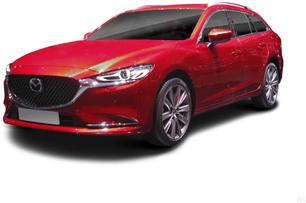
At first glance there's not a lot that separates this from its siblings, it's not until you get up close that you notice more shiny chrome accents on the grille, those special anniversary badges on the side and its limited colour options – I hope you like red or white, as those are your only choices!
The wagon manages to look sporty with its 19-inch alloy wheels, full LED exterior lights and the classic protruding nose that Mazda seems known for now.
It's far more obvious in the interior though with the beautiful tan Nappa leather seats, synthetic suede trims and special embossing on the front headrests.
Surprisingly, the dashboard is still headlined by the older 8.0-inch touchscreen multimedia system. There's also the traditional gear-shifter and buttons/dials to deal with. All of which manage to nod to its long history while starting to feel like relics for such a special edition.
Overall, its pleasant and handsome but don't expect to be wowed, Mazda hasn't broken new ground with this one.
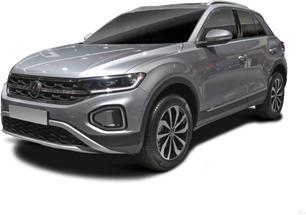
The T-Roc subtly stands out without being garish, avoiding becoming part of the highway or suburban camouflage without relying on extreme design decisions.
For example, the LED daytime running lights that wrap around the shapes below the LED 'I.Q' headlights where vents would otherwise be on the R performance variant are quite cute.
In fact, the whole front end of this small SUV has a friendly look, even if there’s nothing specific that’s particularly exciting about it.
This 'Petroleum Blue Metallic' colour is a $700 option, but anything other than white costs extra.
However, the black roof two-tone look is a standard for the Style, as are the black mirror caps and its 18-inch alloys.
There are roof rails up top, tinted privacy windows for rear passengers and for the rear window and a sloping roofline at the rear that adds a touch of ‘sport’ to the silhouette along with a small spoiler at the top.
The interior is comfortable and well-proportioned but front passengers will enjoy the most room. You'll still feel like you'll be jostling for premium armrest position, though!
Up front, the individual storage is adequate and the open utility tray is large but my phone slid around in it, making it hard to use the wireless charging pad.
There are enough charging options throughout the car to satisfy four people, with two USB-A ports in each row. Curiously, you can only utilise the backseat USBs when the armrest is down, which makes this feel more suited to a smaller family.
The 8.0-inch touchscreen is small and the graphics aren't super clear. You can use it as a touchscreen or opt for the rotary dial but I found switching between the two awkward. Especially, since the touchscreen is disabled while using the (wireless) Apple CarPlay or (wired) Android Auto.
The back seat is quite lean when it comes to amenities and storage. Although, the heated outboard seats are a nice touch, but again, you can only access the controls when the armrest is down.
You can fit up to three (skinny) child seats but with the low roofline, you might not want to be bending over to buckle them in. The door apertures are not too wide either but my six-year-old had no trouble climbing in and out.
For this class, the boot is an okay size at 506L. There is a temporary spare wheel under the level loading space and it's great how the cargo-blind lifts up and away from the space because it's attached to the boot lid.
Unfortunately, this doesn't come with a powered tailgate and I did miss having that feature this week.
Inside the T-Roc is a bit of an interesting dichotomy.
Some of what’s in here is ‘old-gen’ Volkswagen stuff, but it still holds up today against even some recently introduced models.
The dichotomy is that while it’s very usable and slick, some of its materials and surfaces let it down a touch.
The good points are that the cabin tech is a perfect level of physical and digital. The buttons and controls are easy to use and feel solid and even though the climate controls could be more physical, they’re still good as far as touch panel style controls go.
The older VW gear is arguably better than a lot of what’s found in newer models where some use of touchscreens and haptic panels has drawn negative feedback from customers.
The multimedia software managed via the 8.0-inch touchscreen is more simple and sensible than the new version, plus the Digital Cockpit Pro display for the driver is clear and, importantly, customisable. It’s a similar cockpit system that used to seem quite impressive in high-end Audis.
But what doesn’t feel very high-end is some of the plastic and the decisions around function in the rest of the space.
The leather on the seats is not a cheap option box to tick at $3450, but it feels a little cheap to the touch. It’s a tad hard and even has a bit of a rough look to it.
That option also makes them heated and electrically adjustable, though, which is welcome in winter. Otherwise, cloth seats without the optional leather or heating would be absolutely fine, and that means you get a storage space under them, too.
This central space between the driver and front passenger, too, is a little awkward with the cupholder placement. It’s behind the shifter meaning a tall bottle will be in the way and it’s got slightly odd sizing for bottles or cups with nothing to stop them wobbling.
I am, however, a fan of the angled-away phone slot under the climate controls to minimise phone screen visibility (and distraction) and the traditional shifter itself is welcome.
Look up, and (in our test car) there’s an optional ($2000) panoramic sunroof there. It’s yours if you want it, and it does have an electric blind, but some Japanese and Korean cars at this price point get that as standard.
An average-sized adult will find the second row is spacious enough and relatively comfortable. There’s an armrest, dual-directional vents and two USB-C ports.
Behind that, boot space is generous at 445L with the seats up thanks to an adjustable floor, which is very useful for tall items and even manages to fit a space saver spare tyre under it.
It’s a total of 1290L with the split-fold seats down, too, though they’re not super flat with the adjustable floor down.
As the name suggests, this is a special edition and it bumps the Atenza from its usual 'top spot' in the model line-up. Yet, for a top-model it is spectacularly well-priced at $54,935, before on-road costs.
That places it below the Volkswagen Passat 162TSI Elegance ($57,190) and above the Skoda Octavia RS 180TSI ($53,090) wagons.
You get all of the features of the Atenza, like the luxurious heated and ventilated front seats, heated rear outboard seats, heated steering wheel and a sunroof.
Then, you'll also be enjoying the 20th Anniversary badging on the exterior, tan Nappa leather seats with that same badging embossed on the headrests and a delightful synthetic suede trim on the dashboard.
Other features include some nice tech, like wireless Apple CarPlay and wired Android Auto, dual-zone climate control and a premium Bose sound system with 11 speakers, but more on tech below.
The specific Style test vehicle being reviewed here is priced at $38,890, before on-road costs. But it's worth noting a new example of the Style will cost you $39,790 at the time of writing, as its price has since ours was 'delivered'.
While the Style features some older VW fitout, it comes with a decent list of features.
A set of 18-inch wheels, self-levelling headlights (with cornering function), some cute LED DRLs plus chrome highlights with black contrast trim are the best way to spot a Style from the outside.
Inside, there’s an 8.0-inch touchscreen for multimedia paired to the driver’s 'Digital Cockpit Pro' display.
The multimedia screen is last-gen VW gear, but that’s not a bad thing.
There’s also dual-zone climate control with an allergen filter, ambient lighting, a six-speaker sound system, wireless phone charger and wireless Android Auto and Apple CarPlay.
There are a few options on our test car that nudge the price up quite quickly, like the metallic paint, leather upholstery, sunroof, plus the keyless entry or ‘Easy open and close package’.
All this brings the total price as-tested to $45,640, before on-roads.
The good news is you don’t need to tick all, or any, of those options for this to still be a compelling option.
This shares the same engine with the Atenza and that's a 2.5-litre, four-cylinder turbo-petrol one. It has a max power output of 173kW and 420Nm of torque. Plenty of oomph to get you (and your gear) to where you need to go.
The 20th Anniversary edition is a front-wheel-drive and has a six-speed auto transmission. It's not the smoothest combination at lower speeds but let it stretch its legs and you'll be happy with the results.
The engine in the T-Roc - as with most Volkswagens - does what it says on the tin. Essentially, a 110TSI means there’s 110kW of turbocharged VW happening, in this case a 1.4-litre four-cylinder that also makes 250Nm of torque.
It’s paired to an eight-speed torque converter, which will be music to the ears of those who have been scorned by older VW dual-clutches.
It drives the front wheels only, and there’s no hybridisation or 48-volt system.
Let's talk about efficiency. It has a combined cycle fuel figure of 7.6L/100km but I only managed to achieve 10.9L. I reckon that's pretty thirsty considering how much open-road driving I did this week but it's not outrageous for a turbo. Expect a higher figure in an urban setting.
Based on the combined figure, you should be able to get a driving range of around 816km, which is perfectly respectable for those wanting to do a road trip.
A lack of electrification in a relatively small engine and a traditional drivetrain shouldn't scare you too much, in this case.
Combined cycle fuel consumption is a claimed 6.3L/100km. On test in mostly urban areas or for spirited driving we saw the fuel use rise a little higher than that but not by as much as you might think.
After a mix of primarily urban, some highway and a stint of dynamic test driving, the trip computer admitted to a figure of 8.1L/100km.
This is a car that knows what it is and stays in its lane. It's not trying to be the best but it certainly comes close with how it handles itself.
The lower centre of gravity and responsive steering make it hug corners and the car feels firmly situated on the road.
There's enough power that this is a comfy open-roader and you're confident overtaking or getting up to speed but you do feel like you're starting to dig when you hit steeper slopes.
The suspension is a little firm but your backseat passengers will feel that more than you will. Still, it absorbs enough of the bumps that you feel cushioned, even on rough country roads!
The cabin space is fairly quiet but you will get wind noise at higher speeds. Otherwise, all passengers should be able to chat without raising their voices.
I didn't find this to be a bother to park but the 360-degree view camera is terrible. It's very blurry and on the 8.0-inch screen, the image looks small, too.
That said, I love the 11m turning circle and the front and rear parking sensors. Overall, you won't have much trouble parking this one.
The T-Roc is essentially a previous-generation Golf-turned-small SUV in terms of its platform, and that’s a great thing for anyone who likes driving.
The Golf 7.5 was a benchmark for everyday driving as far as hatchbacks are concerned, and even though the current Mk8 might be a bit more up to date, the T-Roc’s use of the platform it rides on is practical and fun.
It’s not as nimble as a Golf, but the T-Roc in front-drive Style guise, with a responsive turbocharged engine and no all-wheel drive system weighing it down, is not only more dynamically capable than most rivals, it’s also easy to access that capability.
The 1.4-litre engine feels well-tuned for its two modes accessible through the shifter - calm but not lazy in ‘Drive’ and eager but not thrashy in ‘Sport’.
It works well with the transmission on the move, picking right gears fairly accurately, though there are paddles behind the wheel for those who prefer to take charge.
The drive modes are also more customisable than just those on the shifter, with 'Individual' selections for steering and drivetrain able to be used rather than the standard 'Eco', 'Normal' or 'Sport' full-system modes.
While the steering wheel itself is a little thick and the feedback, while adequate, isn’t the most telling, it’s accurate and inspires confidence in cornering.
The T-Roc handles turn-in and exits well, even soaking up bumps and not becoming unsettled when braking.
Its safety systems are relatively subtle, and the active cruise control is well sorted, though the automatic braking at car park speeds can be overzealous. Something I’ve experienced in VW Group models several times over the years.
The main culprit for the T-Roc was a shrub beside my driveway that, while not touching the car, would set off the automatic braking system. Still, better than letting the car roll back if there was a proper obstacle or someone who could be hurt in the way.
Aside from that, the Volkswagen T-Roc is fun and easy to drive, and the work that’s gone into that puts its price into perspective a little more.
There are more expensive cars available that are less impressive, some even disappointing.
Safety is important on any car, but more so on a family one. I'm happy this has the usual specs, like daytime running lights, lane keeping aid, lane departure alert, blind-spot monitoring, rear cross-traffic alert, 360-degree view camera, front and rear parking sensors and intelligent seatbelt reminders.
I like the fact the adaptive cruise control now has a stop and go function and that traffic sign recognition and a head-up display are included.
The autonomous emergency braking (and forward collision warning) with car, pedestrian and cyclist detection, is operational from 10–80km/h (a little slower than the average 5.0km/h).
It has a maximum five-star ANCAP safety rating but it was done a while ago in 2018. It only has six airbags which is a bit low for a family vehicle now but that does include curtain airbags covering both rows.
There are ISOFIX child seat mounts on the outboard rear seats and three top-tether anchor points across the back. You may get lucky with three skinny child seats but two will fit best.
A 0-4 rearward facing child seat can be installed but will encroach on front passenger comfort, especially if they're tall.
In 2017, ANCAP gave the T-Roc five stars for safety. For most people, that says enough, plus the list of features the SUV comes with is fairly comprehensive even in the Style.
While its rating is getting on in years, the only real downside to the T-Roc’s age when it comes to safety is it only having six airbags - front and side for the front passengers, plus curtain airbags for front and rear passengers.
But the list of tech isn’t lacking, with driver fatigue detection, pedestrian monitoring, parking bay and parallel parking assistance, pedestrian monitoring, side assist, rear cross-traffic alert and lane assist.
The ongoing costs match the purchase price for their affordability. This has a five-year/unlimited km warranty, which is pretty normal for this class.
However, on the five-year servicing plan, services average $501 per service - which is very competitive for this class! Servicing intervals are also reasonable at every 12 months or 15,000km, whichever occurs first.
You're not even getting hit with the fuel pricing you can see on other mid-range models because this accepts a minimum of 91 RON petrol and is even E10 suitable.
Volkswagen’s five-year/unlimited kilometre warranty is pretty standard for a premium-leaning brand, with VW also offering roadside assistance for the warranty period.
In terms of servicing, VW offers care plans of three years or five years, covering servicing for $1515 or $2770 respectively. That's an average of $505 or $554 per workshop visit.
Otherwise, servicing costs at 12-month/15,000km intervals can cost from $470 for some to $1104 to the biggest service if you don’t go with the locked-in package.