What's the difference?
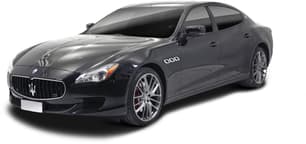
Maserati's Quattroporte is part of a dying breed. A decade or so ago, the European manufacturers took a huge amount of pride in their range-topping big luxury sedans, cars you can either drive or be driven in, bristling with the latest technology.
In 2015, all we hear about are the range-topping SUVs from those makers, with cars like the S-Class and 7 Series fading slowly into irrelevance.
While by no means low-tech, the Maserati Quattroporte takes the high style route, focussing on a luxurious interior with that handmade feel.
The Mercedes-Benz Sprinter range of vans and cab-chassis models competes for buyers in the Light Duty (3501-8000kg GVM) segment of Australia’s highly competitive Heavy Commercial vehicle market.
In 2024 the German manufacturer expanded its diverse turbo-diesel van range by launching a full-electric variant called the eSprinter, which for the first time offered local buyers the opportunity to drive with zero tailpipe emissions.
We recently spent a working week with this unique offering to assess how competently it could fulfil the diverse job requirements of private tradie buyers and fleet operators.
Beauty is way more than skin-deep in the Quattroporte and while the 330 doesn't have the punch of the S, it's hardly that much slower. Maserati reasons you will want to spend the $25,000 saved on options, concentrating on the Italian craftsmanship rather than the outright performance available in the V8 or the efficiency of the less aurally attractive diesel.
As with any car of this type, you've got to want one in the first place, but for a big, beautiful sedan, there's nothing as good looking this side of an Aston Rapide. The Quattroporte 330 does nothing to dim the allure of Modena's big mover and, if you're that way inclined, nobody on the outside will ever know.
With the convenience of back-to-base charging the eSprinter would be well suited to last-mile logistics or other urban delivery roles, as its driving range is ample for many of these urban tasks with the added benefit of zero tailpipe emissions. However, at more than $100K it is a big spend (like its full-electric rivals) so only a thorough cost-benefit analysis can decide if it’s the right choice for your business.
Long, flowing lines mark out the Maserati as something quite different to its German, British and Japanese competition. This Quattroporte has increased in every dimension but the lines cover its size beautifully.
Big wheels, long wheelbase, low ride but it still looks like a sedan rather than pretending to be a coupe.
The elegance of the lines is complemented by a distinct lack of bling – there's little in the way of chrome work or shouty details. There's plenty satin finishes available and the beautiful paint, while available in pretty much any colour you like, is best kept to a restrained, deep hue. Or silver.
The cabin will doubtless age well. Classic shapes house a fairly conventional but hugely comfortable cabin. The front seats have heaps of adjustment and are large but supportive. Naturally, the leather is soft and supple.
The central screen isn't the dominant feature, like a 50-inch LCD screen in a small living room while buttons are kept to a minimum.
The rear seat is sensationally comfortable, with hectares of available space and a seat comfortable for either lounging or working.
This is a substantial vehicle riding on a 3665mm wheelbase and spanning almost 6.0 metres in length (5932mm) and more than 2.0 metres in width (2020mm without mirrors), yet it has a tight kerb-to-kerb turning circle of only 12.4 metres.
And with the optional High Roof as fitted to our example it stands almost 3.0 metres tall (2867mm), so drivers need to be conscious of this extra dimension when accessing underground loading zones, driving under height-restricted bridges etc.
Its rear-wheel drive unitary chassis features simple and rugged McPherson strut front suspension paired with a De Dion-style rigid beam/leaf spring rear axle, along with four-wheel disc brakes and electrically assisted power steering.
There’s prominent use of unpainted dark grey plastic in external areas where bumps, scrapes and wear are usually inflicted, including the grille, front bumper, hubcaps, doorhandles, door mirror shells, side bump-strips and rear bumper.
The cabin design is spacious, neat and functional, with unique instrumentation which replaces the traditional tachometer with a gauge that monitors driving efficiency. There’s also a digital info screen that displays average energy consumption, battery charge, estimated driving range, gear selection and more.
The current Quattroporte has been with us now for a couple of years in diesel and petrol turbocharged V6s and turbo V8 forms.
The 330BHP uses the same, Ferrari-built V6 but detuned to 'just' 330 bhp. The price has been detuned too, dropping $25,000 from the V6 S's entry price to kick off at $210,000.
Maserati 330bhp benefits from an overall specification improvement across the range, landing in your garage with a ten-speaker stereo with USB and Bluetooth, power everything, dual-zone climate control, keyless entry and start, front and rear parking sensors with reversing camera, cruise control, sat-nav, auto headlights and wipers, double glazed windows and an interior covered in leather and wood.
Later in the year, your Quattroporte will be available with a new silk trim from Zegna
Only very occasionally does it become clear that Maserati is part of the Fiat Group and that moment comes when you use the 7.0-inch central screen in the dash.
eight-speed ZF automatic transmission
The software is based on the group's UConnect and it isn't great. It's not bad, but it feels its age (however, it's much better than the system on the Gran Turismo), needing a lot more work or a quick surrender to Apple's CarPlay or Android Auto.
Once you work your way through the weird menus, it's fine to use and is miles ahead of the not-much-cheaper Lexus LS unit which is almost unusable.
Sound from the ten speaker stereo is crystal clear and the phone performance is also very good.
The local eSprinter range, which does not include a cab-chassis variant, offers a choice of van-based models comprising the MWB (Medium Wheelbase) with 81kWh motor for a list price of $104,313 and LWB (Long Wheelbase) with 113kWh motor for $121,041. This six-figure pricing is in the same ballpark as full-electric large van equivalents from Ford (E-Transit) and LDV (eDeliver 9).
Our test vehicle, finished in standard 'Arctic White', is the smaller MWB/81kWh model equipped with the optional High Roof (option code DO3) which adds almost half a metre (489mm) to its external height and $2392 (ex GST) to its price.
Its work-focused standard equipment includes 16-inch steel wheels with 225/75 R16 tyres and a full-size spare, DRLs and side marker lights, sealed cabin bulkhead with central window, electric-adjustable truck-style exterior mirrors, heated driver’s seat and exterior mirror, prestige leather-rimmed steering wheel with multiple remote control functions, colour 5.5-inch driver’s information display, reversing camera, front/rear parking sensors and tyre pressure monitoring to name a few.
The cabin also has an electronic parking brake, electric air-conditioning and heating plus multiple USB ports and 12V sockets. The latest 'MBUX' multimedia system features a large 10.25-inch touchscreen as central command offering voice activation, digital radio, wireless Apple/Android connectivity and more.
Like the S, the 330bhp is powered by Maserati's twin turbo 3.0 litre V6, made with more than a dash of Ferrari involvement. As the name suggests, it produces 243kW and a chunky 500Nm. With just under two tonnes to shift, the ubiquitous eight-speed ZF automatic transmission whisks the Quattroporte 100km/h in 5.6 seconds, only half a second down on the 301kW V6 S.
Maserati claims 9.1L/100km on the combined cycle (with the help of stop-start), which seems reasonable given our figure of 10.8L/100km, which we got a with a mix of city and highway running as well as a very enthusiastic blast through some secret back roads.
The eSprinter is powered by a single electric motor producing 150kW of power and 400Nm of torque. It’s mounted under the rear floor where it drives the rear wheels through a single-speed transmission.
This compact motor-trans unit shares underfloor space with an 81kWh lithium-ion battery that provides the motor’s energy. This battery occupies most of the underfloor between the front and rear axles and features a slimline design to optimise ground clearance.
Drivers have a choice of three drive modes comprising 'Comfort', 'Economic' and 'Max Range', plus different levels of energy recuperation using steering wheel-mounted paddles that adjust the intensity of regenerative braking.
The electric motor also features a ‘boost’ function which temporarily increases power output when fast acceleration or overtaking is required. The eSprinter’s maximum speed is capped at 120km/h.
Just a few hundred metres behind the wheel is all it will take to convince you the Maserati belongs in the same class as the competition. It's incredibly quiet – courtesy of the acoustic double glazing – and all occupants benefit from supreme comfort.
While the 330 is 58kW down on the full fat V6, you won't really miss them. There's a fat torque curve, with all 500Nm available from 1750 to 5000rpm, meaning easy progress for the 5.2 metre sedan.
The Quattroporte has two sport buttons to choose from – one looks after the drivetrain and exhaust valving while the second stiffens up the Skyhook suspension.
With the first sport button pressed, you get a more lively throttle, sharper shifts and a glorious noise from the exhausts, although they are a long way from your ears.
It's still a fast car, with strong acceleration from standstill and in the gears, the power as linear as you like with no real turbo lag and a most un-turbo noise to go with the performance.
The only dynamic problem is the electric steering – it seems to get confused between your inputs and feedback from the road, the tyres feeling like they're 'nibbling' an uneven surface, tweaking the wheel in your hands.
The assistance is a little spotty, too, unexpectedly changing weight. It's just a bit weird. In normal driving, you'll never notice it.
There are large handles on the front door window frame and overhead shelf to assist climbing aboard, where you’ll find a comfortable and commanding driving position.
This is thanks to supportive seating (albeit with no lumbar adjustment), ample steering wheel height/reach positioning and a spacious footwell, combined with a clear rear view through the bulkhead window and along the sides thanks to large truck-style mirrors.
The leather-rimmed steering wheel feels nice in your hands, all major controls are easy to see and operate and the electric air-conditioning and heating systems are effective.
It’s a pleasant vehicle to drive as the most noise you hear is the tyres, given the near silence of the rear-mounted motor and drivetrain. The underfloor location of the battery also creates a low centre of gravity, which optimises handling with minimal body lean when cornering.
Unladen ride quality is excellent, enhanced by the weight of the battery which helps the suspension iron out bumps. And the electric motor’s 400Nm of torque provides energetic performance, with acceleration delivered in a smooth liquid-like surge.
Selecting the strongest regenerative braking not only optimises energy harvesting for the battery but also creates enough retardation to ensure mostly single-pedal driving (accelerator only) as the brake pedal is rarely required. This mode is also handy on steep descents.
To test its payload rating we forklifted 975kg into the cargo bay, which combined with our two-man crew equalled a total payload of 1155kg that was still comfortably below its legal limit.
The rear leaf springs compressed less than 30mm under this loading, leaving ample bump-stop clearance to ensure no bottoming out on our test route. The e-motor’s response was more subdued as you’d expect but it still hauled this payload with apparent ease.
Overall, the driving experience was hard to fault, apart from the vertical pillar between the fixed and sliding glass in the driver’s door blocking the outer third of the exterior mirror’s view, at least with the driver’s seat positioned far enough rearwards to suit my 186cm frame.
We also noted, when travelling at highway speeds on a windy day, that our test vehicle was prone to being moved within its lane by strong crosswinds, even though ‘Crosswind Assist’ is included in the active safety menu.
We suspect the High Roof option was responsible for this given the larger bodysides it creates and is something to be mindful of when driving in high wind conditions.
Six airbags, ABS, stability and traction controls, brake assist, blind spot monitoring and rear cross traffic alert.
There is no ANCAP or EuroNCAP safety rating for the Quattroporte.
There’s no ANCAP star rating for commercial vans above 3.5-tonne GVM but the eSprinter did score the maximum Platinum grade in ANCAP’s Commercial Van Safety Comparison in 2024.
It comes standard with six airbags, active distance assist (can automatically brake and accelerate in traffic), lane-keeping, multiple blind-spot monitoring, rear cross-traffic alert, tyre pressure monitoring, reversing camera, front/rear parking sensors, crosswind assist and many more.