What's the difference?
Just in case attacking Australia's crowded SUV market with a virtually unheard of Indian brand wasn't a high enough hurdle to leap over, Mahindra had made its task even harder - think a Bollywood version of Mission Impossible - by launching its XUV500 SUV here with a diesel engine (which nobody wanted) and a manual gearbox (which few could even remember how to use).
Fortunately, it fixed one of those issues late in 2016, finally adding an automatic transmission to the line-up. And now, at long last, it's fixed the other.
This, then, is the petrol-powered XUV500 SUV. And, on paper at least, it's the most sense-making Mahindra to date.
For one, it's a ferociously cheap way into a new seven-seat SUV. For another, it's pretty well equipped, even from the base level. There's a long warranty, an equally long roadside assistance offering, and there's capped-price servicing, too.
So, should the mainstream SUV players be looking over their shoulders?
Spoiler alert: no.
As far as clichés go, attempting to make “a silk purse from a sow’s ear” couldn’t be more apt than when contemplating the original NX of 2014.
What was essentially the Lexus-fication of the vocal, fidgety and thirsty old Toyota RAV4 may have worked a treat sales-wise, but proved trickier when assessed against the lens of a BMW X3, Audi Q5 and Volvo XC60 rival.
The earliest NX just wasn’t refined enough.
This was especially true following the reborn RAV4 arrival in 2019, proving to be embarrassingly more competent – even compared to most luxury midsized SUV alternatives.
Now, finally, the NX redesign has followed suit, moving on to a variation of the Toyota’s stronger, quieter and more advanced TNGA architecture (dubbed GA-K) as a starting base.
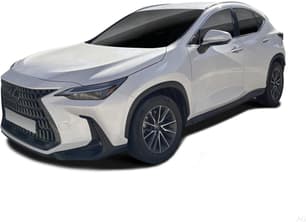
Speaking of which, let’s dive straight into the least-expensive version, the NX 250 Luxury 2WD auto, to find out if the most popular Lexus model in Australia has finally found its mojo.
This petrol-powered and well-priced XUV500 W6 might mark Mahindra's most convincing effort at cracking Australia's congested SUV market, but we're still not completely convinced.
That said, it's certainly cheap, the ownership credentials stack up and it's a very comfortable way to transport seven people.
So, is the cheapest Lexus NX the grade you’d skip? Depends on where you live and drive.
If you’re urban based and bound, save up a bit more and go the petrol-electric hybrid; otherwise, out on country roads especially, the spirited and sporty NX 250 is more than up to the task.
Either way, though, the latest NX is finally fit to fight the other premium brands’ medium SUV efforts, head on and held up high. Welcome to big mid league, Lexus.
Ignore or underestimate at your own peril, everybody else.
There's no getting away from the fact the XUV500 is not the sleekest, prettiest SUV in the pack. But it's not ugly, either. More that it looks like it's doing its best with a design philosophy hatched a generation or two ago.
Its best angle by far is when viewed straight on, where the piano-black grille, dual bonnet bulges and complicated (read: a little weird) headlight clusters all add some road presence to Mahindra's only SUV.
A side-on viewing, however, is less satisfying, where a combination of strangely placed and super-sharp body creases (including one over the rear wheelarch, which adds a Harbour Bridge-style crescent to the otherwise-straight window line) and serious rear overhang give the XUV500 an inescapable awkwardness.
Inside, expect a vast collection of rock-hard (though nicely patterned) plastics, with the ambiance rescued somewhat by the clean-looking and vertical central control unit, which is home to the media screen and air-con controls.
Ready for some hashtag real talk? There are better-looking and better-feeling seven-seat SUVs out there. But there aren't many that start at $25,990 drive-away. And I think that's Mahindra's point.
Lexus says that nearly one million of the original-shape NX versions were produced, so there’s no way that the brand was going to mess with the styling of the latest version. Which explains why picking new from old is a serious case of trainspotting.
But that migration to the TNGA GA-K platform has brought some benefits from a design point of view. The styling now breathes more, especially when viewed rear-on, thanks to a body that’s 20mm longer and wider, as well as a handy 30mm wheelbase stretch.
Drilling into the details, the headlights have an LED ‘tick’ motif, the corporate ‘spindle’ grille isn’t as in your face and the rear gains ‘LEXUS’ lettering spelled out, probably to accentuate stance.
Crisp and elegant, the design works well. This is a handsome machine. Looks expensive too.
Pretty damn practical, actually, regardless of whether you want to carry people or cargo. Carrying both at the same time, however, is tricky.
But let's start with people. There is a huge amount of room in the third row of the XUV500, a space with enough head and legroom to put plenty of its competition to shame.
Thanks to second-row seat backs that fold flat, before the the entire seat lifts up and pushes forward, climbing into seats six and seven isn't too big a drama, either.
We rarely say this about seven-seat cars, but at 175cm, I'd feel plenty comfortable back there on a longer drive. There are two air vents in the third row, too, along with bottle storage and side-seat storage for thin items.
All XUV500's are fitted with a 70-litre fuel tank.
The space in the middle row is ample as well, and you'll find three ISOFIX attachment points, one for each of the three seats. There's also a door pocket in each rear door and storage nets on the rear of the two front seats. A pull-down divider that separates the back seat is home to two cupholders, matching the two for front seat riders.
The only downside to all this people-lugging happiness is that, with the third row of seats in place, there is absolutely no room for luggage. Mahindra doesn't quote a litre storage figure when seven are seated (mostly because it would probably be embarrassing to write "one litre"), but trust us, you'll be lucky to squeeze a soft backpack in the boot with all seats in place.
Things improve considerably when you drop the third row of seats, though, which unlocks 702 litres of storage, and that number climbs to 1512 litres with the second and third row folded down.
Though distinctively attractive and obviously well built, the previous NX was quite small for a medium-sized SUV inside, with tight rear legroom.
It also had a nonsense mouse-operated multimedia controller that was fiddly, annoying and counter-intuitive to use.
Thankfully, the new-from-the-ground-up design has rectified both these issues in the latest version.
Now the NX is properly medium-sized, and so easier to get in and out of, as well as palpably roomier front and rear. Employing the RAV4’s TNGA architecture results in a lower and roomier cabin, that benefits all in terms of packaging.
Being the entry-level 250, you might not expect much in terms of interior presentation or style, but Lexus Australia’s product planners have been deft in specifying this grade to make it look luxurious and on-brand.
Body-hugging bolstered perforated leather front bucket seats, in our example finished in a black/cream hue with orange stitching, belie the base-grade reality of the 250. This scheme is also found on the centre console, armrest and door cards, lifting the ambience no end. It looks, feels and smells expensive in here.
The only thing that seems to be missing is a smartphone charger. That's part of a $3K option pack that also throws in a sunroof and foot-operated actuation for the electric tailgate. Not bad.
Then there’s the driving position, with an electrically-operated reach/height adjustable steering column and a multi-configurable seat to help find the right spot. All-round vision is also better than you might expect, no doubt helped out by huge exterior mirrors and a large reversing camera screen.
Typical Lexus-style classy digital instrumentation, directly ahead, are positioned in such a way that you’re not really aware of/missing the available head-up display in higher grades. Though it takes a quick amount of familiarisation, all the info there is ultimately clear and easy to take in.
The same applies to the now touch-only centre screen, which has a slick rich finish and tactility, and also encompasses the climate-control display.
Along with banishing the dreaded mouse pad, kudos to Lexus for also installing physical switches or buttons for the most-used items – audio volume, temperature setting, and front and rear window demisting.
These and the simplified sub-screen menus for navigation, wireless telephony/audio streaming, vehicle diagnoses and vehicle settings amongst other features, is quickly second-nature in their accessibility and operation. And the sound system quality is great too.
One of our very few complaints concerns the Apple CarPlay experience, which seems needlessly complicated to return to if you temporarily switch away from it to the NX’s native multimedia system. Confusing and distracting.
Never mind. There are minivan levels of practicality at work here, from the superb and easily manipulated ventilation system to the seemingly endless storage options, that include bottle holder capability in the doors, a clever lid operation for the huge centre console and properly engineered cupholders.
Lovely lush materials of satisfying quality are further plus points.
We’re also fans of the NX’s electric door opening system with a failsafe handle, meaning you can grasp the door handle inside or out and a solenoid activated by a press in of a thumb releases the door quickly and naturally in a single action; it feels… upmarket and ergonomic once accustomed to.
Accessing the back seat is easy due to the latest model’s larger proportions. Much of the same applies out back as the front seat area in terms of quality of finish and attention to detail. Sculptured and enveloping backrests (adjustable for two reclining positions), a well-padded cushion and more-than-sufficient space for two burly adults or three smaller people means this NX is more family friendly than the swoopy exterior styling suggests.
We’re also happy to find large people-facing air vents, two USB and a 12V outlets, one-touch electric windows with that premium-car soft close mechanism, overhead LED lights, grab handles, centre armrest with cupholders, map storage behind both front seats, coat hooks and good lines of vision further enhance the appealing and comfortable back seat environment. It feels like a Lexus should.
Further back than that, after releasing the electric tailgate via either an interior button or exterior switch, you’ll find that the boot has a fairly high loading lip, but then offsets this with a long, flat floor with matching levels of appropriate-quality finishes. Another 12V plug and two bag hooks are included, along with ample lighting and tie-down hooks. There’s also a hidden deep storage compartment underneath the floor, due to the discontinuation of a spare wheel (due to runflat tyres, remember).
Capacity is rated at a fairly ordinary 520 litres, extending to 1411L with the split/fold backrests folded. You’d expect a remote actuation for the latter like Mazda wagons have had for decades, but none is found at this price point.
Note there is no solid cargo cover either, just a flexible/flimsy fabric item that’s foldable and easily stored.
Overall, though, despite of its base positioning within the NX hierarchy, the 250's interior experience is in keeping with the brand's image.
Make no mistake, this Mahindra kills the competition on price. The entry-level W6 version will cost you a lean $25,990, while the fruited-up W8 version will set you back $29,990. You can even have an AWD W8 for $32,990. The best part? All of those are drive-away prices.
Go for the W6, and you can expect 17-inch alloy wheels, cloth seats, air-con with vents (powered by a second compressor) in the second and third row, cornering headlights with DRLs, front and rear fog lights, cruise control, rear parking sensors and a 6.0-inch multimedia screen linked with a six-speaker stereo.
Spring for the W8, and you'll add leather seats, a reversing camera, tyre-pressure monitoring and a bigger, 7.0-inch screen with standard sat-nav.
Priced from $60,800 (all prices are before on-road costs), NX 250 Luxury equipment levels are – in a word – generous for an entry-level proposition. In fact, we thought our test vehicle arrived jam-packed with options, but what’s in the photos is standard fare.
There’s no scrimping on safety, for example, with eight airbags, autonomous emergency braking (AEB), front and rear cross-traffic alert, blind-spot monitor, lane-keep and steering assist, adaptive cruise control, LED lights with auto high beams and Safe Exit Assist – which won’t allow doors to open if vehicles or cyclists are whizzing by and in danger of being struck. Clever.
The NX 250 also scores keyless entry/start, a 9.8-inch touchscreen featuring ‘Hey, Lexus’ voice control, sat-nav, Apple CarPlay/Android Auto, digital radio, powered steering column adjustability, electric front seats with heating, dual-zone climate control, a powered tailgate and 18-inch alloys running on 235/50 runflat tyres (so no spare wheels whatsoever).
About the only thing we’d like is a smartphone charger, though that’s available as part of a $3000 Enhancement Pack 1, which also throws in a sunroof and kick-sensor activation for that powered tailgate. All for under $64K. Job done.
This is provocative pricing. A base Genesis GV70 RWD starts at $68,500, a Q5 35 TDI diesel FWD costs from $68,350 or nearly $73,000 for the quattro petrol AWD – as does XC60 Plus B5 AWD, an X3 sDrive20i RWD is $76,600 and a GLC 200 RWD is now from $77,305.
Even with the Lexus’ EP1 box ticked, they make the NX 250 seem like conspicuously good value for money.
You’ll find luxuries like leather, adaptive headlights, instrumentation head-up display, a larger touchscreen, vented seats, surround-view camera, premium audio and 235/50 R20-sheathed 20-inch alloys in the bestselling 350h hybrid grade, in either swishier Sports Luxury or racier F Sport grades; both begin at $73,100, AWD adds $4800 and another (rear-sited) electric motor, while that price also covers the rapid and non-hybrid 350 Turbo AWD F Sport.
The flagship NX is the 450h+ F Sport AWD plug-in hybrid electric vehicle (PHEV) from $89,900. The company’s (and Toyota’s) first such tech for Australia.
All NXs include Lexus’ ‘Encore’ aftersales subscription program offering myriad offers and services including “free” car rental.
There's a diesel engine currently available, but the clock is ticking - Mahindra expects it to be phased out within six months. But the big news here is the new petrol engine, a turbocharged 2.2-litre unit good for 103kW/320Nm. It's paired exclusively with an Aisin-developed six-speed automatic transmission, and will send it's power to the front or all four wheels.
Mahindra doesn't quote official performance figures, but those engine outputs hardly scream excitement, do they?
There are two ways of looking at this.
Yes, the NX 250 is powered by a variation of the same engine found in the humble base Camry Ascent in Australia at almost half the price. On the other hand, it’s a Toyota powertrain and everything that’s good and reliable and dependable about that. Which is not always the case with premium SUVs.
Dubbed Dynamic Force, which may imply forced-induction like a turbo or supercharger but there isn’t any, the 2487cc 2.5-litre naturally aspirated direct-injection D-4S twin-cam four-cylinder engine delivers 152kW of power at 6600rpm and 243Nm of torque at between 4000rpm to 5000rpm.
Drive is sent to the front wheels only, via an eight-speed torque-converter automatic. Tipping the scales at a pretty hefty 1705kg, it’s nonetheless the lightest NX, and manages a power-to-weight ratio of 89.1kW per tonne. That’s about the same as a GLC 200, which uses a 2.0-litre turbo petrol engine.
Local numbers are yet to be confirmed, but after an admittedly vigorous local test, the on-board computers was reading 13+ litres per 100km. All XUV500's are fitted with a 70-litre fuel tank.
Rated Euro6b, the NX 250 demands 95 RON premium unleaded petrol. Same as Camry, actually,
We recorded a decent 9.7 litres per 100km during our time using the NX 250 in city, urban and rural conditions, against the trip computer’s 9.5L/100km and the official combined average of just 6.9L/100km.
Note this may be so because there was a lot of fast back-road driving, as the engine loves a rev and there’s a palpable wave of power that comes on strongly between 5000rpm and 6500rpm. A bit like Mazda’s naturally-aspirated units, but just not as sonorous.
At 55 litres, the fuel tank will allow for up to 797km based on the combined average cycle between refills.
About as old school as rocking a pair of button-up tracksuit pants with a Run-DMC cassette stuffed into your Walkman.
On a straight and unchallenging road, there's stuff to like about the petrol-powered XUV500. The engine, while gruff under heavy acceleration, doesn't feel too wheezy when you're not asking a great deal of it, and nor is the cabin overly loud at suburban speeds. It's a comfortable space for driver and passengers, too, and the gearbox performed seamlessly on our short test drive.
But that's about where the good news ends. There's an unshakeable agricultural feel to the way this Mahindra SUV goes about its business, and nowhere is that more obvious than through the steering wheel, which has only a vague and difficult relationship with the the front tyres, making it seriously tricky to approach twisting roads with anything approaching confidence.
The steering is slow and cumbersome - light when you first begin turning the wheel, with a ton of weight appearing by surprise midway through the cornering process - and it has a tendency to fight back should the front wheels find a bump or corrugation in the road, too.
The body lolls about when challenged, too, and the tyres are quick to give up their grip on tighter corners. All of which would give it a certain retro charm if it wasn't so very new, and I must admit I was cackling maniacally on some of the more twisting roads.
But it's simply not a car I could live with.
The NX 250 truly is a tale of two cars.
Around town, it is utterly capable and benign. The 2.5-litre atmo four-pot petrol unit is a revvy, raucous sort of engine, pulling away strongly off the line, responding quickly to pressing down on the throttle, shuffling up through seven of the lower gears smoothly (top is a highway overdrive), and generally being an easy vehicle to drive.
About the only concern is how noisy the engine can become if you’re needing to accelerate hard, with a definite mechanical zing that gives the Lexus a bit of a hoon attitude. We’re also a little hesitant about using the Sport mode in built-up areas, as ratios are held on to whether up or down shifting, amplifying the loud nature of this powertrain.
Other aspects of the NX 250’s driveability around town rate highly: light yet linear steering, with a tight turning circle providing easy manoeuvrability and parking; firm yet still absorbent suspension, offering an appropriately isolating ride over most bad road surfaces; and an overall sense of sound engineering. It seems quieter than an equivalent RAV4, more importantly.
Which led us to initially conclude that, in an urban environment, you’d naturally pay the extra $3K for the NX 250 Hybrid, to eliminate that noisy engine when pushing down hard on the throttle. Easy.
However, then we ventured out on a long rural drive, a few couple of hundred kilometres from the big city. On country roads, the NX 250 really sparks up in a most compelling way.
Yes, the engine is still a bit rowdy, but as the revs rise and the needle edges near the 6800rpm red line, the Lexus just keeps on building up speed rapidly, providing an unexpectedly sporty edge. Above 5000rpm this thing still has plenty of oomph, relying on a deep well of power to really extend its legs.
It also makes sense to slot the auto lever into manual, and use the finely positioned paddle shifters. That’s when you’re most aware of the gearbox being a torque-converter auto, with defined and assertive selections. It’s a good way to feel involved in the experience too.
Actually, as a mechanical ensemble, it all comes together at speed; that light and easy steering remains relaxed yet reactive, weighing up nicely if you choose Sport. The handling maintains a fluid, connected feel, with ample levels of grip from the Bridgestone tyres.
It occurred to us that driving the NX 250 Hybrid out on rural backroads would deny the enthusiast of the base model’s lightness and agility, since the latter weighs hundreds of kilos less; the brakes are perfectly modulated instead of feeling vaguely mushy and/or trigger happy as with many electrified SUVs; and – even with the road noise being well-supressed – you’re far less aware that the atmo petrol engine is singing loudly at speed.
Plus, the ride out in the sticks, even on our craggy old test strip that would jar the bones of some other midsized SUVs, remains calm and comfortably firm. That’s real progress for the NX.
We’d appreciate a bit more nuance in the way the stability control kicks in (quite late) to catch the tail; while the driver-assist tech like the adaptive cruise control and lane-keep assist do their jobs admirably, the latter’s constant chiming can be annoying; and there's a fair amount of road-noise intrusion over coarse bitumen. Like most midsized luxury SUVs, actually. Still quieter than a RAV4, though.
No jarring faults then. Lexus has done its homework and fixed most of the things that annoyed or infuriated us about the previous generation version. Good work.
Expect dual front, front-side and curtain airbags (though the latter don't extend to the third row of seats), along with rear parking sensors and ESP. Stepping up to the W8 trim adds a reversing camera with dynamic guidelines. The XUV500 was awarded a four-star (out of five) ANCAP assessment when tested in 2012.
Tested in July, 2022, the latest NX range delivers a five-star ANCAP crash-test rating. It managed high scores in all four categories: Adult, Child and Vulnerable Road User protections, and Safety Assist technologies.
You’ll find eight airbags (providing coverage to all outboard occupants, also taking in dual-front occupant knees and centre item to stop lateral head strikes).
The AEB system with intersection assist works between 5-80km/h for pedestrian and cyclist detection and works day and night, while the car-to-car protection works between 5-180km/h.
Then there’s lane-tracing, lane-keep and steering assist, that works between 50-200km/h, as well as blind-spot monitoring, adaptive cruise control with stop/go functionality, auto high beams, road sign recognition, front as well as rear cross-traffic alert, reverse parking cameras, all-round parking sensors, tyre pressure monitors and Safe Exit Assist – which won’t allow doors to open if passing cyclists or pedestrians are in danger of being struck.
There’s also Intersection Turn Assist, providing early brake activation if required, Emergency Steering Assist (extra steering assistance to help keep the vehicle in its lane) and Emergency Driving Stop System.
As with most new vehicles nowadays, anti-lock brakes with brake-assist and electronic brake-force distribution is also standard, along with stability and traction control systems. Lexus provides three rear-seat child-seat tether anchorages and two ISOFIX latches, fitted to the outboard positions of the back bench.
All XUV500s are covered by a five year/100,000km warranty (though the final two years apply only to the drivetrain), along with five years of complimentary roadside assistance.
The XUV500 is also covered by Mahindra's capped-price servicing program for the first three years of ownership, and will require servicing every six months or 10,000km.
Since the beginning of 2021, Lexus offers a five-year, unlimited kilometre warranty with roadside assistance. It used to be four years.
Service intervals are at 12 months or 15,000km, whichever comes first.
The NX also includes three years and 45,000km of capped-price servicing, with each one costing $495 – and as we’ve noticed in the recent past, that is very highly competitive pricing for a luxury brand.
Plus, there’s also Lexus’ ‘Encore’ aftersales subscription program offering myriad offers and services.