What's the difference?
Lotus - it’s one of the most iconic names in the history of automobiles and was once Great Britain’s answer to Ferrari - on the road and the Formula One circuit.
But that was a long time ago, in the 1960s and ‘70s. Since then Lotus has been on a rollercoaster ride through various owners who put in various levels of investment, resulting in various degrees of success.
But through it all, Lotus has stayed true to the ethos of company founder, Colin Chapman - ‘simplify, then add lightness.’ It’s obviously a playful saying, but it spoke to the core elements of Lotus cars, agility and driving purity.
Lotus rarely worried about big, powerful engines and instead focused on creating the best-handling cars.
That was the past, though, because Lotus Cars is now owned by Geely, the Chinese automotive giant that also counts Volvo, Polestar, Zeekr and more under its control.
Geely’s vision for Lotus is very different to what has come before, with a future focused on building electric SUVs and sedans; such as the already released Eletre and Emeya.
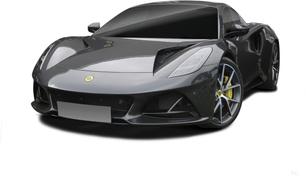
All of which is a very long way to get us to the car we’re actually testing - the MY24 Lotus Emira.
This is the last petrol-powered sports car from Lotus, and while it has been available already with a V6 engine, it has recently arrived with a Mercedes-AMG four-cylinder turbo.
Given its place in the grand scheme of things, the Emira not only needs to live up to the legacy of the iconic models that came before it, but also needs to lay the foundations for the brand’s electric future. Which is a lot of pressure for one car to carry…
For many, Chevrolet’s repositioning of the engine in its Corvette from the nose to behind its passengers was a shock, although Chevy had seemingly been itching to make the shift since showing its XP-880 Astro II concept car close to 60 years ago.
But the idea of an electric motor in ‘America’s Sports Car’ was probably even more confronting.
However, when you add the critical detail that the petrol-electric hybrid E-Ray version of the current C8 Corvette puts out 488kW (655hp) and 806Nm, surely fears the end is nigh for muscle car enthusiasts ebb away.
The C8 ‘Vette has been with us for five years, blurring the line between traditional US-style performance and mid-engine Euro exotics, maintaining good ol' boy naturally aspirated V8 power but locating it between the axles, and in the E-Ray, hooking it up with a chunky electric drive unit up front.
There are potential changes on the horizon, with the even more thunderous Corvette Grand Sport X hybrid lurking in the wings. But right now, this is Chevrolet’s hybrid hero.
Could this cut-price supercar be your next four-wheeled piece of mechanical pride and joy?
If this really is the final petrol-powered Lotus sports car then it’s a sad day for fans of the brand and its history. But it’s also worthy of celebration because they have made a car that is genuinely impressive.
It may not be perfect, and it will have to fight hard to lure buyers away from Porsche, BMW and co. but for anyone who enjoys a dynamic, engaging and incredibly fun sports car the Emira should be on your short-list.
Alternatively, if you’ve always dreamed of buying a traditional Lotus sports car and haven’t got around to it until now, this is your last chance so don’t wait too long.
The Chevrolet Corvette E-Ray offers hypercar-level performance, aggressive design and brilliant dynamics at a bargain-price relative to similarly-configured Euro exotics. Blending raw V8 grunt with front-axle electric power it delivers an exhilarating drive experience.
While things like ingress and egress are a challenge and warranty coverage is modest, the car’s immense capability makes it an attractive option for anyone wanting a high-performance mid-engine machine without the astronomical price tag of a ‘traditional’ supercar.