What's the difference?
You’re after a premium SUV with size for five, without exceeding the ideal metropolitan footprint. It should have adequate oomph for occasional forays into wider open spaces, but offer enough comfort and luxury to keep you cool and relaxed in the city.
And you’d rather look at something outside the predictable Euro brand path. The Lexus UX 200 F-Sport may just be your ideal urban companion.
Remember when electric vehicles were the next big thing? Well they still are, it's just that hybrids are making a huge comeback and have entered a new era of the super hybrid. These are plug-in hybrids with enormous driving ranges and Chery’s just arrived Tiggo 9 Super Hybrid is one of these.
The Tiggo 9 is a large seven-seater SUV that competes with the likes of plug-in versions of the Hyundai Palisade and GWM Tank 500, only for less money.
The value is excellent, but how does the Tiggo 9 score in other areas such as the way it drives, its practicality and safety, or its styling and interior feel?
We found out in this first Australian drive.
The Lexus UX 200 F Sport really steps up in the urban context. It’s big enough, energetic enough (especially using the Sport setting and the CVT’s manual mode), and delivers good value for the price. We’d like more boot space, a little more room in the back seat, and the Remote Touch media interface deposited in the bin. But overall it’s a great premium option for young families or active couples in the city.
The Chery Tiggo 9 Super Hybrid is outstanding in many ways, especially value and the way it drives. I can only stress the importance of charging this vehicle frequently, however, otherwise it will go from super hybrid to super fuel consumer.
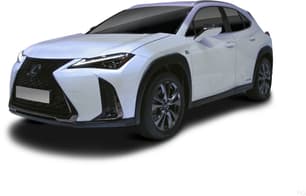
Design is a key differentiator for Lexus, with a love-it-or-hate-it polarising design language standing the brand’s current products apart in pretty much any car park.
The exterior takes a classic SUV profile and adorns it with an arresting mix of angles outlining everything from the signature ‘spindle grille’ and gaping front air vents to the jagged headlights, and wheel arch overfenders.
A dark chrome finish on key exterior trim elements, as well as the standard 18-inch alloy rims, adds to the premium look..
The rear is a riot of different shapes and surfaces, the full-width tail-light standing proud of the body like a low-relief sculpture, and the surface of the rear hatch door chamfered and contorted through multiple planes.
The back bumper is blinged up with more dark chrome, and features a diffuser style section underneath it.
The interior will be instantly recognisable to any current Lexus owner, the relatively complex, multi-layered dash design finished in a uniform grey, spiced up by the odd splash of brushed metal and our car’s standard white ‘leather accented’ trim.
The broad 10.3-inch multimedia screen is neatly integrated alongside a compact instrument binnacle housing a crystal clear configurable digital instrument display above the centre stack, and all the controls are clear and easy to use, with one exception.
The Lexus ‘Remote Touch’ pad used to manage multiple media and vehicle functions is torture. Despite available adjustments for speed and sensitivity, even on its most benign setting it is maddeningly over-reactive and inaccurate.
Chery has crafted a superb-looking SUV here. Sure, the design isn’t ground-breaking or unique, but styling is beautiful from the large grille and multi-spoke wheels to the chrome framed windows and smooth lines of the tailgate.
Our car was painted in 'Aurora Green', which looks stunning in the sunlight. There’s also 'Cosmic Black', 'Star White' and 'Technical Grey'.
The cabin is super modern and luxurious looking, with only a few physical buttons for the hybrid system and climate control. The leather seats are a lovely high-end touch, and while the level of refinement is not up there with the likes of Audi and Lexus flagships the build quality appears to be good.
The Tiggo 9 stretches 4800mm end to end and is 1930mm wide. That classifies it as a large SUV, albeit not an enormous one. A fairly short wheelbase of 2750mm means the cabin space isn’t as voluminous as you might have thought.
It might be a relatively compact SUV in the wider world, but at a bit less than 4.5 metres long, slightly more than 1.8m wide, and just over 1.5m tall, the Lexus UX is fairly sizeable if your natural habitat is the urban environment.
But it’s far from oversized, and the UX has a tight space ace up its sleeve in the form of a 10.4m turning circle. It might sound like a large arc, but that’s a full metre less than the only marginally longer Lexus NX, and considerably inside the bigger Lexus RX’s radius.
And the difference between a clunky three-point turn, and a swift U-turn in a tight traffic environment is massive. So, gold star there.
On the inside, day-to-day practicality in the form of cabin storage runs to a pair of cupholders in the front centre console, with a (Qi) wireless charging mat ahead of them, a decent glove box, as well as generous door bins with enough space for full-size bottles.
A large lidded storage box between the seats contains two USB ports, an ‘aux-in’ socket, and a 12V outlet. It also features the Lexus party trick of hinging open towards the driver or passenger depending on which side button you've pressed. Clever.
There’s a fold-down centre armrest with twin cupholders in the back, but there are no storage pockets on the front seatbacks, or bins in the doors.
Speaking of which, the rear door apertures are tight, making it more of a struggle than it should be for anything above average size adults to get in and out.
Rear headroom is good, although legroom is tight, and shoulder room will be squeezy for grown-ups. That said, twin air vents in the rear of the front centre console is a welcome addition in a car of this size, as are two USB charging ports to keep devices topped up and occupants happy.
Boot space is 371 litres (VDA) with the rear seats upright, which is modest. The small and medium suitcases from our three-piece set fitted in, but there wasn't much space left over. The bulky CarsGuide pram will squeeze in… just. And of course, the second-row backrest split-folds 60/40 to liberate extra capacity.
There are tie-down anchor points at each corner of the cargo floor, a 12-volt power outlet, strategically placed bag hooks and bright lighting, but don’t bother looking for a spare wheel, the Dunlop SP Sport Maxx tyres are run-flats.
There’s a button on the key fob that seems to indicate it remotely opens the rear cargo door, but in my experience it remained a non-cooperative mystery.
Towing capacity is the same, rather lightweight 750kg whether the trailer you’ve connected is braked or unbraked.
The Chery Tiggo 9 is not overly large and with a relatively short wheelbase the cabin room is adequate but not outstanding. I’m tall at 189cm, but there is still room for me to sit behind my driving position and headroom is good, too. That said, the cabin floor is high which raises the knee height for second row passengers.
The third row is really just for children and for those occasional but unpredictable times when as a parent you’re suddenly thrown into having to transport more kids home or to parties.
Cabin storage is good with door pockets and cupholders front and back, while a large storage area under the centre console is great for loose items or even a handbag or small backpack.
The wireless charger is perfectly situated on top of the console and features a grippy soft surface.
I would have liked more physical dials and buttons for climate and the stereo, which are accessed through the central screen.
Boot space, according to Chery, is larger than it looks, with the manufacturer saying with the third row up there is 143 litres of cargo capacity and with five seats in place it's 819 litres.
At $53,450, before on-road costs, the UX 200 F Sport is a premium, 2.0-litre compact SUV lining up against some sharp competition in the form of Audi’s Q3 35 TFSI Launch Edition ($52,750), the BMW X1 sDrive 2.0i M Sport, ($51,750), the Mercedes-Benz GLA 180 ($48,690), and Volvo’s XC40 T4 Inscription ($51,990). All four-cylinder, and front-wheel drive, except for the all-wheel drive Volvo.
The 200 is the entry-point to a three-level UX model range, and F Sport is the highest of three specification grades (above ‘Luxury’ and Sports Luxury’).
Fifty grand is a significant financial threshold, and when you’re lining up against a batch of big name European competitors, the standard equipment list is critical. And the 200 F Sport comes to the party with an impressive number of boxes ticked.
Aside from the active and passive safety tech detailed in the safety section below, the UX 200 F Sport features a leather-accented F Sport shift lever and heated steering wheel, power-adjustable steering column, leather-accented seat trim, eight-way power-adjustable, heated and ventilated F Sport front seats, Qi wireless phone charging, active cruise control, keyless entry and start, dual-zone climate control air (including ‘Lexus Climate Concierge’ management of climate, front seats, and the steering wheel), 18-inch alloy wheels, illuminated entry, and F Sport alloy-accented pedals.
Also included are bi-LED headlights (with auto levelling and adaptive high beam), LED fog lights, LED tail-lights, adaptive variable suspension, five drive modes (Eco, Normal, Sport, Sport+, Custom), a rear performance damper, paddle shifters, an 10.3-inch multimedia screen, 7.0-inch digital driver information display, reversing camera, parking sensors (front and rear), satellite navigation (with live traffic updates), eight-speaker audio (with digital radio), and voice recognition for media and other functions.
No Apple CarPlay or Android Auto connectivity here, though, as Lexus sticks with its own media/audio connection set-up.
Our test example was fitted with an optional moonroof ($2500) and premium ‘Cobalt Mica’ paint ($1500), for an as-tested price of $57,450.
Other colours available are: 'Khaki Metal' (green), 'Carnelian' (orange), 'White Nova', 'Mercury Grey', 'Premium Silver', 'Titanium' (silver), 'Onyx' (black), 'Graphite Black', and 'Caliente' (red).
There is only one grade in the Chery Tiggo 9 Super Hybrid line-up - the Ultimate - and it lists for $59,990. It’s remarkably affordable compared to many rivals and the value is outstanding.
As you might imagine the Ultimate is fully loaded with features.
There are leather seats - powered adjustable, massaging, heated and ventilated in the front, while the second row outboard seats are heated and ventilated, too.
There are big screens - a 15.6-inch media display and a 10.25-inch digital instrument cluster as well as a head-up display. There’s Apple CarPlay and Android Auto, sat nav, a 12-speaker Sony sound system and digital radio.
There are LED headlights and tail-lights, 20-inch alloy wheels, a panoramic glass roof, privacy glass and a power tailgate.
Sitting under the UX 200’s bonnet is the 2.0-litre (M20A-FKS) four-cylinder petrol engine. It’s an all-alloy, naturally aspirated (non-turbo) design producing 126kW at 6600rpm and 205Nm at 4800rpm.
Versions of this engine are also used in the Toyota Corolla, RAV4, and Camry, the relatively new (2018) unit featuring dual ‘VVT-i’ (Variable Valve Timing-intelligence) managed by an electric motor on the intake side and conventional hydraulic actuation on the exhaust side, plus a combination of direct- and port-injection, as well as electronic throttle control.
Drive goes to the front wheels via a Continuously Variable Transmission (CVT), with a conventional first gear added to aid take-off, and ‘steps’ to mimic normal ratios accessible via wheel-mounted paddles. More on those in the driving section.
Claimed fuel economy for the combined (ADR 81/02 - urban, extra-urban) cycle is 5.8L/100km, the UX 200 emitting 132g/km of CO2 in the process.
This time around we had several weeks with the car, staying mainly within the urban environment (thank you COVID-19), with some brief freeway running thrown in, and we recorded an average of 8.9L/100km, which is a solid miss on the factory claim, but still good enough to deliver a range well in excess of 500km between fills.
Another plus is a minimum fuel requirement of 91 RON ‘standard’ unleaded, and you’ll need 47 litres of it to fill the tank.
The Tiggo 9 Super Hybrid is a plug-in hybrid. There’s a fuel tank for petrol (95 RON minimum) and a charging flap for you to fill up the 34kWh battery.
Super hybrids are so-called because of their relatively big batteries and longer ranges. Chery says on a full 70-litre tank and charged battery the Tiggo 9 Super Hybrid has a range of 1250km (NEDC). The WLPT range isn’t given but while it will still be impressive it would be less than the NEDC. The same goes for the electric-only range of 170km (NEDC).
If you keep the battery charged, fuel consumption is outstanding. In our short time with the car the trip computer was reporting an average 1.4L/100km, which is exactly the manufacturer's claim.
I noticed that once battery charge fell below 20 per cent the fuel economy worsened to 7.1L/100km.
The battery has a 71kW DC charging capacity however and will fill up fast. But you will have to top up frequently to get the good fuel economy.
This was my second time in a UX 200 within the last 12 months, but this time the loan period extended to around six weeks, covering the time much of the globe was in lockdown in response to the coronavirus.
So essential trips around town were the only ones being taken. But more time behind the F Sport’s wheel highlighted some of this UX 200’s dynamic strengths, particularly aspects of the continuously variable transmission (CVT).
This Toyota designed CVT has the advantage of a conventional first gear to give the UX some extra urgency from step-off. And when you’re predominantly in stop-start traffic (although there wasn’t too much of it), that’s a big help.
Like all CVTs, in set-and-forget Drive mode, this unit aims to keep the engine in its operating sweet spot, constantly balancing performance and economy goals; the downside being a droning engine noise. For those old enough to remember manual gearboxes it feels like a constantly slipping clutch.
But slip into ‘Manual’ and the CVT is able to mimic ratio points, and using the wheel-mounted paddles to shift between them lifts driver engagement massively, even in the compacted urban context.
In terms of outright performance, a kerb weight nudging 2.0 tonnes and a peak torque number (205Nm) that doesn’t arrive until a lofty 4800rpm goes a long way towards telling the UX 200 F Sport acceleration story. Lexus claims 0-100km/h in a reasonably brisk 9.2sec.
The UX is underpinned by the ‘Lexus Global Architecture – C’ platform (a Lexus name for Toyota’s TNGA chassis architecture) and suspension is by struts at the front and trailing wishbones at the rear, with the F Sport featuring adaptive variable suspension and a rear performance damper, the latter designed to improve chassis rigidity and minimise vibrations.
Overall ride comfort is really nice, although the standard 18-inch alloy rims are shod with 225/50 Dunlop SP Sport Maxx run-flat tyres and they’re relatively noisy, with an accompanying tendency to follow irregularities in the road surface.
Dial up the Sportier drive settings and everything tightens up appreciably, so if you’re that way inclined, the sport part of the F Sport’s personality is there to be explored.
The electrically assisted steering delivers decent accuracy and road feel, With some momentum up, the UX 200 F Sport feels balanced and predictable, putting it’s power down nicely, if you decide to break away for a brisk B-road run.
Braking is by ventilated discs at the front (305mm) with solid rotors at the rear (281mm), and stopping power is reassuringly firm.
As mentioned earlier, a tight 10.4m turning circle makes parking easy, supported by a high-quality reversing camera and proximity sensors front and rear.
Under the heading of general observations, the driver’s seating position is great - comfy and secure, a one-touch up and down function on all windows is a nice… touch, and the configurable instrument cluster (which includes the central dial physically sliding into different positions) is functional and fun.
The Chery Tiggo 9 Super Hybrid drives silently and smoothly with strong acceleration just like an electric car for the most part while in the city at lower speeds.
Hills and higher speeds call on the engine to help but even then the transition is almost imperceptible.
A comfortable ride with well set up suspension, light and accurate steering make for an impressive and effortless driving experience.
There are downsides, like the brake pedal feel. As in many hybrids there’s a ‘wooden’ sensation and I felt I needed to depress the brake pedal harder and longer to pull up at times. This is a heavy vehicle at 2200kg and brake response could be better.
The active safety tech is also intrusive, as is the case with so many cars these days, but the alerts and warnings can be turned off.
The Lexus UX scored a maximum five-star ANCAP rating when it was assessed in November, 2018.
Active (crash avoidance) tech includes expected features like ABS, EBD, BA and stability and traction controls, while the standard ‘Safety Sense+’ system includes the ‘Pre-collision system’ (Lexus-speak for AEB) with pedestrian and daytime cyclist detection, traffic-sign recognition, active cruise control, evasive steering assist, ‘Lane Tracing Assist’, active high beam control, blind-spot monitoring, and a reversing camera, as well as ‘Rear Cross Traffic Alert’, and a tyre inflation warning system.
But then to help minimise injury if an impact is unavoidable, the UX boasts eight airbags (driver, front passenger , driver's knee, side, cushion and curtain side) as well as a forward collision warning and pre-collision braking system. Impressive.
There are also three top tether points for baby capsules/child restraints across the rear seat, with ISOFIX anchors in the two outer positions.
The Chery Tiggo 9 Super Hybrid hasn’t been assessed by ANCAP yet, but the safety tech is in abundance with everything from AEB, front and rear cross-traffic alerts with braking, lane keeping assistance and blind-spot warning.
For child seats there are three top tether anchor points and two ISOFIX points in the second row only.
There are also 10 airbags onboard.
I’ve mentioned the intrusive safety alerts in the driving section, and while they can be turned off, they can also be life saving.
From its arrival in Australia in the late ‘80s, Lexus has made the ownership experience a high priority. In some areas it’s still at, or near the top of the after-sales class, but in others the grades are slipping.
For example, the standard Lexus warranty in Australia is four years/100,000km. When you have both luxury newcomer, Genesis, and the most established of them all, Mercedes-Benz, at five years/unlimited km, that offer is off the pace.
Sure Audi, BMW, and others are at three years/unlimited km, but the game has moved on for those brands, too. Plus, the mainstream market standard is now five years/unlimited km, with some at seven years.
On the other hand, the ‘Lexus Encore Privileges’ program provides 24-hour roadside assistance for the duration of the warranty, as well as access to owner events and special offers.
A flat tyre during our time with the UX offered a glimpse of that experience, with a flat-bed arriving to take the wounded F Sport away, returning it the next day, ready to roll. Very nice.
Service is scheduled for 12 months/15,000km (whichever comes first). The first service is free, the second is $631, the third $523, and the fourth $631.
A Lexus loan car is provided while your pride and joy is in the workshop, or a pick-up and return option (from home or office) is available. You’ll also receive a complimentary wash and interior vacuum. Not bad.
The Chery Tiggo 9 Super Hybrid is covered by a seven-year, unlimited-kilometre warranty, while the battery has an eight-year unlimited-kilometre warranty.
There’s also roadside assistance and capped price servicing for seven years at $3174, or an average of $453 per year.
Chery's national dealer network consists of 86 sites, including 21 in Melbourne, 20 in Sydney and 12 in Brisbane.